Afghanistan: General News and Discussion

Germany drops promise to resettle hundreds of Afghans​


by The Frontier Post

Germany-drops-promise-to-resettle-hundreds-of-Afghans-810x425.webp


BERLIN: Hundreds of Afghans previously promised sanctuary in Germany have been told they are no longer welcome, in a stark U-turn by the conservative chancellor, Friedrich Merz.

The 640 people in Pakistan awaiting resettlement – many of whom worked for the German military during the US invasion and occupation of Afghanistan – will no longer be taken in, as Merz’s government axes two programmes introduced by its centre-left-led predecessor.

Merz has taken a harder line on migration to fend off a stiff challenge from the far right.

The people awaiting evacuation would receive notice from Germany in the coming days “that there is no longer any political interest in their being admitted”, an interior ministry spokesperson said.

Rights groups called the reversal a betrayal that defied several court rulings. They warned that the Afghans risked “persecution, abuse and death” if they were returned.

Karl Kopp, the head of the German NGO Pro Asyl, criticised the government’s decision as “ice cold”. He added: “The previous government promised to take these people in for one reason only: they had fought for women’s rights, human rights and freedom in Afghanistan.”

The people affected were now in acute danger and at risk of falling into the hands of the Islamist Taliban regime, he said. “For the new government, this shameful treatment of people in mortal danger is a declaration of moral bankruptcy.”

After the Taliban’s return to power four years ago, Germany’s then centre-left-led government launched programmes offering refuge to “especially endangered people” including local staff who had worked for the German military or government ministries, as well as rights activists and journalists.

Until April 2025, before Merz took office in May, about 4,000 local staff and 15,000 of their family members had been resettled in Germany, according to official data.

Since then, a few hundred Afghans have been evacuated from Pakistan but the current government has largely moved to phase out that policy, offering money to those who renounce their right to be resettled. The interior ministry said last month only 62 people had taken up the offer.

Up to 1,800 Afghans approved for relocation to Germany have been stranded in Pakistan for months, NGOs say.

The interior minister, Alexander Dobrindt, has spearheaded many of the government’s toughest measures to block new arrivals.

He has concluded that only Afghanswith a “legally binding” promise should remain eligible for resettlement. The interior ministry said this would cover only 90 of the 220 local staff still awaiting evacuation.

A former local police training officer and father of four told the daily Frankfurter Rundschau that he had waited two years to enter Germany and was shocked by the decision. “In a single moment, all my hopes and dreams of a normal life were shattered,” he was quoted as saying.
 

Muttaqi: no one allowed to conduct military activities abroad​


by The Frontier Post

Muttaqi-no-one-allowed-to-conduct-military-activities-abroad.jpg


KABUL (TOLONews): Afghanistan’s Acting Foreign Minister, Amir Khan Muttaqi, said during a program in Kabul that based on a recent religious decree (fatwa) by Islamic scholars, safeguarding the current system is not only the responsibility of security forces but a duty shared by all citizens.

According to Muttaqi, the scholars have also ruled that jihad becomes obligatory upon any foreign aggression.

He stated: “Protecting the system is not only the responsibility of the security forces, the Ministries of Defense and Interior, but the duty of every individual to defend this system. This is a collective fatwa from the religious scholars. Secondly, if anyone near or far violates Afghanistan’s sovereignty or attacks this system, then jihad is obligatory for the people, and every individual will defend it.”

Muttaqi also emphasized that Afghan soil must not be used against any other country.
 

EU announces 25 million euros to boost food security and resilience in Afghanistan​


by The Frontier Post

EU-announces-25-million-euros-to-boost-food-security-and-resilience-in-Afghanistan-810x485.jpg


KABUL (Ariana News): The European Union (EU) has announced a 25 million euros contribution through the United Nations World Food Programme (WFP) to strengthen community resilience and promote more nutritious diets across Afghanistan.

“The European Union’s new contribution to WFP demonstrates our continued commitment to the Afghan people, notably women, children, and vulnerable local communities,” said Veronika Boskovic-Pohar, EU Chargé d’affaires in Afghanistan. “Agriculture and food value chains must be equipped to bolster Afghans’ nutrition, health, and economic resilience. Through our integrated approach to climate resilience, we are also helping vulnerable rural communities protect their livelihoods and income against natural disasters and long-term devastating impacts of climate change.”

The funding will support WFP initiatives focused on improving food value chains and climate adaptation. Key projects include upgrading community assets such as flood protection walls and irrigation systems, reducing climate-related risks, and safeguarding productive assets essential for local economic stability.

A significant portion of the investment will build on WFP’s school meals programme, training women’s associations and youth entrepreneurs to supply fresh, fortified snacks to schoolchildren. This approach aims to stimulate local economies while creating sustainable livelihood opportunities.

John Aylieff, WFP Representative and Country Director in Afghanistan, expressed gratitude for the EU’s support, noting that the investment aims to deliver a “triple return: stronger livelihoods and resilience, more robust local food systems, and expanded opportunities for women and youth.”
 
To view this content we will need your consent to set third party cookies.
For more detailed information, see our cookies page.
 
To view this content we will need your consent to set third party cookies.
For more detailed information, see our cookies page.
 
Send them back to Afghanistan..

Ship the men back, they can explain things to the Taliban, even though I can't stand them.
The women and kids keep. They will thank us, humanity etc.
 
1765779966135.jpeg

• Host Iran taps regional players as reliable actors; warns against prescriptions ‘imported’ from foreign powers
• Kabul regime declines invitation to attend; ex-Pakistani diplomat terms it ‘head-in-the-sand attitude’
• Any tension between Afghanistan and Pakistan also affects Tehran, says Iranian foreign ministry spox

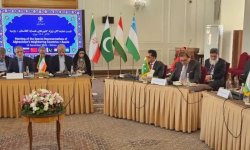
ISLAMABAD: Pakistan on Sunday urged the Afghan Taliban to rid their country of all militant groups, while Iran stressed the need for regional cooperation, rather than foreign intervention, at a multinational Afghanistan-focused meeting in Tehran.

The Taliban were invited to participate, but declined to attend, according to statements from both Iranian and Taliban officials.

To view this content we will need your consent to set third party cookies.
For more detailed information, see our cookies page.


The high-level gathering in the Iranian capital brought together special representatives from Pakistan, China, Russia, Tajikistan, Uzbekistan, and Turkmenistan to discuss shared security concerns and strategies for engaging with Afghanistan’s de facto authorities.

Pakistan’s Special Representative for Afghanistan Mohammad Sadiq made the country’s position clear, emphasising the persistent threat of terrorism originating from Afghan territory.

“The continued threat of terrorism emanating from Afghan soil is a big challenge for the region,” Mr Sadiq said, according to a statement.

He highlighted that a stable Afghanistan, free from terrorist elements, was essential for gaining the trust of its neighbours and unlocking its vast economic potential.

“It is, therefore, imperative that the current de-facto rulers take steps to ameliorate their suffering. And the foremost step in this regard would be to rid their soil indiscriminately of all types of terrorists,” he stated.

He later posted on X that “the people of Afghanistan have already suffered enough and they deserve better”.

Only an Afghanistan that does not harbour terrorists, he explained, will inspire confidence in neighbouring countries to meaningfully engage, which would in turn help realise the country’s immense potential for economic connectivity.

The regional forum was first initiated and hosted by Pakistan in September 2021, just weeks after the Taliban seized control of Kabul as US and Nato forces completed their withdrawal after a 20-year conflict. Iran hosted the second foreign ministers’ meeting of the group in late October 2021.

However, the forum has struggled to achieve its goals. According to Pakistan’s former ambassador to Afghanistan, Mansoor Khan, the original intent was for the group to make collective decisions, including the possibility of a coordinated recognition of the Taliban government.

“The grouping could not become an effective forum as the Taliban did not positively respond,” Mr Khan told Dawn on Sunday.

He added that Pakistan had hoped the neighbouring countries would adopt a unified approach on critical issues such as counter-terrorism, political inclusivity, girls’ education, and human and women’s rights in Afghanistan.

Separately, Ambassador Sadiq held a bilateral meeting with Iranian Foreign Minister Araghchi. According to Pakistan’s ambassador to Iran, Muhammad Muddasir Tipu, Sadiq expressed hope that the meeting would play a useful role in promoting regional peace.

“Recalling closer interactions taking place between leaderships of both countries at the highest levels in the past two years, Mr Araghchi reaffirmed Iran’s commitment to further deepen and widen its ties with Pakistan,” Mr Tipu wrote on X.

To view this content we will need your consent to set third party cookies.
For more detailed information, see our cookies page.


Regional solutions

Mr Araqchi, addressing the meeting, argued that Afghanistan’s stability hinges on its integration into regional political and economic structures, not on external involvement.

“Experience has shown that ‘imported prescriptions and trans-regional decisions’ have failed to bring stability to crisis-hit countries,” he said, according to Iran’s Press TV.

He highlighted the primary role of neighbouring states, describing them as the “most natural and reliable” actors capable of addressing Afghanistan’s complex challenges.

Mr Araghchi pointed to Afghanistan’s strategic geoeconomic position at the intersection of Central, West, and South Asia, highlighting its potential to serve as a vital corridor for trade, energy transit, and regional connectivity.

The Iranian foreign minister argued that the security and prosperity of Afghanistan are inseparable from the interests of the entire region. “Afghanistan’s stability and development are not only a humanitarian necessity but also a strategic imperative for the entire region,” he noted.

He called for collective responsibility and confidence-building measures among regional nations, warning against an over-reliance on security-centric approaches and the neglect of Afghanistan’s social and cultural realities.

Mr Araghchi attributed past failures to these factors, as well as the marginalisation of regional actors and the chaotic foreign military withdrawal in 2021 and said the integration of Afghanistan into regional political and economic processes would help establish long-term stability and reduce tensions.

Reaffirming Iran’s commitment, he said his country was ready to expand cooperation with Afghanistan’s neighbours in transportation, trade, energy, and consular services, arguing that regional convergence could create a sustainable framework for cooperation centred on Afghanistan.

“At the heart of all these efforts are the people of Afghanistan, who deserve a secure and dignified future,” he said.

Taliban decline invitation

Iran’s Foreign Ministry spokesperson, Esmaeil Baqaei, confirmed at a briefing that the Taliban had been formally invited, stating that Iran believed their participation would enhance mutual understanding and help resolve issues between Afghanistan and its neighbouring countries.

“Afghanistan, however, chose not to attend the meeting, a decision that Iran respects,” Baqaei said, according to the IRNA news agency. He noted that the meeting allowed participating countries to discuss regional developments, including recent border tensions between Pakistan and Afghanistan.

Baqaei stressed Iran’s concerns over regional stability, saying, “Iran shares a total border of nearly 2,000 kilometres with Afghanistan and Pakistan. Any tension that arises between the two countries will inevitably affect us as well.”

Kabul’s decision to stay away was criticised by Asif Durrani, Pakistan’s former ambassador to Iran.

“The Taliban regime’s decision not to participate in tomorrow’s Tehran meeting of senior officials from Afghanistan’s immediate neighbours and Russia is further proof of the Taliban’s lack of political maturity,” Durrani wrote on X.

“This decision reinforces the argument that the Taliban cannot negotiate an issue; a mere ‘Na-manu (don’t accept)’ is a head-in-the-sand attitude and will not resolve the serious problems.”
 
How tables have turned, remember US, Afghans were claiming Pakistan being the epic center of world terrorism. Good luck with knocking anything into Taliban's head. When you do, you'll realize there's nothing inside anyway.

I guess this meeting was on the request of Pakistan hence why the Talibunnies skipped it. They're still working with the others bilaterally.
 
How do we even begin to interpret this move by the Taliban. Is Taliban becoming like India? No more negotiations with Pakistan?
 
How tables have turned, remember US, Afghans were claiming Pakistan being the epic center of world terrorism. Good luck with knocking anything into Taliban's head. When you do, you'll realize there's nothing inside anyway.

I guess this meeting was on the request of Pakistan hence why the Talibunnies skipped it. They're still working with the others bilaterally.

With others you probably mean India?
 

Users who are viewing this thread

Country Watch Latest

Back
Top