Japan Defence and General News Discussions

WW II is different, it was a final showdown between good and evil in the world. WW I was more like a European "civil" war, a "great" or grey war. So, the Japanese better know their place in history and accept the crimes they committed, otherwise Asians won't forgive them.
Why there is a difference between WW1 and 2? War is war. Just the scale of killings is different. You see? I am engineer.

About apologize, this is a cultural thing probably only exists in China and Vietnam. I have been taught at home, family, at school to apologize when do a mistake. There is a culture to undo the mistake and face consequences. I don’t think the Japanese are taught in schools or family or elsewhere. If they don’t learn they don’t know.
 
Why there is a difference between WW1 and 2? War is war. Just the scale of killings is different. You see? I am engineer.

About apologize, this is a cultural thing probably only exists in China and Vietnam. I have been taught at home, at school to apologize when do a mistake. There is a culture to undo the mistake and face consequences. I don’t think the Japanese are taught in schools or family or elsewhere. If they don’t learn they don’t know.
WW II involved racial genocides and mass killing of civilians in large populations with the most grotesteque and savage ways by the aggressors. WW I was basically fought only between soldiers in battle fields. Japanese apologized to Americans and whites about WW II, and kiss Yanks' a*** . What Chinese and Koreans need to do is drop nukes on Tokyo, then the Japs will repent and kneel.
 
Last edited:
Ah nonsense
We the Vietnamese always want to peaceful relationship to China. Vietnam had been part of China for 1,000 years, another 1,000 years in Chinese imperial tributes system. That’s 2,000 continuous years. Same same for Korea. In contrast Japan has never been part of Chinese imperial. the Japanese never know it, never accept it.

Japan was also once a vassal state of China.

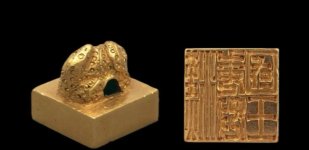
During the Han Dynasty in China, Japan submitted to the Chinese emperor for the first time and became a vassal state of China. The current national treasure of Japan, "汉倭奴国王金印(the golden seal of the Japanese king under the Han Dynasty)," is evidence. The period of Japan's vassal states lasted for hundreds of years and was interrupted during the Southern and Northern Dynasties in China.

The second submission of Japan occurred during the Tang Dynasty. At that time, Japan invaded the Korean Peninsula, and the Tang Dynasty sent reinforcements to the vassal states of the Korean Peninsula, and defeated the Japanese army at the mouth of the White River. Japan became a vassal state of China for the second time and sent envoys to study Chinese culture for a long time. Japan also became a Confucian cultural country during this period. The second period of Japan's vassal state history lasted for hundreds of years, interrupted after the fall of the Song Dynasty in China. Japan does not recognize the Mongols who defeated the Song Dynasty as the new Chinese dynasty and has defeated the Mongol invasion.

The third submission of Japan occurred during the Ashikaga Yoshimitsu period. Ashikaga Yoshimitsu submitted to the Ming Emperor, but with the downfall of the Ashikaga shogunate, this submission did not last long.

In history, Japan did not submit to China for more than a thousand years, but like Vietnam and North and South Korea, it was also a member of China's vassal state system and Confucian system.

IMG_20251224_162716.jpg
 
Japan was also once a vassal state of China.

During the Han Dynasty in China, Japan submitted to the Chinese emperor for the first time and became a vassal state of China. The current national treasure of Japan, "汉倭奴国王金印(the golden seal of the Japanese king under the Han Dynasty)," is evidence. The period of Japan's vassal states lasted for hundreds of years and was interrupted during the Southern and Northern Dynasties in China.

The second submission of Japan occurred during the Tang Dynasty. At that time, Japan invaded the Korean Peninsula, and the Tang Dynasty sent reinforcements to the vassal states of the Korean Peninsula, and defeated the Japanese army at the mouth of the White River. Japan became a vassal state of China for the second time and sent envoys to study Chinese culture for a long time. Japan also became a Confucian cultural country during this period. The second period of Japan's vassal state history lasted for hundreds of years, interrupted after the fall of the Song Dynasty in China. Japan does not recognize the Mongols who defeated the Song Dynasty as the new Chinese dynasty and has defeated the Mongol invasion.

The third submission of Japan occurred during the Ashikaga Yoshimitsu period. Ashikaga Yoshimitsu submitted to the Ming Emperor, but with the downfall of the Ashikaga shogunate, this submission did not last long.

In history, Japan did not submit to China for more than a thousand years, but like Vietnam and North and South Korea, it was also a member of China's vassal state system and Confucian system.

View attachment 166775
Ashikaga was a shogun he had no legal authority over Japan, the title “King of Japan” just a diplomatic stunt.
Japanese emperors never submitted to China.
Japan as a whole never part of Chinese vassal and tribute system the way Vietnam and Korea did belong to.
 
Ashikaga was a shogun he had no legal authority over Japan, the title “King of Japan” just a diplomatic stunt.
Japanese emperors never submitted to China.
Japan as a whole never part of Chinese vassal and tribute system the way Vietnam and Korea did belong to.
One thing is true, Chinese empire never militarily conquered Japanese lands in history, so they feel Japan never submitted to China. Now, we want to destroy it, we are not interested in occupying the sinful islands.
 
Ashikaga was a shogun he had no legal authority over Japan, the title “King of Japan” just a diplomatic stunt.
Japanese emperors never submitted to China.
Japan as a whole never part of Chinese vassal and tribute system the way Vietnam and Korea did belong to.
The Japanese shogunate began in the 12th century, so even if you don't acknowledge the submission of Ashikaga Yoshu, you have to acknowledge the first two submissions.

Especially the second time, Japan introduced Confucian culture and political system from the Tang Dynasty, replacing the original Japanese culture political system. This means that Japan was not only nominally submitted, but also culturally submitted.
 
You can’t attack country just because they develop nuke.

We can do that.

According to the Enemy States clause in the United Nations Charter (Articles 53, 77, 107), once Japan develops nuclear weapons, China, as a victorious country and a permanent member of the Security Council, not only has the right but also the responsibility to launch a preemptive military strike.

I think what really deserves your attention is that until now, no country has provided diplomatic support to Japan, which is deeply embroiled in the Sino Japanese diplomatic crisis. This is the phenomenon worth considering.

Japan is being abandoned by the world, and the United States' ability to protect and lead is being questioned by the world.
 
We can do that.

According to the Enemy States clause in the United Nations Charter (Articles 53, 77, 107), once Japan develops nuclear weapons, China, as a victorious country and a permanent member of the Security Council, not only has the right but also the responsibility to launch a preemptive military strike.

I think what really deserves your attention is that until now, no country has provided diplomatic support to Japan, which is deeply embroiled in the Sino Japanese diplomatic crisis. This is the phenomenon worth considering.

Japan is being abandoned by the world, and the United States' ability to protect and lead is being questioned by the world.
Talking about legal.
Japan is a member of the UN, it’s a sovereign state, as such the UN charter “enemy clauses” don’t apply.
Any sanctions, blockade or military action against Japan must follow UN articles 39-51, and be authorized by UNSC.
But we today live in a jungle world, wars exist everywhere so most people don’t care much of such UN texts.
The bottom line, China is a great power you can do whatever you want, like the US and Russia.
 
Talking about legal.
Japan is a member of the UN, it’s a sovereign state, as such the UN charter “enemy clauses” don’t apply.
Any sanctions, blockade or military action against Japan must follow UN articles 39-51, and be authorized by UNSC.
But we today live in a jungle world, wars exist everywhere so most people don’t care much of such UN texts.
The bottom line, China is a great power you can do whatever you want, like the US and Russia.
The foundation of the United Nations is the victorious nations group of WW2. Enemy State Clauses explicitly stipulates that when defeated countries such as Japan and Germany have the possibility of rearming and invading again, the five major victorious countries have the right to launch military strikes against them without the authorization of the United Nations.

Japan and other defeated countries have never been normal countries within the United Nations, and their rights and status are restricted. And nuclear weapons are a clear sign of rearmament.

If Japan develops nuclear weapons, China will inevitably launch a military strike or even a nuclear strike against Japan. This is an obligation that China should fulfill to the United, not arbitrary actions under the pretext of national strength.

Every state that has joined the United Nations has committed to uphold the Charter of the United Nations. China's actions in accordance with the United Nations Charter are to China's commitment and the commitment of all United Nations member states.
 
Last edited:
The foundation of the United Nations is the victorious nations group of WW2. Enemy State Clauses explicitly stipulates that when defeated countries such as Japan and Germany have the possibility of rearming and invading again, the five major victorious countries have the right to launch military strikes against them without the authorization of the United Nations.

Japan and other defeated countries have never been normal countries within the United Nations, and their rights and status are restricted. And nuclear weapons are a clear sign of rearmament.

If Japan develops nuclear weapons, China will inevitably launch a military strike or even a nuclear strike against Japan. This is an obligation that China should fulfill to the United, not arbitrary actions under the pretext of national strength.

Every state that has joined the United Nations has committed to uphold the Charter of the United Nations. China's actions in accordance with the United Nations Charter are to China's commitment and the commitment of all United Nations member states.
That’s misleading.
The UN charter mentions “enemy states” but Japan is not mentioned anywhere in the charter.
From the legal, Japan is a UN member and as such it is not an enemy state. China normalized relationship to Japan and as such China doesn’t see Japan as “enemy”.
The clause “enemy state” was created during the war and shall not apply after the war.
 
Talking about legal.
Japan is a member of the UN, it’s a sovereign state, as such the UN charter “enemy clauses” don’t apply.
Any sanctions, blockade or military action against Japan must follow UN articles 39-51, and be authorized by UNSC.
But we today live in a jungle world, wars exist everywhere so most people don’t care much of such UN texts.
The bottom line, China is a great power you can do whatever you want, like the US and Russia.

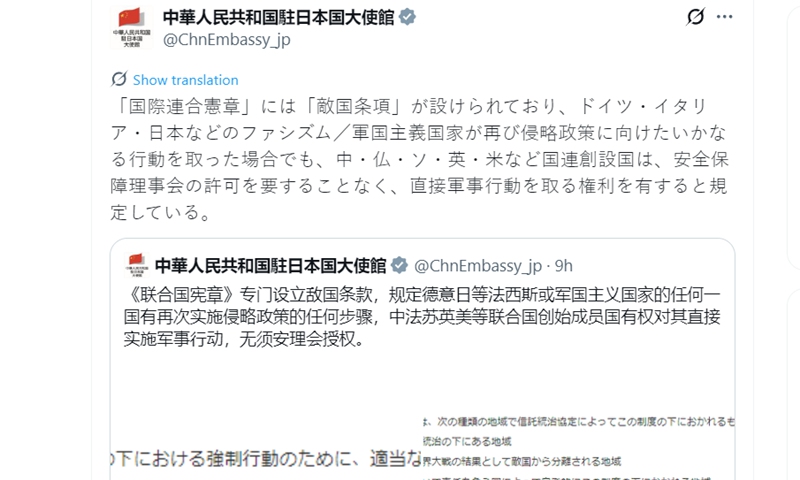
Chinese Embassy in Japan cites UN Charter ‘enemy state clauses’ amid ongoing row due to Takaichi’s erroneous remarks

By Global Times Published: Nov 21, 2025 07:39 PM


Photo: Screenshot of Chinese embassy in Japan


Photo: Screenshot of Chinese embassy in Japan

Chinese Embassy in Japan on Friday published in both Chinese and Japanese language on X platform the United Nations (UN) Charter's "enemy state clauses," which allows founding members of the UN, including China, to take direct military action if any of the former enemy states of the World War II, including Japan, attempts to carry out a policy of aggression.

In the first post in Chinese, the embassy wrote: the Charter of the UN specifically includes the Enemy State Clauses, which stipulate that if any of the fascist or militarist states such as Germany, Italy and Japan takes any step to re-implement an aggressive policy, the founding member states of the UN including China, France, the Soviet Union, the UK and the US shall be entitled to take direct military actions against it, without the authorization of the UN Security Council.

Three pictures of the Japanese version of the UN Charter Articles 53, 77 and 107 were attached with the Chinese language post.

The second was a repost in Japanese language of the first post.

The posts were released amid recent China-Japan diplomatic row due to Japanese Prime Minister Sanae Takaichi's claim at a Diet meeting on November 7 that the Chinese mainland's "use of force on Taiwan" could constitute a "survival-threatening situation" for Japan. Takaichi refused to retract her remarks, implying the possibility of armed intervention in the Taiwan Straits, according to Japanese media reports.

Regarding Takaichi's erroneous remarks on China's Taiwan region, China's Ministry of Foreign Affairs has over the past week repeatedly addressed the issue and made stern warnings, urging the Japanese side to retract the remarks.

Global Times


Why China sent letter to UN chief over Takaichi's erroneous remarks on Taiwan


China 19:39, 22-Nov-2025

CGTN

1763875282730.jpeg


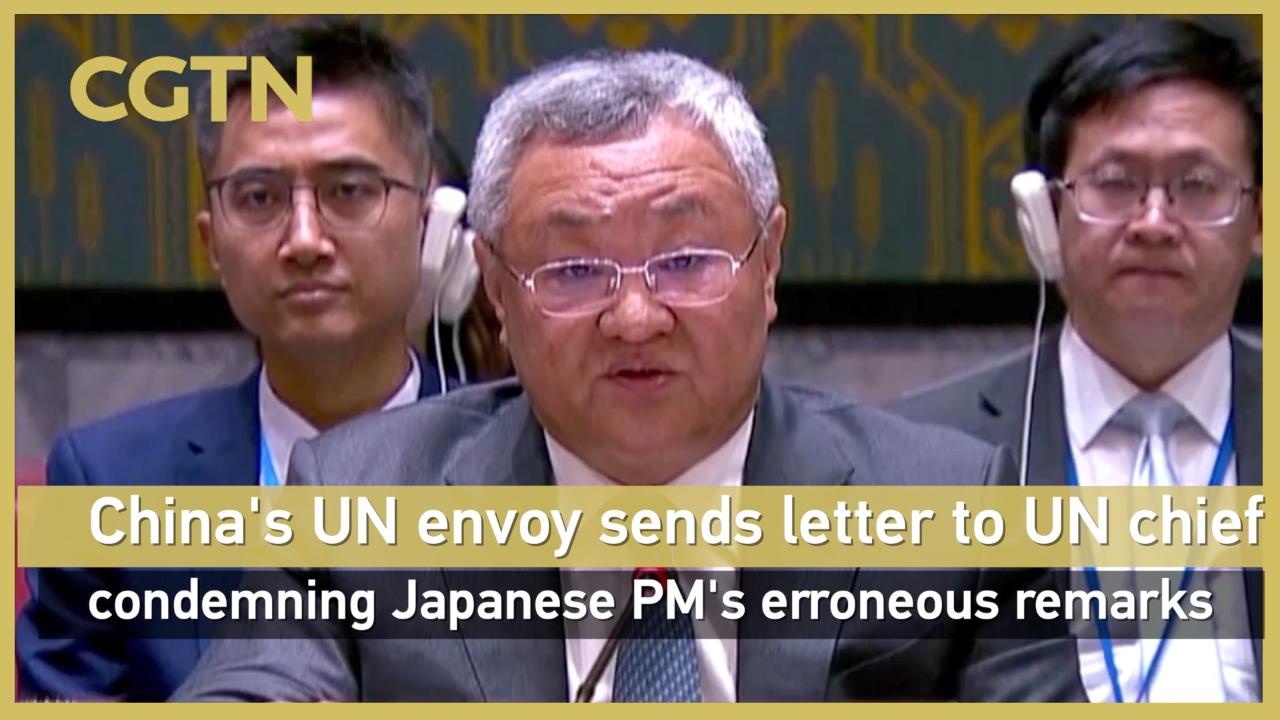
Fu Cong, China's Permanent Representative to the United Nations, has submitted a letter to UN Secretary-General António Guterres elaborating on the Chinese government's position regarding the erroneous remarks on China made by Japanese Prime Minister Sanae Takaichi.

Why did China send this letter? What are China's political considerations, and what is China seeking to achieve? CGTN interviewed Wang Yiwei, Jean Monnet Chair professor and professor at the School of International Relations at Renmin University of China, and Lyu Yaodong, research professor of the Institute of Japanese Studies at the Chinese Academy of Social Sciences, for their insights.

What are the key points in the letter?

Wang explained that the Chinese ambassador highlighted three points in the letter:

First, Japan is a defeated country of World War II and does not possess collective self-defense rights.

Second, under the UN Charter, China's sovereignty and territorial integrity should be protected. The Japanese prime minister's threat to intervene militarily in China's Taiwan region constitutes a severe infringement on China's sovereignty and territory.

Third, China can invoke the "enemy State" clauses in the UN Charter, meaning that if Japan uses force over Taiwan, China could launch a counterattack in accordance with international law.

Why did China send the letter to the UN chief?

Lyu said Fu's letter to the UN secretary-general is primarily intended to point out that Takaichi's remarks on Taiwan violate international law and the norms of international relations. He noted that as a defeated nation in World War II, the UN Charter explicitly prohibits Japan from possessing collective self-defense rights. However, Japan has recently claimed that "a Taiwan contingency is a Japan contingency" and linked it to the exercise of collective self-defense – a blatant violation of the UN Charter.

Lyu added that the Charter's "enemy State" clauses contain clear provisions for responding to any renewed acts of aggression or use of force by former Axis powers. These provisions are determined by the historical mission and nature of the United Nations itself, which was established in the context of the victory in the World Anti-Fascist War.

What is China's core demand?

Lyu explained that China's aim is to make clear that if Japan – an aggressor state during World War II – moves toward rearmament in ways that threaten peace and security in East Asia and globally, it must be constrained by the international legal framework established by the UN Charter after World War II.

Wang echoed this view, saying China's core objective is to reaffirm Japan's identity as a defeated country in World War II and to emphasize that if Japan intervenes militarily in the Taiwan Strait, China can invoke the "enemy State" clauses in the UN Charter at any time – a response that would be both reasonable and lawful.

"China is sending a message to the international community: if Japan gets militarily involved in the Taiwan question, China would have justified and legitimate grounds to counterattack," Wang said.

Why circulate the letter to all UN member states?

"Distributing the letter to all UN member states serves primarily as a warning to Japan not to act rashly, not to rearm and not to undermine world peace," Lyu said.

He added that the letter also aims to make the international community aware that Japan is already moving to erode the constraints of its pacifist constitution, passing domestic laws to lift restrictions on collective self-defense and developing offensive weapons.

"Japan has already been taking steps to prepare and test for potential future military action," Lyu warned, adding that recent attempts to revise the three non-nuclear principles and relax the rules on transferring defense equipment are clear signals.

He said that for a country that has long portrayed itself as following a post-war pacifist path, now seeking to break out of its Pacifist Constitution, becoming a country capable of waging war and even issuing military threats is deeply destabilizing for East Asia and global peace.

"We must use this letter to the UN to alert the international community that Japan, as a defeated aggressor of World War II, is rearming and making reckless threats of force," Lyu said.


Last edited:
That’s misleading.
The UN charter mentions “enemy states” but Japan is not mentioned anywhere in the charter.
From the legal, Japan is a UN member and as such it is not an enemy state. China normalized relationship to Japan and as such China doesn’t see Japan as “enemy”.
The clause “enemy state” was created during the war and shall not apply after the war.
You are the one who is misleading. The UN Charter clearly identifies enemy countries as Japan, Germany, Italy, and other defeated nations.

Germany, Italy and other defeated countries can be supervised by France, Britain, the United States and Russia, and China can not care. However, China will seriously supervise Japan's behavior and fulfill China's obligations as a major victor and a P5 member of the United Nations.
 
  • Like
Reactions: ety
Chinese Embassy in Japan cites UN Charter ‘enemy state clauses’ amid ongoing row due to Takaichi’s erroneous remarks

By Global Times Published: Nov 21, 2025 07:39 PM


Photo: Screenshot of Chinese embassy in Japan


Photo: Screenshot of Chinese embassy in Japan

Chinese Embassy in Japan on Friday published in both Chinese and Japanese language on X platform the United Nations (UN) Charter's "enemy state clauses," which allows founding members of the UN, including China, to take direct military action if any of the former enemy states of the World War II, including Japan, attempts to carry out a policy of aggression.

In the first post in Chinese, the embassy wrote: the Charter of the UN specifically includes the Enemy State Clauses, which stipulate that if any of the fascist or militarist states such as Germany, Italy and Japan takes any step to re-implement an aggressive policy, the founding member states of the UN including China, France, the Soviet Union, the UK and the US shall be entitled to take direct military actions against it, without the authorization of the UN Security Council.

Three pictures of the Japanese version of the UN Charter Articles 53, 77 and 107 were attached with the Chinese language post.

The second was a repost in Japanese language of the first post.

The posts were released amid recent China-Japan diplomatic row due to Japanese Prime Minister Sanae Takaichi's claim at a Diet meeting on November 7 that the Chinese mainland's "use of force on Taiwan" could constitute a "survival-threatening situation" for Japan. Takaichi refused to retract her remarks, implying the possibility of armed intervention in the Taiwan Straits, according to Japanese media reports.

Regarding Takaichi's erroneous remarks on China's Taiwan region, China's Ministry of Foreign Affairs has over the past week repeatedly addressed the issue and made stern warnings, urging the Japanese side to retract the remarks.

Global Times


Why China sent letter to UN chief over Takaichi's erroneous remarks on Taiwan


China 19:39, 22-Nov-2025

CGTN

1763875282730.jpeg


Fu Cong, China's Permanent Representative to the United Nations, has submitted a letter to UN Secretary-General António Guterres elaborating on the Chinese government's position regarding the erroneous remarks on China made by Japanese Prime Minister Sanae Takaichi.

Why did China send this letter? What are China's political considerations, and what is China seeking to achieve? CGTN interviewed Wang Yiwei, Jean Monnet Chair professor and professor at the School of International Relations at Renmin University of China, and Lyu Yaodong, research professor of the Institute of Japanese Studies at the Chinese Academy of Social Sciences, for their insights.

What are the key points in the letter?

Wang explained that the Chinese ambassador highlighted three points in the letter:

First, Japan is a defeated country of World War II and does not possess collective self-defense rights.

Second, under the UN Charter, China's sovereignty and territorial integrity should be protected. The Japanese prime minister's threat to intervene militarily in China's Taiwan region constitutes a severe infringement on China's sovereignty and territory.

Third, China can invoke the "enemy State" clauses in the UN Charter, meaning that if Japan uses force over Taiwan, China could launch a counterattack in accordance with international law.

Why did China send the letter to the UN chief?

Lyu said Fu's letter to the UN secretary-general is primarily intended to point out that Takaichi's remarks on Taiwan violate international law and the norms of international relations. He noted that as a defeated nation in World War II, the UN Charter explicitly prohibits Japan from possessing collective self-defense rights. However, Japan has recently claimed that "a Taiwan contingency is a Japan contingency" and linked it to the exercise of collective self-defense – a blatant violation of the UN Charter.

Lyu added that the Charter's "enemy State" clauses contain clear provisions for responding to any renewed acts of aggression or use of force by former Axis powers. These provisions are determined by the historical mission and nature of the United Nations itself, which was established in the context of the victory in the World Anti-Fascist War.

What is China's core demand?

Lyu explained that China's aim is to make clear that if Japan – an aggressor state during World War II – moves toward rearmament in ways that threaten peace and security in East Asia and globally, it must be constrained by the international legal framework established by the UN Charter after World War II.

Wang echoed this view, saying China's core objective is to reaffirm Japan's identity as a defeated country in World War II and to emphasize that if Japan intervenes militarily in the Taiwan Strait, China can invoke the "enemy State" clauses in the UN Charter at any time – a response that would be both reasonable and lawful.

"China is sending a message to the international community: if Japan gets militarily involved in the Taiwan question, China would have justified and legitimate grounds to counterattack," Wang said.

Why circulate the letter to all UN member states?

"Distributing the letter to all UN member states serves primarily as a warning to Japan not to act rashly, not to rearm and not to undermine world peace," Lyu said.

He added that the letter also aims to make the international community aware that Japan is already moving to erode the constraints of its pacifist constitution, passing domestic laws to lift restrictions on collective self-defense and developing offensive weapons.

"Japan has already been taking steps to prepare and test for potential future military action," Lyu warned, adding that recent attempts to revise the three non-nuclear principles and relax the rules on transferring defense equipment are clear signals.

He said that for a country that has long portrayed itself as following a post-war pacifist path, now seeking to break out of its Pacifist Constitution, becoming a country capable of waging war and even issuing military threats is deeply destabilizing for East Asia and global peace.

"We must use this letter to the UN to alert the international community that Japan, as a defeated aggressor of World War II, is rearming and making reckless threats of force," Lyu said.


Yes but that’s ambiguous.
One, Japan is not explicitly mentioned in the enemy list.
Two, the term “enemy clause” defines the “signatory of the present charter”. The term “present” is important. It does not say “past”. Japan is signatory to the present UN, so China and the rest of the world.
If you go to a court you will lose.
 
Yes but that’s ambiguous.
One, Japan is not explicitly mentioned in the enemy list.
Two, the term “enemy clause” defines the “signatory of the present charter”. The term “present” is important. It does not say “past”. Japan is signatory to the present UN, so China and the rest of the world.
Did you carefully read my previous post ? Here I quote the extract:

the first post in Chinese, the embassy wrote: the Charter of the UN specifically includes the Enemy State Clauses, which stipulate that if any of the fascist or militarist states such as Germany, Italy and Japan takes any step to re-implement an aggressive policy, the founding member states of the UN including China, France, the Soviet Union, the UK and the US shall be entitled to take direct military actions against it, without the authorization of the UN Security Council.
 
Did you carefully read my previous post ? Here I quote the extract:

the first post in Chinese, the embassy wrote: the Charter of the UN specifically includes the Enemy State Clauses, which stipulate that if any of the fascist or militarist states such as Germany, Italy and Japan takes any step to re-implement an aggressive policy, the founding member states of the UN including China, France, the Soviet Union, the UK and the US shall be entitled to take direct military actions against it, without the authorization of the UN Security Council.
That’s China interpretation. You can argue that way or other way. But not everyone follows your interpretation. I read your post I read UN charter full text.
 

Users who are viewing this thread

Pakistan Defence Latest

Country Watch Latest

Latest Posts

Back
Top