
Navigation
Install the app
How to install the app on iOS
Follow along with the video below to see how to install our site as a web app on your home screen.
Note: This feature may not be available in some browsers.
More options
Style variation
You are using an out of date browser. It may not display this or other websites correctly.
You should upgrade or use an alternative browser.
You should upgrade or use an alternative browser.
Why Japan Can’t Produce Another Sony | AB Explained
- Thread starter Hamartia Antidote
- Start date
More options
Who Replied?
Hamartia Antidote
Elite Member
- Thread starter
- #2
So one of the big changes that added that last straw to Japan Inc's fate was the switch to digital music. Where the tiny Apple ipod with no moving parts basically wiped out what was left of Japan's HiFi electronic equipment makers. Those makers already were hit hard when stereo TV became the norm and the need to plug sound through a HiFi system was not needed.
Sam6536
Registered Member

Sony is still massive in audio industry though. I recently bought their ULT Wear headphones, they are great!So one of the big changes that added that last straw to Japan Inc's fate was the switch to digital music. Where the tiny Apple ipod with no moving parts basically wiped out what was left of Japan's HiFi electronic equipment makers. Those makers already were hit hard when stereo TV became the norm and the need to plug sound through a HiFi system was not needed.
They still dominate consumer audio products market.
Also for TVs Bravia is a reputed name alongside LG.
Hamartia Antidote
Elite Member
- Thread starter
- #4
Sony is still massive in audio industry though. I recently bought their ULT Wear headphones, they are great!
They still dominate consumer audio products market.
Also for TVs Bravia is a reputed name alongside LG.
The HiFi industry is a shell of its former self. In the past when walking into the electrics section of a store tvs were in the back while aisle after aisle of HiFi stacks and speakers were the norm in the middle with Denon/Yamaha/Okyno/Kenwood/Pioneer/Panasonic/Akai/JVC and numerous others grabbing you attention.
Now they are in the back in a corner while TVs and phones are going up and down the aisles.
Last edited:
冖_冖
Registered Member

Sony to hand off TV business to joint venture with China’s TCL
January 21, 2026 at 17:29 JST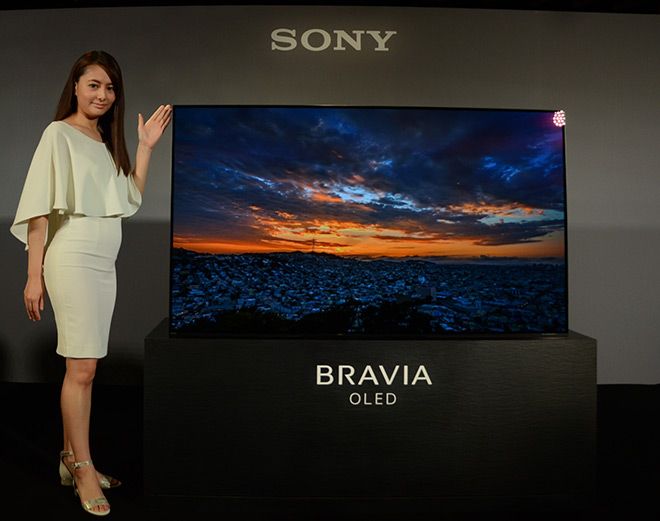
Sony Corp.’s Bravia television with an OLED screen in 2017 (Asahi Shimbun file photo)
Sony Group Corp. is spinning off its long-struggling television business, once a flagship of its consumer electronics offerings.
Its consumer electronics subsidiary Sony Corp. announced on Jan. 20 that it will transfer the TV and audio equipment business to a joint venture with major Chinese home appliance maker TCL Electronics Holdings Ltd.
The two companies, which reached a basic agreement on the partnership on the same day, plan to sign a final contract by the end of March.
TCL will own 51 percent of the venture while Sony will hold the remainder. Operations are expected to begin in April 2027.
Sony has marketed its televisions under the Bravia brand. Both Sony and Bravia names will continue to appear on the new company's products.
The joint venture will be responsible for the entire process on a global scale, from product development and design to manufacturing and sales.
With Sony carving out its TV business, Panasonic Holdings Corp. will be the only Japanese company still manufacturing televisions in-house, aside from Sharp Corp., which was acquired by Taiwan’s Hon Hai Precision Industry Co.
In Japan, domestic TV manufacturers have been fighting an uphill battle against Chinese rivals.
According to the BCN Research Institute, Chinese-affiliated companies such as TCL and Hisense Group, which acquired Toshiba Corp.’s TV business, for the first time accounted for more than half of domestic unit sales of flat-panel televisions in 2024.
Sony’s share was less than 10 percent.
Sony first released a television in 1960. Eight years later, it rolled out the Trinitron cathode-ray tube televisions, which became a sensation for their high picture quality.
Later, thin-screen models also proved popular, establishing televisions as one of Sony’s flagship consumer electronics offerings.
But since the 2000s, the company has lost ground amid intense price competition with overseas rivals, particularly from China and South Korea.
Revenue from the TV business fell to 564 billion yen ($3.56 billion) in fiscal 2024, down nearly 10 percent from the previous year.
Sales of the consumer electronics operations, which include televisions, accounted for less than 20 percent of Sony Group’s overall revenue.
The group is marking its 80th anniversary this year, and has shifted its focus toward entertainment sectors, such as games, films and music, in recent years.
These businesses now account for about 60 percent of the company’s total revenue.

Watandar
Trusted Member

I remember "It's a Sony" TV ads from the 90s, when a Sony television would be priced $100 more than all other brands. Japanese electronic makers stopped innovating and stagnated.
Sony to hand off TV business to joint venture with China’s TCL
January 21, 2026 at 17:29 JST
Sony Corp.’s Bravia television with an OLED screen in 2017 (Asahi Shimbun file photo)
Sony Group Corp. is spinning off its long-struggling television business, once a flagship of its consumer electronics offerings.
Its consumer electronics subsidiary Sony Corp. announced on Jan. 20 that it will transfer the TV and audio equipment business to a joint venture with major Chinese home appliance maker TCL Electronics Holdings Ltd.
The two companies, which reached a basic agreement on the partnership on the same day, plan to sign a final contract by the end of March.
TCL will own 51 percent of the venture while Sony will hold the remainder. Operations are expected to begin in April 2027.
Sony has marketed its televisions under the Bravia brand. Both Sony and Bravia names will continue to appear on the new company's products.
The joint venture will be responsible for the entire process on a global scale, from product development and design to manufacturing and sales.
With Sony carving out its TV business, Panasonic Holdings Corp. will be the only Japanese company still manufacturing televisions in-house, aside from Sharp Corp., which was acquired by Taiwan’s Hon Hai Precision Industry Co.
In Japan, domestic TV manufacturers have been fighting an uphill battle against Chinese rivals.
According to the BCN Research Institute, Chinese-affiliated companies such as TCL and Hisense Group, which acquired Toshiba Corp.’s TV business, for the first time accounted for more than half of domestic unit sales of flat-panel televisions in 2024.
Sony’s share was less than 10 percent.
Sony first released a television in 1960. Eight years later, it rolled out the Trinitron cathode-ray tube televisions, which became a sensation for their high picture quality.
Later, thin-screen models also proved popular, establishing televisions as one of Sony’s flagship consumer electronics offerings.
But since the 2000s, the company has lost ground amid intense price competition with overseas rivals, particularly from China and South Korea.
Revenue from the TV business fell to 564 billion yen ($3.56 billion) in fiscal 2024, down nearly 10 percent from the previous year.
Sales of the consumer electronics operations, which include televisions, accounted for less than 20 percent of Sony Group’s overall revenue.
The group is marking its 80th anniversary this year, and has shifted its focus toward entertainment sectors, such as games, films and music, in recent years.
These businesses now account for about 60 percent of the company’s total revenue.
nahtanbob
Elite Member
The truth is most of Sony is a backward-looking engineering culture. The Discman, Walkman, and PlayStation were anomalies to the Sony culture.
Hamartia Antidote
Elite Member
- Thread starter
- #8
I remember "It's a Sony" TV ads from the 90s, when a Sony television would be priced $100 more than all other brands. Japanese electronic makers stopped innovating and stagnated.
Well in the 80's and early 90's they were the "go to" company for consumer electronics.
I had a 27inch Sony Trinitron XBR Stereo TV in the 1980s and it was awesome.
Also had a Sony CDP CD player too in the late 1980's.
Decent sounding stereo TV sank Japan inc. No need to buy a hiFi set to watch TV with good sound anymore. Older tvs had terrible sound.

Beijingwalker
VIP Member
Chinese brands seize nearly 60% of Japan TV market as Sony shifts to TCL
Published 2026.02.20. 08:27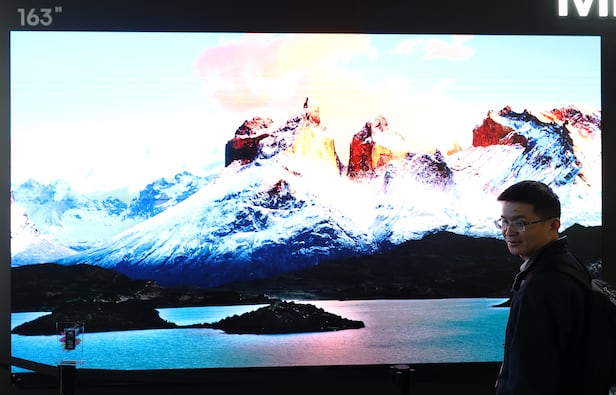
A 163-inch micro LED TV is on display at the booth of the Chinese corporations Hisense at the Las Vegas Convention Center (LVCC) in Nevada during CES. /Courtesy of Yonhap News Agency
As Japanese home appliance corporations that once dominated the global TV market have one after another abandoned production, the share of Chinese-affiliated corporations in Japan has neared 60%.
According to the Sankei Shimbun on the 19th, with Sony Group recently deciding to hand over leadership of its TV business to a joint venture with TCL of China, the share of Chinese-affiliated TVs in Japan is expected to surge from the 50% range to 60%.
Currently, No. 1 in Japan's TV market is Regza (26.0%, 2025 Japan market share), established after China's Hisense acquired Toshiba's TV institutional sector.
Adding the shares of Hisense's own brand (16.6%) and TCL (10.2%) shows that more than half of the Japanese market is already under Chinese-affiliated capital.
With even Sony (8.4%) effectively stepping back from in-house production, Panasonic Holdings (8.4%) has become the only major Japanese appliance maker still producing its own TVs.
Japanese corporations came to dominate the global market in the 1960s with cathode-ray tube TVs and Sony's "Trinitron."
But after the 2011 switch to terrestrial digital broadcasting, they began to decline under price competition.
At the time, Japanese companies focused on volume-driven, low-margin market share battles, but later lost ground to Korean corporations such as Samsung Electronics and to Chinese corporations competing on low prices, causing profitability to deteriorate rapidly.
Eventually, in 2012 Hitachi Ltd. halted TV production in Japan, in 2018 Toshiba sold its TV business to Hisense, and in 2024 Mitsubishi Electric ended sales.
Japanese appliance makers are now shifting their business structures from consumer electronics such as TVs to higher-revenue areas such as digital solution services in infrastructure.
Experts said, "For Japanese consumers, the 'Japanese brand' may remain, but in practical terms a structure in which Chinese-affiliated products dominate the market will become entrenched."

Chinese brands seize nearly 60% of Japan TV market as Sony shifts to TCL
Chinese brands seize nearly 60% of Japan TV market as Sony shifts to TCL
 biz.chosun.com
Beijingwalker
VIP Member
Also for TVs Bravia is a reputed name alongside LG.
TCL overtakes Samsung in December global TV shipments
2026.02.20 11:00:01
Chinese TV maker TCL surpassed South Korea‘s Samsung Electronics in global TV shipments in December, taking the top spot for the month, according to market data.
Counterpoint Research’s latest Global Monthly TV Tracker showed Thursday that TCL captured a 16 percent share of global TV shipments in December, ranking first. Shipments rose 10 percent from a year earlier, driven by strong growth in Asia-Pacific, China, and the Middle East and Africa.
Samsung’s share stood at 13 percent, slipping to second place after holding the lead from January through November last year. Although its December shipments increased 8 percent year on year, its market share fell 4 percentage points from the previous month. Samsung recorded solid growth in North and Latin America but posted sharper declines in Western Europe and the Middle East and Africa. For the fourth quarter as a whole, however, Samsung’s shipments rose 2 percent from a year earlier, outpacing TCL.
Hisense ranked third, with December shipments down 23 percent year on year. While it maintained its No. 1 position in China, it could not offset a broader market slowdown there, where shipments fell 18 percent over the same period.
On a full-year basis, Samsung retained the top position in 2025 with a 15 percent share of the global market. TCL followed with 13 percent, Hisense with 12 percent, and LG Electronics with 9 percent. Analysts say the narrowing gap with Chinese rivals could pose a growing threat to Samsung.
Bob O’Brien, research director at Counterpoint Research, said TCL has steadily expanded its market share over several months, with a year-end surge in shipments enabling it to overtake Samsung in December. “Although it was just one month, TCL continues to post sustained shipment growth year on year, while Samsung’s performance appears relatively flat,” he said.
He added that if TCL strengthens its presence in the premium segment through cooperation with Sony, it could become a more formidable competitor to Samsung in the future.


Beijingwalker
VIP Member
You still live in the 1980's, at least your mind still does.Well in the 80's and early 90's they were the "go to" company for consumer electronics.
I had a 27inch Sony Trinitron XBR Stereo TV in the 1980s and it was awesome.
Also had a Sony CDP CD player too in the late 1980's.
Decent sounding stereo TV sank Japan inc. No need to buy a hiFi set to watch TV with good sound anymore. Older tvs had terrible sound.
Hamartia Antidote
Elite Member
- Thread starter
- #12
You still live in the 1980's, at least your mind still does.
LOL! This is coming from a nation who is completely obsessed with Japan's military walking their streets over 80+ years ago. Just let it go dude..everybody from that time is dead.
Your nation still lives in the 1930's, at least your minds still do.
Beijingwalker
VIP Member
No one obsessed with Japan, if you mean Japan's unrepentance over the WW2, Koreans remember that more than Chinese. What I mean is your old stereotypes are so detached from today's world now.LOL! This is coming from a nation who is completely obsessed with Japan's military walking their streets over 80+ years ago. Just let it go dude..everybody from that time is dead.
Your nation still lives in the 1930's, at least your minds still do.
Beijingwalker
VIP Member
Those days were long gone.I remember "It's a Sony" TV ads from the 90s, when a Sony television would be priced $100 more than all other brands. Japanese electronic makers stopped innovating and stagnated.
Sam6536
Registered Member
I know I was just stating that among the Legacy TV brands LG and Sony have a good image.TCL overtakes Samsung in December global TV shipments
2026.02.20 11:00:01
Chinese TV maker TCL surpassed South Korea‘s Samsung Electronics in global TV shipments in December, taking the top spot for the month, according to market data.
Counterpoint Research’s latest Global Monthly TV Tracker showed Thursday that TCL captured a 16 percent share of global TV shipments in December, ranking first. Shipments rose 10 percent from a year earlier, driven by strong growth in Asia-Pacific, China, and the Middle East and Africa.
Samsung’s share stood at 13 percent, slipping to second place after holding the lead from January through November last year. Although its December shipments increased 8 percent year on year, its market share fell 4 percentage points from the previous month. Samsung recorded solid growth in North and Latin America but posted sharper declines in Western Europe and the Middle East and Africa. For the fourth quarter as a whole, however, Samsung’s shipments rose 2 percent from a year earlier, outpacing TCL.
Hisense ranked third, with December shipments down 23 percent year on year. While it maintained its No. 1 position in China, it could not offset a broader market slowdown there, where shipments fell 18 percent over the same period.
On a full-year basis, Samsung retained the top position in 2025 with a 15 percent share of the global market. TCL followed with 13 percent, Hisense with 12 percent, and LG Electronics with 9 percent. Analysts say the narrowing gap with Chinese rivals could pose a growing threat to Samsung.
Bob O’Brien, research director at Counterpoint Research, said TCL has steadily expanded its market share over several months, with a year-end surge in shipments enabling it to overtake Samsung in December. “Although it was just one month, TCL continues to post sustained shipment growth year on year, while Samsung’s performance appears relatively flat,” he said.
He added that if TCL strengthens its presence in the premium segment through cooperation with Sony, it could become a more formidable competitor to Samsung in the future.
Chinese offering from TCL/Xiaomi are good value for money offerings. It forces other OEMs to price their own products competitively. Competition is always good. Before mainstream Chinese phone brands and TVs entered India the price to performance ratio was on the higher side.
Users who are viewing this thread
Total: 2 (members: 0, guests: 2)
Pakistan Defence Latest
-
-

-

-
PA Options against Indian Armour - ATGMs on MANPADS & Attack Gunship Helicopter - News & Discussions (7 Viewers)
- Latest: Be dazzled
-

Country Watch Latest
-

-
 Iran - Israel/US War: Israel-US declare war on Iran, Iran responds (131 Viewers)
- Latest: the vicious kind
-
 Localising Power: Saudi Defence Industrialisation as Strategic Bargain (12 Viewers)
- Latest: Pakistani Dragon
-
TF-X / KAAN / Hürjet Turkish Fighter & Trainer Aircrafts News & Discussions (17 Viewers)
- Latest: ChineseTiger1986
-
Latest Posts
-
-
-
Iran - Israel/US War: Israel-US declare war on Iran, Iran responds (131 Viewers)
- Latest: the vicious kind
-
France confirms shooting down of Indian Rafale and failure of SPECTRA: What future for French air superiority? (16 Viewers)
- Latest: Yasser76
-
Localising Power: Saudi Defence Industrialisation as Strategic Bargain (12 Viewers)
- Latest: Pakistani Dragon