Iran - Israel/US War: Israel-US declare war on Iran, Iran responds

New Updates:

To view this content we will need your consent to set third party cookies.
For more detailed information, see our cookies page.


To view this content we will need your consent to set third party cookies.
For more detailed information, see our cookies page.

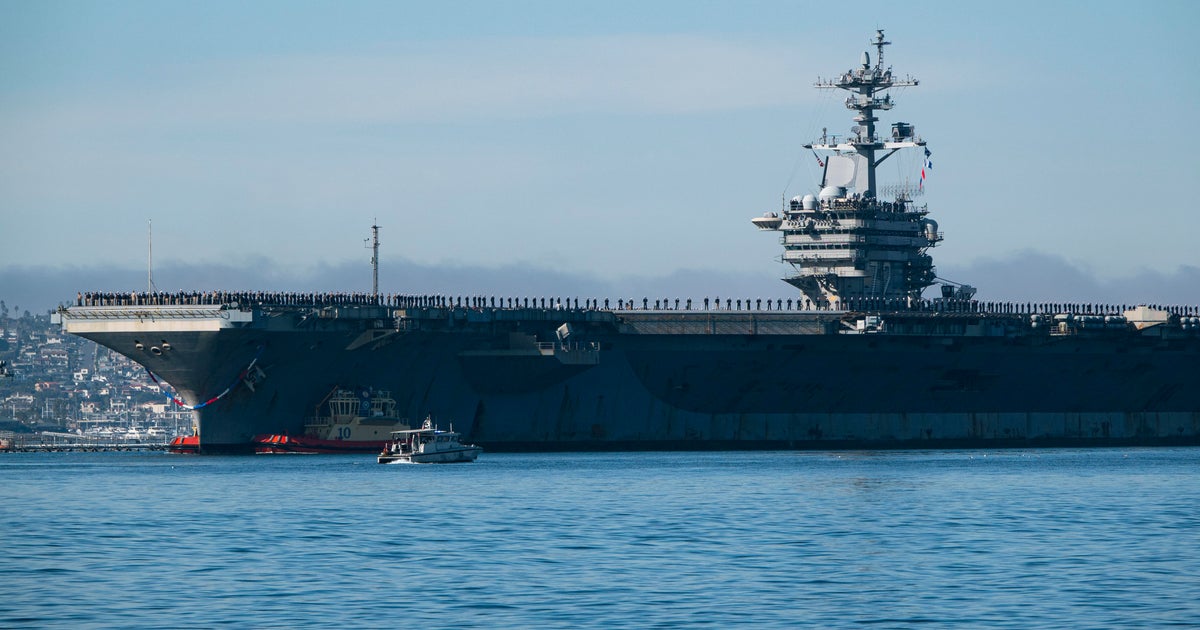
whats the story behind USS Abraham lincoln hit? when was this claimed and what sort if ASBM was used ? any details on this story ?
 
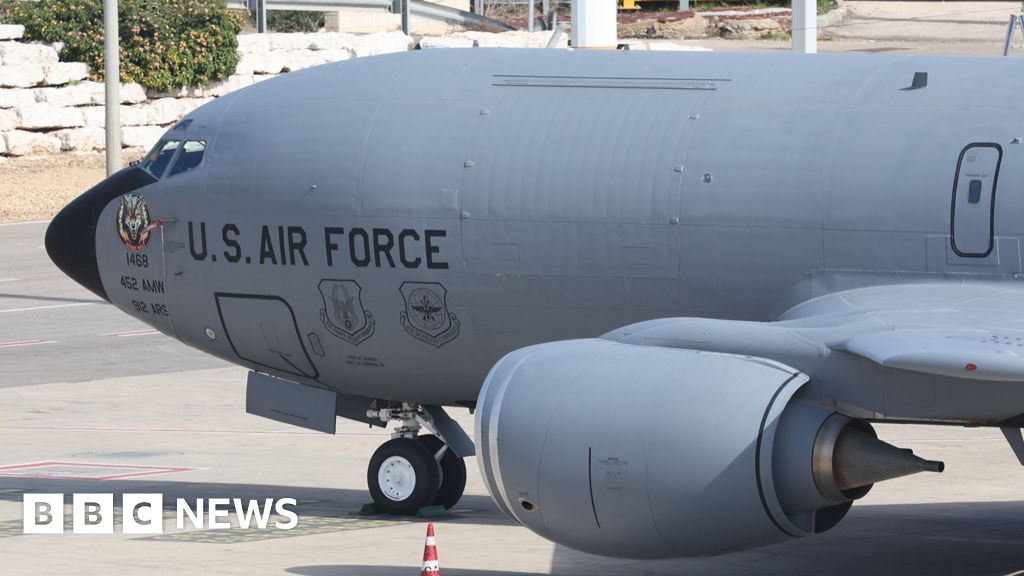
Iranians are going after Air fuel tankers... You will see next few days.. their proxies in Iraq and Lebanon will go after them. Then other route is either from uae Saudi Arabia, Qatar, Kuwait or Pakistan,. Mostly in Arab usa air bases are not functional anymore... This will put lot of stress on Israeli and American Air forces. What happened last night with the Air fuel tankers it is a game-changing.
Just had a call with one the pilots there. The fighters from Israel and USA fly lower than the tankers, all the way to Tehran and back with little worry. The tankers are at the back, and they think it was an aerial collision. Both tankers were at the same altitude, and could have been shot down together if it were a SAM or something similar.

Pakistan isn't allowing any Israeli and American jets to cross into their airspace. They have their Arab allies allowing for airspace usage.


There is a chance a few Kuwaiti Typhoons might be damaged or destroyed....
 
To view this content we will need your consent to set third party cookies.
For more detailed information, see our cookies page.


We love seeing your face, but we would prefer it stayed attached to your neck. You are a brave man, and you have my respect, but being a martyr is a one time deal that Iran is not ready for right now. Stop trying to be a hero and start being a survivor and taking precautions! Your presence and leadership is the only morale boost Iran actually needa!
 
1773398636218.png
1773398676216.png
1773398710323.png
The data covers activity from February 28th to March 12th. During this period, we observed the following key metrics:

  • Total Missiles Fired: 2,495
  • Total Drones Launched: 2,795
  • Total Barrages from Lebanon: 261
  • Total Barrages from Iran: 196
  • Peak Activity Date: Monday, March 2nd, with 1,028 total combined incidents.

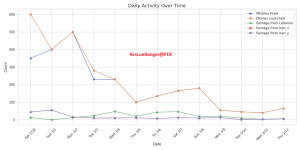
1. Daily Activity Over Time: This chart shows the trend for each activity type. You can see a significant spike in both missiles and drones between February 28th and March 2nd, followed by a general decline.

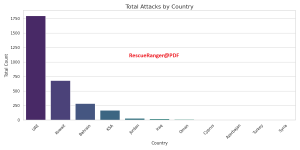
2. Total Attacks by Country: Based on the regional data, the UAE recorded the highest number of incidents (1,797), followed by Kuwait (682) and Bahrain (285).

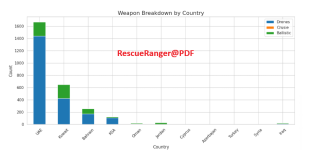
3. Weapon Breakdown by Country: This visualization breaks down the type of weapons used (Drones, Cruise, and Ballistic) for each country. Drones are the most frequently used weapon across almost all regions.


Summary of Regional Data


CountryDronesCruiseBallisticTotal
UAE1,43902291,797
Kuwait4250226682
Bahrain173086285
KSA110014170
Iraq12012

Insights

  • Trend Analysis: Activity was heaviest at the end of February and the beginning of March. By mid-March, daily counts for both missiles and drones dropped significantly (below 100 per day).
  • Regional Focus: The UAE and Kuwait account for the vast majority of the recorded incidents in the regional breakdown.
  • Weaponry: Drones appear to be the primary tool used, outnumbering ballistic missiles in most regions except for Jordan, where only ballistic incidents were recorded.


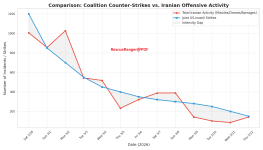
Comparative analysis with Joint US/Israeli Strikes vs Iran:
1773399365055.png

Analysis of Strike Data (Feb 28 – Mar 12)

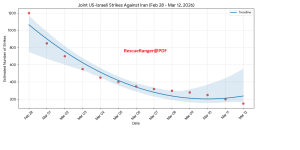
The campaign started with an unprecedented opening salvo. In the first 12 hours alone, nearly 900 strikes were recorded, targeting Iranian nuclear facilities, air defenses, and leadership compounds.

By March 12, cumulative reports from the Associated Press and sources indicated the total number of coalition airstrikes had surpassed 6,000.


DateEstimated StrikesKey Developments
Feb 281,200Opening wave; assassination of Supreme Leader Ali Khamenei.
Mar 2700Strikes on Hezbollah infrastructure in Lebanon to prevent escalation.
Mar 5400Second major wave targeting IRGC command centers.
Mar 12150Focus shifts to neutralizing naval assets near the Strait of Hormuz.


Trends and Observations


  • Initial Shock Phase: The highest concentration of strikes occurred between Feb 28 and March 2. This "decapitation" phase aimed to dismantle the Iranian command structure and nuclear capabilities immediately.
  • Sustained Attrition: After the initial week, the strike volume decreased as the coalition shifted toward precision targeting of mobile missile launchers and internal security facilities (like Basij bases).
  • The Trendline: As shown in the generated analysis, there is a clear negative exponential trend. This suggests that the coalition successfully neutralized many primary targets early on, transitioning from mass bombardment to specific "mopping up" operations by mid-March.
---
1773399746899.png
1773399787459.png

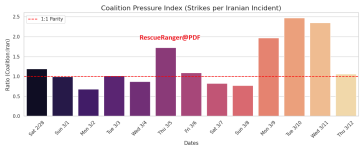
Dashboard Analysis: Comparison & Pressure Index

The data shows a clear pattern of "action and reaction" throughout the two-week period.

DateTotal Iranian ActivityCoalition StrikesPressure Ratio
Feb 281,0061,2001.19 (Coalition leads)
Mar 21,0287000.68 (Iran offensive peak)
Mar 101012502.48 (Coalition suppression)
Key Insights

Opening Parity (Feb 28 – Mar 1): The conflict began with massive volume on both sides. On February 28, the Coalition launched roughly 1.2 strikes for every 1 Iranian incident, indicating an immediate and aggressive counter-offensive.

Iranian Peak (March 2): Monday, March 2nd, saw the highest volume of Iranian activity (1,028 incidents). During this specific 24-hour window, Iranian barrages actually outpaced the number of reported Coalition counterstrikes (700), marking the most intense period of the offensive.

Suppression and Dominance (March 9 – March 12): As Iranian activity began to collapse due to attrition (dropping from over 1,000 daily incidents to fewer than 150), the Coalition maintained a high pressure.

On March 10, the Coalition was launching 2.5 strikes for every 1 Iranian launch, suggesting they had successfully gained air superiority and were systematically dismantling remaining infrastructure.

Pressure Index Trend: The second graph ("Coalition Pressure Index") highlights that while Iran had high volume early on, the Coalition's ability to sustain strikes relative to the incoming threat increased significantly as the conflict matured.


--
 
Last edited:
Well it is relevant because the Negotiator from America side Kushner is tied to the Alexander Brothers (Now convicted in New York) , and they Alexander Brothers are tied to Epstiene.

Trump Senior who started the war and Kushner are key players who started the war

Trump recently stated
"I started the war base on information I got from Kushner /Whitkoff and Ministry of War head Pete Hegseth
  • To view this content we will need your consent to set third party cookies.
    For more detailed information, see our cookies page.

The decision to start war is being questioned in USA


Note:
Kushner's past experience is selling condos , so how is he suddenly a negotiator for wars or no wars?

Little trash is just like whitekooff a buyer-seller, a cheater and bul
Interesting thread:

To view this content we will need your consent to set third party cookies.
For more detailed information, see our cookies page.

Were do you see 6 fingers ? Although I admit his gesture and look are really weird
 
These days every attack source should be proven before getting into an irreversible conclusion. There were lucas drone attacks to Oman before. Maybe a single or 2 lucas drone was sent there to drive Turkey in which in a real attack scenario it wont be 2 drones. Short range air defenses should be on high alert.

Continious Turkish awacs coverage around incirlik base is also necessary. It would alert about the trajectory-source of lucas or similar kamikaze drones much before they reach the target.
Another highly risky area is Kurecik radar installation. It is closer to Iran. Instead of a medium range ballistic missile a lucas drone swarm can be used by isreali proxies to make a false flag on that radar installation as if Iran attacked it. The radar can track the trajectory of ballistic missiles but it cannot track low flying drones from longer ranges.

Continious Turkish awacs coverage over that area would show the direction of incoming kamikaze drone swarms negating any attempt of a false flag. It is another risky area that needs more precautions in addition to the incirlik airbase.
 
View attachment 185467
View attachment 185468
View attachment 185469
The data covers activity from February 28th to March 12th. During this period, we observed the following key metrics:
  • Total Missiles Fired: 2,495
  • Total Drones Launched: 2,795
  • Total Barrages from Lebanon: 261
  • Total Barrages from Iran: 196
  • Peak Activity Date: Monday, March 2nd, with 1,028 total combined incidents.

  1. Daily Activity Over Time: This chart shows the trend for each activity type. You can see a significant spike in both missiles and drones between February 28th and March 2nd, followed by a general decline.
  2. Total Attacks by Country: Based on the regional data, the UAE recorded the highest number of incidents (1,797), followed by Kuwait (682) and Bahrain (285).
  3. Weapon Breakdown by Country: This visualization breaks down the type of weapons used (Drones, Cruise, and Ballistic) for each country. Drones are the most frequently used weapon across almost all regions.

Summary of Regional Data


CountryDronesCruiseBallisticTotal
UAE1,43902291,797
Kuwait4250226682
Bahrain173086285
KSA110014170
Iraq12012

Insights

  • Trend Analysis: Activity was heaviest at the end of February and the beginning of March. By mid-March, daily counts for both missiles and drones dropped significantly (below 100 per day).
  • Regional Focus: The UAE and Kuwait account for the vast majority of the recorded incidents in the regional breakdown.
  • Weaponry: Drones appear to be the primary tool used, outnumbering ballistic missiles in most regions except for Jordan, where only ballistic incidents were recorded.


Comparative analysis with Joint US/Israeli Strikes vs Iran:
View attachment 185473

Analysis of Strike Data (Feb 28 – Mar 12)

The campaign started with an unprecedented opening salvo. In the first 12 hours alone, nearly 900 strikes were recorded, targeting Iranian nuclear facilities, air defenses, and leadership compounds.

By March 12, cumulative reports from the Associated Press and sources indicated the total number of coalition airstrikes had surpassed 6,000.


DateEstimated StrikesKey Developments
Feb 281,200Opening wave; assassination of Supreme Leader Ali Khamenei.
Mar 2700Strikes on Hezbollah infrastructure in Lebanon to prevent escalation.
Mar 5400Second major wave targeting IRGC command centers.
Mar 12150Focus shifts to neutralizing naval assets near the Strait of Hormuz.


One wonders what UAE did to get all that attention, so much more than Qatar, and Bahrain ..

( one does agree with the UAE getting it in the neck a bit more than the others, but wonder what Iran's angle is. ).
 

Users who are viewing this thread

Pakistan Defence Latest

Back
Top