Iran shows the world the limits of US power
What the Iran crisis means for the future world order
Published 12 Mar, 2026 20:46 | Updated 13 Mar, 2026 05:52
By Timofey Bordachev, Program Director of the Valdai Club
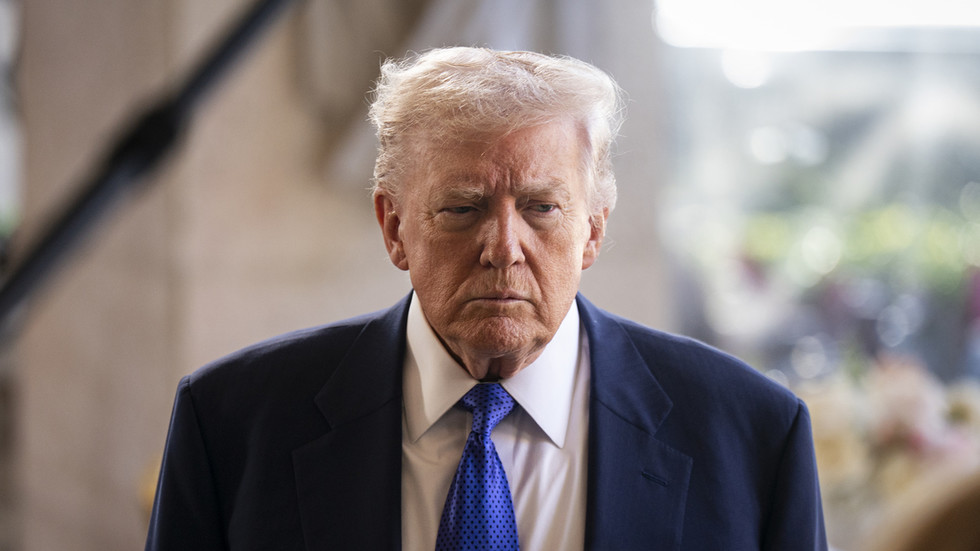
US President Donald Trump © Al Drago / Getty Images
Despite the optimism expressed in some quarters, it would be premature to declare that the American and Israeli military campaign against Iran has already stalled or that the crisis will soon be resolved through international mediation. The situation remains volatile, and the resilience of the Iranian state is still being tested. Yet even at this early stage, the conflict is raising deeper questions about the role the US will play in world politics once its latest attempt to restore global dominance runs its course.
The US is not about to disappear from international affairs. Scenarios of American collapse belong to the realm of fantasy. For Russia, China, India and other major powers, the real question is not whether the US will remain a central actor in global politics, but how it will fit into the evolving international order.
For Russia in particular, this issue carries special significance. The US remains the most powerful component of the Western world, with which Russia has historically maintained relations that are at once close and confrontational. Geography and history ensure that our strategic calculations will always take into account both Western Europe and America. Russia must therefore think carefully about how the US can be incorporated into a future balance of power that serves our own long-term interests.
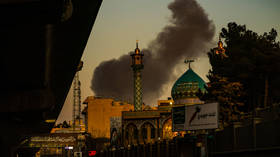
The events surrounding the recent attack on Iran may mark an important turning point. They have exposed the limits of American power in a world that is no longer willing or able to accept unilateral leadership. It remains unclear how long Iran can withstand sustained military pressure, what degree of assistance it will receive from external partners, and how long Washington itself is prepared to continue a campaign that appears to have exceeded its original expectations.
What is already visible, however, is a contradictory picture.
Read more
Is the Iran war the one America can’t win – and can’t end?
The Israeli leadership appears determined to press ahead to the end. By contrast, Donald Trump and members of his administration seem increasingly perplexed by the unexpected resilience of the Iranian state. At the same time, many American allies are visibly anxious about the consequences of the conflict. Perhaps most importantly, the war is already having serious repercussions for the global economy.
These economic pressures help explain why rumors are circulating that Washington may be quietly searching for mediators capable of opening a dialogue with Tehran.
In this turbulent environment, Russia has expressed support for the Iranian people and state, which it views as victims of an unprovoked attack. At the same time, Moscow must pursue policies that correspond to its own strategic interests. As one of the world’s major military powers, Russia is concerned above all with the overall balance of power in the international system, and with the unique place historically occupied within that system by the US.
To understand this position, one might use a medical analogy. The US resembles a neoplasm within the global political organism. Yet unlike in medicine, the existence of such a
“tumor” does not necessarily destroy the whole system. Instead, it becomes integrated into the organism’s development, occupying a special role.
The extraordinary position achieved by the US in the second half of the twentieth century was not simply the result of overwhelming superiority. It was also the product of very specific historical circumstances. Western Europe had been devastated by war, China was in a state of internal upheaval, and Soviet Russia had largely isolated itself from the rest of the world during its communist experiment. These conditions allowed the US to assume a position of leadership with remarkable confidence.
But this leadership was never the result of classical imperial conquest comparable to the Roman Empire or the empire of Genghis Khan. The US did not defeat its major rivals through decisive military victory. Rather, it emerged as the strongest actor at a moment when other powers were preoccupied with solving their own internal problems.
Read more
In Iran, the US has bitten off more than it can chew
In this sense, America became the
“last camel” in the caravan that suddenly found itself in the lead when others fell behind.
Today, however, the historical circumstances that enabled American predominance have largely disappeared. There are no longer objective reasons why other centers of power should remain behind. As a result, the US may eventually become a more normal participant in world politics rather than its dominant force.
The Iran crisis illustrates this shift. Even with its enormous accumulated wealth and military capabilities, the US cannot easily subdue a large and resilient state without escalating to the nuclear level – an option that remains unthinkable for all sides.
In that sense, Trump’s venture into Iran may serve an important historical purpose. It demonstrates to the world that attempts to restore the era of unchallenged American dominance are futile. This lesson is not only important for other countries; it is also vital for Americans themselves, who must eventually come to terms with the limits of their power and define a new role in international affairs.
Russia, which has participated in global politics for more than three centuries, understands these limits well. Most other major powers do as well. Only the US has never truly faced them.
For that reason, the painful lessons now being learned may ultimately prove beneficial.
Read more
The war on Iran could remake the world
At the same time, it is important to avoid apocalyptic thinking. The idea that weakening American dominance would inevitably lead to global chaos is largely a rhetorical device designed to preserve the existing order. A more balanced international system is both possible and, in many respects, desirable.
Russia’s own history illustrates this point. From the very beginning of the US as an independent state, Russia often used relations with America as an instrument for pursuing its own foreign policy objectives. In the 18th and 19th centuries, these objectives were closely linked to Russia’s rivalry with Britain. Later, the triangular relationships among Russia, Europe, and the US shaped the broader dynamics of international politics.
Today, new configurations are emerging. American pressure on both Europe and China may unintentionally contribute to the formation of a more balanced system in which no single power dominates the rest.
Such an outcome would correspond closely to Russia’s interests.
The international order that eventually emerges from the current period of upheaval will almost certainly be more diverse and complex than the one that preceded it. Wars and crises may accompany this transition, but they should not obscure the underlying transformation.
If the world passes through this period of adjustment without catastrophic conflict, the US will remain an important player in global politics – not because the world requires American leadership, but because other powers will continue to incorporate the US into their own strategic calculations.
In the future international system, America will still matter. Just not in the way it once did.
The US-Israel war with Iran raises deeper questions about Washington’s role in world politics and whether American dominance can survive in a multipolar era.

www.rt.com