r3alist
Elite Member


Just make sure you don't jump off the bridge at the end of your walk, your family needs you.
Sure, they do.
Best of health to your family.
Follow along with the video below to see how to install our site as a web app on your home screen.
Note: This feature may not be available in some browsers.
Just make sure you don't jump off the bridge at the end of your walk, your family needs you.
Question is what's the approach with least negative outcomes.No real good options for Pakistan here to be honest, damned if we do, damned if we dont. Pretty much sums up all the conversations on this thread...

Impossible when you consider who is the aggrieved party. Both Iran and GCC see themselves as victims.There needs to be extreme pressure applied to the gulfies to push for a ceasefire, they can stop this, diplomatic way is the best.

exactly just avoid it ,and focus on your countrySuing for peace is not so simple as people think. At best this will be another frozen conflict like India/Pak - Russia/Georgia etc etc....
For few dollars more, curse in the form of Zial Hul Haq. When destruction of this country started. Kalashnikov, heroin, religious extremism.Beautiful post.
You win the Internet todayexactly just avoid it ,and focus on your country

Here here, finally someone talking sense in this new world order we have woken up to.Oh for just a few hours for Palestinians to hide in safety and for us to send 6 MRV equipped nuke Shaheen missiles and solves the worlds problems in less then an hour....

The Kingdom has already funded our longest war against Afghanistan since the Kargil Conflict of May-June 1999.Pakistan will definitely help the KofSA. However, should we expect help if India attacks us (and it will definitely attack Pakistan) in future? We don't need their army/ airforce/ navy, but will KSA also coerce other GCC states (we know it can) to stop supplying oil to India?
KK culture didn't start with Zia, on contrary Zia had it contained, bhutto and her inability to contain the tribals is what caused this.For few dollars more, curse in the form of Zial Hul Haq. When destruction of this country started. Kalashnikov, heroin, religious extremism.
We hate to accept the reality.
Warm water churn been sold us by Zia so many times. But, Afghanistan war was revenge of Vietnam war.KK culture didn't start with Zia, on contrary Zia had it contained, bhutto and her inability to contain the tribals is what caused this.
Without making it too much of a history lesson:
The Taliban you see today or even the Taliban that existed in 1993 or even 2001 are not the original group that Pakistan supported.
Pakistan had its own interests beyond just protecting the muslims in Afghanistan and aiding the US.
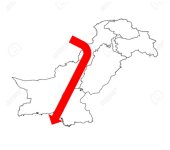
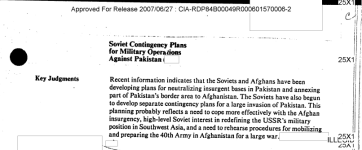
Pakistan had credible intelligence at that time that the Soviets intended to capture Afghanistan and then push into Pakistan to capture the ports in Karachi:
View attachment 187323
The Original group that Pakistan backed and supported were Seven Party Mujahideen Alliance formed in 1988.
Afghan's have and always will remain fractured - in 1988 when the leaders of the seven party alliance came to Peshawar - it was only due to their hatred of the Soviet Union.
These included: Hikmatyar, Rasul Sayyaf, Rabbani, Mojaddedi, Younus Khalis, Mohammed Nabi. These were the main six major groups that made up the Mujahideen Alliance.
The one person to keep these warring groups who were highly distrust of each other was Gen. Zia Ul Haq.
The plan was always to push the Soviet Union out of Afghanistan and establish a government in Kabul with these six at the helm- a government that would be a friend to Pakistan to the extent that Afghanistan and Pakistan would be twinned nations.
It is important to understand that these groups depended on Pakistan not just for training, guidance or military aid - they traded with Pakistan all their food and consumables even their clothes were made and shipped from Pakistan.
In 1988 there were some 150,000 Afghan Refugees residing on the Pakistani side of the border on a permanent basis - others were transient and travelled to and from. The Government of Pakistan even ran primary schools to educate the children of the refugees.
You must appreciate that an entire generation was being raised that spoke Urdu, Urdu became their second language.
By the end of 1988 it was clear that the Soviet Union had lost its campaign and would be forced out of Afghanistan.
The Afghan Alliance could practically taste victory - at this critical juncture Gen. Zia was martyred in an assassination.
A tragic event that would have severe and long lasting repercussions for not only Afghanistan and Pakistan but the entire region going forward.
Instantly Pakistan lost control and influence over the Afghan Alliance.
When Benazir Bhutto came to power - she was unknown to the Afghan Alliance, not only was she an unknown she was a woman and the Afghan warlords did not respect her, nor listen to any commands from Islamabad.
Bhutto despite the advice of her head of Intelligence decided to plan the battle lines - a battle that would have devastating consequences.
In 1989 enter (late) Gen. Hamid Gul - who led a failed last ditch attempt - to lead a campaign to attempt to capture Jalalabad - to establish a seat of power for the Afghan Alliance inside Afghanistan.
To control Jalalabad the Mujahidin would have remove Najibullah's power and government - The battle was a complete failure - the Afghan Mujahideen who were used to light and unconventional warfare faltered when having to use conventional tactics against a dug in and well trained opponent and took heavy losses - some 14,000 mujahedeen were killed in the battle of Jalalabad.
Following the failure of the Battle of Jalalabad - Bhutto replaced Gen. Hamid Gul as the DG ISI.
Now rudderless and nursing wounds - the Afghan Alliance turned on each other - blaming different leaders and even Islamabad for poor leadership.
Fastforward to 1992. It is a common misconception that Pakistan maintained control of the Mujahideen - by the summer of 1992 Pakistan has all but lost any control or influence over the Alliance. The Americans had stopped financing them, and the Shura based in Peshawar was a Shura in name only.
This was around the same time Pakistan was slapped with heavy sanctions due to its covert nuclear weapons program.
Najibullah had managed to maintain control of not just Kabul but all territory to the East and South of Kabul.
In the winter of 1992 Ahmed Shah Mehsud led his forces and after a brutal campaign which left most of Kabul resemble a ghost town - wrestled it from Najibullah's grasp.
This was a major disaster for Pakistan. You see Bhutto and her planners never saw Afghanistan for what it was a disparate nation full of tribes and clans who differentiate themselves based on ethnic lines, Pakistan under Bhutto had bet on Hikmatyat's forces within the Afghan Alliance to establish a Pashtun ethnic government that would be friendly to Pakistan.
They didn't count on Ahmed Shah Mehsud or any of the other ethnic groups such as the Uzbek's, Tajik's or the Hazars having any say in how Afghanistan would be governed.
From 92-1996 Ahmed Shah Mehsud and Hikmatyar controlled small parcels of Afghanistan - the rest of the country was a lawless chaotic land with small fiefdoms ruled by powerful warlords who controlled the drugs trade, smuggling rackets and human trafficking.
All the same time the flow of refugees into Pakistan was constant.
In between all this sometime in 93-94 a group of religious students in Kandahar banded together and decided to kill the local warlord who was oppressing the people of the area - This was the birth of the Taliban (Lit. Students) - since they were religious students they adopted the name Taliban.
So when people say Pakistan gave birth to the Taliban, they don't know the history of the region or the country in question.
Anyhow, one of these students quickly rose to prominence due to his charisma and courage - his name was Mullah Mohammed Omar. He was the first Amir and established an Islamic government in Kandahar.
By the end of 1996 the Taliban had Seized Kabul, Ahmed Shah Mehsud retreated to Panjshir and Hekmatyar escaped to Iran.
In 1997 witnessing the developments across the border, Pakistan became the first and only nation to recognise the Afghan Taliban regime. This was a diplomatic victory for Pakistan.
Due to this, the Afghan Taliban saw Pakistan extremely favourably. Between 1996 till 2001 Pakistan and Afghanistan enjoyed hospitable brotherly relations.
When people say the Afghan-Pakistan border is porus it is because Pakistan and Afghanistan enjoyed such cordial relations that at no time was Afghanistan seen as a threat that needed to be fenced in or kept in check.
It is prudent that I mention here, that as Afghanistan had NO economy, Pakistan not only provided transfer of food, crops, agricultural equipment, medicine, vehicles and general items but also paid the salaries of many commanders and men. This is often used as a stick to beat Pakistan with to say that Pakistan financed terrorism.
When in fact from 1997-2001 the Taliban were virtually unknown to the wider world - they were not a threat, the US had disengaged, Soviet Union had collapsed the cold war was over.
Now this is all great, but about about the Original SIX powerful warlords? where did they go?
Well they existed but they now distrusted Pakistan - harbouring resentment for the failure of Jalalabad and feeling that Pakistan had installed the Taliban in Afghanistan, and since Pakistan provided financial and diplomatic aid to the Taliban - both Hikmatyar and Mehsud among others used this support as evidence to their audience that "LOOK PAKISTAN WANTS TO RULE AFGHANISTAN THEY INSTALLED THE TALIBAN".
Mehsud and Hikmatyar were among the most vocal anti-Pakistani voices.
Afghan Taliban were basically illiterate people who only knew the Quran in its literal form, they had no experience of governing a nation and enforced an extreme brand of Islam - this was showcased to the world when they bombed and destroyed the statues in Bamyan earning global condemnation.
Whilst Pakistan maintained diplomatic relations with the Afghan Regime and supported them - they never interfered with how they managed the country - the human rights violations under the strict brand of Islamic governance in Afghanistan, caused many in Afghanistan to further distrust of Pakistan as "meddlers".
Pakistan kept advocating for Afghanistan managed to convince the Saudis and the UAE to recognise the Taliban as the government of Afghanistan.
Now lets fast forward to 1999 - Martial Law is enforced in Pakistan and Gen. Musharraf's government comes to power.
Prior to September 11, Gen Musharraf had very good relations with the regime in Kabul - then the rest we know is history... After the fall of the Taliban regime the original group of Taliban that looked at Pakistan favourably have all grown old and are six feet under, the current generation of Afghan Taliban don't feel the same affinity with Pakistan as the group in 97-2001 because the younger generation blame Pakistan for supporting the Americans.
Warm water churn been sold us by Zia so many times. But, Afghanistan war was revenge of Vietnam war.

Thank you for this post, which i hope you dont mind me keeping. This is what is missing from diaspora "mental textbooks", hence I will paraphrase parts of it to help explain these bitter realities.KK culture didn't start with Zia, on contrary Zia had it contained, bhutto and her inability to contain the tribals is what caused this.
Without making it too much of a history lesson:
The Taliban you see today or even the Taliban that existed in 1993 or even 2001 are not the original group that Pakistan supported.
Pakistan had its own interests beyond just protecting the muslims in Afghanistan and aiding the US.
Pakistan had credible intelligence at that time that the Soviets intended to capture Afghanistan and then push into Pakistan to capture the ports in Karachi:
View attachment 187323
The Original group that Pakistan backed and supported were Seven Party Mujahideen Alliance formed in 1988.
Afghan's have and always will remain fractured - in 1988 when the leaders of the seven party alliance came to Peshawar - it was only due to their hatred of the Soviet Union.
These included: Hikmatyar, Rasul Sayyaf, Rabbani, Mojaddedi, Younus Khalis, Mohammed Nabi. These were the main six major groups that made up the Mujahideen Alliance.
The one person to keep these warring groups who were highly distrust of each other was Gen. Zia Ul Haq.
The plan was always to push the Soviet Union out of Afghanistan and establish a government in Kabul with these six at the helm- a government that would be a friend to Pakistan to the extent that Afghanistan and Pakistan would be twinned nations.
It is important to understand that these groups depended on Pakistan not just for training, guidance or military aid - they traded with Pakistan all their food and consumables even their clothes were made and shipped from Pakistan.
In 1988 there were some 150,000 Afghan Refugees residing on the Pakistani side of the border on a permanent basis - others were transient and travelled to and from. The Government of Pakistan even ran primary schools to educate the children of the refugees.
You must appreciate that an entire generation was being raised that spoke Urdu, Urdu became their second language.
By the end of 1988 it was clear that the Soviet Union had lost its campaign and would be forced out of Afghanistan.
The Afghan Alliance could practically taste victory - at this critical juncture Gen. Zia was martyred in an assassination.
A tragic event that would have severe and long lasting repercussions for not only Afghanistan and Pakistan but the entire region going forward.
Instantly Pakistan lost control and influence over the Afghan Alliance.
When Benazir Bhutto came to power - she was unknown to the Afghan Alliance, not only was she an unknown she was a woman and the Afghan warlords did not respect her, nor listen to any commands from Islamabad.
Bhutto despite the advice of her head of Intelligence decided to plan the battle lines - a battle that would have devastating consequences.
In 1989 enter (late) Gen. Hamid Gul - who led a failed last ditch attempt - to lead a campaign to attempt to capture Jalalabad - to establish a seat of power for the Afghan Alliance inside Afghanistan.
To control Jalalabad the Mujahidin would have remove Najibullah's power and government - The battle was a complete failure - the Afghan Mujahideen who were used to light and unconventional warfare faltered when having to use conventional tactics against a dug in and well trained opponent and took heavy losses - some 14,000 mujahedeen were killed in the battle of Jalalabad.
Following the failure of the Battle of Jalalabad - Bhutto replaced Gen. Hamid Gul as the DG ISI.
Now rudderless and nursing wounds - the Afghan Alliance turned on each other - blaming different leaders and even Islamabad for poor leadership.
Fastforward to 1992. It is a common misconception that Pakistan maintained control of the Mujahideen - by the summer of 1992 Pakistan has all but lost any control or influence over the Alliance. The Americans had stopped financing them, and the Shura based in Peshawar was a Shura in name only.
This was around the same time Pakistan was slapped with heavy sanctions due to its covert nuclear weapons program.
Najibullah had managed to maintain control of not just Kabul but all territory to the East and South of Kabul.
In the winter of 1992 Ahmed Shah Mehsud led his forces and after a brutal campaign which left most of Kabul resemble a ghost town - wrestled it from Najibullah's grasp.
This was a major disaster for Pakistan. You see Bhutto and her planners never saw Afghanistan for what it was a disparate nation full of tribes and clans who differentiate themselves based on ethnic lines, Pakistan under Bhutto had bet on Hikmatyat's forces within the Afghan Alliance to establish a Pashtun ethnic government that would be friendly to Pakistan.
They didn't count on Ahmed Shah Mehsud or any of the other ethnic groups such as the Uzbek's, Tajik's or the Hazars having any say in how Afghanistan would be governed.
From 92-1996 Ahmed Shah Mehsud and Hikmatyar controlled small parcels of Afghanistan - the rest of the country was a lawless chaotic land with small fiefdoms ruled by powerful warlords who controlled the drugs trade, smuggling rackets and human trafficking.
All the same time the flow of refugees into Pakistan was constant.
In between all this sometime in 93-94 a group of religious students in Kandahar banded together and decided to kill the local warlord who was oppressing the people of the area - This was the birth of the Taliban (Lit. Students) - since they were religious students they adopted the name Taliban.
So when people say Pakistan gave birth to the Taliban, they don't know the history of the region or the country in question.
Anyhow, one of these students quickly rose to prominence due to his charisma and courage - his name was Mullah Mohammed Omar. He was the first Amir and established an Islamic government in Kandahar.
By the end of 1996 the Taliban had Seized Kabul, Ahmed Shah Mehsud retreated to Panjshir and Hekmatyar escaped to Iran.
In 1997 witnessing the developments across the border, Pakistan became the first and only nation to recognise the Afghan Taliban regime. This was a diplomatic victory for Pakistan.
Due to this, the Afghan Taliban saw Pakistan extremely favourably. Between 1996 till 2001 Pakistan and Afghanistan enjoyed hospitable brotherly relations.
When people say the Afghan-Pakistan border is porus it is because Pakistan and Afghanistan enjoyed such cordial relations that at no time was Afghanistan seen as a threat that needed to be fenced in or kept in check.
It is prudent that I mention here, that as Afghanistan had NO economy, Pakistan not only provided transfer of food, crops, agricultural equipment, medicine, vehicles and general items but also paid the salaries of many commanders and men. This is often used as a stick to beat Pakistan with to say that Pakistan financed terrorism.
When in fact from 1997-2001 the Taliban were virtually unknown to the wider world - they were not a threat, the US had disengaged, Soviet Union had collapsed the cold war was over.
Now this is all great, but about about the Original SIX powerful warlords? where did they go?
Well they existed but they now distrusted Pakistan - harbouring resentment for the failure of Jalalabad and feeling that Pakistan had installed the Taliban in Afghanistan, and since Pakistan provided financial and diplomatic aid to the Taliban - both Hikmatyar and Mehsud among others used this support as evidence to their audience that "LOOK PAKISTAN WANTS TO RULE AFGHANISTAN THEY INSTALLED THE TALIBAN".
Mehsud and Hikmatyar were among the most vocal anti-Pakistani voices.
Afghan Taliban were basically illiterate people who only knew the Quran in its literal form, they had no experience of governing a nation and enforced an extreme brand of Islam - this was showcased to the world when they bombed and destroyed the statues in Bamyan earning global condemnation.
Whilst Pakistan maintained diplomatic relations with the Afghan Regime and supported them - they never interfered with how they managed the country - the human rights violations under the strict brand of Islamic governance in Afghanistan, caused many in Afghanistan to further distrust of Pakistan as "meddlers".
Pakistan kept advocating for Afghanistan managed to convince the Saudis and the UAE to recognise the Taliban as the government of Afghanistan.
Now lets fast forward to 1999 - Martial Law is enforced in Pakistan and Gen. Musharraf's government comes to power.
Prior to September 11, Gen Musharraf had very good relations with the regime in Kabul - then the rest we know is history... After the fall of the Taliban regime the original group of Taliban that looked at Pakistan favourably have all grown old and are six feet under, the current generation of Afghan Taliban don't feel the same affinity with Pakistan as the group in 97-2001 because the younger generation blame Pakistan for supporting the Americans.
| Feature | Chabahar Port (Iran) | Gwadar Port (Pakistan) |
| Primary Partner | India | China |
| Strategic Goal | Bypass Pakistan to reach Central Asia. | Gateway for the China-Pakistan Economic Corridor (CPEC). |
| IRGC Influence | High; the IRGC controls the security and logistics around the port. | None; seen as a rival "Sunni/Chinese" hub. |
You are most welcome my dear brother. I am only here to learn and share what little pathetic bits of information I have. People think me a government tout or propagandist, I am just another patriot.Thank you for this post, which i hope you dont mind me keeping. This is what is missing from diaspora "mental textbooks", hence I will paraphrase parts of it to help explain these bitter realities.
On a side note, based on his comments, I had always assumed Gulbuddin Hekmatyar remained sympathetic towards Islamabad and may still plausibly have been able to exert leverage. Seems not to be the case after all.


