Navigation
Install the app
How to install the app on iOS
Follow along with the video below to see how to install our site as a web app on your home screen.
Note: This feature may not be available in some browsers.
More options
Style variation
You are using an out of date browser. It may not display this or other websites correctly.
You should upgrade or use an alternative browser.
You should upgrade or use an alternative browser.
Pakistan-Saudi Arabia mutual defense pact: News & Discussion
- Thread starter Yasser76
- Start date
More options
Who Replied?


PakFactor
Elite Member

Nahi I dont disagree with you bahi. Me and @PakFactor agree the outlook is an abysmal one for many nations for "years" to come.
Indeed, we shall continue these discussions as more pieces are introduced to the chessboard.
@Yasser76, one key element @RescueRanger and I have discussed and strongly agree on is that we've failed to build a moat around our country, which would have allowed countries such as Pakistan to absorb and sustain the blows to our economy and, in turn, stabilize our interior.
The writing was on the wall 10 years ago; had our collective leadership read it, we could have prepared for what we are seeing today. I will say that, before his first term on the campaign trail, President Trump laid out his vision of a new world and the schism that was to come. When Trump fired the first shot at China, the hair on their necks stood up; China went to the drawing board and recalibrated its policies and trade. Today, of all the nations, China is the least affected. It, too, took lessons from the Ukraine-Russian War, and saw its underbelly being just as vulnerable, and took actions to mitigate it.
The words of a Russian Oligarch should have been a second warning to others when he uttered, "We thought we were friends, and they wouldn't do this to us." Yet, everyone stood still.
The final warning was during President Biden's term, when he continued the same policies and reinforced them toward Russia and China. Now, as we know, when great powers play, the grass (small nations) gets trampled. Biden's term should have been the final reading that this is U.S. state policy moving forward, and resources will be at play afterwards. Even then, you've sold your national assets at a very low price. I've done my own set of calculations. I will say this: you wouldn't see the benefits of your Reko Dik project. I will also wager that the Pakistanis themselves did not conduct a feasibility study either; hell, there wasn't one till this day for CPEC either.
The Chinese gave the world a new blueprint, but the world ended up reading to an IQ of 47.
The current leadership (both military and civilian) is inept at dealing with external factors and has slipped up internally due to a buildup of failures. Its position is that of garbage on the ocean surface; you'll flow where the current takes you, or stay at the bottom under pressure.
Last edited:

Oscar
Moderator

You make a really fair point about the elites. It is absolutely true that decades of relying on off-the-books GCC bailouts have enabled bad leadership, delayed vital reforms, and kept the country in a cycle of dependency. People have every right to be frustrated by an autocratic system that forces the public to foot the bill for poor geopolitical management, and citizens should definitely be allowed to ask tough questions without being dismissed.Perhaps the financial and security cover these off the books agreements with Saudis and Emiratis in the past only enabled bad behavior in the Pakistani leadership , keeping the state weak and postponing the necessary reforms needed by the country to stand on its own feet.
We are now being informed, nay, we are now being spoken down to by this same leadership that we must maintain access to the remittances, deferred oil payments and cash bailouts the GCC provides, else the economy will go kaput. Therefore we must go defend these Saudis and GCC, whatever that means.
The incompetent and half-assed way the country has been run is now being leveraged to push the same country into a conflict that its war-weary public does not want, based on "strategic understandings and agreements" which noone has ever seen or voted on.
The country is an autocracy, and hence the elites will do whatever they want and the public will just eat the cost. But we should at least be allowed to ask questions and point out flawed approaches without being slandered.
However, there is a clear distinction between genuine questioning and just pushing back for the sake of criticism. Asking for accountability is essential, but refusing to accept the middle-ground reality that all states rely on classified security and financial backchannels is where the argument loses its footing. When skepticism is weaponized merely to reject politically inconvenient realities, it stops being about reform and starts looking more like ideological cultism. That is what is being called out here and not the act of asking questions, but the refusal to accept nuanced facts when they do not perfectly align with a preferred political narrative which you have openly stated and shown repeated bias to have.
Oscar
Moderator
Indeed, we shall continue these discussions as more pieces are introduced to the chessboard.
@Yasser76, one key element @RescueRanger and I have discussed and strongly agree on is that we've failed to build a moat around our country, which would have allowed countries such as Pakistan to absorb and sustain the blows to our economy and, in turn, stabilize our interior.
The writing was on the wall 10 years ago; had our collective leadership read it, we could have prepared for what we are seeing today. I will say that, before his first term on the campaign trail, President Trump laid out his vision of a new world and the schism that was to come. When Trump fired the first shot at China, the hair on their necks stood up; China went to the drawing board and recalibrated its policies and trade. Today, of all the nations, China is the least affected. It, too, took lessons from the Ukraine-Russian War, and saw its underbelly being just as vulnerable, and took actions to mitigate it.
The words of a Russian Oligarch should have been a second warning to others when he uttered, "We thought we were friends, and they wouldn't do this to us." Yet, everyone stood still.
The final warning was during President Biden's term, when he continued the same policies and reinforced them toward Russia and China. Now, as we know, when great powers play, the grass (small nations) gets trampled. Biden's term should have been the final reading that this is U.S. state policy moving forward, and resources will be at play afterwards. Even then, you've sold your national assets at a very low price. I've done my own set of calculations. I will say this: you wouldn't see the benefits of your Reko Dik project. I will also wager that the Pakistanis themselves did not conduct a feasibility study either; hell, there wasn't one till this day for CPEC either.
The Chinese gave the world a new blueprint, but the world ended up reading to an IQ of 47.
The current leadership (both military and civilian) is inept at dealing with external factors and has slipped up internally due to a buildup of failures. Its position is that of garbage on the ocean surface; you'll flow where the current takes you.
I completely agree with your assessment of the current state of affairs, but the nuance here is the sheer lack of any new leadership emerging to challenge these old school narratives. You see this glaring disparity firsthand in our diplomatic corps. If you interact with someone from the Indian Foreign Service, they are genuinely bright, highly capable individuals, whereas you are hard pressed to find that same level of competence and intelligence in Pakistani consulates. While the CSS remains a highly coveted exam, the candidates entering the system just mirror the stagnation seen across other government sectors. You could blame this purely on a lack of available resources, but the reality is that a disproportionate number of Pakistan's best and brightest simply opt for the private sector or move abroad altogether.
And that gets to the bigger problem. It’s easy to dump all of this on the military, and a lot of blame does belong there, but the rot is wider and older than that. It goes into how the country was formed, how elitist the system became, how dependent it stayed on outside actors, and how every crisis kept rewarding survival tactics over actual state-building. So when people ask why the same stale playbooks keep coming back, it’s because newer thinking is usually discouraged, especially in the dominant military mindset, and that gets reinforced by bureaucrats, elite families, feudals, oligarchs, all the usual classes that benefit from things staying shallow and controlled.
Ultimately, you simply cannot generate forward-thinking policies without a robust, educated middle class. The country’s ruling elite is mostly built on legacy, non-tech wealth and land holding. Expecting these traditional, non-technical businessmen to somehow spark innovation or develop an awareness of modern geopolitical shifts is a losing bet. They are insulated from the consequences of the ineptitude you mentioned, which guarantees the country will keep drifting with the current until that underlying structural elitism is fundamentally changed.
Oscar
Moderator
A separate but related point is that this problem is not lost on everyone inside the military either. There are clearly many people, including at senior levels, who understand that the old playbook is exhausted and that Pakistan cannot keep running on the same assumptions forever. But recognizing decay and staking your career on trying to reverse it are two very different things. A lot of people are effectively thinking: why stick my neck out for momentum that either will not materialize or will get hijacked by yet another flawed political vehicle?
That is basically what happened with PTI. There was real sympathy for it in parts of the military and wider state because it seemed to offer an opening against the old dynastic and patronage driven model. But that support was eventually quashed because the party’s own figurehead and many of its key political actors were deeply inconsistent in principle, highly personalized in style, and increasingly looked less like the foundation of a new political culture and more like the beginnings of another quasi-dynastic project built around one man’s legitimacy. At that point, whatever reformist potential it had was undermined by the fact that its internal culture did not really match the scale of the change it claimed to represent.
If anything, one could argue that Jamaat-e-Islami, despite being ideologically troubling in other ways, has often looked more internally merit-based and organizationally coherent than what PTI was drifting toward. And unlike PTI’s leadership, it likely would have handled the GCC relationship with more caution and continuity rather than trying to posture through it. But even that would still run into the same deeper barrier: the military establishment is too conditioned by its inherited assumptions, external dependencies, and institutional fears to seriously rewrite the strategic script without feeling like it is gambling with the state itself.
That is the tragedy of it. Pakistan does not really have a leader who understands both Pakistan as a state and Pakistanis as a society, and I separate those two deliberately. Most leaders either understand the mechanics of the state but not the people, or they understand the public mood but cannot translate that into pragmatic statecraft. The only forces that have consistently shown they understand both are the two dynastic camps, but they understand them mainly as instruments to preserve and expand their own power, not to genuinely rebuild the country.
That is basically what happened with PTI. There was real sympathy for it in parts of the military and wider state because it seemed to offer an opening against the old dynastic and patronage driven model. But that support was eventually quashed because the party’s own figurehead and many of its key political actors were deeply inconsistent in principle, highly personalized in style, and increasingly looked less like the foundation of a new political culture and more like the beginnings of another quasi-dynastic project built around one man’s legitimacy. At that point, whatever reformist potential it had was undermined by the fact that its internal culture did not really match the scale of the change it claimed to represent.
If anything, one could argue that Jamaat-e-Islami, despite being ideologically troubling in other ways, has often looked more internally merit-based and organizationally coherent than what PTI was drifting toward. And unlike PTI’s leadership, it likely would have handled the GCC relationship with more caution and continuity rather than trying to posture through it. But even that would still run into the same deeper barrier: the military establishment is too conditioned by its inherited assumptions, external dependencies, and institutional fears to seriously rewrite the strategic script without feeling like it is gambling with the state itself.
That is the tragedy of it. Pakistan does not really have a leader who understands both Pakistan as a state and Pakistanis as a society, and I separate those two deliberately. Most leaders either understand the mechanics of the state but not the people, or they understand the public mood but cannot translate that into pragmatic statecraft. The only forces that have consistently shown they understand both are the two dynastic camps, but they understand them mainly as instruments to preserve and expand their own power, not to genuinely rebuild the country.

RescueRanger
Meme Lord
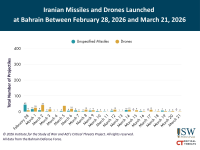
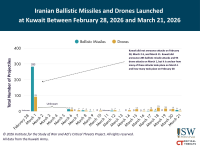
Good analysis from ISW:
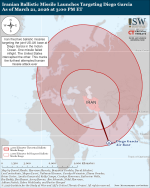
NEW: Iran launched two ballistic missiles targeting the US-UK base at Diego Garcia in the Indian Ocean on March 21, marking the furthest ever attempted Iranian missile strike. The attack demonstrated that Iranian missiles can reach beyond the 2,000-kilometer limit that the regime has long claimed to have self-imposed.
One missile failed inflight, and the United States intercepted the other.
Other Key Takeaways:The Islamic Revolutionary Guards Corps (IRGC) has reportedly expanded its influence over regime decision-making amid a growing power vacuum caused by leadership losses and Supreme Leader Mojtaba Khamenei’s apparent inability to exercise full authority.
Some of the officials who have likely expanded their influence are among the most aggressive and repressive elements within the IRGC.The United States Treasury Department issued a short-term waiver on March 20, permitting the sale of Iranian oil already in transit.
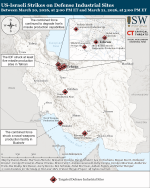
The waiver does not allow for new purchases of oil.The combined force continued to degrade Iran’s missile production capabilities. The IDF struck at least five missile production sites in Tehran.
Full report:
 understandingwar.org
NEW: Iran launched two ballistic missiles targeting the US-UK base at Diego Garcia in the Indian Ocean on March 21, marking the furthest ever attempted Iranian missile strike. The attack demonstrated that Iranian missiles can reach beyond the 2,000-kilometer limit that the regime has long claimed to have self-imposed.
One missile failed inflight, and the United States intercepted the other.
Other Key Takeaways:The Islamic Revolutionary Guards Corps (IRGC) has reportedly expanded its influence over regime decision-making amid a growing power vacuum caused by leadership losses and Supreme Leader Mojtaba Khamenei’s apparent inability to exercise full authority.
Some of the officials who have likely expanded their influence are among the most aggressive and repressive elements within the IRGC.The United States Treasury Department issued a short-term waiver on March 20, permitting the sale of Iranian oil already in transit.
The waiver does not allow for new purchases of oil.The combined force continued to degrade Iran’s missile production capabilities. The IDF struck at least five missile production sites in Tehran.
Full report:
Iran Update Special Report, March 21, 2026
Iran launched two ballistic missiles targeting the US-UK base at Diego Garcia in the Indian Ocean on March 21.
understandingwar.org
PakFactor
Elite Member
I completely agree with your assessment of the current state of affairs, but the nuance here is the sheer lack of any new leadership emerging to challenge these old school narratives. You see this glaring disparity firsthand in our diplomatic corps. If you interact with someone from the Indian Foreign Service, they are genuinely bright, highly capable individuals, whereas you are hard pressed to find that same level of competence and intelligence in Pakistani consulates. While the CSS remains a highly coveted exam, the candidates entering the system just mirror the stagnation seen across other government sectors. You could blame this purely on a lack of available resources, but the reality is that a disproportionate number of Pakistan's best and brightest simply opt for the private sector or move abroad altogether.
And that gets to the bigger problem. It’s easy to dump all of this on the military, and a lot of blame does belong there, but the rot is wider and older than that. It goes into how the country was formed, how elitist the system became, how dependent it stayed on outside actors, and how every crisis kept rewarding survival tactics over actual state-building. So when people ask why the same stale playbooks keep coming back, it’s because newer thinking is usually discouraged, especially in the dominant military mindset, and that gets reinforced by bureaucrats, elite families, feudals, oligarchs, all the usual classes that benefit from things staying shallow and controlled.
Ultimately, you simply cannot generate forward-thinking policies without a robust, educated middle class. The country’s ruling elite is mostly built on legacy, non-tech wealth and land holding. Expecting these traditional, non-technical businessmen to somehow spark innovation or develop an awareness of modern geopolitical shifts is a losing bet. They are insulated from the consequences of the ineptitude you mentioned, which guarantees the country will keep drifting with the current until that underlying structural elitism is fundamentally changed.
A separate but related point is that this problem is not lost on everyone inside the military either. There are clearly many people, including at senior levels, who understand that the old playbook is exhausted and that Pakistan cannot keep running on the same assumptions forever. But recognizing decay and staking your career on trying to reverse it are two very different things. A lot of people are effectively thinking: why stick my neck out for momentum that either will not materialize or will get hijacked by yet another flawed political vehicle?
That is basically what happened with PTI. There was real sympathy for it in parts of the military and wider state because it seemed to offer an opening against the old dynastic and patronage driven model. But that support was eventually quashed because the party’s own figurehead and many of its key political actors were deeply inconsistent in principle, highly personalized in style, and increasingly looked less like the foundation of a new political culture and more like the beginnings of another quasi-dynastic project built around one man’s legitimacy. At that point, whatever reformist potential it had was undermined by the fact that its internal culture did not really match the scale of the change it claimed to represent.
If anything, one could argue that Jamaat-e-Islami, despite being ideologically troubling in other ways, has often looked more internally merit-based and organizationally coherent than what PTI was drifting toward. And unlike PTI’s leadership, it likely would have handled the GCC relationship with more caution and continuity rather than trying to posture through it. But even that would still run into the same deeper barrier: the military establishment is too conditioned by its inherited assumptions, external dependencies, and institutional fears to seriously rewrite the strategic script without feeling like it is gambling with the state itself.
That is the tragedy of it. Pakistan does not really have a leader who understands both Pakistan as a state and Pakistanis as a society, and I separate those two deliberately. Most leaders either understand the mechanics of the state but not the people, or they understand the public mood but cannot translate that into pragmatic statecraft. The only forces that have consistently shown they understand both are the two dynastic camps, but they understand them mainly as instruments to preserve and expand their own power, not to genuinely rebuild the country.
This should be a must-read, as it goes right to the root of the problem.
Interestingly, when @RescueRanger and I spoke yesterday, I said, in short, "They stifled competition and entrepreneurship, allowing them to strangle the economy, which, in turn, limited expansion and diversification."
So when people ask why the same stale playbooks keep coming back, it’s because newer thinking is usually discouraged, especially in the dominant military mindset, and that gets reinforced by bureaucrats, elite families, feudals, oligarchs, all the usual classes that benefit from things staying shallow and controlled.
The bolded part, if I'm not mistaken, data shows that 70% of the parliament is made up of landowning families. Then you have a co-mingling of the business and investor communities with the military through a marriage of convenience between sons and daughters. Within the bureaucracy, you have relatives of industrialists and exporters occupying the top spots, and export permits are being limited. The laws passed are advantageous to those making the laws. Collectively, they've made up an oligopoly.
In totality, this has limited our upside growth by failing to bring in new ideas and talent, and our downside by keeping the same, thereby limiting the new talent pool coming into the system. We would say this sort of limitation is created to control risk, an Iron Condor in options trading. It's a strategy used by those who are averse to risk.
The Indians have played the game well; they took the institutions they were handed and reinforced them from the grassroots level on up. Those in policy-making positions are experts in their fields and are supported by an educated class. There is also a number of input committees, in which their experts engage with expats to gather ideas and concerns, and plan long-term strategies. We have none of that except nepotism. Who would know better than Abdul and Abdul's son, who has to hear from one's father, and then parrot it at work.
Appreciate it @Oscar
Last edited:

Michael
VIP Member

Is this the wargame you created? Or something else?Breakdown and critical analysis of Operation: Muhafiz-Ul-Bahr
View attachment 187395
This operation represents a shift from independent naval patrolling to a coordinated "conveyor belt" of protected transit between Gwadar and Karachi.
As the Strait of Hormuz remains under "contested control" following the February 28 strikes, this protocol is the only way Pakistan is currently receiving the 100–120 million liters of oil arriving from the UAE and Saudi Arabia.
1. Two-Stage Escort Structure: The protocol divides the 450km coastline into two distinct responsibility zones to manage the risk of Iranian or "proxy" interference:
View attachment 187397
- Stage A: The Deep-Sea Handover (PLA-N Presence):While the Chinese PLA-Navy has been cautious about participating in a Western-led coalition, it has deployed a "Surface Action Group" (likely Type 052D destroyers) to the North Arabian Sea. Their role is non-kinetic overwatch: they position themselves between the Iranian coast and the shipping lanes, providing a "radar umbrella" and electronic shielding for tankers destined for Gwadar.
- Stage B: The Coastal Shuttle (Pakistan Navy):Once a tanker enters Pakistan's Exclusive Economic Zone (EEZ) near Gwadar, the Pakistan Navy takes over. Two frigates (typically Zulfiquar-class or Tughril-class) flank the tanker in a "tight diamond" formation. They provide the physical "kinetic" protection against the specific threat of FPV drones and suicide speedboats.
2. Silent Transit technical specs: To minimize the chance of being targeted by long-range missiles, the protocol mandates "Silent Transit" for all tankers:
View attachment 187398
- AIS Blackout: Tankers like the Karachi (PNSC-operated) are ordered to turn off their Automatic Identification System (AIS) transponders 50 miles before the Makran coast.
View attachment 187399
View attachment 187400
- Encrypted Data-Link: The escort ships use the JMICC (Joint Maritime Information Coordination Centre) in Manora to feed real-time satellite data to the tanker, allowing it to navigate without broadcasting its own position.
- Anti-Drone EW Bubbles: The escort frigates project a 2km "Electronic Warfare Bubble" around the tanker to jam the control signals of any loitering munitions launched from the rugged coastal cliffs.
3. Logistic "Sanctuary" Hubs: The protocol identifies three "Sanctuary Hubs" where tankers can anchor under heavy guard if a threat is detected:
- Gwadar Anchorage: The primary "waiting room" for tankers entering from the Gulf.
- Ormara (PNS Ahsan): A mid-point refueling and tactical stop where the Navy can swap escort crews.
- Karachi Port/Port Qasim: The final offloading point, which is now protected by a permanent 5-mile "No-Fly Zone" for all unauthorized drones.
4. Integration with CEPC: The PLA-N’s involvement is specifically framed as "Infrastructure Defense" for CPEC. By protecting the tankers moving into Gwadar, China ensures that the Gwadar-to-Kashgar land route remains a viable alternative if the sea routes to Shanghai are completely severed by the US-Israel-Iran war.

MastanKhan
VIP Member
Hi,seems, you cant argue intelligently
im very disappointed with your post
i could write a very malleably price argument to break your thought process
but, I wont, bec, you cant think straight!
Cry me a river---. I donot argue with anyone---. It is an illusion you need to come out of---.
MastanKhan
VIP Member
Hi,In fact , this is individual decision of Muneera , no one knows the term and conditions. It never came in Form 47 parliament, like Gen Reheel Shareef who brought the Yemen issue in parliament.
But seems, Israel and US ordered him to protect Saudi, before they start Iran war.
It was all planned and Gen Muneera was part of this plan and sold out traitor General. But yesterday act was massive damage by insulting one sect.
Raheel Shareef did not understand the Shia influence in pakistan's parliament. Gen. Munner does very well.
Gen Raheel was too slow to understand consequences.
Iran's blessing are on pakistan now all of a sudden---. Means it is pakistan's turn to be destroyed to protect Iran. Just like Lebanon---Palestine---syria---yemen.
Truth Seeker
Registered Member
Pak will have only to blame itself if they trust GCC blindly. I don't think they gonna hold there end of bargain and side with Pak over their investment in India in any categorical way.Pakistan will definitely help the KofSA. However, should we expect help if India attacks us (and it will definitely attack Pakistan) in future? We don't need their army/ airforce/ navy, but will KSA also coerce other GCC states (we know it can) to stop supplying oil to India?

东风夜放花千树
Registered Member
According to current news analysis, Iran attacks Saudi Arabia relatively infrequently. The countries that Iran attacks most frequently are the UAE and Bahrain.
If Saudi Arabia requests assistance from Pakistan, it is more likely to be to participate in air defense interception missions.
Saudi Arabia will not attack Iran as long as there are no signs of Iran failing. Saudi Arabia is facing the choice of how to survive.
If the United States and Israel fail, Middle Eastern countries will restore diplomatic relations with Iran and put pressure on Israel. If Iran fails, Middle Eastern countries will attack Iran and maintain the previous status after the war. Participating in the war now equals making a choice, but the outcome is uncontrollable. This does not align with national interests. It should be noted that many NATO and U.S. allied countries refuse to join U.S. actions. The Houthi forces in Yemen have not yet joined the war, which will make Saudi Arabia even more cautious.
Iran may not achieve complete victory, but Iran definitely will not fail. The international community and countries upholding the UN Charter will not accept Iran's failure.
Currently, the biggest issue is that Middle Eastern countries need to maintain communication channels. When NATO countries and U.S. allies do not participate in the war on a large scale, in order to alleviate pressure, the U.S. and Israel, along with the Epstein coalition, need to provoke hatred among Middle Eastern countries and initiate the Sixth Middle East War. This is the plan most aligned with the interests of the United States and Israel.
Middle Eastern countries need to prevent false flag operations orchestrated by the United States and Israel. Iran has already denied multiple attacks.
If Saudi Arabia requests assistance from Pakistan, it is more likely to be to participate in air defense interception missions.
Saudi Arabia will not attack Iran as long as there are no signs of Iran failing. Saudi Arabia is facing the choice of how to survive.
If the United States and Israel fail, Middle Eastern countries will restore diplomatic relations with Iran and put pressure on Israel. If Iran fails, Middle Eastern countries will attack Iran and maintain the previous status after the war. Participating in the war now equals making a choice, but the outcome is uncontrollable. This does not align with national interests. It should be noted that many NATO and U.S. allied countries refuse to join U.S. actions. The Houthi forces in Yemen have not yet joined the war, which will make Saudi Arabia even more cautious.
Iran may not achieve complete victory, but Iran definitely will not fail. The international community and countries upholding the UN Charter will not accept Iran's failure.
Currently, the biggest issue is that Middle Eastern countries need to maintain communication channels. When NATO countries and U.S. allies do not participate in the war on a large scale, in order to alleviate pressure, the U.S. and Israel, along with the Epstein coalition, need to provoke hatred among Middle Eastern countries and initiate the Sixth Middle East War. This is the plan most aligned with the interests of the United States and Israel.
Middle Eastern countries need to prevent false flag operations orchestrated by the United States and Israel. Iran has already denied multiple attacks.
mythbuster
Trusted Member
Great post Oscar , it cuts right through the core of our problems.. keep it up.A separate but related point is that this problem is not lost on everyone inside the military either. There are clearly many people, including at senior levels, who understand that the old playbook is exhausted and that Pakistan cannot keep running on the same assumptions forever. But recognizing decay and staking your career on trying to reverse it are two very different things. A lot of people are effectively thinking: why stick my neck out for momentum that either will not materialize or will get hijacked by yet another flawed political vehicle?
That is basically what happened with PTI. There was real sympathy for it in parts of the military and wider state because it seemed to offer an opening against the old dynastic and patronage driven model. But that support was eventually quashed because the party’s own figurehead and many of its key political actors were deeply inconsistent in principle, highly personalized in style, and increasingly looked less like the foundation of a new political culture and more like the beginnings of another quasi-dynastic project built around one man’s legitimacy. At that point, whatever reformist potential it had was undermined by the fact that its internal culture did not really match the scale of the change it claimed to represent.
If anything, one could argue that Jamaat-e-Islami, despite being ideologically troubling in other ways, has often looked more internally merit-based and organizationally coherent than what PTI was drifting toward. And unlike PTI’s leadership, it likely would have handled the GCC relationship with more caution and continuity rather than trying to posture through it. But even that would still run into the same deeper barrier: the military establishment is too conditioned by its inherited assumptions, external dependencies, and institutional fears to seriously rewrite the strategic script without feeling like it is gambling with the state itself.
That is the tragedy of it. Pakistan does not really have a leader who understands both Pakistan as a state and Pakistanis as a society, and I separate those two deliberately. Most leaders either understand the mechanics of the state but not the people, or they understand the public mood but cannot translate that into pragmatic statecraft. The only forces that have consistently shown they understand both are the two dynastic camps, but they understand them mainly as instruments to preserve and expand their own power, not to genuinely rebuild the country.

solarmane
Registered Member
Global Terrorism Index 2026. Header (Asian): 1. Pakistan, ..., 6. Syria, ..., 10. Israel, 11. Afghanistan, ..., 13. India.

Psyko70
Trusted Member
Great post by pak falcon and oscar.
Its same not just at upper level but at lower. I consider being in 30s my new ideas are always ignored or not given serious thoughts by old naive seniors due to their mistrust on newer generations and same old mindset. Also, they are worried their use will be written off due to new generations taking over. The small narrow mindset of thinking for self has destroyed the country.
Its same not just at upper level but at lower. I consider being in 30s my new ideas are always ignored or not given serious thoughts by old naive seniors due to their mistrust on newer generations and same old mindset. Also, they are worried their use will be written off due to new generations taking over. The small narrow mindset of thinking for self has destroyed the country.
Users who are viewing this thread
Total: 1 (members: 0, guests: 1)
Pakistan Defence Latest

Country Watch Latest
-
 Iran - Israel/US War: Israel-US declare war on Iran, Iran responds (68 Viewers)
- Latest: AZ_HighCountry
-
-

-

-

Latest Posts
-

-
-
Iran - Israel/US War: Israel-US declare war on Iran, Iran responds (68 Viewers)
- Latest: AZ_HighCountry
-

-