Vietnam Defense and News forum

They are heavily relied on the US.
Yes that’s right.
The problem is the US will never give a piece of military technology to Vietnam.
In case you missed the news, same for the Chinese. since the Ming, China imposes a total military technology embargo on Vietnam.
The only way is circumventing via Israel, or Japan or Philippines, or in the case of China via smuggling.

To view this content we will need your consent to set third party cookies.
For more detailed information, see our cookies page.
 
The world’s largest football stadium begins to take shape.
Capacity 135,000 seats
Location Hanoi
To view this content we will need your consent to set third party cookies.
For more detailed information, see our cookies page.


1774369030569.png
 
$650 million
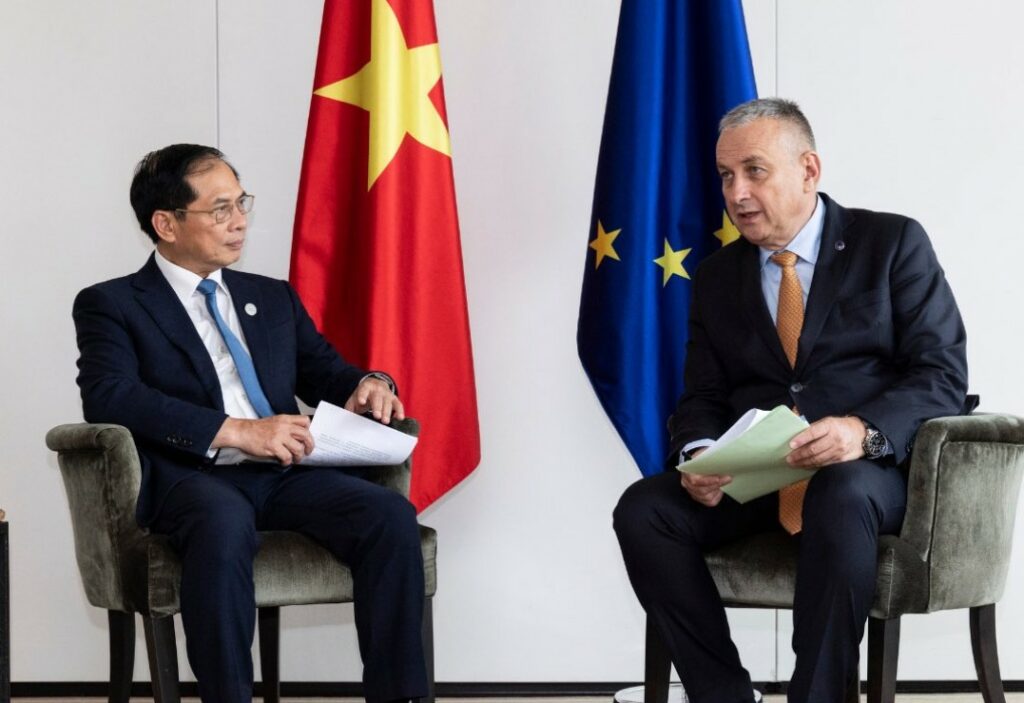
Europe-Vietnam business forum

To view this content we will need your consent to set third party cookies.
For more detailed information, see our cookies page.
 
Yes that’s right.
The problem is the US will never give a piece of military technology to Vietnam.
In case you missed the news, same for the Chinese. since the Ming, China imposes a total military technology embargo on Vietnam.
The only way is circumventing via Israel, or Japan or Philippines, or in the case of China via smuggling.

To view this content we will need your consent to set third party cookies.
For more detailed information, see our cookies page.


No point for Vietnam to build up its own military industrial complex ecosystem, since you are not China, and you cannot become 100% dependent without relying the foreign assistance.
 
Yes that’s right.
The problem is the US will never give a piece of military technology to Vietnam.
In case you missed the news, same for the Chinese. since the Ming, China imposes a total military technology embargo on Vietnam.
The only way is circumventing via Israel, or Japan or Philippines, or in the case of China via smuggling.

To view this content we will need your consent to set third party cookies.
For more detailed information, see our cookies page.

So, Vietnam decides it is going to dance with the devils such as Japan and Israel, watch out what Vietnam possibly ends up.
 
No point for Vietnam to build up its own military industrial complex ecosystem, since you are not China, and you cannot become 100% dependent without relying the foreign assistance.
Foreign assistance? From whom? Our military industrial complex has been able to produce anti-ship missiles, land attack and air-launched cruise missiles, MLRS, AESA radars, medium range 70-km SAM system, IFV, 122 mm SPH, 125 mm tank gun, turbo jet engine, radar seeker for missiles. SRBM, FPV drones, suicide drones, UAV. We even receive patents from the U.S and Europe for our military applications. Our military industries have progressed so quick that I never thought I would live to see these days all thanks to a new generation of young and talented Vietnamese that we are able to retain in our nation. You must be high if you believe any nation would transfer strategic technologies like defense to you.
 
Last edited:
So, Vietnam decides it is going to dance with the devils such as Japan and Israel, watch out what Vietnam possibly ends up.
The world is a jungle. There isn’t much choices. If we don’t work with Japan, whom we should work with? Afghanistan?
No need to worry too much. The Vietnamese believe the risk is manageable.
Takaichi seems to lean most on the US, then US allies, Vietnam comes third to her mind if any. judging her actions and her gov party the Japanese put their fate entirely on the US. I would be more concerned about the Japanese.
 

VinFast Hasn’t Given Up On Its US Ambitions — Despite Delays, Betting On Long-Term Strategy​

Raymond Tribdino
Raymond Tribdino
1774412936483.png
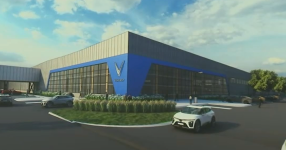
VinFast’s decision to resume construction of its North Carolina manufacturing plant by April of this year is an indication that the “war” for brand recognition isn’t over for the Vietnamese automaker.

“The US remains a long-term strategic pillar for VinFast,” VinFast Le Thi Thu said during the company’s earnings call earlier this month. She framed the adjustments as part of a deliberate long-term strategy rather than a retreat, emphasizing that the company is building its global operations in stages to ensure sustainability and efficiency.

The long-term commitment to the United States is evident with the announcement because despite the various difficulties (uncertainties might be a more appropriate word) of doing business in the US under the current administration, VinGroup recalibrates amid its own financial pressures while pursuing global expansion challenges.

First announced in 2022 as a $4 billion investment, the North Carolina project was envisioned as a cornerstone of VinFast’s entry into the highly competitive US electric vehicle market. At the time, the plan promised 7,500 jobs and positioned the company as a potential new manufacturing anchor in the American Southeast. The groundbreaking happened a year later and marked a milestone not only for VinFast but also for Vietnam’s ambitions to establish a global industrial footprint.

Four years later, the project reflects a more measured trajectory. In its full-year 2025 financial results released March 16, 2026, VinFast reported a $3.9 billion net loss and a $235.6 million impairment charge related to the North Carolina facility. The company has since adopted what it describes as a “disciplined” and “phased” approach to capital deployment, pushing the start of production to 2028 while reducing the plant’s footprint and workforce projections.

The revised plan reduces the projected workforce to about 1,400 employees and scales down the facility to roughly 780,000 square feet. While these figures fall well below initial expectations, they align with a broader industry trend in which emerging EV manufacturers are prioritizing capital discipline amid rising costs, supply chain volatility, and evolving demand.

VinFast’s entry into the global EV market has been rapid. Founded in 2017, it initially focused on domestic production before pivoting aggressively toward electrification and international expansion. In 2022, it dropped ICE manufacturing, and by 2023, it had begun deliveries in North America and listed on the Nasdaq, signaling its ambitions to compete with established automakers and new EV entrants alike.

The North Carolina plant remains central to that ambition. Local production is critical for qualifying for federal incentives under the Inflation Reduction Act, a key factor in pricing competitiveness in the US market. Despite delays, VinFast maintains that establishing a manufacturing base in the United States is essential to its long-term positioning.

At the same time, the company is accelerating growth in emerging markets. Thuy highlighted expansion in Southeast Asia, including Indonesia and the Philippines, as well as ongoing development of an integrated EV facility in Tamil Nadu, India. These markets offer lower operating costs and faster adoption growth, providing near-term opportunities to stabilize revenue while larger investments like the US plant mature.

The recalibration also places VinFast under scrutiny from North Carolina officials, particularly regarding a $315 million incentive package tied to job creation and investment targets. State authorities have indicated they are monitoring progress closely and may revisit the terms of the agreement as construction resumes.

For now, activity at the Chatham County site is expected to restart in early April 2026, with initial work focused on foundational development. While the scale has been reduced, the project’s continuation signals that VinFast is not abandoning its US ambitions but reshaping them.

“Our approach is to grow responsibly while laying the groundwork for long-term success,” Thuy said in a LinkedIn message, reinforcing the company’s message that patience and phased investment are key to navigating a rapidly evolving global EV landscape.
 
Part of Europe’s 560 million euro package will go to high-speed railway. But getting HSR technology is more important than getting money through.
 
To view this content we will need your consent to set third party cookies.
For more detailed information, see our cookies page.
 
Putin looks pale. The 3 day war against Ukraine makes him older than he is.

To view this content we will need your consent to set third party cookies.
For more detailed information, see our cookies page.
 
To view this content we will need your consent to set third party cookies.
For more detailed information, see our cookies page.
 
Vietnamese STV380 7.62x39mm assault rifle
probably the most lethal rifle of the infantry

1774459738811.png
 
Foreign assistance? From whom? Our military industrial complex has been able to produce anti-ship missiles, land attack and air-launched cruise missiles, MLRS, AESA radars, medium range 70-km SAM system, IFV, 122 mm SPH, 125 mm tank gun, turbo jet engine, radar seeker for missiles. SRBM, FPV drones, suicide drones, UAV. We even receive patents from the U.S and Europe for our military applications. Our military industries have progressed so quick that I never thought I would live to see these days all thanks to a new generation of young and talented Vietnamese that we are able to retain in our nation. You must be high if you believe any nation would transfer strategic technologies like defense to you.

If you are capable to build a 6th gen aircraft with your indigenous turbofan engine, avionics and weapon system.

Then we have to admit that your country has achieved 100% military sovereignty.
 
If you are capable to build a 6th gen aircraft with your indigenous turbofan engine, avionics and weapon system.

Then we have to admit that your country has achieved 100% military sovereignty.
Tiger, that’s unrealistic. Making aircraft is the most difficult thing ever. Extremely difficult, extremely expensive. There are just few who make them, the US, China, Russia and some in Europe and Asia. Entirely 100 percent can be ruled out.

I think the most feasible way is we copy Mig21 or Su22 aircraft and develop at later stage own aircraft, maybe in 10-20 years. And if even, we need massive technology transfer and high level of imports. Similar way Viettel is doing with the first semiconductor 32nm fab that will make wafers and chips.

To view this content we will need your consent to set third party cookies.
For more detailed information, see our cookies page.
 

Users who are viewing this thread

  • Back
    Top