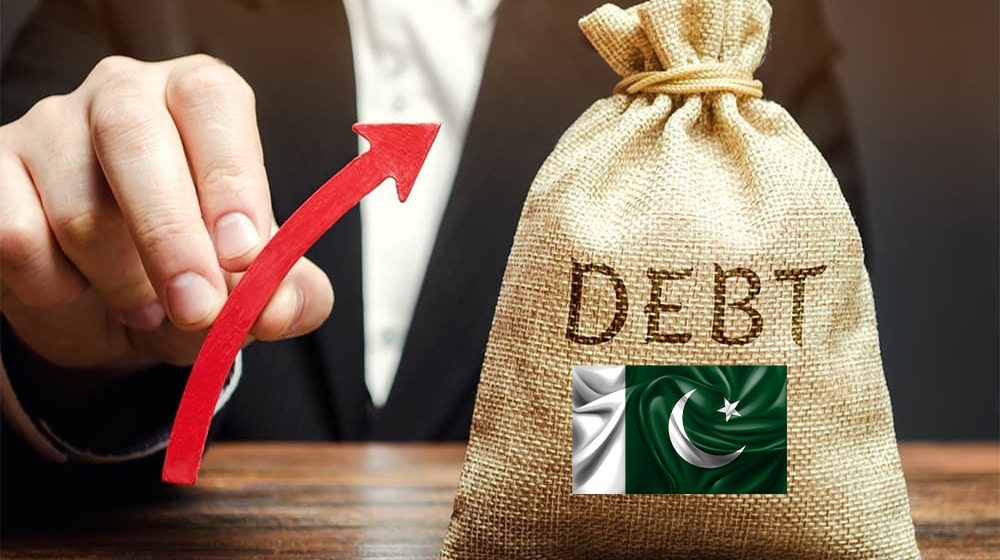
Pakistan External Debt

BISP program needs to be shut down for a few years. [ > USD 2 Billion / year ], atleast at the federal level.

The money is needed urgently to pay off USD debt.

The 28th Amendment reducing the provincial share to 30 % is urgently needed and with more provinces of course, with each division becoming a separate province.

Those divisions that don't have a surplus budget / economically not stable, should be federalized On a temporary basis until the relevant divisions financial situation is Improved.

If the current economic crisis continues indefinitely then, rupee might lose it value and USD denominated debt might sky rocket putting more unsustainable fiscal pressure on the economy and we can't maneuver independently until IMF is dictating the terms.

The provinces can start their own programs from their own provincial budgets, which should be reduced to 30 % of divisible pool according to the NFC Award.

Benazir Income Support Programme (BISP) has been budgeted at Rs722.48 billion for the upcoming financial year 2025-26, an increase of over 20 percent in the programme’s annual budget, in comparison to Rs598.71 billion it received in the outgoing financial year.


The perks given to the bureaucrats should be reduced and completely digitised so that the usage can be monitored in real time / live feed and the information should be easily accessible by the public online / live feed.
 
Last edited:
To view this content we will need your consent to set third party cookies.
For more detailed information, see our cookies page.
 

Pakistan interest bill jumps

"During fiscal year 2025, Pakistan paid a total of $13.32 billion to service its foreign debt. This included:
  • $9.73 billion in loan repayments (principal)
  • $3.59 billion in interest payments"

Between 1 July 2024 - 30 June 2025, the actual amount Pakistan paid was $13.32 billion. The rest were rollovers. The interest for these rollovers would also be included in the interest payment.

Now, for those who go into panic every other month whenever they hear news of Pakistan paying $24 -27 billion in external debt, they need to understand that more than half of that amount is rollovers, and the actual payment is only $13.32 billion out of the $63 billion federal budget.
 
To view this content we will need your consent to set third party cookies.
For more detailed information, see our cookies page.

That looks scary but works out to about U.S.$1,000 per person. Not too high, if the people become more productive and the GDP goes up to lower middle-income country level.
 
BISP program needs to be shut down for a few years. [ > USD 2 Billion / year ], atleast at the federal level.

The money is needed urgently to pay off USD debt.

The 28th Amendment reducing the provincial share to 30 % is urgently needed and with more provinces of course, with each division becoming a separate province.

Those divisions that don't have a surplus budget / economically not stable, should be federalized On a temporary basis until the relevant divisions financial situation is Improved.

If the current economic crisis continues indefinitely then, rupee might lose it value and USD denominated debt might sky rocket putting more unsustainable fiscal pressure on the economy and we can't maneuver independently until IMF is dictating the terms.

The provinces can start their own programs from their own provincial budgets, which should be reduced to 30 % of divisible pool according to the NFC Award.

Benazir Income Support Programme (BISP) has been budgeted at Rs722.48 billion for the upcoming financial year 2025-26, an increase of over 20 percent in the programme’s annual budget, in comparison to Rs598.71 billion it received in the outgoing financial year.


The perks given to the bureaucrats should be reduced and completely digitised so that the usage can be monitored in real time / live feed and the information should be easily accessible by the public online / live feed.
Imports of all non-essential items should also be banned immediately. On those items should be allowed which we either cannot make ourselves and need to survive and grow (essential edibles, machines, computers, medicines etc.) or those which we need to support our exports (raw materials, chemicals etc.). Do we absolutely need, and deserve the 30+ odd Vehicle Companies which will sell here and repatriate all profits in USD back to Japan/China/Korea and so on?

We should ideally be importing only as much as we are exporting (USD 40 Billion should be the criteria today). And that's what we should maintain so that we grow our exports to satisfy the greed of importing luxuries. The remittances should be earmarked only to increase our federal Forex reserves and to service debt. We also need to enact a 1-child per family starting this year for all new families and have the law there for the next 10 years; control population growth which is breaking our backs.

We do that for 10 years and I am sure things would be very different.

P.S. The perks given to bureaucrats are not really that high. It's the overheads, the illegal, under the table or otherwise perks which are not a part of remuneration that are a big problem; to this end, we will need to eliminate corruption and nepotism.
 
"During fiscal year 2025, Pakistan paid a total of $13.32 billion to service its foreign debt. This included:
  • $9.73 billion in loan repayments (principal)
  • $3.59 billion in interest payments"

Between 1 July 2024 - 30 June 2025, the actual amount Pakistan paid was $13.32 billion. The rest were rollovers. The interest for these rollovers would also be included in the interest payment.

Now, for those who go into panic every other month whenever they hear news of Pakistan paying $24 -27 billion in external debt, they need to understand that more than half of that amount is rollovers, and the actual payment is only $13.32 billion out of the $63 billion federal budget.
I have read your posts and your repeated attempts trying to explain to some of the members here what the situation actually is, when not taken out of context and concentrated on certain deceptive parameters. But in the end, I think you are only wasting your effort and energy.

I too have done the same for many years, especially on the actual previous forum. I have also explained how things would have been so much different if only the ‘supremely failed experiment of Imran Khan’ was not imposed on Pakistan. And not because I doubt the intentions of those who implemented the failure on Pakistan; because I believe the intentions were noble, I too would have been in the bandwagon to try and get rid of the 2-dynastical party system which we have had over the recourse. And I rue the failure of the attempt, had it been successful, perhaps we could have rid the country of dynasties. Alas, it was not meant to be.

What my politicised countrymen and fellow forum members either intentionally do not recall the 2016/17 period or were too young to remember how good it really was, despite the rampant electricity failures during the previous PPP Government which had to be overcome even through less than favourable contracts, what Rs. 104/USD meant, the 24 Billion or thereabouts forex reserves in the country, the over 300 Billion USD GDP in 2016/17, and the CPEC projects (which were being touted as a solution to all our economic woes, I no longer believe it to be the case).

I am lazy now and rely on AI doing a lot of heavy lifting so asked AI to fact check the stats from my memory above and this is what I got:

The 2016–2017 period in Pakistan is often cited as a time of significant macroeconomic stability and growth. Key indicators from that era align with the figures you mentioned:
  • GDP Growth and Size: The economy achieved a GDP growth rate of 5.28% in FY 2016–17, the highest in a decade at that time. This expansion pushed the nominal GDP beyond the US$300 billion mark.
  • Foreign Exchange Reserves: Total liquid foreign exchange reserves reached a peak of approximately $24 billion in late 2016, supported by stable inflows and improved macroeconomic fundamentals.
  • Exchange Rate Stability: The Pakistani Rupee (PKR) was maintained at approximately Rs. 104–105 per USD for an extended period, providing a sense of price stability for imports and businesses.
  • Energy Sector Developments: While the previous PPP-led government (2008–2013) struggled with rampant load shedding of up to 12–18 hours daily, the 2013–2018 administration prioritized adding generation capacity. By 2017–18, the power deficit was projected to decline significantly to roughly 2,371 MW. However, these gains were often tied to Power Purchase Agreements (PPAs) that later contributed to a "circular debt" crisis due to high-capacity payments and dollar-indexed returns.
So, I added the criteria of total external debt, and this is the response:

By the end of the 2016–17 fiscal year (June 30, 2017), Pakistan's external debt profile was as follows:
  • Total External Debt and Liabilities (EDL): The broader measure of external obligations reached approximately US$83 billion.
  • External Public Debt: This subset, which specifically includes government-owed debt and IMF obligations, stood at approximately US$62.5 billion.
  • Rupee Equivalent: In local currency terms, the external public debt was recorded at Rs. 6,539 billion.
  • As a % of GDP: External debt and liabilities were approximately 26.3% of GDP during this period.
  • Growth Trends: While total debt was rising to fund infrastructure and energy projects, it was considered manageable at the time due to the Rs. 104/USD exchange rate and high foreign exchange reserves.
The only part anyone can bring up, already highlighted in red above, is also self explanatory to those who were facing up to 18 hours of load shedding and just wanted 24 hours of electricity at the time. The contracts, even in USD were extremely managable as well as CPEC Projects. How I rue those days. And then came in the experiment!
 
To view this content we will need your consent to set third party cookies.
For more detailed information, see our cookies page.

Instead of people, not you, gloating on the case, should we not wonder what has happened for UAE to call in it's placement of 3.5 Billion USD with Pakistan? Over the course of the US-Israel-Iran war, what has Pakistan done for the UAE to pull this stunt?

I am sorry that we are in a state where these GCC countries are able to pull stunts like this so very easily, but is it not strange that they can invest Trillions of USD in the US but will not invest anything in Pakistan? They are driving the US Military industry because of which the US is the super power that it is but they will not help out another Muslim country climb out of the debt trap while looking at us whenever they are threatened. Shameful at both ends I would say.
 
Instead of people, not you, gloating on the case, should we not wonder what has happened for UAE to call in it's placement of 3.5 Billion USD with Pakistan? Over the course of the US-Israel-Iran war, what has Pakistan done for the UAE to pull this stunt?

I am sorry that we are in a state where these GCC countries are able to pull stunts like this so very easily, but is it not strange that they can invest Trillions of USD in the US but will not invest anything in Pakistan? They are driving the US Military industry because of which the US is the super power that it is but they will not help out another Muslim country climb out of the debt trap while looking at us whenever they are threatened. Shameful at both ends I would say.
I am sorry but you should stop overestimating your worth. Looks like just because you are muslim country, other muslim countries should help you? Investing US afford them the returns. Investing in Pakistan is throwing money down the drains.
 
You have Shahbaz as a PM and Zardari as President. Potential investors need not worry. Their investment is safe and sound.
 
Instead of people, not you, gloating on the case, should we not wonder what has happened for UAE to call in it's placement of 3.5 Billion USD with Pakistan? Over the course of the US-Israel-Iran war, what has Pakistan done for the UAE to pull this stunt?

I am sorry that we are in a state where these GCC countries are able to pull stunts like this so very easily, but is it not strange that they can invest Trillions of USD in the US but will not invest anything in Pakistan? They are driving the US Military industry because of which the US is the super power that it is but they will not help out another Muslim country climb out of the debt trap while looking at us whenever they are threatened. Shameful at both ends I would say.
Money does not have religion. It follows profits. They are also investing quite a significant amount in India.

If Pakistan gives better returns on investment it too will get investment. Not just for Islamic countries but from all over.
 

Users who are viewing this thread

Pakistan Defence Latest

Latest Posts

Back
Top