


it's in international waters and fair game to Somali pirates or their related cousin the USN.
Navigation
Install the app
How to install the app on iOS
Follow along with the video below to see how to install our site as a web app on your home screen.
Note: This feature may not be available in some browsers.
More options
Style variation
You are using an out of date browser. It may not display this or other websites correctly.
You should upgrade or use an alternative browser.
You should upgrade or use an alternative browser.
Iran - Israel/US War: Israel-US declare war on Iran, Iran responds
- Thread starter Khorasan Black Flags
- Start date
More options
Who Replied?
Persian Gulf
INT'L MOD


That story came from a U.S. journalist who had to walk it back because she made it upBe that as it may, but everyone will come with their maximalist positions initially.
A Pakistani insider revealed that part of the challenge during the Islamabad Summit was that whereas the US side was engaging with Trump without any hinderance throughout the negotiations, the same was not the case for the Iranian team. They were not able to contact their leadership inside Iran on account of security considerations.
So we have had other challenges above and beyond the maximalist positions.

ShapurII
Trusted Member

Nobody knows who is in charge. If Sepah was in charge, there would've been no ceasefire.I understand your feeling. But now right now Ayatollah doesn´t exist anymore or is not in charge, it is the Sepah who is giving their instructions and planning the war.
It is a good time for redeploying forces, opening entrances in missile bases and improvise more launchers. If you think that Sepah is not taking advantage also of this shift you´re wrong.

Flotilla
Trusted Member

And this is the start.
Similar land corridors can be reinforced with other countries like Turkmenistan or even Afghanistan.
The blockade it is a joke.
| Negotiators reportedly reached a stalemate over the Strait of Hormuz, with Tehran rejecting joint control and insisting on full authority over passage and the imposition of transit fees. Following the failed talks, US President Donald Trump announced a naval blockade of Iranian ports, while Pakistani mediators are pushing for a second round of negotiations before the current ceasefire expires. |
BigMela2onin
Trusted Member
Is this confirmed by any Chinese sources?
Blain2
THINK TANK: CONSULTANT

I did not see it being sourced to an American journalist.That story came from a U.S. journalist who had to walk it back because she made it up
'Draft was ready': how US-Iran talks narrowly missed historic deal in Islamabad
Last-minute 'hiccup' resulted in breakdown of Pakistan-mediated US-Iran talks, say sourcesKamran YousafApril 13, 20264 min read
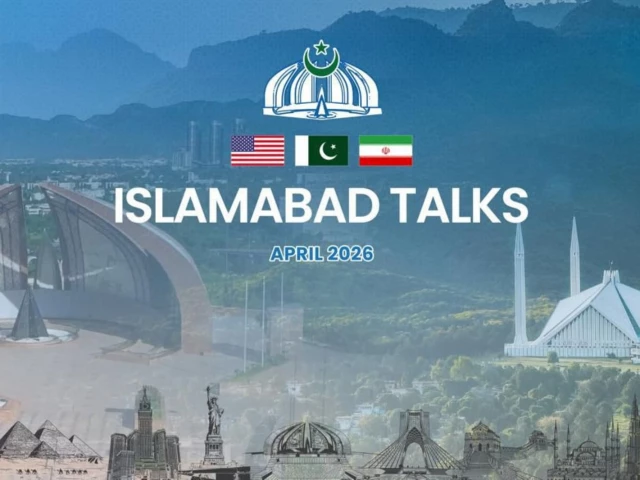
'Draft was ready': how US-Iran talks narrowly missed historic deal in Islamabad
ISLAMABAD:
Local and international journalists were exhausted at the media centre set up just a stone’s throw from the Serena Hotel, where senior Iranian and US officials had been engaged in intense negotiations.
The Jinnah Convention Centre was just across the road from the five-star hotel, yet close proximity to the venue of the talks did not mean access to what was going on behind closed doors.
But it was around 3am when some officials present at the centre were alerted. The message came from people inside the Serena Hotel: “Be ready, there could be a joint statement.”
Suddenly, officials who were on the verge of sleep had to turn agile. But as night gave way to day, the possibility of a “joint statement” faded away.
Instead, a message was relayed to American journalists travelling with the US delegation that Vice President JD Vance would speak to reporters.
Vance said he had “bad news” that talks between the US and Iran had failed to reach a deal. But that was not the entire story.
Read More: Iran accuses US of derailing Islamabad talks after near agreement
The Express Tribune can now report, after interacting with relevant people and diplomatic sources, that both sides were close to agreeing on a framework before a last-minute hiccup. The alert about a “joint statement” stemmed from the progress both sides had made.
“The draft was ready to be signed,” said a diplomatic source, suggesting the agreement was missed by the barest of margins.
Iran’s Foreign Minister Abbas Araghchi also confirmed that both sides were inches away from what he called the “Islamabad MoU”, but, according to the top Iranian diplomat, the US side shifted the goalposts and resorted to a maximalist position at the last minute.
Vance, before departing from Pakistan, insisted that Iran’s failure to give firm assurances regarding not seeking nuclear weapons led to the collapse of the talks.
It has now emerged that the US side wanted Iran to give up uranium enrichment and all existing stockpiles.
The US side was also of the view that Iran was in breach of the ceasefire deal for not reopening the Strait of Hormuz immediately.
The Iranian side, however, wanted guarantees and remained sceptical that the US might backtrack after Tehran gave up on the nuclear issue and reopened the Strait of Hormuz.
Another factor that prevented the two sides from signing on the dotted line was a lack of communication between the Iranian side and the leadership back home due to security reasons.
The US side, on the other hand, had the luxury of speaking to President Donald Trump during the negotiations. Vance confirmed that he spoke to Trump almost a dozen times during the talks.
“This showed how close the two sides were. Otherwise, there was no need for them (the US delegation) to talk to Trump so frequently,” said a diplomatic source. The marathon talks may not have produced results, but laid the framework for future engagement.
The Iranian foreign minister characterised the talks as the most intense engagement with the US since the 1979 Islamic Revolution.
“This is remarkable. Pakistan has done what others could not,” said another diplomat who was aware of the developments.
Also Read: FM Dar calls on US, Iran to uphold ceasefire commitment
The Iranian ambassador to Pakistan also said the “Islamabad talks” were not an event but a process that laid the framework for future engagements.
Senior Iranian and US officials may have met for 21 hours, but many more hours and days were spent by Pakistani interlocutors with all sides leading up to the talks.
“A lot of homework was done during that period,” according to sources. “The way Pakistan managed to execute its plans from security to arranging talks was exceptional,” another diplomatic source acknowledged.
The key question now is: what happens next?
“Diplomacy is not dead. There is a stalemate,” said a source.
Pakistan has not given up on its efforts to secure a deal between the US and Iran. Deputy Prime Minister and Foreign Minister Ishaq Dar, who was part of the talks, reached out to key players, including Saudi Arabia, Egypt, and Turkey.
In telephonic conversations with his counterparts, Dar stressed that both sides must adhere to the ceasefire and said Pakistan would continue to mediate between Iran and the US in the days to come.
Diplomatic sources said senior officials from Egypt, Turkey, and Saudi Arabia would travel to Islamabad this week as part of efforts to prevent renewed hostilities in the region.
China, too, is in the mix. It supported the Islamabad talks and said it hoped all sides would seize the opportunity.
Despite the Islamabad talks not living up to expectations, there is a sense that all is not lost and diplomacy still has a chance to succeed.
President Trump’s threats to impose a naval blockade around the Strait of Hormuz may just be a tactical move to pressure Iran into signing a deal, according to observers.
“The good thing is the ceasefire is holding. We hope that before the truce ends, there will be progress on the diplomatic front,” said a source.
Flotilla
Trusted Member
Being a de-centralized Command, why every region and military leadership have fullfilled the ceasefire?. I am pretty sure there are no civil Government that controls right now the Military power. But who knows, maybe you´re right.Nobody knows who is in charge. If Sepah was in charge, there would've been no ceasefire.
Immortals
Elite Member
Nobody knows who is in charge. If Sepah was in charge, there would've been no ceasefire.
Sepah is not a singular entity and commanders have differing viewpoints on how to wage this war. Vahidi (one of the most hardline commanders) doesn’t have absolute power.
Mojtaba and his surrounding circle has to take into account the powerful factions and wealthy families that run the country.
More war wouldn’t change realities on the ground. That a settlement has to happen. So far the U.S. hasn’t budged.
My only fault on Iran would be allowing Saudi Arabia to keep 7MBPD oil production running and not attacking it more directly during the war and not closing the Bab Al Mandeb strait via the Houthi’s. Iran keeping this card and not using it was a bit surprising.
Without this further pressure on Trump it will delay what he ultimately needs to realize that the zero enrichment zero missile zero proxy deal that he wants just won’t happen.
I prob see Iran agreeing to a freeze on enrichment for the rest of Trump’s term (~3 years).
The smart thing to do would be delaying any shipping of the HEU to Russia UNTIL the date Iran is able to restart large scale uranium enrichment. In the meantime it would be down blended to 20%. Iran needs to protect itself from the next administration coming in and trying to prevent Iran from restarting enrichment like we saw with the arms embargo and sunset clauses in JCPOA.
Immortals
Elite Member
That story came from a U.S. journalist who had to walk it back because she made it up
She didn’t make it up, she just said what everyone already knew and the news aggregators spun it as new fact.
Vance told the Iranians to give up enrichment or accept a 20 year freeze (basically giving it up). And she said the Iranians didn’t accept and maybe they would consider it once they returned to Tehran and began deliberating.
Somehow this got spun into: Iranians will consider giving up enrichment to manipulate the markets.
ShapurII
Trusted Member
This is no longer 2013. We are not dealing with Obama. Trump wants his demands 100%, as he said it yesterday. Not 90%, not 95%, but all of it.Sepah is not a singular entity and commanders have differing viewpoints on how to wage this war. Vahidi (one of the most hardline commanders) doesn’t have absolute power.
Mojtaba and his surrounding circle has to take into account the powerful factions and wealthy families that run the country.
More war wouldn’t change realities on the ground. That a settlement has to happen. So far the U.S. hasn’t budged.
My only fault on Iran would be allowing Saudi Arabia to keep 7MBPD oil production running and not attacking it more directly during the war and not closing the Bab Al Mandeb strait via the Houthi’s. Iran keeping this card and not using it was a bit surprising.
Without this further pressure on Trump it will delay what he ultimately needs to realize that the zero enrichment zero missile zero proxy deal that he wants just won’t happen.
I prob see Iran agreeing to a freeze on enrichment for the rest of Trump’s term (~3 years).
The smart thing to do would be delaying any shipping of the HEU to Russia UNTIL the date Iran is able to restart large scale uranium enrichment. In the meantime it would be down blended to 20%. Iran needs to protect itself from the next administration coming in and trying to prevent Iran from restarting enrichment like we saw with the arms embargo and sunset clauses in JCPOA.
Iran even accepted a 10 year freeze apparently, but it wasn't enough. I think a 3-year freeze is reasonable, but the US is not going to accept that. They believe Iran is on the verge of collapse and they are not going to stop their pressure now. Whether it's true or not, we will see.
As I said before, there is no scenario that a non-nuclear Islamic Republic would remain in power. I still stand by this. It is only a matter of time to overthrow the Islamic Republic, unless Iran achieves nuclear deterrence and plays the madman like it did during the first days of war. The only thing that kept the Islamic Republic in power this time was our unpredictable moves. If we return to our old policies like before the war, we're done.

clutch
Elite Member

Last edited:

ShapurII
Trusted Member
Even France and the UK who tried to stay away from the heat are now talking about a coalition to keep the Strait of Hormuz open. But people still want to say that ceasefire was a good idea.
Users who are viewing this thread
Total: 139 (members: 11, guests: 128)
Pakistan Defence Latest


Country Watch Latest


Latest Posts
-

-
-
-

-
Naqvi did not object to India’s refusal to collect Women’s Asia Cup trophy (6 Viewers)
- Latest: ThoroughPro