News Desk Published April 14, 2026 Updated about 2 hours ago
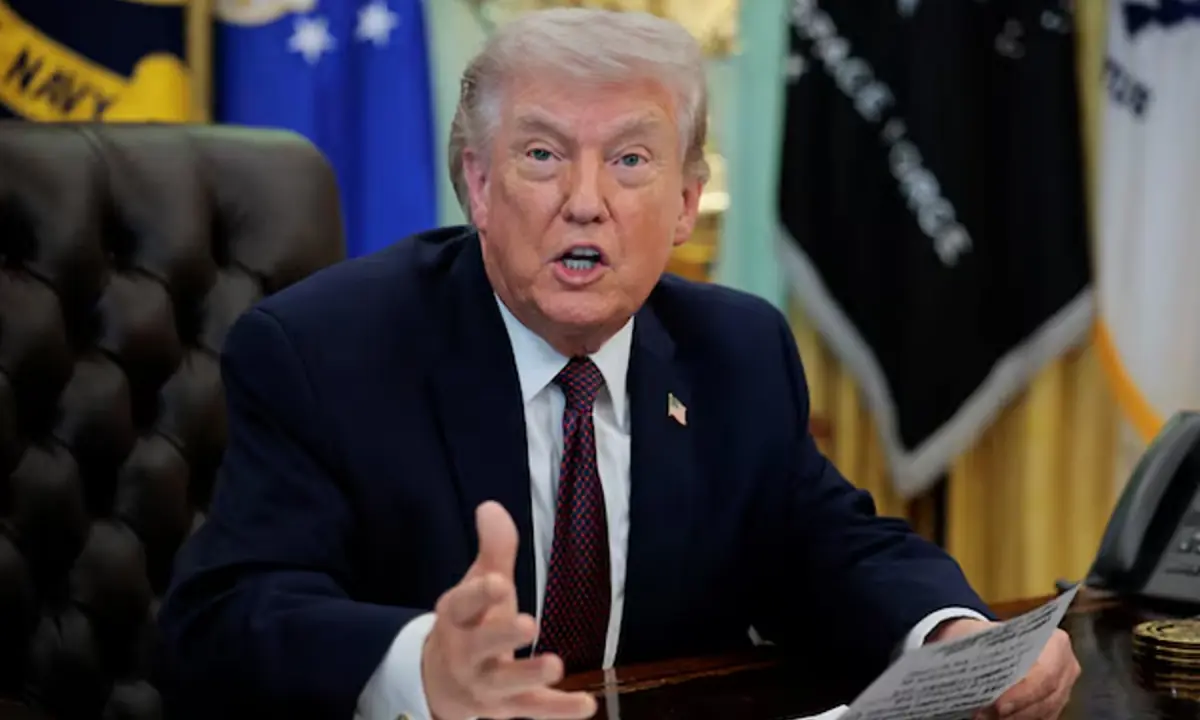
US President Donald Trump speaks during the signing ceremony for an executive order on mail ballots, in the Oval Office of the White House in Washington, D.C. on March 31, 2026. — Reuters/ File
Listen to article1x1.2x1.5x
Jump to comments

Join our Whatsapp Channel
US President Donald Trump said on Tuesday that talks between Washington and Tehran could resume over the next two days and that “ we’re more inclined to go” to Pakistan, reported
New York Post.
“You should stay there, really, because something could be happening over the next two days, and we’re more inclined to go there.
ADVERTISEMENT
“It’s more likely, you know why? Because the Field Marshal is doing a great job. He’s fantastic, and therefore it’s more likely that we go back there,“ he told
New York Post. “Why should we go to some country that has nothing to do with it?”
Trump’s statement follows
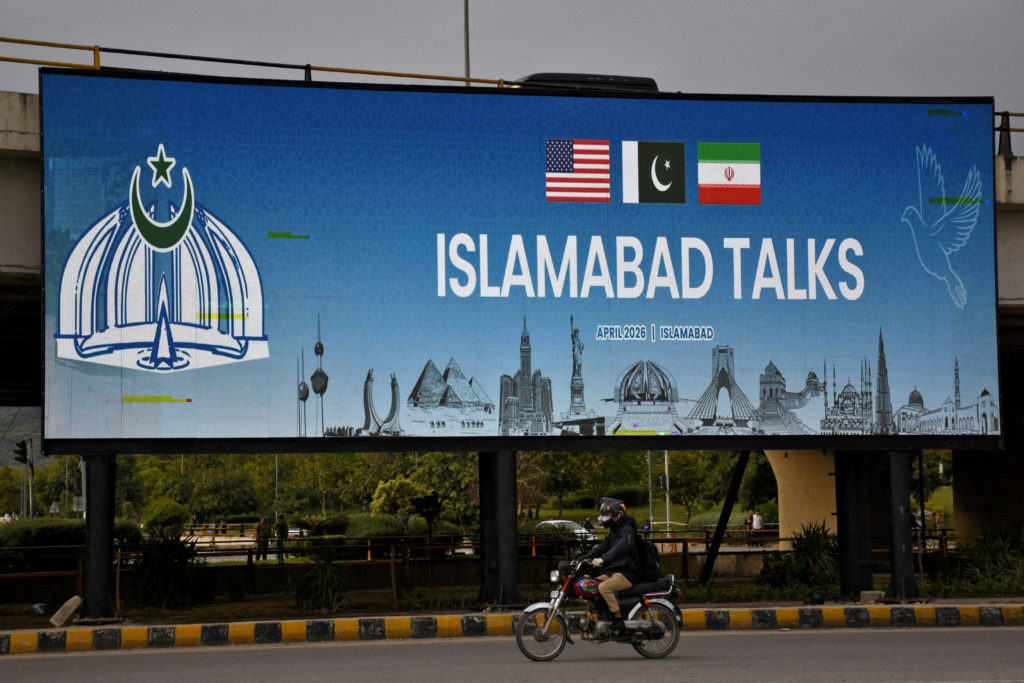
reports that negotiating teams from the US and Iran could return to Islamabad later this week, after engaging in dialogue in Pakistan’s capital over the weekend.
Pakistan hosted
direct Iran-US talks in Islamabad on Saturday and Sunday, marking the highest engagement between the two sides
since 1979. Both delegations departed the capital on Sunday after the talks ended without an agreement, but also
without a breakdown.
Earlier, two Pakistani sources with knowledge of the talks told
Reuters that Islamabad was communicating with the two sides about the timing of the next round and the meeting would likely take place on the weekend.
“We have reached out to Iran and we got a positive response that they will be open to a second round of talks,” a senior Pakistani government official was quoted as saying by
Reuters.
On Monday, officials familiar with the back-channel exchanges
told Dawn that intermediaries were working to bring Tehran and Washington back to the negotiating table, with Pakistan at the centre of the efforts, backed by Turks and Egyptians.
The immediate priority, they said, was to extend the ceasefire.
On Monday, Prime Minister Shehbaz Sharif
told a meeting of the federal cabinet that “full efforts” were ongoing to resolve the conflict.
Noting that the truce was still holding, he said, “As I am talking to you, matters that are not resolved, full efforts are underway to resolve them.”
Today, he
called on President Asif Ali Zardari, briefed him on his upcoming visits to Saudi Arabia and Turkiye “for further engagement to promote peace efforts” and took him into confidence on “all aspects of the dialogue” between Iran and the United States, a statement issued by the President’s Secretariat said.
The
ceasefire between the US and Iran, brokered on April 8 after weeks of conflict, is set to expire on April 22. While technically intact, it is increasingly precarious.
The US has moved toward enforcing a naval
blockade of Iranian ports, prompting a
warning from Tehran that such a move would be a violation of the ceasefire.
Pakistan, after the end of the talks in Islamabad, moved swiftly to consolidate international support.
Deputy Prime Minister and Foreign Minister Ishaq Dar has recently
held a series of calls with his counterparts, including Britain’s Yvette Cooper, China’s Wang Yi, Turkiye’s Hakan Fidan, Saudi Arabia’s Prince Faisal bin Farhan and Egypt’s Badr Abdelatty.
Across these engagements, Pakistan conveyed a consistent message that all parties to the conflict must uphold the ceasefire and that dialogue remains the only viable path forward. International partners responded positively.
Diplomatic sources said these engagements helped build a broad, if informal, coalition aimed at sustaining the process and buying time before the April 22 deadline.
The objective was to secure either an extension of the ceasefire or a return to technical-level engagement that could prepare the ground for a second political round.
Since the Islamabad talks, the intermediaries have helped exchange messages between the US and Iran on the outstanding issues, hoping to convince both sides to extend the truce by at least 45 days.
Both sides agreed to continue negotiations, but differences on the agenda, objectives, format and venue for the next round persisted. A diplomatic source said Iran preferred Islamabad, citing proximity, familiarity and its comfort with Pakistan’s role as mediator.
However, it was earlier reported that the US side was understood to be considering alternative options, reflecting a different assessment of the negotiating environment, logistical preferences and security considerations.
“It's more likely, you know why? Because the Field Marshal is doing a great job. He’s fantastic, and therefore it’s more likely that we go back there," he says.
www.dawn.com