United Arab Emirates to quit oil cartel Opec

Dalit

Elite Member
Joined
Mar 16, 2012
Messages
39,068
Reaction score
66,544
Reputation
12,464.0
Country of Origin
Country of Residence
1777385907874.png

The United Arab Emirates (UAE) is quitting the Opec and Opec+ groups of major oil producing nations next month after nearly 60 years of membership.

The UAE said its decision would help it meet growing global energy demand in the long term after recent investments to boost its production capacity.

It is seen as a blow to the cartel, with one analyst describing the exit as "the beginning of the end of Opec".

The Gulf state's energy minister said being a country with no obligation under the groups would give it more flexibility.

Opec was formed in 1960 by five countries - Iran, Iraq, Kuwait, Saudi Arabia and Venezuela - and its aim has been to co-ordinate production to provide steady revenue for its members.

The number of countries in the cartel has fluctuated over the years, but in addition to the five founding members it also includes Algeria, Equatorial Guinea, Gabon, Libya, Nigeria and the Republic of the Congo.

The UAE joined in 1967, and its departure will leave the cartel with 11 members. There are an additional 10 non-Opec members in the wider Opec+ alliance.

Saul Kavonic, head of energy research at MST Financial, said it was "the beginning of the end of Opec".

"With the UAE leaving, Opec loses about 15% of its capacity and one of its most compliant members."

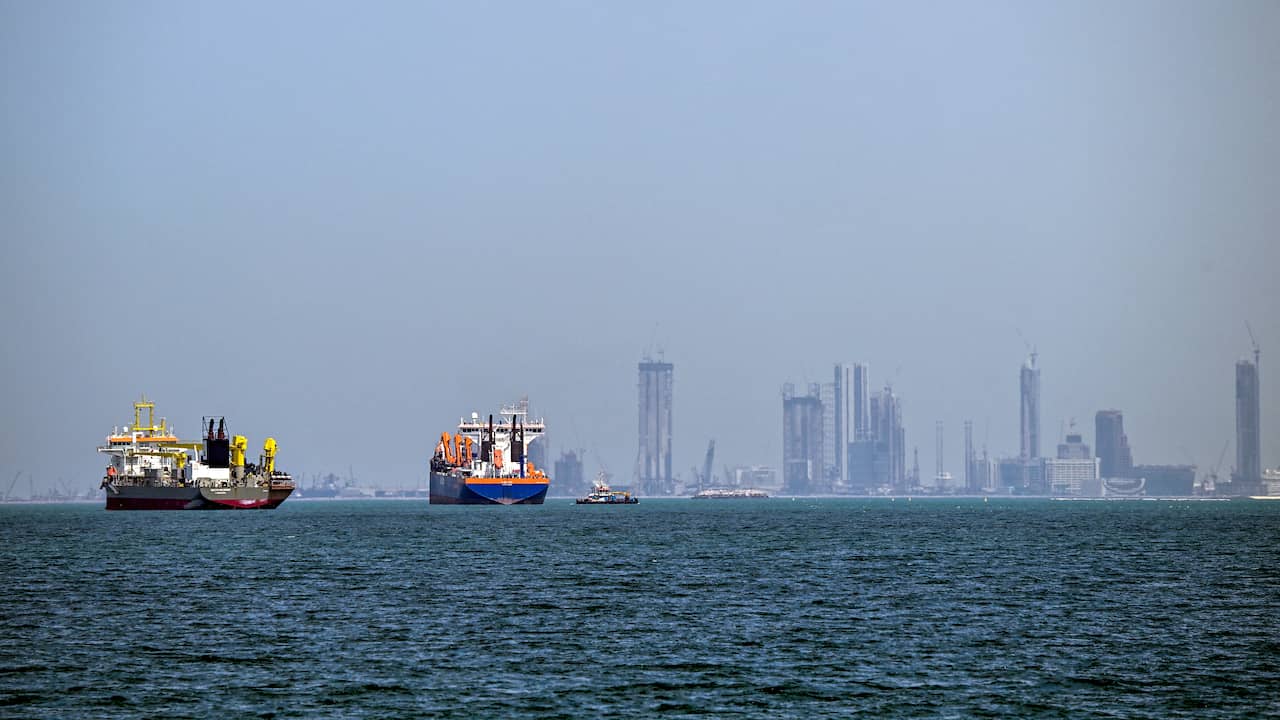
The UAE's decision came as the World Bank warned the war in the Middle East has caused the biggest loss of oil supply on record.

Energy prices will rise by about a quarter on average as a result this year, it said, while it could take six months for shipping through the key Strait of Hormuz to return to pre-war levels.

"The poorest people, who spend the highest share of their income on food and fuels, will be hit the hardest," said the World Bank's chief economist Indermit Gill.

The UAE's decision to leave Opec will not have an immediate impact on global energy supply, due to the ongoing closure of the Strait of Hormuz, but could lead to a longer-term boost in output.

The country has invested heavily in boosting its production capacity and has wanted for a long time to pump more oil, economists said.

David Oxley, chief climate and commodities economist at Capital Economics, said its departure could lead to lower oil prices but higher volatility on the market in the coming decades.

He added that while the UAE is small, the implications could be major if other member states leave, or countries such as Russia and Saudi Arabia decide to ramp up production as a result.
Dr Carole Nakhle, chief executive of Crystol Energy and secretary general of the Arab Energy Club, told the BBC the UAE's decision "has been a long time in the making".

"Abu Dhabi has pursued ambitious production capacity growth, yet often felt constrained by group quotas, especially amid uneven compliance by some members," she said.

Nakhle added that Iran's actions as an Opec member were likely to have reinforced the UAE's decision.

According to the latest figures from Opec, UAE produces 2.9 million barrels of oil a day. Saudi Arabia, the de facto leader of Opec, produces nine million barrels of oil.

"Saudi Arabia will struggle to keep the rest of Opec together, and effectively have to do most of the heavy lifting regarding internal compliance and market management on its own," Kavonic said, adding other Opec members could follow suit.

"This present a fundamental geopolitical reshaping of the Middle East and oil markets," he added.
 

UAE leaves OPEC, citing national interest in 'a new energy age'​

The UAE’s historic decision is a major blow to the alliance of oil producers, just as the global energy crisis is escalating over Iran’s blockade of the Strait of Hormuz, but the Gulf state insists its decision “enhances the UAE’s ability to respond to evolving market needs."​


The United Arab Emirates announced on Tuesday that it will leave the Organisation of the Petroleum Exporting Countries (OPEC) effective 1 May.

“The time has come to focus our efforts on what our national interest dictates and our commitment to our investors, customers, partners and global energy markets," the UAE said in a statement to state news agency WAM.

The UAE explained that its decision “follows a comprehensive review of the UAE’s production policy and its current and future capacity and is based on our national interest and our commitment to contributing effectively to meeting the market’s pressing needs.”

The UAE’s dramatic decision to quit the alliance of the world’s biggest oil producers and make its own sovereign decisions away from Saudi Arabia and the other OPEC members strikes a heavy blow to the oil exporting countries who produce a third of the global oil supply and signals a fundamental reshape of the global energy interactions, just as the global energy crisis is escalating over Iran’s blockade of the Strait of Hormuz.

The UAE has previously criticised the OPEC members for inaction and lack of support during Iran’s attacks on the Gulf state, which absorbed most of the Iranian missiles and drones.

To reassure the markets amid the spiralling global energy crisis, the UAE said that it “will continue to act responsibly," adding that the decision ”enhances the UAE’s ability to respond to evolving market needs."

In addition, the UAE explained that its decision is “driven by national interests and the country’s commitment to actively contributing to meeting the urgent needs of the market, particularly given the ongoing geopolitical volatility in the near term, stemming from disruptions in the Arabian Gulf and the Strait of Hormuz, which impact supply dynamics.”

One of the world’s major oil producers, the UAE has been insisting that OPEC members should do more for the alliance and for the Gulf states attacked by Iran and in its statement on Tuesday, it underlined that it “made significant contributions and even greater sacrifices for the benefit of all.”

In its statement, the UAE is insisting that its decision is meant to better serve global energy markets, underlining that “the UAE is a trusted producer of some of the world’s most cost-competitive and lower-carbon barrels, which will play an important role in supporting global growth and emissions reduction."

The Gulf state explained that “this decision aligns with the UAE’s long-term strategic and economic vision and the development of its energy sector."

"It reinforces the UAE’s commitment to its role as a responsible and reliable producer that anticipates the future of global energy markets," the statement said.

 
The United Arab Emirates (UAE) announced on Tuesday its decision to withdraw from the oil cartel OPEC. Additionally, the country will no longer participate in the monthly OPEC+ meetings, where ally Russia joins the major oil-producing OPEC nations at the table.

The UAE's withdrawal marks a significant blow to the OPEC cartel. The organization is under heavy pressure due to the ongoing conflict in the Middle East. As one of the group's largest producers and an ally of Russia, the Emirates plan to leave OPEC on May 1 after sixty years of membership.

This unexpected move comes after the country, which is also a United States ally, criticized other Arab nations. It claimed they were not doing enough to protect the UAE against numerous recent Iranian attacks.

The decision appears to be a major blow to the oil hegemony of Saudi Arabia, which holds a leading role in the oil organizations. However, the UAE’s departure from OPEC represents a major victory for U.S. President Donald Trump, who has accused the organization of 'ripping off the rest of the world' by keeping oil prices artificially high.

The exact consequences of the UAE's decision remain to be seen. 'While the short-term effects may be limited due to ongoing disruptions in the Strait of Hormuz, the longer-term consequence is a structurally weakened OPEC,' an analyst from market research firm Rystad Energy told Reuters.

 
Letting their land being used to bomb Iran was i guess a poor idea for them.
They are sitting on the same table as Israel and USA says it all….
They may be
But what I am curious about is whether Sharjah and other remaining emirates have also thrown their lot or completely bowed to ABZ and Dubai?
 

Users who are viewing this thread

Pakistan Defence Latest

Latest Posts

Back
Top