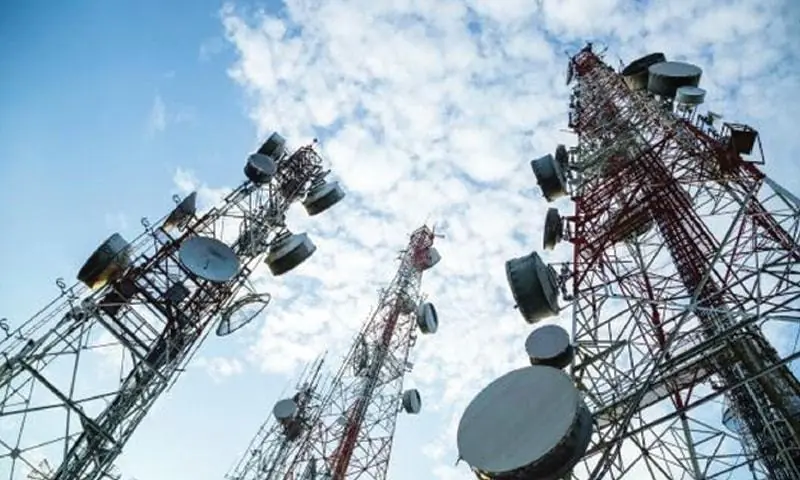
Govt aims to raise telecom fiberisation to nearly 60% in three years
IT Minister Shaza Fatima Khawaja said Pakistan aims to raise telecom tower fiberisation from 16% to nearly 60% in three years. She also said fibreised home passes are targeted to rise to at least 10 million within two years.
April 30, 2026
ISLAMABAD: Federal Minister for Information Technology and Telecommunication Shaza Fatima Khawaja said the government is targeting a sharp increase in telecom fiberisation over the next three years, while also seeking to expand fibre access to homes and strengthen the country’s digital infrastructure.
Speaking at the EU-Pakistan Business Forum 2026, the minister said only a small share of telecom towers in Pakistan are currently connected through fibre.
"Only 16% of our towers are fiberised at this point. Our target is that in the next three years, we will increase that to almost 60%," she said.
She added that Pakistan also plans to increase fibreised home passes from around 2-3 million to at least 10 million within the next two years. According to the minister, the government has removed right-of-way charges under the prime minister’s direction to make fibre deployment easier across the country and to create a more investment-friendly environment for the sector.
Khawaja said Pakistan has already landed two to three submarine internet cables. She said two of them are expected to become operational this year, while another is due next year. She also said agreements have been signed with Central Asian countries as part of efforts to position Pakistan as a regional data transit hub.
The minister said data usage in Pakistan has grown by about 25% over the past two years, driven by a young population that includes more than 150 million digital-first users. To address network capacity constraints, she said the government recently held a major spectrum auction covering five frequency bands ranging from 700 MHz to 3500 MHz.
According to her, 480 MHz of spectrum was successfully auctioned in what she described as one of the largest spectrum allocations globally, taking Pakistan’s total spectrum capacity to more than 750 MHz. "This is not a marginal improvement but a structural correction required for future connectivity needs," she said.
She said the additional spectrum would improve current 4G services and support the rollout of 5G. The minister noted that Pakistan’s connectivity model remains overwhelmingly dependent on mobile broadband, with around 98% of users relying on wireless networks and only 2% using fibre-based networks. She said expanding fibre infrastructure is necessary to meet future demand and support the growth of the digital economy.
Khawaja further said Pakistan is aligning its regulatory framework with the General Data Protection Regulation (GDPR) to promote trust and transparency. She said the country, with a population of more than 240 million, around 200 million mobile subscribers and 150 million mobile internet users, presents a significant market for digital investment.
The minister also said the RAAST payment system is supporting Pakistan’s shift towards a cashless economy by improving transparency and financial inclusion.
Digital infrastructure push
The minister’s remarks outlined the government’s broader push to expand digital connectivity through fibre deployment, additional spectrum and international data links. The measures, as presented by Khawaja, are aimed at improving network quality, preparing for future technologies and increasing Pakistan’s appeal for investment in the digital sector.