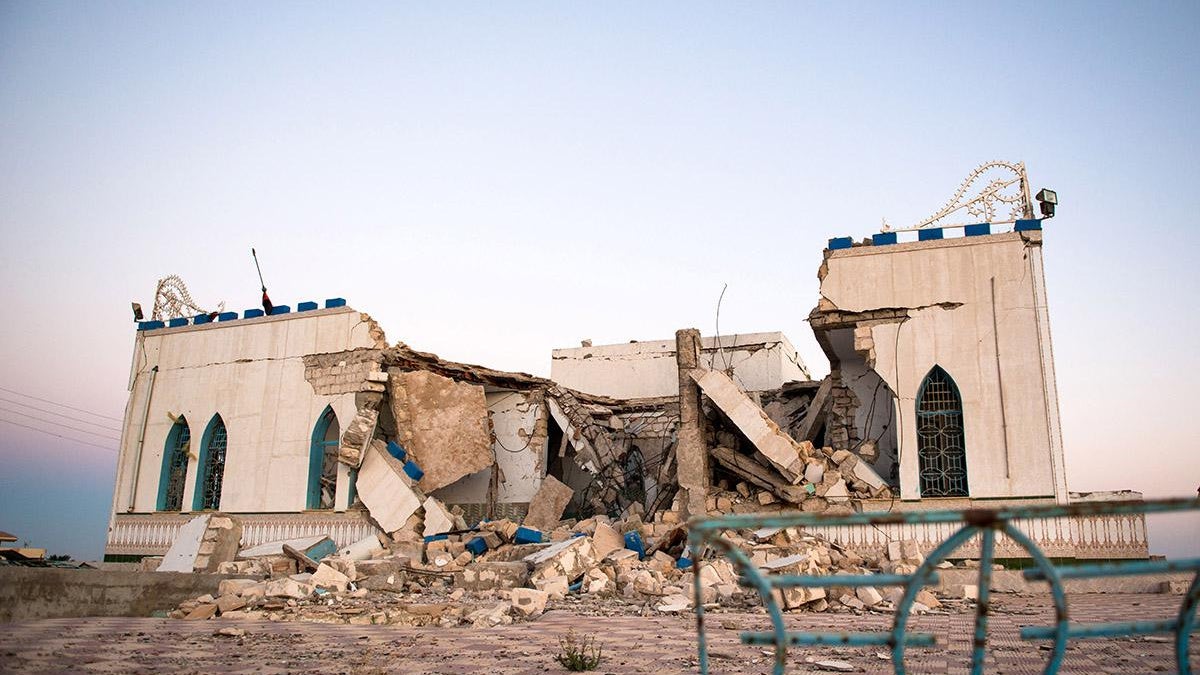
Attacks on Sufis and Their Shrines are Growing in Bangladesh

MNZGamerX

Registered Member
Joined
Dec 12, 2023
Messages
1,751
Reaction score
1,907
Reputation
927.3
Country of Origin
Country of Residence
The Jamaat-e-Islami and affiliated groups are attacking Bangladesh’s long tradition of cultural and social pluralism.

By Purnima Chowhan
May 25, 2026

thediplomat_2025-08-05-095336.jpg

In the last two months, at least two Sufi shrines have come under attack by Islamist mobs in Bangladesh. The first was on April 11, when a Pir (spiritual leader) was beaten to death by a mob of around 300-400 people in an attack on a shrine in Kushtia in western Bangladesh. Then, on May 14, a mob vandalized the centuries-old shrine of Hazrat Shah Ali Baghdadi in Mirpur, Dhaka, where they beat people up with sticks.

The Bangladesh Jamaat-e-Islami, the country’s largest Islamist party, was allegedly involved in the two attacks. Although it has denied the allegations, evidence points in the direct of the Jamaat, which is now the main opposition party in Bangladesh.

Following the attack on the shrine in Mirpur on May 14, police arrested three men reportedly linked to the Jamaat based on video footage. Local parliamentarian Meer Ahmad Bin Qasem Arman, who was elected in the recent February 12 general elections on a Jamaat ticket, admitted that some of those arrested worked in his election campaign. Similarly, the murder of the Pir in Kushtia was reportedly led by a former district president of Chhatra Shibir, Jamaat’s student wing.

When they target Sufis, their places of worship and practices, Islamists often claim that their attacks are carried out in the name of the “Tauhidi Janata” (monotheistic masses).

Radical Islamists view the mystical and syncretic nature of Sufism as an intolerable deviation from their fundamentalist ideology. Hardliners consider the Sufi practices of visiting shrines, seeking intercession from saints, and playing devotional music (such as qawwali) to be bid’ah (an un-Islamic innovation) and a form of shirk (polytheism). Because Sufism emphasizes spiritual inclusivity, often integrating localized cultural traditions and attracting Hindus and Buddhists, Islamists view it Sufism as a threat to their monolithic worldview.

Since the fall of the Sheikh Hasina government on August 5, 2024, the violent targeting of shrines, Sufi institutions, and spiritual centers across Bangladesh has surged.

Several of these attacks are the work of the Jamaat, its leaders and activists.

During the 1971 Liberation War, the Jamaat-e-Islami was opposed to independence and collaborated with the Pakistan military in the horrific violence that was unleashed on the Bangladeshi people. Its leaders were convicted on charges of crimes against humanity by a special war crimes tribunal in Bangladesh.

In recent years, and especially in the run-up to the February general election, Jamaat leaders claimed the party had changed its position and supported Bangladesh’s emergence as an independent nation and promised to not seek to apply Shariah law. Importantly, they claimed to have adopted an inclusive ideology that was more accepting of Bangladesh’s religious minorities, even allowing a Hindu to contest on the Jamaat ticket. However, the Jamaat continues to target minorities violently.

Conflict Between Ideology and Political Strategy

Ideologically, Jamaat-e-Islami is a hardline Sunni Islamic political party inspired by the doctrines of Maulana Abul A’la Maududi. The party is opposed to Sufism, shrine culture, and Pir-centric religious practices. This ideological opposition is not new, but concern arises when it crosses into violence.

Viewed separately, the attacks on Sufis appear to be spontaneous expressions of religious anger. But the repetition of similar tactics, rhetoric, and organizational patterns raises several questions: Are these really isolated incidents, or part of a wider ideological and political project? Why is violence fueled by religious sentiment spreading so rapidly in Bangladesh? Many of these attacks on shrines, looting, and even killings happen in the full view of the administration.

Jamaat has long been accused of using religious sentiment as a tool of political mobilization. Its rhetoric frequently invokes themes such as “defending Islam,” “upholding morality,” or “protecting religious values.” But when such language contributes to violence, the issue moves beyond political discourse and becomes a matter of public security.

Mobilizing the public through religious sentiment increasingly functions as a political tool for the party. The process often begins with an allegation framed around religion, followed by organized mobilization and public incitement. Over time, this has become a recognizable pattern.

Rise of Mob Politics and Impunity

The rise of “mob justice” has become increasingly visible in Bangladesh, particularly after the fall of Hasina’s government and during the interim administration led by Dr. Muhammad Yunus. According to a recent study by the think-tank Maqam: Center for Sufi Heritage, at least 97 shrines were attacked over the 17 months when Yunus was at the helm. Three people were killed and 468 others were injured in these attacks.

Several attacks have involved bulldozing, arson, and looting. In Sherpur, the Murshidpur Darbar shrine was looted and burned in November 2024, while in Rajbari, the grave of “Nura Pagla,” a Sufi dervish, was exhumed and his remains burned in September 2025.

Reports from multiple incidents alleged the involvement of Jamaat leaders, alongside members of the ruling BNP and the National Citizen Party. In Sylhet, the centuries-old Urs festival at Shah Paran’s shrine was halted in September 2004, after madrasa students with local administrative support unleashed violence.

Despite the scale of the violence, only 11 cases were reportedly filed between August 2024 and February 2026, and most investigations have shown little progress. Video evidence circulated publicly, yet law enforcement agencies failed to act.

These attacks that target shrines, minorities, journalists, and cultural organizations reflect a larger cultural intolerance in the country. It appears that perpetrators of mob violence operate under political protection, often linked to Jamaat or allied groups. Repeated involvement of affiliated activists suggests tacit endorsement. Meanwhile, administrative inaction – even during attacks witnessed by police or security forces – has deepened public doubts about political pressure and impunity.

Which Path Is Bangladesh Taking?

If any group can repeatedly incite crowds to impose its ideology through violence, the issue threatens the social foundations of the state itself. Beyond being simply religious disputes, attacks on shrines strike at Bangladesh’s long tradition of cultural and social pluralism.

This is why Jamaat-e-Islami’s name repeatedly surfaces in discussions surrounding these attacks. The party’s ideological position, grassroots networks, and history of mobilizing religious sentiment consistently place it at the center of suspicion. Although direct party involvement may be difficult to prove in every case, the identities of those accused continue to reinforce public doubts.

History shows that once mob culture becomes normalized, it rarely remains under anyone’s control. An attack on a shrine today may become an attack on another religious or social group tomorrow. Unless political forces take a firm stand against violence, this cycle will continue.
 
The Jamaat-e-Islami and affiliated groups are attacking Bangladesh’s long tradition of cultural and social pluralism.

By Purnima Chowhan
May 25, 2026

View attachment 198850

In the last two months, at least two Sufi shrines have come under attack by Islamist mobs in Bangladesh. The first was on April 11, when a Pir (spiritual leader) was beaten to death by a mob of around 300-400 people in an attack on a shrine in Kushtia in western Bangladesh. Then, on May 14, a mob vandalized the centuries-old shrine of Hazrat Shah Ali Baghdadi in Mirpur, Dhaka, where they beat people up with sticks.

The Bangladesh Jamaat-e-Islami, the country’s largest Islamist party, was allegedly involved in the two attacks. Although it has denied the allegations, evidence points in the direct of the Jamaat, which is now the main opposition party in Bangladesh.

Following the attack on the shrine in Mirpur on May 14, police arrested three men reportedly linked to the Jamaat based on video footage. Local parliamentarian Meer Ahmad Bin Qasem Arman, who was elected in the recent February 12 general elections on a Jamaat ticket, admitted that some of those arrested worked in his election campaign. Similarly, the murder of the Pir in Kushtia was reportedly led by a former district president of Chhatra Shibir, Jamaat’s student wing.

When they target Sufis, their places of worship and practices, Islamists often claim that their attacks are carried out in the name of the “Tauhidi Janata” (monotheistic masses).

Radical Islamists view the mystical and syncretic nature of Sufism as an intolerable deviation from their fundamentalist ideology. Hardliners consider the Sufi practices of visiting shrines, seeking intercession from saints, and playing devotional music (such as qawwali) to be bid’ah (an un-Islamic innovation) and a form of shirk (polytheism). Because Sufism emphasizes spiritual inclusivity, often integrating localized cultural traditions and attracting Hindus and Buddhists, Islamists view it Sufism as a threat to their monolithic worldview.

Since the fall of the Sheikh Hasina government on August 5, 2024, the violent targeting of shrines, Sufi institutions, and spiritual centers across Bangladesh has surged.

Several of these attacks are the work of the Jamaat, its leaders and activists.

During the 1971 Liberation War, the Jamaat-e-Islami was opposed to independence and collaborated with the Pakistan military in the horrific violence that was unleashed on the Bangladeshi people. Its leaders were convicted on charges of crimes against humanity by a special war crimes tribunal in Bangladesh.

In recent years, and especially in the run-up to the February general election, Jamaat leaders claimed the party had changed its position and supported Bangladesh’s emergence as an independent nation and promised to not seek to apply Shariah law. Importantly, they claimed to have adopted an inclusive ideology that was more accepting of Bangladesh’s religious minorities, even allowing a Hindu to contest on the Jamaat ticket. However, the Jamaat continues to target minorities violently.

Conflict Between Ideology and Political Strategy

Ideologically, Jamaat-e-Islami is a hardline Sunni Islamic political party inspired by the doctrines of Maulana Abul A’la Maududi. The party is opposed to Sufism, shrine culture, and Pir-centric religious practices. This ideological opposition is not new, but concern arises when it crosses into violence.

Viewed separately, the attacks on Sufis appear to be spontaneous expressions of religious anger. But the repetition of similar tactics, rhetoric, and organizational patterns raises several questions: Are these really isolated incidents, or part of a wider ideological and political project? Why is violence fueled by religious sentiment spreading so rapidly in Bangladesh? Many of these attacks on shrines, looting, and even killings happen in the full view of the administration.

Jamaat has long been accused of using religious sentiment as a tool of political mobilization. Its rhetoric frequently invokes themes such as “defending Islam,” “upholding morality,” or “protecting religious values.” But when such language contributes to violence, the issue moves beyond political discourse and becomes a matter of public security.

Mobilizing the public through religious sentiment increasingly functions as a political tool for the party. The process often begins with an allegation framed around religion, followed by organized mobilization and public incitement. Over time, this has become a recognizable pattern.

Rise of Mob Politics and Impunity

The rise of “mob justice” has become increasingly visible in Bangladesh, particularly after the fall of Hasina’s government and during the interim administration led by Dr. Muhammad Yunus. According to a recent study by the think-tank Maqam: Center for Sufi Heritage, at least 97 shrines were attacked over the 17 months when Yunus was at the helm. Three people were killed and 468 others were injured in these attacks.

Several attacks have involved bulldozing, arson, and looting. In Sherpur, the Murshidpur Darbar shrine was looted and burned in November 2024, while in Rajbari, the grave of “Nura Pagla,” a Sufi dervish, was exhumed and his remains burned in September 2025.

Reports from multiple incidents alleged the involvement of Jamaat leaders, alongside members of the ruling BNP and the National Citizen Party. In Sylhet, the centuries-old Urs festival at Shah Paran’s shrine was halted in September 2004, after madrasa students with local administrative support unleashed violence.

Despite the scale of the violence, only 11 cases were reportedly filed between August 2024 and February 2026, and most investigations have shown little progress. Video evidence circulated publicly, yet law enforcement agencies failed to act.

These attacks that target shrines, minorities, journalists, and cultural organizations reflect a larger cultural intolerance in the country. It appears that perpetrators of mob violence operate under political protection, often linked to Jamaat or allied groups. Repeated involvement of affiliated activists suggests tacit endorsement. Meanwhile, administrative inaction – even during attacks witnessed by police or security forces – has deepened public doubts about political pressure and impunity.

Which Path Is Bangladesh Taking?

If any group can repeatedly incite crowds to impose its ideology through violence, the issue threatens the social foundations of the state itself. Beyond being simply religious disputes, attacks on shrines strike at Bangladesh’s long tradition of cultural and social pluralism.

This is why Jamaat-e-Islami’s name repeatedly surfaces in discussions surrounding these attacks. The party’s ideological position, grassroots networks, and history of mobilizing religious sentiment consistently place it at the center of suspicion. Although direct party involvement may be difficult to prove in every case, the identities of those accused continue to reinforce public doubts.

History shows that once mob culture becomes normalized, it rarely remains under anyone’s control. An attack on a shrine today may become an attack on another religious or social group tomorrow. Unless political forces take a firm stand against violence, this cycle will continue.

Hopefully, BNP won’t make the mistake like last time.

BAL was aggressively clamping down on incitement of hatred against Sufis.

Hence their popularity in greater Sylhet.

Attacks on Sufi shrines is a red line that must not be crossed.

Perpetrators must be punished exactly like they were under BAL.
 
The Jamaat-e-Islami and affiliated groups are attacking Bangladesh’s long tradition of cultural and social pluralism.

By Purnima Chowhan
May 25, 2026

View attachment 198850

In the last two months, at least two Sufi shrines have come under attack by Islamist mobs in Bangladesh. The first was on April 11, when a Pir (spiritual leader) was beaten to death by a mob of around 300-400 people in an attack on a shrine in Kushtia in western Bangladesh. Then, on May 14, a mob vandalized the centuries-old shrine of Hazrat Shah Ali Baghdadi in Mirpur, Dhaka, where they beat people up with sticks.

The Bangladesh Jamaat-e-Islami, the country’s largest Islamist party, was allegedly involved in the two attacks. Although it has denied the allegations, evidence points in the direct of the Jamaat, which is now the main opposition party in Bangladesh.

Following the attack on the shrine in Mirpur on May 14, police arrested three men reportedly linked to the Jamaat based on video footage. Local parliamentarian Meer Ahmad Bin Qasem Arman, who was elected in the recent February 12 general elections on a Jamaat ticket, admitted that some of those arrested worked in his election campaign. Similarly, the murder of the Pir in Kushtia was reportedly led by a former district president of Chhatra Shibir, Jamaat’s student wing.

When they target Sufis, their places of worship and practices, Islamists often claim that their attacks are carried out in the name of the “Tauhidi Janata” (monotheistic masses).

Radical Islamists view the mystical and syncretic nature of Sufism as an intolerable deviation from their fundamentalist ideology. Hardliners consider the Sufi practices of visiting shrines, seeking intercession from saints, and playing devotional music (such as qawwali) to be bid’ah (an un-Islamic innovation) and a form of shirk (polytheism). Because Sufism emphasizes spiritual inclusivity, often integrating localized cultural traditions and attracting Hindus and Buddhists, Islamists view it Sufism as a threat to their monolithic worldview.

Since the fall of the Sheikh Hasina government on August 5, 2024, the violent targeting of shrines, Sufi institutions, and spiritual centers across Bangladesh has surged.

Several of these attacks are the work of the Jamaat, its leaders and activists.

During the 1971 Liberation War, the Jamaat-e-Islami was opposed to independence and collaborated with the Pakistan military in the horrific violence that was unleashed on the Bangladeshi people. Its leaders were convicted on charges of crimes against humanity by a special war crimes tribunal in Bangladesh.

In recent years, and especially in the run-up to the February general election, Jamaat leaders claimed the party had changed its position and supported Bangladesh’s emergence as an independent nation and promised to not seek to apply Shariah law. Importantly, they claimed to have adopted an inclusive ideology that was more accepting of Bangladesh’s religious minorities, even allowing a Hindu to contest on the Jamaat ticket. However, the Jamaat continues to target minorities violently.

Conflict Between Ideology and Political Strategy

Ideologically, Jamaat-e-Islami is a hardline Sunni Islamic political party inspired by the doctrines of Maulana Abul A’la Maududi. The party is opposed to Sufism, shrine culture, and Pir-centric religious practices. This ideological opposition is not new, but concern arises when it crosses into violence.

Viewed separately, the attacks on Sufis appear to be spontaneous expressions of religious anger. But the repetition of similar tactics, rhetoric, and organizational patterns raises several questions: Are these really isolated incidents, or part of a wider ideological and political project? Why is violence fueled by religious sentiment spreading so rapidly in Bangladesh? Many of these attacks on shrines, looting, and even killings happen in the full view of the administration.

Jamaat has long been accused of using religious sentiment as a tool of political mobilization. Its rhetoric frequently invokes themes such as “defending Islam,” “upholding morality,” or “protecting religious values.” But when such language contributes to violence, the issue moves beyond political discourse and becomes a matter of public security.

Mobilizing the public through religious sentiment increasingly functions as a political tool for the party. The process often begins with an allegation framed around religion, followed by organized mobilization and public incitement. Over time, this has become a recognizable pattern.

Rise of Mob Politics and Impunity

The rise of “mob justice” has become increasingly visible in Bangladesh, particularly after the fall of Hasina’s government and during the interim administration led by Dr. Muhammad Yunus. According to a recent study by the think-tank Maqam: Center for Sufi Heritage, at least 97 shrines were attacked over the 17 months when Yunus was at the helm. Three people were killed and 468 others were injured in these attacks.

Several attacks have involved bulldozing, arson, and looting. In Sherpur, the Murshidpur Darbar shrine was looted and burned in November 2024, while in Rajbari, the grave of “Nura Pagla,” a Sufi dervish, was exhumed and his remains burned in September 2025.

Reports from multiple incidents alleged the involvement of Jamaat leaders, alongside members of the ruling BNP and the National Citizen Party. In Sylhet, the centuries-old Urs festival at Shah Paran’s shrine was halted in September 2004, after madrasa students with local administrative support unleashed violence.

Despite the scale of the violence, only 11 cases were reportedly filed between August 2024 and February 2026, and most investigations have shown little progress. Video evidence circulated publicly, yet law enforcement agencies failed to act.

These attacks that target shrines, minorities, journalists, and cultural organizations reflect a larger cultural intolerance in the country. It appears that perpetrators of mob violence operate under political protection, often linked to Jamaat or allied groups. Repeated involvement of affiliated activists suggests tacit endorsement. Meanwhile, administrative inaction – even during attacks witnessed by police or security forces – has deepened public doubts about political pressure and impunity.

Which Path Is Bangladesh Taking?

If any group can repeatedly incite crowds to impose its ideology through violence, the issue threatens the social foundations of the state itself. Beyond being simply religious disputes, attacks on shrines strike at Bangladesh’s long tradition of cultural and social pluralism.

This is why Jamaat-e-Islami’s name repeatedly surfaces in discussions surrounding these attacks. The party’s ideological position, grassroots networks, and history of mobilizing religious sentiment consistently place it at the center of suspicion. Although direct party involvement may be difficult to prove in every case, the identities of those accused continue to reinforce public doubts.

History shows that once mob culture becomes normalized, it rarely remains under anyone’s control. An attack on a shrine today may become an attack on another religious or social group tomorrow. Unless political forces take a firm stand against violence, this cycle will continue.
Jamat Islami in Pakistan visits Data Darbar with flowers when its elections time, these islamist sell their soul for political power and votes. They'll go whichever way the wind is strongest.
 
Jamat Islami in Pakistan visits Data Darbar with flowers when its elections time, these islamist sell their soul for political power and votes. They'll go whichever way the wind is strongest.
The Islamist political parties were the primary vehicles for Wahhabi/Salafi indoctrination in Pakistan. They sold their souls and country for Gulf cash. I hope Bangladesh does not make the same mistake.
 
The Islamist political parties were the primary vehicles for Wahhabi/Salafi indoctrination in Pakistan. They sold their souls and country for Gulf cash. I hope Bangladesh does not make the same mistake.
They will because those who fund these ideologies use them as a political tool, to gain influence and power in those nations, if they trade with you, give you billions the ideology comes with it. Same way how Usa through trade, economy, aid spreads its secular ideology. But the islamist ideology is also aligned with the west, they promote a modern version of Islam which naturally aligns with the west. Example Syrian Jolani, Saudis, Qataris etc.
 
Thats sad.
The sufi saints preached Islam in BD.
I went to Bayazid Bustami shrine . What an experience it was .
 
The Islamist political parties were the primary vehicles for Wahhabi/Salafi indoctrination in Pakistan. They sold their souls and country for Gulf cash. I hope Bangladesh does not make the same mistake.
Wahabis / salafi indoctrination is not any worse than Shia indoctrination.
 
The Islamist political parties were the primary vehicles for Wahhabi/Salafi indoctrination in Pakistan. They sold their souls and country for Gulf cash. I hope Bangladesh does not make the same mistake.

This is what I am concerned about for Bangladesh and expressed my concerns about the regime change operation in 2024 exactly for this reason as the Jamaatis and NCP are chasing dollars and following an American agenda for the country which is very similar to what happened to Pakistan and in some ways this is a reply ... While we all wanted the Hasina regime toppled in should have been done on our terms but after August 5 the uprising was hijacked and a CIA selected team installed in power ...
 
This is what I am concerned about for Bangladesh and expressed my concerns about the regime change operation in 2024 exactly for this reason as the Jamaatis and NCP are chasing dollars and following an American agenda for the country which is very similar to what happened to Pakistan and in some ways this is a reply ... While we all wanted the Hasina regime toppled in should have been done on our terms but after August 5 the uprising was hijacked and a CIA selected team installed in power ...
Hasina regime was pro India and anti Pakistan but also maintained good and balanced relations between Russia China and Usa. The current regime (as it looks) wants balanced relations between Pakistan and India, good relations with Russia China but more pro Usa regime. India is certainly not happy, they want anti Pakistan regime and will not accept a regime which maintains good relations with Pakistan.
 
Hasina regime was pro India and anti Pakistan but also maintained good and balanced relations between Russia China and Usa. The current regime (as it looks) wants balanced relations between Pakistan and India, good relations with Russia China but more pro Usa regime. India is certainly not happy, they want anti Pakistan regime and will not accept a regime which maintains good relations with Pakistan.

I agree but the Indians also believe that Pakistan's interest in Bangladesh is actually motivated at a distance by the USA and their objective is to radicalize the country through the Jamaat. Pakistan may have independent reasons for taking an interest in Bangladesh that coincided with the regime change in 2024 but the timing is just a little too coincidental as if everything was planned beforehand and the Interim Government advisors had been selected well beforehand by the Americans and vetted by the CIA. There were some very bad choices as the anti-Hasina movement and the Interim Government was fully infiltrated by the Indians. There is now a complicated game being played in Bangladesh ...
 
Thats sad.
The sufi saints preached Islam in BD.
I went to Bayazid Bustami shrine . What an experience it was .
We call them sufis but they were sunni Muslims who practised spirituality, were scholars etc.

This is not only taking place in Bangladesh but also many other muslim countries around the world, their aim is to destroy historical Islam and promote a modern version as demanded by their funders.

Libya:


Screenshot_20260528_191755_Chrome.jpg

Somalia:
Screenshot_20260528_191913_Chrome.jpg

Mali:
Screenshot_20260528_192035_Chrome.jpg

Yemen:
Screenshot_20260528_192131_Chrome.jpg

Iraq: They didnt even spare graves of Prophets Peace be upon them.
Screenshot_20260528_192632_Chrome.jpg
 
I agree but the Indians also believe that Pakistan's interest in Bangladesh is actually motivated at a distance by the USA and their objective is to radicalize the country through the Jamaat. Pakistan may have independent reasons for taking an interest in Bangladesh that coincided with the regime change in 2024 but the timing is just a little too coincidental as if everything was planned beforehand and the Interim Government advisors had been selected well beforehand by the Americans and vetted by the CIA. There were some very bad choices as the anti-Hasina movement and the Interim Government was fully infiltrated by the Indians. There is now a complicated game being played in Bangladesh ...
23m votes for Jamat Islami and allies is huge number, but isn't Jamat Islami in opposition. So the main policies are being implemented by BNP and allies. Ofcourse with main opposition party JI their influence is growing, they are very strong at grass root level. Pakistan influence is being overplayed by India, the main power is China. India is not happy because they want anti Pakistan regime, so a well balanced government is not acceptable.
 
We call them sufis but they were sunni Muslims who practised spirituality, were scholars etc.

This is not only taking place in Bangladesh but also many other muslim countries around the world, their aim is to destroy historical Islam and promote a modern version as demanded by their funders.

Libya:


View attachment 199187

Somalia:
View attachment 199188

Mali:
View attachment 199189

Yemen:
View attachment 199190

Iraq: They didnt even spare graves of Prophets Peace be upon them.
View attachment 199191

Yep they blow up and destroy everything, these pieces of $hit have never built anything or greatness of made any leap in science and related fields. The Sufis have had endless great people.
The Ottomans had a great policy of destroying them in battle, the Central Asian hordes had one better of mass slaughter of them.
I'm sure some idiot will say that's extreme no doubt he hasn't come across the numerous head cutting videos of theirs.
 

Users who are viewing this thread

Pakistan Defence Latest

Back
Top