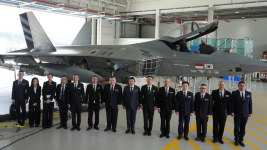
IFX Indonesian Fighter Experiment (KF21/IFX program)

I hope things go smoothly and no roadblocks occur. There are many countires who want to see IFX program collapse.

Amin, inshaAllah it will be fine.

Yes it is. That direct order plan/scheme (initial 16 planes block 2) is actually a very good thing to happen if it is executed (bringing back Indonesia share into initial 20%).

According to my analysis, pretty much Indonesia is still pretty ambitious on this project, this is why it insist to have 5th prototype that is intended since the beginning for plane development by Indonesian Aerospace (IFX, KF21 Indonesian version).
 

Hanwha Aerospace Unveils First Domestic Drone Engine Prototypes, Eyes Next-Gen KF-21 Engine​


Hyeon-gi Jang


The 5,500-pound turbofan engine, the first domestically produced long-life aircraft engine developed by Hanwha Aerospace together with the Agency for Defense Development. /Hanwha Aerospace - Seoul Economic Daily Finance News from South Korea

The 5,500-pound turbofan engine, the first domestically produced long-life aircraft engine developed by Hanwha Aerospace together with the Agency for Defense Development. /Hanwha Aerospace


Hanwha Aerospace (012450.KS) unveiled the first prototypes of two drone engines developed with independent domestic technology together with the Agency for Defense Development (ADD), and threw down the gauntlet to develop an advanced engine to be mounted on the next-generation KF-21 fighter jet.

Hanwha Aerospace held the "Ground Test Launch Ceremony for First Prototype of Domestic Long-Life Aircraft Engine" at its Changwon No. 1 plant in South Gyeongsang Province on Monday, unveiling a 5,500-pound engine for a low-observable unmanned wingman and a 1,400-horsepower turboprop engine for a medium-altitude unmanned aerial vehicle (MUAV).

Domestic companies have succeeded in developing short-life aircraft engines such as missile engines under ADD leadership and are proceeding to mass production, but this is the first time a prototype of a long-life engine capable of more than several thousand hours of use has been completed.

About 300 officials attended the event, including ADD President Lee Gun-wan, Jung Ki-young, head of the Future Combat Power Program Bureau at the Defense Acquisition Program Administration (DAPA), Kim Sung-joong, head of the Planning and Management Staff at Air Force Headquarters, and Kim Sun, head of Hanwha Aerospace's aviation business division.

The low-observable unmanned wingman is a next-generation unmanned aerial system that performs various missions such as reconnaissance, electronic warfare, and attack in conjunction with the KF-21 fighter jet. The MUAV is expected to contribute to improving the Korean military's intelligence capabilities by flying for extended periods and monitoring and reconnoitering wide areas.

The 1,400-horsepower turboprop engine developed by Hanwha Aerospace together with the Agency for Defense Development. /Hanwha Aerospace - Seoul Economic Daily Finance News from South Korea

The 1,400-horsepower turboprop engine developed by Hanwha Aerospace together with the Agency for Defense Development. /Hanwha Aerospace

The engines unveiled this time are successfully undergoing ground test runs after completing assembly. Once development is completed, Korea will achieve localization of drones by securing not only the airframe, flight control, and mission equipment, but also the engine—called the "heart" of the aircraft—with independent domestic technology.

"The completion of this first prototype of a domestic aircraft engine and the launch of ground testing is a true beginning toward securing aircraft engine technology," said Kim Jin-hyung, principal researcher at ADD. "Our research team will do its best until the day when aircraft engines developed with our own hands soar powerfully into the skies of the Republic of Korea and compete proudly on the world stage."

The industry assessed the aircraft engine development as a turning point that could enhance the self-reliance of the entire domestic aviation industry. The reason is that mounting domestic engines allows free expansion of the defense export market without sanctions or permission from other countries. Major countries developing aircraft engines strictly control technology transfer and exports through various regulations such as the Missile Technology Control Regime (MTCR), the International Traffic in Arms Regulations (ITAR), and the Export Administration Regulations (EAR). Even when an engine is imported from abroad, approval from the original manufacturing country is required for related maintenance and upgrades, as well as for exporting aircraft equipped with that engine. A representative example is that the KF-21 and FA-50, which are equipped with U.S.-made engines, cannot be exported independently.

In addition, the industry forecast that global export competitiveness will be strengthened through vertical integration of aircraft, engines, avionics, and armaments. Because price, performance, and maintenance conditions can be flexibly adjusted, added value can be maximized over the long term through maintenance, repair, and overhaul (MRO) business after aircraft sales.

Based on its engine development capabilities, Hanwha Aerospace will move forward with developing a 10,000-pound turbofan engine. The 10,000-pound engine is a core engine mounted on passenger aircraft and long-endurance drones. Unlike the 5,500-pound engine, which uses most of the air for combustion, the turbofan uses only part of the incoming air for combustion and passes the rest to the rear, giving it high fuel efficiency and high output.

Furthermore, the company will also take on the development of an advanced 24,000-pound engine. The 24,000-pound engine is considered the core of the 6th-generation KF-21 fighter jet, which will feature stealth capabilities in the future, and a review for pursuing the development project will be conducted from August this year to early next year.

Hanwha Aerospace also announced a plan to invest 5.5 trillion won to develop the 24,000-pound engine while deriving variants such as engines for naval vessels, securing at least 1,500 units by 2060.

"Based on the experience and technological capabilities Hanwha Aerospace has accumulated, we will rapidly narrow the technology gap with advanced countries and focus all our capabilities on achieving self-reliance in Korea's aircraft engine technology," stressed Kim Jong-ho, head of Hanwha Aerospace's Advanced Engine Business Team.

[CAPTIONS]Kim Jong-ho, head of Hanwha Aerospace's Advanced Engine Business Team, explains the development status and future plans for domestically produced aircraft engines at the Changwon No. 1 plant in South Gyeongsang Province on the 6th. /Hanwha Aerospace - Seoul Economic Daily Finance News from South Korea

[CAPTIONS]Kim Jong-ho, head of Hanwha Aerospace's Advanced Engine Business Team, explains the development status and future plans for domestically produced aircraft engines at the Changwon No. 1 plant in South Gyeongsang Province on the 6th. /Hanwha Aerospace

 
Recent Visit of Thailand Air Force to Korea, 5-10 July 2026

We can see air to surface smart bombs (at least it is seen in the right wing) are intacted in KF21 1st prototype

I also can see the targeting pod device in the below air intake.

1784172516845.png
 

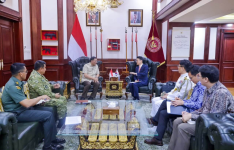
Indonesian Defense Minister Receives South Korean Ambassador, Strengthens Defense Cooperation​


July 15, 2026

1784173645126.png

JAKARTA – Defense cooperation between Indonesia and the Republic of Korea continues to advance as both countries seek to deepen their strategic partnership.

As part of these efforts, Indonesian Minister of Defense Sjafrie Sjamsoeddin received South Korean Ambassador to Indonesia H.E. Yoon Soon Gu at the Ministry of Defense headquarters on Tuesday (July 14, 2026).

The meeting focused on concrete steps to strengthen the Indonesia–Republic of Korea strategic partnership in the defense sector. Discussions covered plans for a 2+2 meeting involving the two countries' foreign and defense ministers, expanded cooperation in education and training, and the development of air defense systems.

The two sides also discussed advancing defense industrial cooperation through tangible projects, resolving outstanding technical issues, facilitating knowledge and technology transfer, and ensuring balanced benefits for both countries.

"The meeting reflects the commitment of Indonesia and the Republic of Korea to further strengthen their long-standing strategic partnership while promoting closer defense cooperation," the Ministry of Defense's Information Bureau said in a statement.

In a separate statement posted on his official Instagram account, @sjafrie.sjamsoeddin, Minister Sjafrie said the discussions focused on practical measures to enhance bilateral defense ties.

"The meeting discussed concrete steps to strengthen the strategic partnership between Indonesia and the Republic of Korea in the defense sector, including plans for a 2+2 meeting between the foreign and defense ministers, cooperation in education and training, and the development of air defense systems," Sjafrie said.

He added that South Korea is one of Indonesia's strategic partners with advanced defense technology capabilities, making continued cooperation increasingly important.

According to Sjafrie, future cooperation should prioritize strengthening Indonesia's domestic defense industry through technology development.

"Defense industrial cooperation should be directed toward tangible project progress, the resolution of technical issues, knowledge and technology transfer, and balanced benefits for both countries," he said.

Sjafrie expressed hope that closer defense cooperation would further strengthen bilateral relations between Indonesia and South Korea while contributing to the development of defense capabilities in both countries.


KAI Completes KF-21 Development After 10 Years... Beginning of the Indigenously Developed Fighter Era - The Asia Business Daily​


by Jang Bokyeong

1785330952643.png


Completion of System Development Follows First Mass-Produced Unit in March​


The Korean fighter jet KF-21 ‘Boramae’ has completed a decade-long system development phase and has now entered full-scale mass production.

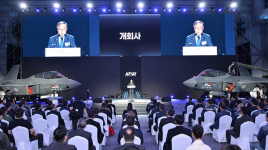
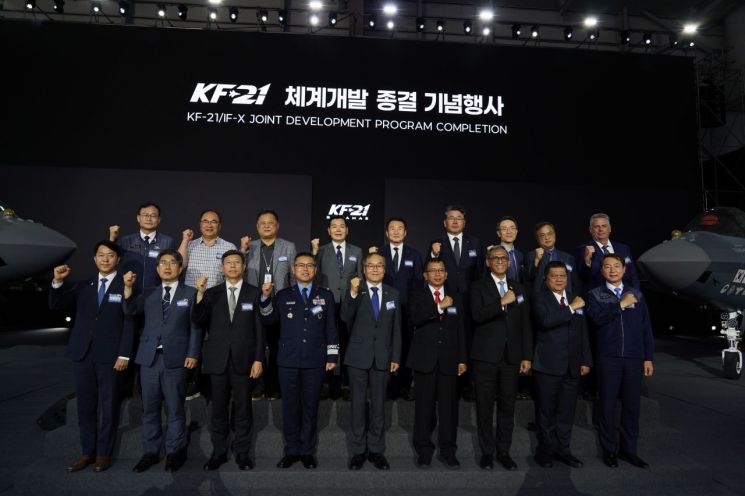
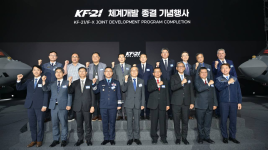
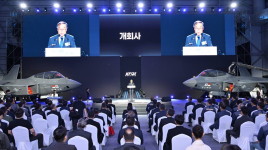
Korea Aerospace Industries (KAI) announced on the 29th that it held the “KF-21 System Development Completion Ceremony” at its headquarters in Sacheon, Gyeongnam, organized by the Defense Acquisition Program Administration.

1785330998974.png

A view of the venue for the 'KF-21 System Development Completion Ceremony' held by the Defense Acquisition Program Administration on the 29th at the headquarters of Korea Aerospace Industries (KAI) in Sacheon, Gyeongnam.

Approximately 300 people attended the event, including Yoo Yong-chul, Commissioner of the Defense Acquisition Program Administration, officials from the Ministry of National Defense and the Air Force, representatives from KAI and partner companies, representatives from Indonesia’s Ministry of Defense and PTDI (Indonesian Aerospace), the international co-development partner, as well as representatives from Lockheed Martin, a technical partner.

Since the launch of system development in 2015, the KF-21 has successfully completed its basic and detailed design, production of prototypes, ground tests, and flight tests, thereby meeting all required performance and safety standards.

In particular, the successful completion of integrated system development—including not only the aircraft system itself but also logistics support (ILS) and training systems—has established an independent, full-cycle capability covering development, production, operation, maintenance, and training.

Following the rollout of the first mass-produced unit in March, the completion of system development marks the transition of the KF-21 program into the mass production and force integration phase, making South Korea the eighth country in the world to develop a supersonic fighter jet and to possess an independent mass production system.

The comprehensive capabilities accumulated during KF-21’s development—including AESA radar, advanced avionics, flight controls, as well as structural design and manufacturing technologies—are expected to serve as key assets for the future of Korea’s air power.

Furthermore, the aerospace industry ecosystem built with over 500 domestic partner companies is contributing to the localization of core technologies, enhancement of partner competitiveness, and the creation of quality jobs.

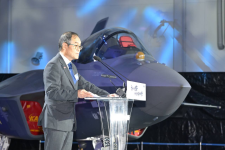
Yoo Yong-chul, Commissioner of the Defense Acquisition Program Administration, stated, “The success of the KF-21 is a momentous achievement made possible by the hard work and dedication of those involved, the engineers who participated in the development, and the unwavering support of the nation who believed in our technological capabilities. Moving forward, we will further promote the excellence of the KF-21 and once again prove Korea’s strength through self-reliant national defense based on technological independence.”

KAI plans to continue upgrading the KF-21’s performance and developing future air power capabilities in line with the government’s vision of becoming one of the world’s top four defense industry powers.


Kim Jongchul, President and CEO of KAI, commented, “The successful system development of the KF-21 is a historic achievement that has demonstrated to the world that Korea can independently develop cutting-edge fighter aircraft. Not only will we ensure successful mass production and stable force integration, but we will also pursue further upgrades such as the integration of domestically developed weapons, performance enhancement, next-generation AI-linked aerial combat systems, and manned-unmanned teaming (MUM-T) based on the KF-21 platform.”


S. Korea formally completes development of homegrown KF-21 fighter jet​


12:00 July 29, 2026

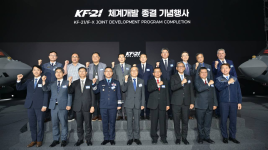
1785331274192.png
South Korean and Indonesian officials seen on the photo

SEOUL, July 29 (Yonhap) -- South Korea on Wednesday officially wrapped up the development of its first homegrown KF-21 fighter jet, more than a decade after launching the project to replace the country's aging fleet of fighter jets, the state arms procurement agency said.

The event commemorating the completion of the development project for the indigenous fighter jet is set to take place at the headquarters of Korea Aerospace Industries (KAI) in Sacheon, some 300 kilometers south of Seoul, the Defense Acquisition Program Administration (DAPA) said.

The 8.8 trillion-won (US$6.04 billion) project formally took off in 2015 to replace the Air Force's aging fleet of U.S.-made F-4 and F-5 jets.

The project saw the rollout of the first KF-21 prototype in April 2021, and the fighter jet passed the final combat suitability review in May this year, clearing all performance requirements for missions.

Officials have since carried out more than 1,600 flight trials without any accidents, according to officials.

"The success of the KF-21 is a splendid accomplishment that was possible due to the blood and sweat of technicians, and also the support of the public, who believed in the power of our technical skills," DAPA Minister Lee Yong-cheol said.

"We will promote the excellence of KF-21 jets and once again demonstrate the nation's strength by achieving self-reliant national defense through technological independence," he added.

With the completion of this project, DAPA plans to deliver the first advanced fighter jet to the Air Force in September.

Wednesday's event will be attended by officials from the state-run Agency for Defense Development and Korea Aerospace Industries, along with defense ministry officials from Indonesia.

Jakarta had joined as a partner of the development project, agreeing to share development costs in exchange for technology transfers, a prototype and other conditions.


DAPA plans to deliver the first batch of 40 KF-21 fighter jets, primarily equipped with air-to-air combat capabilities, to the Air Force by 2028. It aims to produce an additional 80 aircraft with enhanced capabilities by 2032, deploying a total of 120 to the Air Force.


A Shared Success, A Great Flight Toward the Future: KF-21​


The Republic of Korea has become the eighth nation in the world to develop a supersonic fighter jet using its own independent technology.

The completion of the system development for the KF-21 Boramae is not the achievement of any single person or organization alone.

The sweat and effort of countless researchers and partner companies have come together to complete an independent fighter jet that will protect the skies of the Republic of Korea.

Now, the KF-21 is embarking on the path toward full-scale mass production and deployment.

Together with everyone who has shared this journey, please look forward to the future story of Korea Aerospace Industries and the KF-21.
 

South Korea Opens Up About Delays in Joint KF-21 Fighter Jet Project with Indonesia​


CNN Indonesia
Wednesday, 26 August 2026, 21:00 WIB


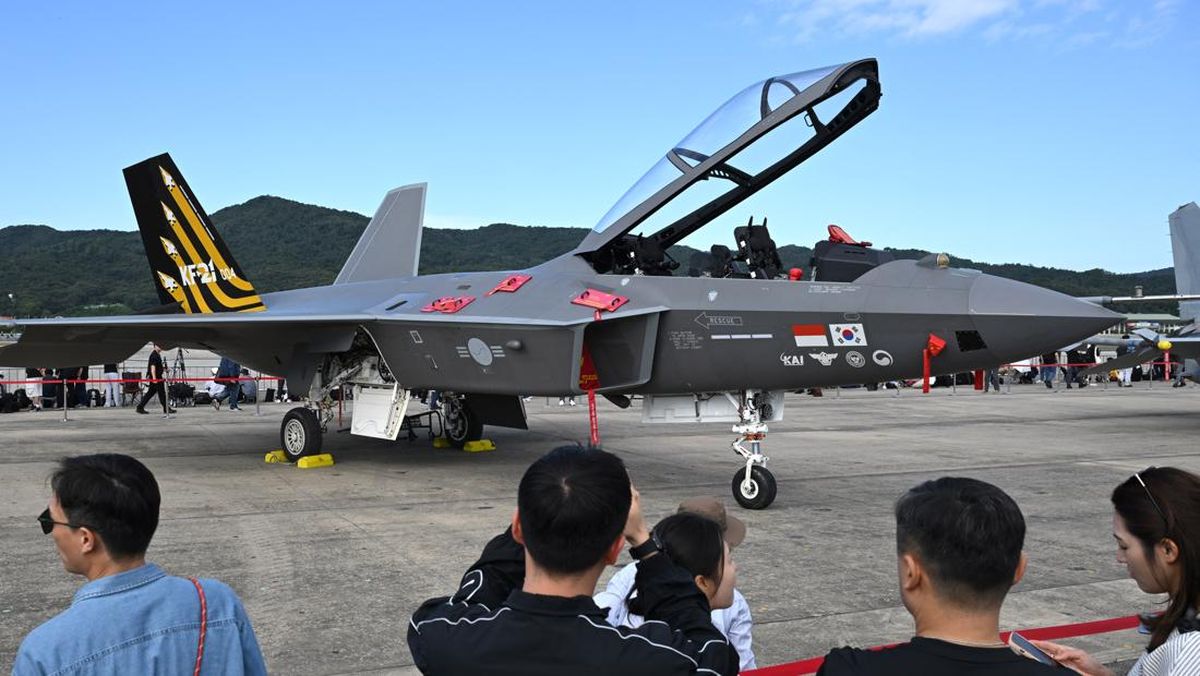
The Boramae fighter jet jointly produced by South Korea and Indonesia. (Photo: AFP/JUNG YEON-JE)


Jakarta, CNN Indonesia
– South Korea has affirmed that changes to the cooperation arrangement for the KF-21/IF-X fighter aircraft program have not discouraged the country from continuing defense cooperation with Indonesia.

Uhm Taeho, Political Section Chief at the South Korean Embassy, said the two countries had indeed encountered several obstacles during the joint development of the KF-21. However, according to him, Indonesia and South Korea were able to resolve those issues through mutual agreement.

“If you ask me whether that will hinder Korea’s cooperation with Indonesia going forward, I would say no. In fact, quite the opposite,” Uhm said during an Indonesian Next Generation Journalist Network on Korea (IKJN) workshop in Central Jakarta on Wednesday (26 August).

Uhm said the various problems that emerged during the KF-21 project instead provided valuable experience for both countries in building a relationship founded on trust.

The KF-21 Boramae project is a 4.5-generation fighter jet program involving South Korea and Indonesia, originally based on a financing contribution scheme of 80% from Seoul and 20% from Jakarta.

The joint project, which Indonesia agreed to participate in beginning in 2010, experienced delays, particularly over financing issues as well as several incidents. The project, initially valued at 8.1 trillion won, or around Rp100 trillion, was originally targeted for completion this year.

“We have gone through various difficulties in this project. This is a very valuable asset for us because we went through all of those challenges and were able to emerge from them in a partnership based on mutual trust. I think that is a very good example. And we are pleased with the outcome of this joint development project,” he said.

According to Uhm, the KF-21 cooperation represents South Korea’s first joint development project. Indonesia was also the first country to become South Korea’s partner in the joint development of a weapons system.

“Indonesia truly is an important partner in creating and developing Korea’s defense industry. The history of defense cooperation between the two countries is remarkable. The KT-1 and everything else represented firsts for Korea,” Uhm said.

“This is not just about Indonesia buying Korean weapons, but also about Korea accepting Indonesia as its partner. Indonesia is the first country to undertake joint development with us,” he added.

Current Status of the KF-21 Fighter Jet Project​

Uhm said the KF-21/IF-X cooperation has reached the conclusion of its joint development phase. He noted that the aircraft even bears two national flags as a symbol of the involvement of both countries.

“If you look at the KF-21, the aircraft has two national flags. There is no other weapons system in Korea that has two national flags on a weapon,” he said.

Uhm said the joint development phase of the project was successfully completed in the previous month. South Korea and Indonesia also held a ceremony with officials from Indonesia’s Ministry of Defense to mark the completion of the phase.

However, he said the form of the next stage of defense cooperation has yet to be determined. The two countries are still holding discussions involving their respective defense and foreign ministries.

“This represents a major commitment by Indonesia and Korea to jointly develop a next-generation fighter aircraft system. When we talk about the next step, if we are satisfied with the results of Indonesia’s investment, Korea’s investment, and the partnership that we have, I think we will move into the next stage,” Uhm said.

“However, we are still in the process of discussing the specific form of the next stage of cooperation,” he added.

Uhm said it was too early to disclose the concrete form that future cooperation would take. According to him, defense projects are large in scale, meaning that their methods, structure, and implementation timeline must take into account domestic and international economic conditions.

“It is a little too early to discuss the specifics, but I can assure you that there are very substantive discussions taking place between the two countries. I hope we can share more details with you going forward,” he said.

KF-21 Cooperation Scheme Changed​

Uhm made the remarks in response to a question about changes to the KF-21/IF-X cooperation scheme. Indonesia was previously involved under a joint development and production arrangement, but the government subsequently opted for a direct procurement scheme.

Indonesia’s Ministry of Defense previously said the change was the result of an internal government evaluation. The government said the revised KF-21 arrangement resulted from an assessment aimed at ensuring that the cooperation delivers optimal benefits for Indonesia, particularly in terms of technology transfer and strengthening the national defense industry. The decision was said to be unrelated to other issues circulating publicly.

Responding to the change, Uhm acknowledged that the KF-21 project had encountered several difficulties that affected relations between the two countries.

“We did experience several difficulties; we all know that. It was one of the factors that really dragged down our relationship for a time,” Uhm said.

However, he said the two countries subsequently resolved the issues through mutual agreement and adjusted the terms of the project.

“We were able to overcome all of that. And we did it through mutual agreement, with mutual consent. We were able to adjust the terms and reach an agreement on how we would continue the KF-21/IF-X joint development project,” he said.

Indonesia’s Position​

From the Indonesian side, Vahd Nabyl Achmad Mulachela, Head of the Center for Policy Strategy for Asia-Pacific and African Affairs at Indonesia’s Ministry of Foreign Affairs, said defense industrial cooperation is an important component of Indonesia-South Korea bilateral relations.

He said the cooperation encompasses not only the KF-21/IF-X but also submarine cooperation and regular meetings involving defense industry players from both countries, including state-owned and private companies.

“The third area is defense industry partnership. We are aware of the KF-21/IF-X fighter aircraft development program, and there are also several areas of cooperation involving submarines. Indonesia and Korea also hold annual meetings involving a number of defense industry players in Indonesia, not only state-owned companies but also private companies operating in the defense industry,” Nabyl said.

Regarding changes to the KF-21 project, Nabyl said priorities in both Indonesia and South Korea had shifted over the course of the cooperation.

“After the agreement to undertake this joint cooperation was signed, a number of developments emerged in both Indonesia and South Korea, meaning that the order of priorities of the two countries could change over time,” he said.

Nevertheless, Nabyl said the two countries ultimately succeeded in achieving the final objective of the KF-21 development project.

“However, the main point, as Mr. Uhm mentioned, is that we ultimately achieved the final objective. This year, we completed our cooperation in this sector for the joint development of the KF-21,” Vahd said.

KF-21 Becomes a Pillar of Defense Relations​

Mina Ryu, Director of the Southeast Asia Division 1 at South Korea’s Ministry of Foreign Affairs, said Indonesia-South Korea defense cooperation has developed as the two countries expanded their strategic relationship.

According to Mina, Indonesia purchased South Korea’s KT-1 basic trainer aircraft in 2001 and became South Korea’s first defense export partner.

“Following the end of the Cold War, bilateral cooperation expanded into broader strategic dimensions. In 2001, Indonesia purchased Korea’s KT-1 basic trainer aircraft and became Korea’s first defense export partner,” Mina said.

She said defense industrial cooperation subsequently became one of the pillars of relations between the two countries. The KF-21/IF-X is one of the leading examples of that cooperation.

“Since then, defense industrial cooperation has become one of the important pillars of our bilateral relationship. The KF-21/IF-X fighter aircraft joint development project is a prime example,” she said.

Mina explained that the KF-21 development agreement was reached in 2010 and the project began in 2016. The 10-year project was completed in June 2026.

On 29 July 2026, South Korea’s Defense Acquisition Program Administration (DAPA) and Indonesia’s Ministry of Defense also held a joint event to celebrate the completion of the joint development project.

“Indonesia’s participation was an important part of making the KF-21 what it is today. The project represents an achievement of bilateral collaboration,” Mina said.


-------------

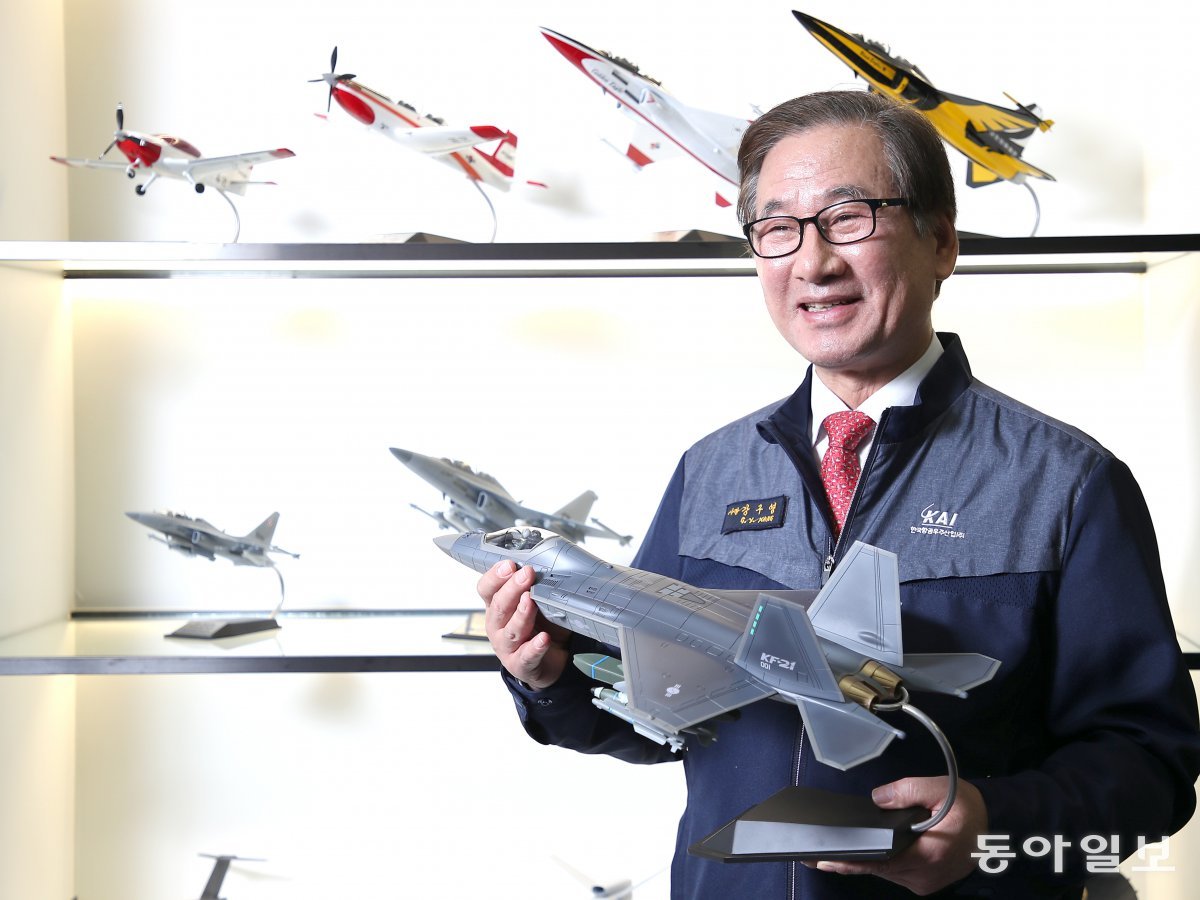
Former Korean Aerospace CEO

The development of the KF-21 could have been stalled if Indonesia had not participated.
Indonesia has made a significant contribution to the development of Korea's aerospace industry.


Users who are viewing this thread

Pakistan Defence Latest

Back
Top