China Strengthens Territorial Claim Against India With Villages Seen From Space

Beijingwalker

VIP Member
Joined
Nov 4, 2011
Messages
92,673
Reaction score
113,268
Reputation
2,088.2
Country of Origin
Country of Residence

China Strengthens Territorial Claim Against India With Villages Seen From Space​

Dec 29, 2023 at 8:03 AM EST

China has strengthened its territorial claims against India in recent years by constructing new settlements along their disputed border, with the dozens of concrete structures likely to be put to use by the Chinese People's Liberation Army.

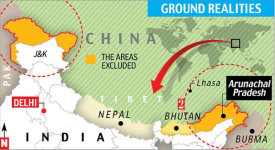
The two Asian giants fought a bloody border war in 1962 over the disputed 2,100-mile Line of Actual Control. In the past three years, however, fresh clashes have been reported at both ends of the LAC as they tussle over otherwise inhospitable strategic ground in the Himalayas.

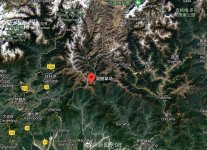
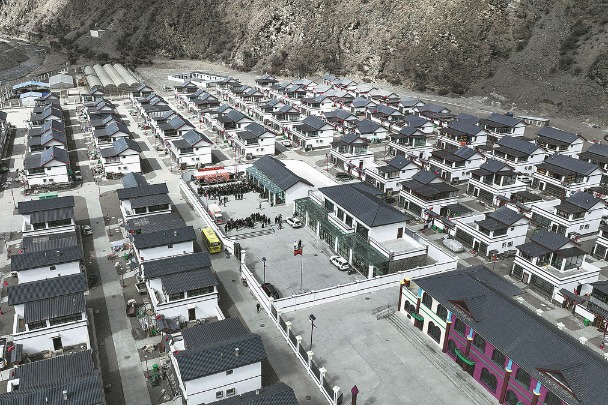
In an area known as the Nagdoh bowl, roughly 2.2 miles from the border with India's northeastern state of Arunachal Pradesh, China has consolidated its presence by building so-called "xiaokang" villages. The phrase means "moderately prosperous," borrowed directly from Chinese leader Xi Jinping's former development goal for the country.
微信图片_20231230115616.jpg

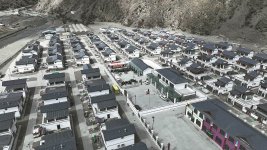
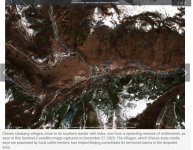
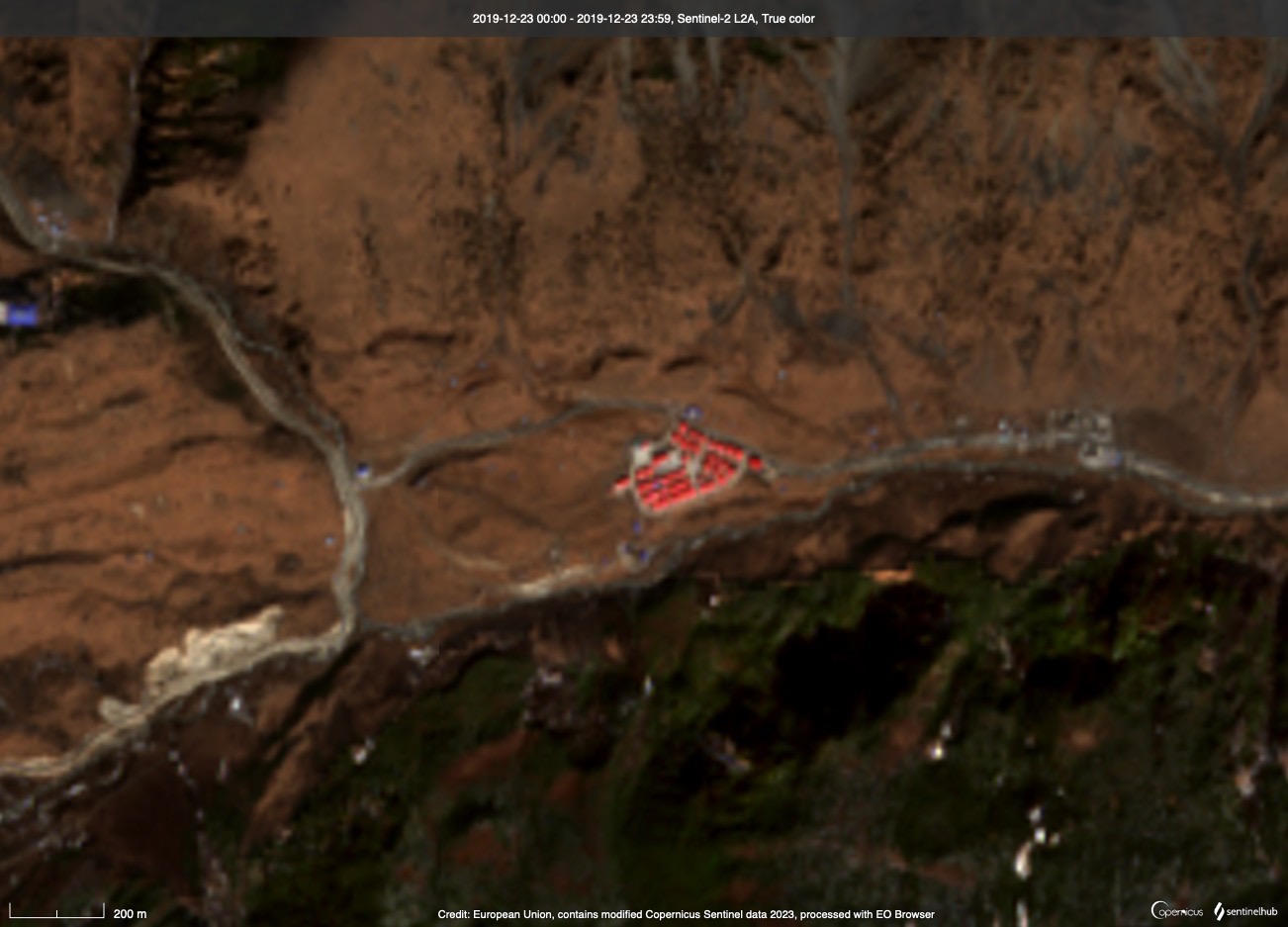
Newsweek's analysis of imagery from Sinergise's Sentinel Hub website, captured by the Sentinel-2 satellite of the European Union's Copernicus Earth observation program, showed the sprawling network of villages growing in the border city of Nyingchi, in China's southwestern Tibet region, since late 2020.

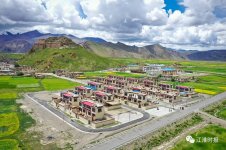
The satellite photographs showed one red-roofed settlement in the area existing as far back as 2017, before dozens more buildings, all with dark roofs, emerged alongside a field and running track. The three dual-use settlements of mixed civilian and military infrastructure were said to be occupied by local cattle herders, according to Chinese state media.

China claims Arunachal Pradesh as part of southern Tibet. One year ago, PLA troops and members of the Indian Army fought at a placed called Yangtse in the Tawang region of the Indian state. It was another melee with fists and handheld weapons instead of firearms—part of a long-running understanding between the two sides.

Xi has repeatedly called on the PLA to defend the country's border at all costs. The harder line on territorial integrity has become the driving force behind Beijing's regional security calculus as well as its long-term defense planning.

"Border defense work is a major event in the governance of the country," China's president said in June during an inspection of the Inner Mongolia region in the country's north. Holding Chinese territory is key to "the construction of a strong country and the great cause of national rejuvenation," he said.

Subject-matter experts in the country say China's xiaokang villages are a "gray-zone" tactic, a quasi-military move that deliberately falls short of the threshold of war. Policymakers in New Delhi have been warned that the new settlements could be used to secretly house garrisons, and to launch offenses into Indian land.

"Chinese efforts to strengthen its claims in the area have led Beijing to adopt new ways and means: building xiaokang 'model' villages in strategic areas, renaming places, and issuing new border laws that India sees as giving more legal cover to its forces," Amrita Jash, an assistant professor at India's Manipal Academy of Higher Education, wrote in an October report for the University of Pennsylvania's Center for the Advanced Study of India.

After last year's melee in Yangtse—6.2 miles west of the Nagdoh bowl where Beijing's three xiaokang villages are located—officials in New Delhi accused a Chinese patrol of an incursion into Indian territory.

Rajnath Singh, India's defense minister, told his country's lawmakers that PLA troops had "tried to transgress the LAC" and "unilaterally change the status quo." The Indian Army responded "in a firm and resolute manner," Singh said.

Beijing, however, said it was Indian troops who had crossed into China's southern border instead.

"The patrol was blocked by the Indian Army illegally crossing the line. We dealt with it professionally and effectively and stabilized the situation on the ground," Col. Long Shaohua, a spokesperson for the PLA's Western Theater Command, said at the time.

"We ask the Indian side to strictly control and restrain its front-line troops, and work with China to maintain peace and tranquility on the border," Long said.

In an op-ed that month, L. Nishikanta Singh, a retired lieutenant general of the Indian Army, identified Tsong Dzong, roughly 10 miles north of the Nagdoh bowl, as a PLA regimental base, from which Chinese soldiers had mobilized for the clash.

It was the second such major incident after the June 2020 clash in the Galwan Valley of India's Ladakh region, on the western end of the LAC, where 20 Indian soldiers and at least four PLA soldiers died.

In Yangtse, the Indian Army commands a strategic advantage thanks to its occupation of the region's high ground. But the PLA wants to change the reality on the ground through permanent presence in the xiaokang villages near the border.

"Yangtse's importance lies in the fact that we can get a very good view of what is going on in the Nagdoh bowl. And…it is the fulcrum of the Chinese activities in the area opposite Tawang," Singh said.

China is attempting to tip the scales in another way—lawfare in the public domain. Chinese users of open-source mapping software like Sentinel Hub are tweaking labels and adding place names in a subtle tactic that some have dubbed "cartographic aggression."

In 2021, mapmaker Nick Doiron noticed that Chinese contributors on the OpenStreetMap platform had extend Beijing's territorial claims by adding Chinese map nomenclature to contested locations, from the border with India to the South China Sea.

On Sentinel Hub, at the site of Nagdoh bowl, a line of Chinese text now refers to the area as part of "the motherland."

The Indian government has not officially acknowledged China's xiaokang villages north of the border, but there is little doubt it is paying attention.

This past April, India's Home Minister Amit Shah defied Beijing's protests to visit Arunachal Pradesh, where a newly built village called Kibithoo—just 7 miles from the LAC—is seen as an effort to counter Beijing's settlement program nearby.

New Delhi has allocated over half a billion dollars in funds to ensure the remote area remains connected to the rest of the country.

The Indian and Chinese defense ministries did not immediately return Newsweek's separate written requests for comment.
 
China builds 'xiaokang border defence village' in Arunachal: Implications for India's security
A report published by the US Department of Defence stated that Beijing had constructed a large 100-home civilian village in the northeastern state 'sometime in 2020'

November 10, 2021 11:12:27 IST

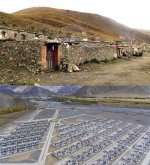
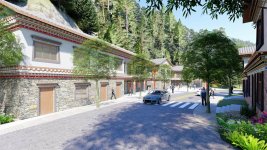
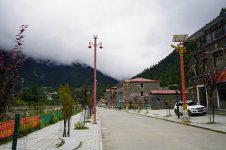
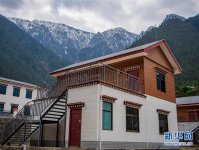
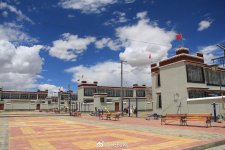
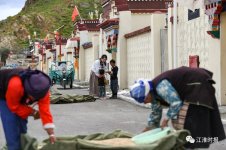
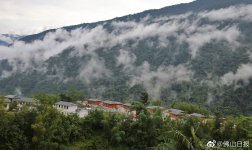
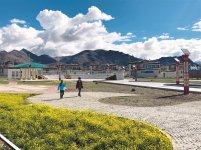
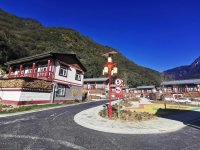
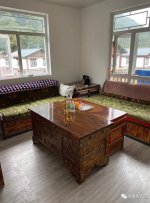
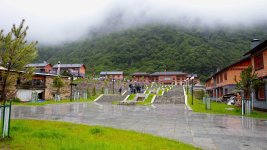
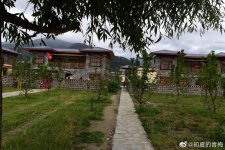
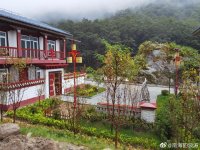
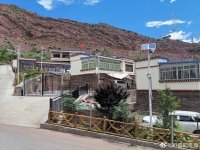
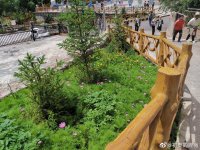
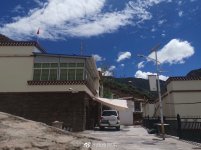
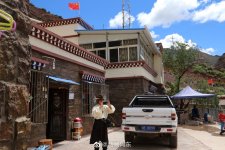
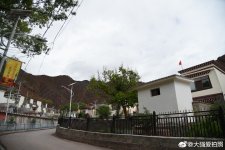
Tibet old dwellings VS Newly built Xiaokang government houses
1610600344482058518.jpg

China’s ‘xiaokang’ villages along LAC

The village mentioned in the US report isn’t the first that China has constructed.

According to officials in the know, China has built 628 "xiaokang villages on the border" along the 3,488-km Line of Actual Control (LAC), stretching from eastern Ladakh to Arunachal Pradesh.
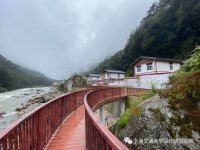
These constructions are built on the basis of President Xi Jinping's strategy of “stabilising Tibet for the governance of frontier regions” and to meet the goal of building a xiaokang — or “moderately well off” — society by 2021.

According to the Chinese, the 'xiaokang border defence villages' will act as a buffer and watch posts along the border and help prevent infiltration.

China attaches great importance to these 'xiaokang border defence villages' is also evident from the fact that Beijing has provided 30.1 billion yuan for them.
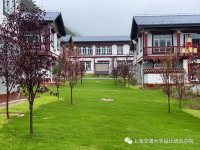
Moreover, a report in the Tibet Daily, quoted a villager in a xiaokang border defence village, as saying that he received a border subsidy of 5,000 yuan ($790) per year in addition to an annual ecological subsidy of 8,871 yuan ($1400) annually.

 
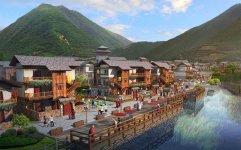
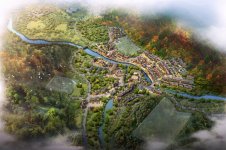
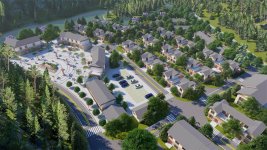
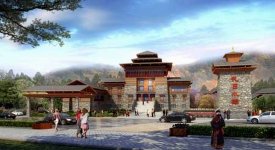
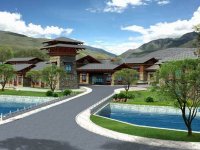
Border region Xiaokang villages planning and construction vary from village to village based on their individual characterisics

隆子县扎日乡仲那村边境生态文明小康示范村


项目工程由道路、景观、建筑组成。道路部分为新建工程,共计 13 条道路,分别为道路 A、道路 B、 道路 C、道路 D、道路 E、道路 F、道路 G、道路 H、道路 I、道路 J、 道路 K、道路 L、道路 M。

全路长3052.779m;景观部分包含车行道、路沿石、汀步、停车位、挡土墙、护坡、栏杆、硬质铺装、台阶、种植池、垃圾桶、坐凳、指示牌、土石方、太阳能路灯。

建筑部分规划用地面积212340.45㎡,总建筑面积24755.16㎡,住宅共157户,6栋公建(卫生院栋,村委会2栋,厕所3栋)。

项目地内共有两座电站,其中一座为部队所有,另外一座为规划区居民供电。

Google translation

Xiaokang Ecological Civilization Well-off Demonstration Village on the Border of Zhongna Village, Zari Township, Longzi County

The project is composed of roads, landscapes and buildings. The road part is a new construction project, a total of 13 roads, namely Road A, Road B, Road C, Road D, Road E, Road F, Road G, Road H, Road I, Road J, Road K, Road L, Road M.

The total length of the road is 3052.779m; the landscape part includes the roadway, curbstones, stepping, parking spaces, retaining walls, slope protection, railings, hard paving, steps, planting ponds, trash cans, stools, signs, Earth and stone, solar street lights.

The planned land area for the building part is 212,340.45 square meters, with a total construction area of 24,755.16 square meters. There are 157 residential houses and 6 public buildings (health center building, 2 village committee buildings, and 3 public toilets).

There are two power stations in the project area, one of which is owned by the army, and the other provides power to residents in the planned area.

调整大小 57031620615621.jpg调整大小 58461620615624.jpg调整大小 13621620615625.jpg调整大小 1021620615791.jpg调整大小 20631620615788.jpg调整大小 20181915434303.jpg
调整大小 201819154231892.jpg
调整大小 97261620615790.jpg
 
China-India border region "Xiaokang" villages
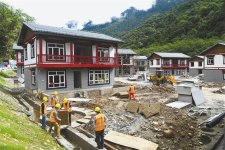
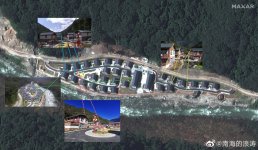
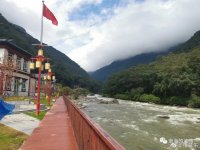
广东深圳市援建的“边境小康村”察隅县竹瓦根镇雄久新村竣工。 西藏决定对全区边境行政村实施小康村建设,主要围绕“水、电、路、教、科、文、卫”等十个方面改善边民的生产生活条件。
调整大小 W020200623314723958951.jpg
5a606dc568bb98d065d455a7a361ac38.jpg
调整大小 2020090110500092853.jpg1125824310_15862619226491n.jpg00321163602_a9f843de.jpg
 
The government just raised the cash subsidy for Tibetan border villagers to 6,600 Yuan per person/year. This guy living in Indian border just got his government subsidy money, his household has 3 people, and the family got 19,800 Yuan ( $ 3150 USD).
微信图片_20211113192255.jpg
 
Poverty alleviation relocation in Tibet, China builds a new village inDoklam on China-Bhutan border

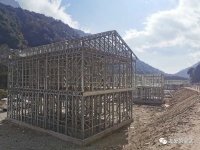
China finished a new village at China-Bhutan border, Yadong County. The new village, Pangda (庞达村), will become the home of 27households / 100 people, who used to be living in absolute poverty in a high altitude area in Yadong where environment is very harsh and inhabitable.

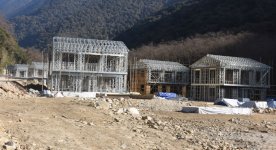
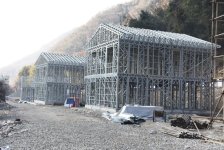
Construction of the Pangda Village was started in Dec. 2019, and completed in May 2020, with a 2.5-month pause in between due to Covid. The buildings in Pangda are using the steel frame structure, supplied by Baosteel Corp.

The Pangda village project is financed by Shanghai city as poverty alleviation pairing up program which wealthy cities and regions are paired up with poor counterparts in China by the central government and made obligated to help the poor regions to get out of poverty, failing the designated alleviation job by the deadline could mean losing jobs for the officials from the rich regions.

The investment for building this village is around ¥285million ($43 million), the village homes 27households / 100 people .

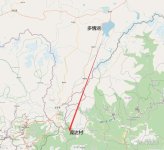
Location of Pangda village

640 (2).jpg
4418fa2bgy1gkyssyabhcj21fl0u0e81.jpg
f4198cc451da81cb705766b34566d01608243196.jpge1eef8014c086e0613b35b0915087bf40bd1cbd4.png35f6d10a19d8bc3eacb9e3b4958ba61ea9d34596.jpg80449995d143ad4b0cfc3c8295025aafa50f061d.jpg
 
Poverty alleviation and border securing done at same time, two birds in one stone. 20 years ago these Tibetan herders owned nothing more than the tattered clothes they wore, Now they have big houses, free cash, private cars ( Some travelers say it puzzles them that cars look the same for every household in some villages in Tibet, it turns out those cars were just given by the government)

006aDVpvgy1gg271lgvpvj31400u07h1.jpg006aDVpvgy1gg271mqoeej31400u018g.jpg8b9e4847gy1gg2659uqu3j21410u0tgw.jpg8b9e4847gy1gg26572lfaj21900u016z.jpg8776402bly1gfm1ukns57j21900u0nkv.jpg8cd8a17dgy1ge43oe8ejij20zk0jz461.jpg8cd8a17dgy1ge43oewrq7j20zk0jzn5h.jpg
 

Better living conditions secure borders with India​

By CUI JIA | China Daily | Updated: 2023-03-15 08:52

64111aaaa31057c4b4b73e68.jpg
An aerial photo taken on Feb 15 shows a relocated village in Doyul Lhoba ethnic township, Lhunze county, the Tibet autonomous region. JIGME DORJE/XINHUA
Increased infrastructure in rural Tibet brings benefits to people, nation

The population is growing in the border areas of the Tibet autonomous region, with improved living conditions and road network being a contributing factor, resulting in a safer and more stable border and safeguarding national security, according to a National People's Congress deputy.

Tashi Gyaltsan, an NPC deputy of the Tibet autonomous region and head of Doyul Lhoba ethnic township in Lhunze county, said infrastructure in all 28 villages in the county near the border between China and India has been modernized, benefiting more than 6,000 people.

"Those villages are now connected by roads in good condition. Furthermore, the road network in the border area is expected to be further improved in the future," said Tashi Gyaltsan, a member of the Lhoba ethnic group.

Improved transport infrastructure in recent years has paved the way for development, and new roads have allowed people to get to townships and villages in border areas more conveniently throughout the year.

"In the past, Yulmed township, surrounded by mountains, would be cut off by heavy snow in the winter for months. After the completion of a road by the end of 2020, the problem has been solved. What's more, an airport in Lhunze is now operational, which will surely boost the development of the county," Tashi Gyaltsan said.

All three villages of Doyul Lhoba ethnic township have running tap water and electricity, and infrastructure such as roads and the internet. People's living standards have been significantly improved in all aspects, he said.

The improved living conditions have attracted more people to live in villages and settlements in border areas, and the steady increase in population has been key to maintaining stability, Tashi Gyaltsan, said.

"The villagers all understand the importance of safeguarding national security, as well as their roles in keeping the border areas stable. I am often touched by their words and actions on border protection when I visit them," he said. "The changes in Lhunze county have also taken place in other border areas in Tibet," he added.

To make the border areas more stable and help them thrive, the region introduced preferential policies in 2022 to assist people moving to 48 settlements, according to the region's government work report published in January.

The population in border areas has seen an increase of 10.5 percent in the past five years, and by 2022, the length of the road network in such areas was 3.7 times what it was in 2018, according to the report.

By stepping up efforts in infrastructure construction in border areas and developing suitable industries in those areas this year, the growth in economic development and people's incomes is expected to exceed the regional average, the report added.

 
Some crazy sardarji colonel will lay waste to all of it with an arty barrage

both shells and rocket arty.
You talk big, from these proximity locations, China can barrage New Delhi using only artillery fire.

微信图片_20231230133212.png
 
Last edited:

Users who are viewing this thread

Pakistan Defence Latest

Latest Posts

Back
Top