PM Shehbaz Approves $6 Billion Refinery Upgrades Plan

hydrabadi_arab

Trusted Member
Joined
Jul 31, 2015
Messages
6,994
Reaction score
13,637
Reputation
5,216.7
Country of Origin
Country of Residence
Prime Minister Shehbaz Sharif has approved amendments to Pakistan’s Brownfield Refinery Policy 2023, paving the way for long awaited upgrades of existing refineries aimed at improving fuel quality, reducing imports, and attracting fresh investment into the energy sector.

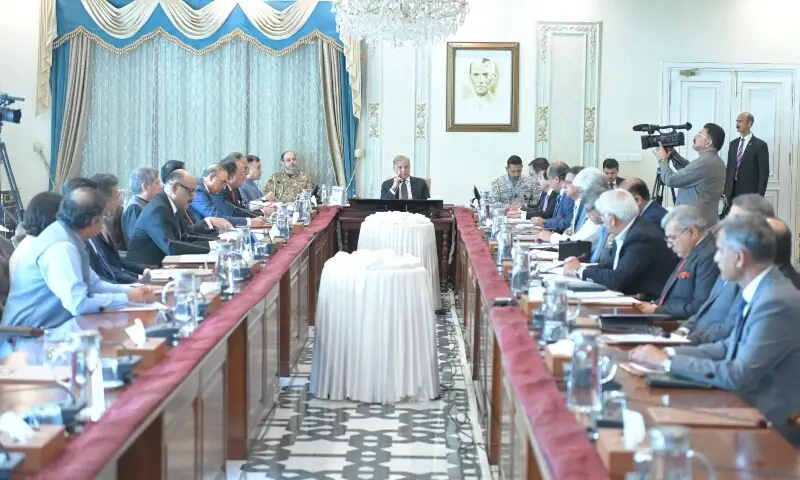
The decision was taken during a meeting of the Cabinet Committee on Energy (CCoE), where the government approved proposed changes to the refinery policy after consultations with industry stakeholders and relevant institutions.

The Brownfield Refinery Policy 2023 was introduced to encourage modernization of Pakistan’s existing refineries and attract around $6 billion in investment for upgrades. The projects are designed to enable production of Euro V compliant petrol and diesel, reduce furnace oil output, improve environmental standards, and strengthen Pakistan’s energy security.

During the meeting, Prime Minister Shehbaz Sharif said refinery modernization was essential for reducing dependence on imported fuels and ensuring a more secure energy system. He emphasized that upgraded refineries would help meet domestic energy needs while supporting cleaner fuel production.

The Prime Minister directed relevant ministries and institutions to ensure timely implementation of the revised policy and introduce reforms to improve the performance of the Oil and Gas Regulatory Authority (OGRA). He said stronger regulation, transparency, and competition were necessary to encourage investment in the energy sector.

The government also plans to promote the amended refinery policy among investors in Qatar, Saudi Arabia, and other Gulf countries through roadshows. The Prime Minister praised Petroleum Minister Ali Pervaiz Malik and his team for their work on finalizing the policy amendments.

Officials informed the meeting that the revised policy aims to accelerate refinery upgrades, increase production of environmentally compliant fuels, reduce low quality petroleum products, and support Pakistan’s energy reform agenda. The Prime Minister also directed authorities to increase strategic petroleum reserves to strengthen fuel security.
 
Prime Minister Shehbaz Sharif has approved amendments to Pakistan’s Brownfield Refinery Policy 2023, paving the way for long awaited upgrades of existing refineries aimed at improving fuel quality, reducing imports, and attracting fresh investment into the energy sector.

The decision was taken during a meeting of the Cabinet Committee on Energy (CCoE), where the government approved proposed changes to the refinery policy after consultations with industry stakeholders and relevant institutions.

The Brownfield Refinery Policy 2023 was introduced to encourage modernization of Pakistan’s existing refineries and attract around $6 billion in investment for upgrades. The projects are designed to enable production of Euro V compliant petrol and diesel, reduce furnace oil output, improve environmental standards, and strengthen Pakistan’s energy security.

During the meeting, Prime Minister Shehbaz Sharif said refinery modernization was essential for reducing dependence on imported fuels and ensuring a more secure energy system. He emphasized that upgraded refineries would help meet domestic energy needs while supporting cleaner fuel production.

The Prime Minister directed relevant ministries and institutions to ensure timely implementation of the revised policy and introduce reforms to improve the performance of the Oil and Gas Regulatory Authority (OGRA). He said stronger regulation, transparency, and competition were necessary to encourage investment in the energy sector.

The government also plans to promote the amended refinery policy among investors in Qatar, Saudi Arabia, and other Gulf countries through roadshows. The Prime Minister praised Petroleum Minister Ali Pervaiz Malik and his team for their work on finalizing the policy amendments.

Officials informed the meeting that the revised policy aims to accelerate refinery upgrades, increase production of environmentally compliant fuels, reduce low quality petroleum products, and support Pakistan’s energy reform agenda. The Prime Minister also directed authorities to increase strategic petroleum reserves to strengthen fuel security.
Misleading headline. Showbaaz has approved changes to a policy that is hoping to attract investment. The government doesn't have any spare money of its own to invest and the Sharifs are not going to invest their personal fortune in this.
 
In few years Pakistan will be exporting refined petrol/diesel. India watch out, we are coming to take your share.

Good for Pakistan but a government which has to prostrate itself in front of international lenders for a bailout every few years to pay off existing debt, where are they gonna get $6 billion to upgrade its refineries or build a strategic reserve ?
 
Good for Pakistan but a government which has to prostrate itself in front of international lenders for a bailout every few years to pay off existing debt, where are they gonna get $6 billion to upgrade its refineries or build a strategic reserve ?

$6bn upgradation will produce 21mt/per year. There is another expansion plan going on to take overall capacity to 33mt by 2035. India days of easy refined petrol exports will be over soon.

Here is exactly how the $6 billion funding is structured:

1. The Escrow Mechanism (Tariff Protection)​

The foundation of the funding model relies on a self-financing mechanism subsidized by fuel pricing.

  • The government will allow refineries to collect a 10% deemed duty (tariff protection) on the ex-refinery prices of petrol (Motor Spirit) and High-Speed Diesel for a period of seven years.
  • Instead of keeping all this extra revenue as profit, refineries must deposit the entire 10% duty from petrol and 2.5% of the duty from diesel into a jointly operated escrow account managed alongside the Oil and Gas Regulatory Authority (OGRA).
  • These escrow funds will cover up to 27.5% of the total project cost if a refinery imports new equipment, or 24.5% if they import used machinery.
  • Refineries cannot use these escrow funds as collateral and can only withdraw the money after achieving financial close and completing at least 25% physical progress on the project.

2. Commercial Debt (Foreign & Local Lenders)​

Because the escrow account only covers a maximum of 27.5% of the upgrades, the remaining 72.5% of the project cost must be financed directly by the refineries. The bulk of this will come from commercial borrowing.

  • Refineries will secure loans from local commercial banks, international lenders, and foreign investors.
  • To secure these multi-billion-dollar foreign loans, international lenders require strict guarantees. Therefore, the government is introducing "stability and parity clauses" into the upgrade agreements.
  • These clauses legally protect foreign investors and lenders from sudden adverse changes in taxation, environmental regulations, or foreign exchange policies that could ruin the project's economics.
  • Refineries will also be permitted to open onshore foreign currency accounts—funded by exporting their excess furnace oil—to ensure they have the dollars needed to service their foreign debt obligations.

3. Refinery Equity (Sponsor Contributions)​

The final portion of the funding will come from the internal cash reserves and equity of the refinery operators themselves (such as PARCO, Attock, and PRL).

  • For the non-escrow portion of the costs, refineries are generally expected to utilize a standard 70:30 debt-to-equity structure.
  • This means the refinery operators will inject their own corporate capital to cover the final ~20% to 25% of the overall project cost.
In Summary: The $6 billion is not a government handout. It is a structured financing plan where the government provides a guaranteed revenue stream (the 10% deemed duty) to unlock the initial capital, which then allows the refineries to comfortably borrow the remaining billions from international and local banks to complete the construction.
 
@hydrabadi_arab

Hydra bro,

Good initiative by the Showbaaz govt.

India watch out, we are coming to take your share.

My dear friend Brofessor sahib (aka Riazul Haq sb) has been threatening to take our share in the IT exports market for over 2 decades now. How has it worked out?

Regards

@Owaiz @CallSignMaverick
 
There is need of modern refinery in KPK because alot of crude oil is extracted from KP. And than a second refinery in Sindh maybe. No need to built them on coastline where they can be taken out by single missile in any future war situation.
 
$6bn upgradation will produce 21mt/per year. There is another expansion plan going on to take overall capacity to 33mt by 2035. India days of easy refined petrol exports will be over soon.

Here is exactly how the $6 billion funding is structured:

1. The Escrow Mechanism (Tariff Protection)​

The foundation of the funding model relies on a self-financing mechanism subsidized by fuel pricing.

  • The government will allow refineries to collect a 10% deemed duty (tariff protection) on the ex-refinery prices of petrol (Motor Spirit) and High-Speed Diesel for a period of seven years.
  • Instead of keeping all this extra revenue as profit, refineries must deposit the entire 10% duty from petrol and 2.5% of the duty from diesel into a jointly operated escrow account managed alongside the Oil and Gas Regulatory Authority (OGRA).
  • These escrow funds will cover up to 27.5% of the total project cost if a refinery imports new equipment, or 24.5% if they import used machinery.
  • Refineries cannot use these escrow funds as collateral and can only withdraw the money after achieving financial close and completing at least 25% physical progress on the project.

2. Commercial Debt (Foreign & Local Lenders)​

Because the escrow account only covers a maximum of 27.5% of the upgrades, the remaining 72.5% of the project cost must be financed directly by the refineries. The bulk of this will come from commercial borrowing.

  • Refineries will secure loans from local commercial banks, international lenders, and foreign investors.
  • To secure these multi-billion-dollar foreign loans, international lenders require strict guarantees. Therefore, the government is introducing "stability and parity clauses" into the upgrade agreements.
  • These clauses legally protect foreign investors and lenders from sudden adverse changes in taxation, environmental regulations, or foreign exchange policies that could ruin the project's economics.
  • Refineries will also be permitted to open onshore foreign currency accounts—funded by exporting their excess furnace oil—to ensure they have the dollars needed to service their foreign debt obligations.

3. Refinery Equity (Sponsor Contributions)​

The final portion of the funding will come from the internal cash reserves and equity of the refinery operators themselves (such as PARCO, Attock, and PRL).

  • For the non-escrow portion of the costs, refineries are generally expected to utilize a standard 70:30 debt-to-equity structure.
  • This means the refinery operators will inject their own corporate capital to cover the final ~20% to 25% of the overall project cost.
In Summary: The $6 billion is not a government handout. It is a structured financing plan where the government provides a guaranteed revenue stream (the 10% deemed duty) to unlock the initial capital, which then allows the refineries to comfortably borrow the remaining billions from international and local banks to complete the construction.
There is nothing "self-financing " about what is effectively a subsidy. If refiners are getting 10% of the fuel price, somebody will have to put up that cash. Since IMF danda is on the government, it cannot be financed through the deficit and will have to be paid for by the consumers through additional levies or taxes.

In any case, this scheme does not sound like the easy money so-called Pakistani industrialists are used to . I am not sure there will be any takers.
 
In few years Pakistan will be exporting refined petrol/diesel. India watch out, we are coming to take your share.
Janaab India's annual throughput of refineries is 26 times higher, and the amount of capacity being added here is unparalleled anywhere else on earth except maybe China.
 
Misleading headline. Showbaaz has approved changes to a policy that is hoping to attract investment. The government doesn't have any spare money of its own to invest and the Sharifs are not going to invest their personal fortune in this.

What do you think all these agreements with Saudi, Kuwait, Qatar etc entail???


We need to ensure the Hindus are thrown out of the Muslim world
 
There is nothing "self-financing " about what is effectively a subsidy. If refiners are getting 10% of the fuel price, somebody will have to put up that cash. Since IMF danda is on the government, it cannot be financed through the deficit and will have to be paid for by the consumers through additional levies or taxes.

In any case, this scheme does not sound like the easy money so-called Pakistani industrialists are used to . I am not sure there will be any takers.

Its done deal. It will save Pakistan $2bn/year by import substitution. And earn FX by exporting refined diesel/petrol.
 
This is a more balanced reporting of the news, which correctly identifies that the reason for the amendment is that the government's own older policy was a complete flop and also flags how IMF conditions and commitments are going to restrict and limit any "incentives " the government hopes to provide

 
Its done deal. It will save Pakistan $2bn/year by import substitution. And earn FX by exporting refined diesel/petrol.
No one can stop people from day dreaming. Just read the Dawn article I just posted when you wake up.
 
Janaab India's annual throughput of refineries is 26 times higher, and the amount of capacity being added here is unparalleled anywhere else on earth except maybe China.

14x higher not 26x, but that will change. It will be 10x in few years.

Upgradation and new greenfield refinery in Hub Balochistan capacity will reach 33mt by 2035. India should cut its further investment plans in refineries because market will be flooded in few years.
 

Users who are viewing this thread

Pakistan Defence Latest

Country Watch Latest

Back
Top