Joint Defense Agreement: Turkey, Saudi Arabia, and Pakistan, news & updates

To view this content we will need your consent to set third party cookies.
For more detailed information, see our cookies page.
 
According to Chinese think tanks, the Makkah Joint Defence Pact signed by Saudi Arabia, Pakistan, and Turkey on August 7, 2026, stems from the following key factors:

1. Declining Trust in US Security: Analysts view this as the primary driver. Since the October 2023 Gaza conflict and subsequent regional wars, attacks on US bases in the Gulf have exposed Washington's security guarantees as "unreliable and unpredictable." The trio is now seeking strategic autonomy to hedge against this uncertainty.

2. Immediate Security Needs: Facing severe regional instability, including Houthi and Iraqi militia attacks on Saudi Arabia and Red Sea crises, the nations aim to establish a collective defence front to secure maritime routes and deter aggression.

3. Strategic Complementarity: The alliance leverages the high complementarity of their military and economic strengths to build a region-led autonomous security architecture.

4. Proven High-Level Trust: Close political coordination during recent crises has verified their operational synergy and built high-level trust, translating theoretical cooperation into a practical pact.

Ultimately, this alliance is a natural outcome of their pursuit of strategic autonomy and collective security amid a complex and volatile regional landscape.
 
Don't count chickens before they hatch bro.
His punchline stick to his life and carrier, by profession he is physician not politician. Guess who will provide him massive support...
 
Last edited:
According to Chinese think tanks, the Makkah Joint Defence Pact signed by Saudi Arabia, Pakistan, and Turkey on August 7, 2026, stems from the following key factors:
1. Declining Trust in US Security: Analysts view this as the primary driver. Since the October 2023 Gaza conflict and subsequent regional wars, attacks on US bases in the Gulf have exposed Washington's security guarantees as "unreliable and unpredictable." The trio is now seeking strategic autonomy to hedge against this uncertainty.
2. Immediate Security Needs: Facing severe regional instability, including Houthi and Iraqi militia attacks on Saudi Arabia and Red Sea crises, the nations aim to establish a collective defence front to secure maritime routes and deter aggression.
3. Strategic Complementarity: The alliance leverages the high complementarity of their military and economic strengths to build a region-led autonomous security architecture.
4. Proven High-Level Trust: Close political coordination during recent crises has verified their operational synergy and built high-level trust, translating theoretical cooperation into a practical pact.
Ultimately, this alliance is a natural outcome of their pursuit of strategic autonomy and collective security amid a complex and volatile regional landscape.

Great post.
Unfortunately, there are some extremely stupid people in this forum who, due to their domestic political or sectarian biases, are stuck in intellectual quagmires which are their comfort zones. I have spent most of the time in this forum in last 5-6 months in the Iran war thread and seen how some Iranians, just like the Pakistanis, can't get past their domestic political biases.
Your post is great because it connects the dots in an evolving situation--and the situation in the Middle East is extremely rapidly evolving since the Oct. 2003 Israel-Gaza war which has directly led to this trilateral agreement between Pakistan, Turkey, and Saudi Arabia alliance.
 
I don't really trust those (muslims) who get elected in western countries. none of them had done a good job to muslim countries and the muslim community.
yes, there policy is always focus US domestic issues.
 
Turkish Foreign Minister Hakan Fidan on Egypt's accession to the Mecca Agreement for Joint Defense:

— Egypt is already a natural partner for us in all matters. And I believe that in the upcoming phase, Egypt will be among us as an alliance.

— We are currently dealing with each other as if we are already members of an alliance, and relations with all countries are like this.

To view this content we will need your consent to set third party cookies.
For more detailed information, see our cookies page.


I knew Egypt would join in the future.

Massive population, massive infantry, greatest number of tanks of the whole MENA-region, and a economy with warexperience, bordering Israel.

Turkish armed forces are already doing joint excersises with Egyptian army, last one was this year.

Hakan Fidan just pushed the pawn to Sisi. He must react now.
 
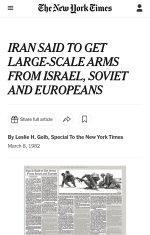
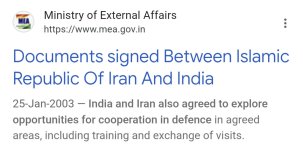
Iran signing a defence cooperation agreement with India in 2003 and taking covert arms shipments from Israel of all countries during the Iran-Iraq War is justified. But Pakistan signing a defence agreement with Saudi Arabia and Turkey is somehow wrong.
 

Attachments

  • HPNof78acAEZ0ji.jpg
    HPNof78acAEZ0ji.jpg
    377.8 KB · Views: 5
  • HPNofezaUAA-VT2.jpg
    HPNofezaUAA-VT2.jpg
    129.3 KB · Views: 5
Israel and Iran will likely never be able to join this pact. The reasons are the same for both countries: a lack of respect for neighboring countries and megalomania.
 
To view this content we will need your consent to set third party cookies.
For more detailed information, see our cookies page.


There will be joint military exercises and training. Weapons and communication systems will be interoperable.

This is going to have a profound impact on the Turkish defense industry.

Saudi is one of the largest arms importers in the world.


this alliance potentially sets up Turkey to replace the United States, UK, Germany and France as the top source of Saudi defense purchases.

Not to mention they are currently expanding their defense capabilities and platforms. Future sales of Amphibious assault ships, Frigates, destroyers, submarines, fighter jets, tanks, SIGNIT aircraft all all up for grabs. The only limitation here for Turkey is how fact products are ready and how quickly it can deliver such products.

A trilateral cooperation on Nuclear attack submarines would also be something that could be pursued.

The Saudi investment into the Turkish defense sector could also boost it similarly to how Qatari investment propelled many projects.
 
So the Houthis just hit Saudi Arabia I guess? Do we have to do something now as per the pact or was it just symbolism.


No, he was Agnostic Muslim. I believe you have to perform certain acts to be Shia which he never did. Go to Iran if you love them so much. Why are you earing zionist dollars in America?

He was from a Shia family, he was a Khoja from Gujrat his name was literally JINNAH.

Don't worry about my location I would suggest you leave Pakistan ASAP because otherwise you're just extending a Shia's legacy.
 
This looks good on paper but will the members countries will defend the member country which goes into war with some other heavy weight country (military power) like in case of :

1) Pakistan Vs India (conflict very likely)
2) Saudia Arab vs Iran ( least likely but can happen)
3) Turkey Vs Israel (will eventually happen in distant future)

There are other scenarios as well which I believe every member country can take care of the conflict themselves:
1) Like Pak vs Afghanistan
2) Saudia Arab vs Houthis
3) Turkey vs Kurds/some groups in Syria

Future members:
1) Egypt
2) Azerbijaan
3) Qatar
 
Last edited:

Users who are viewing this thread

Back
Top