Joint Defense Agreement: Turkey, Saudi Arabia, and Pakistan, news & updates

Greeks, Indians, Iranians, Isrealis all do that thing where they always frame themselves as the perpetual victims. That any nation who does something to improve their own standing is an affront to them.


That's the thing. It's not just indians, israelis etc that have a problem with Pakistan doing well and becoming more powerful on the world stage. EVEN the Pakistanis who belong to the "we are the same people as indians" brigade and who don't have loyalty to Pakistan are jumping up and down like chimpanzees as their backsides are on fire because of the Pakistan, Turkiye and Saudi Arabia defence pact.
 
These guys come across as massive pussies. Its a country of 1.4 billion people. If Turkiye was 1.4 billion, we would not give a shit if the entire world came up against us.

THEY ARE. But these inherently cowardly 1.5 billion indians ALWAYS try to instigate non-indians into attacking Pakistanis and Muslims because they can't do it themselves. The fact that Pakistan's image and profile is surpassing that of india on the world stage is burning the dravidian backsides of these indian creatures.
 
Really interesting what Turkish FM said about the deal. It very much is like article 5 of NATO and that they have already sorted out what kind of aid nations can give each other. Egypt can join once "technical" details finalised. My guess is this will be how to integrate Egyptian forces. Seems a lot of detailed work has been done behind the scenes about joint production, intel sharing and what units would be sent to which country

Pak-Saudi-Turkiye defence pact open to any other country in region, 'purely defensive': DPM Dar

News DeskAnadolu AgencyReuters Published August 9, 2026 Updated about 4 hours ago
0
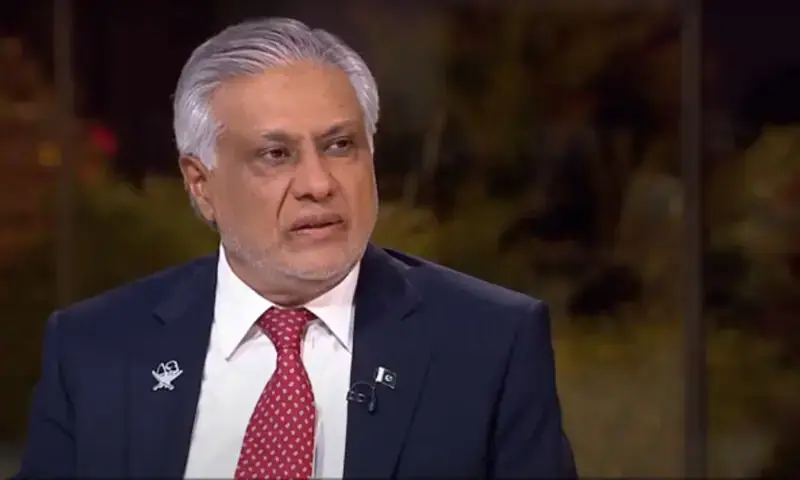
Foreign Minister Ishaq Dar during an interview to Al Jazeera. — Screengrab via Al Jazeera English YouTube/ File
Listen to article1x1.2x1.5x
https://www.dawn.com/news/2021671/p...y-in-region-purely-defensive-dpm-dar#comments
Deputy Prime Minister and Foreign Minister said on Sunday that the defence pact signed between Pakistan, Saudi Arabia and Turkiye remained “open to any country in the region” willing to uphold its fundamental principles.

He also clarified that the agreement was “purely defensive” in nature.

The indication that an expansion of the Makkah Joint Defence Agreement, signed in the Saudi city on Friday, was possible came a day after the Turkish foreign minister said Egypt could be joining the pact.

The pact aims to strengthen collective deterrence and empowers its signatory states to treat an attack against one of them as an attack against all of them.


Dar further elaborated on the pact, which he referred to as the Makkah Accord, in a post on X.

“The Makkah Joint Defence Agreement […] reflects the depth of the brotherly relations between the leadership and peoples of the three countries.

“The Makkah Accord is the culmination of years of discussions and coordination, with a common desire to strengthen strategic cooperation in addressing multifarious peace and security challenges and advancing regional peace, stability and prosperity,” he said.


He clarified that the pact did not abrogate or replace any existing bilateral or multilateral agreements between the signatory countries, or with other countries or organisations.

Reiterating that any external armed attack on any one of the three countries would be considered an attack on all under the pact, he said it was consistent with the inherent right of individual and collective self-defence under Article 51 of the UN Charter.


Moreover, he said, the accord was “purely defensive” in nature.

“It is not targeted against any country and its sole purpose is to further strengthen our ongoing efforts towards peace, stability and prosperity in the wider region.”

“The Makkah Accord remains open to any country in the region willing to uphold its fundamental principles and resolve differences through mutual respect, cooperation and peaceful means,” he said, adding that the pact was consistent with the fundamental pillars of Islamabad’s foreign policy.

“Pakistan looks forward to continuing to work closely with all brotherly countries in the region towards lasting peace and stability. We remain committed to advancing the cause of peaceful resolution of all conflicts and building a more secure, stable and prosperous future for our peoples,” he concluded.

Earlier, on Saturday, Turkish Foreign Minister Hakan Fidan also said he believed Egypt could join the pact once several technical issues were resolved.

“Egypt is already our natural partner on all issues. I believe that at the next stage, Egypt will also be among us in the alliance. We already act toward one another as if we were alliance members. There are a few technical issues. Once these are implemented, there is no reason for Egypt not to be part of it,” he told Turkiye’s state-run Anadolu news agency.


Other countries had expressed interest in joining the agreement, but the founding members had debated how the expansion should be handled, he further stated.

Some countries that wanted to join asked not to be named, he said, adding that the preferred model was for Turkiye, Saudi Arabia and Pakistan to remain the three core founding countries, responsible for establishing the principles, standards and long-term structure of the alliance, while other countries could join with the approval of the core members.

“Under our president’s vision, we should not remain limited to three countries. We should grow,” Fidan said.

Fidan also said the initiative was broader than the traditional definition of the Middle East because of Pakistan’s participation.

Pakistan’s geographical position meant the initiative went beyond the conventional definition of the Middle East and represented a broader regional perspective.

Fidan further elaborated on this, saying the pact was technically the same as Nato’s Article 5 mutual defence agreement.


Article 5 of the North Atlantic alliance specifies that an attack on one of its members is an attack on all of them. It obliges allies to take action they deem necessary to assist the country under attack, including potentially the use of military force.

While the Makkah defence pact stipulates the same, Fidan explained that its text contained general commitments whose practical implementation would depend on discussions and decisions by relevant bodies.

A country would need to make a request for assistance and would determine the type of support it needs, he said, adding that the requests could be of different kinds, ranging from intelligence and logistics to ammunition or, if necessary, military units, depending on the scale of the threat.

The signatories, he said, would decide through consultations what degree, form, and format of support they would ask for in the event of an attack, but that no country would be considered a threat as long as a member state is not attacked.

Fidan also said that the new alliance was not directed against Iran or any other country, but rather served as a general pledge to support the three signatories’ security.

He further told Anadolu that discussions on the initiative began before the current war environment, when there was no US-Israel war on Iran and other regional countries had also been involved in the talks leading to the agreement.

Fidan said its signatories were countries that did not have expansionist policies. “They are countries concerned with their own borders, their own problems and their development, and, if possible, they want to contribute positively to their environment through good relations and good neighborliness.“

The three countries, he said, had different styles and capacities, but when brought together, they naturally formed a defence-oriented organisation rather than an offensive one.

“It is not an approach of going on the offensive and saying, ‘Let’s do this or that together.’ Therefore, unless it is attacked by a country, whether from inside or outside the region, this alliance cannot have any dispute with any country. But, of course, the power composition we have put forward will make a constructive contribution to regional stability,” he said.

He termed the pact the “most important step” toward bringing lasting stability to this region.

According to Fidan, the pact would be operational under a political and military committee comprising foreign and defence ministers and chiefs of general staff, similar to Nato structures.

The committee would translate the vision set by the leaders into decisions and carry out related work, while a secretariat would be established to implement those decisions, he explained.

“At the first committee meeting, ministers would likely present proposals to the leaders on the establishment, structure and functioning of the secretariat, as well as its initial tasks,” he said, adding that the pact would cover a broad range of military issues, including interoperability, or the ability of countries with different military structures to operate together. Other areas would include joint training, mutual support, logistics, threat assessments, intelligence sharing and, most importantly, defence industry cooperation.

He said the committee would meet at certain intervals during the year and that a permanent secretariat would be established in Saudi Arabia. The structure, functioning and additional units of the secretariat would be determined in discussions among the members.

Fidan added that joint exercises and training would be necessary to establish the ability of the countries to operate together.

“Because after a while you will see that when you find yourselves in a common combat scenario, how your weapons systems and communications systems will communicate with one another and how they will be compatible are important issues. These are the things that will be done after the secretariat is established,” he said.

He said standards would need to be developed and that analyses and assessments would also be carried out.


Fidan said the defence agreement had received strong support from countries in the Muslim world, including those that were not members but were nevertheless very pleased with the agreement.

He said there were also supporters in the West who understood the substance of the initiative.

“Especially in the Islamic world, there are many who strongly support this issue. There are also supporters in the West, among those who understand the essence of the matter. The way for the Middle East to cease being a place that produces problems for humanity and the international community and instead become a place that creates added value with everything it possesses is through implementing constructive alliances of this kind,” Fidan said.

Fidan said the leadership of Turkiye, Saudi Arabia and Pakistan had created significant regional and global expectations and that officials now had the responsibility to fill those expectations professionally.

“Our responsibility, in the positions we hold, is to recognise that the political will put forward by the leadership of the three countries has created a very significant regional and global expectation. We need to fill that expectation very professionally, move forward step by step and make it work. We have begun doing this, and God willing, we will continue,” he said.

 
That's the thing. It's not just indians, israelis etc that have a problem with Pakistan doing well and becoming more powerful on the world stage. EVEN the Pakistanis who belong to the "we are the same people as indians" brigade and who don't have loyalty to Pakistan are jumping up and down like chimpanzees as their backsides are on fire because of the Pakistan, Turkiye and Saudi Arabia defence pact.

There are indeed Pakistanis, including me, who want to have peaceful relations with India but I doubt such Pakistanis think of Pakistanis as the 'same people' as Indians. Maybe pre 1947 Partition, there would be much cultural overlap but the two countries have evolved differently to the point that Pakistanis even mostly look different from Indians, let alone the languages and social norms, which are increasingly different. It is like the North and South Koreans have evolved very differently since their own partition decades ago.

The Pakistanis you speak of in the quoted parts are the followers of a certain political party of Pakistan and that's because the recently diplomatic gains Pakistan has is not done when their Messiah Khan is not the leader--as simple as that!
 
am more onterested in interoperbility. how would they do ? would usa create some hurdles and how would they adopt ?
 

Which other countries could join the Turkiye-Saudi-Pakistan defence pact?​

While Egypt has been floated as a candidate, analysts say Cairo may be wary of defence commitments.

What does the pact do?​

The Mecca defence pact builds on a previous agreement reached between Saudi Arabia and Pakistan a year ago.

Regional officials have suggested that the pact could eventually expand to include other countries, strengthening its role as a mechanism for collective security and deterrence.

The pact’s central feature is a NATO-like stipulation that an attack on any one of the three states would be treated as an attack on all of them although the details have yet to be fleshed out.

Turkish Foreign Minister Hakan Fidan said the allies will decide through consultations what degree, form and format of support they would ask for in the event of an attack but no country would be considered a threat as long as a member state is not attacked.

Turkish and Saudi officials have stressed that the pact is not meant to supplant any other strategic alliances or relationships while Turkiye, which is a member of NATO, has said the agreement does not target any country, including Iran.
 
am more onterested in interoperbility. how would they do ? would usa create some hurdles and how would they adopt ?

Yes, Turk FM alludes to this and I think the devil is in the detail here, but for sure all three countries use NATO systems in their air forces (F-16, F-15s, Erieyes, E-7) and navies (Pak MILGEM and future Jinnah) and Saudi Lay Fayette and Avante 2000.

If all this equipment can work together within a NATO envoironment no reason it cannot work with the alliance. All three countries within the alliance have a lot of experiance working with US forces and interoperating with them
 
Yes, Turk FM alludes to this and I think the devil is in the detail here, but for sure all three countries use NATO systems in their air forces (F-16, F-15s, Erieyes, E-7) and navies (Pak MILGEM and future Jinnah) and Saudi Lay Fayette and Avante 2000.

If all this equipment can work together within a NATO envoironment no reason it cannot work with the alliance. All three countries within the alliance have a lot of experiance working with US forces and interoperating with them
Sir problem is usa. usa did not allow Pakaitani pilots for turkish f 16s after coup was carried by the army.. Interoperbility between f 16s and f 15s is biggest issue until or unless there is new fighter jet without any foreign involvement. in future if f35s come and j 35 in Paf colours how this will work out.
 
Sir problem is usa. usa did not allow Pakaitani pilots for turkish f 16s after coup was carried by the army.. Interoperbility between f 16s and f 15s is biggest issue until or unless there is new fighter jet without any foreign involvement. in future if f35s come and j 35 in Paf colours how this will work out.

US seems to be looking favourably on this and it actually helps get them out if a bind, as the alliance can take over much of the detterence posture of US forces.
Unsure how PAFA'S netcentric model and its air and AEW/SAM platforms will integrate with Saudi and Turkish forces.
My guess is Pakistan may have to look at reinvesting in it's F-16 fleet again and of course KAAN option is there for both Saudi and Pakistan in the long term
 
In my perfect world, it would be Iran joining this agreement.

It would provide a land and air bridge for Pakistan to counter India.

Saudi Arabia: Financial Power
Turkey: Military Industry.
Iran: Ballistic missiles and one-way drones capability
Pakistan: Nuclear power


This would have caused serious vibrations within the think tank in Israel and India.

However. This will always be a dream.
 
US seems to be looking favourably on this and it actually helps get them out if a bind, as the alliance can take over much of the detterence posture of US forces.
Unsure how PAFA'S netcentric model and its air and AEW/SAM platforms will integrate with Saudi and Turkish forces.
My guess is Pakistan may have to look at reinvesting in it's F-16 fleet again and of course KAAN option is there for both Saudi and Pakistan in the long term
yes thats for long term i mean for starter how would they manage it all . it would be interesting . sams ew satellites missiles drones tactical data links f 16s jf 17s f 15 etcc.
 
Last edited:
Really interesting what Turkish FM said about the deal. It very much is like article 5 of NATO and that they have already sorted out what kind of aid nations can give each other. Egypt can join once "technical" details finalised. My guess is this will be how to integrate Egyptian forces. Seems a lot of detailed work has been done behind the scenes about joint production, intel sharing and what units would be sent to which country

Pak-Saudi-Turkiye defence pact open to any other country in region, 'purely defensive': DPM Dar

News DeskAnadolu AgencyReuters Published August 9, 2026 Updated about 4 hours ago
0
Foreign Minister Ishaq Dar during an interview to Al Jazeera. — Screengrab via Al Jazeera English YouTube/ File
Listen to article1x1.2x1.5x
https://www.dawn.com/news/2021671/p...y-in-region-purely-defensive-dpm-dar#comments
Deputy Prime Minister and Foreign Minister said on Sunday that the defence pact signed between Pakistan, Saudi Arabia and Turkiye remained “open to any country in the region” willing to uphold its fundamental principles.

He also clarified that the agreement was “purely defensive” in nature.

The indication that an expansion of the Makkah Joint Defence Agreement, signed in the Saudi city on Friday, was possible came a day after the Turkish foreign minister said Egypt could be joining the pact.

The pact aims to strengthen collective deterrence and empowers its signatory states to treat an attack against one of them as an attack against all of them.


Dar further elaborated on the pact, which he referred to as the Makkah Accord, in a post on X.

“The Makkah Joint Defence Agreement […] reflects the depth of the brotherly relations between the leadership and peoples of the three countries.

“The Makkah Accord is the culmination of years of discussions and coordination, with a common desire to strengthen strategic cooperation in addressing multifarious peace and security challenges and advancing regional peace, stability and prosperity,” he said.


He clarified that the pact did not abrogate or replace any existing bilateral or multilateral agreements between the signatory countries, or with other countries or organisations.

Reiterating that any external armed attack on any one of the three countries would be considered an attack on all under the pact, he said it was consistent with the inherent right of individual and collective self-defence under Article 51 of the UN Charter.


Moreover, he said, the accord was “purely defensive” in nature.

“It is not targeted against any country and its sole purpose is to further strengthen our ongoing efforts towards peace, stability and prosperity in the wider region.”

“The Makkah Accord remains open to any country in the region willing to uphold its fundamental principles and resolve differences through mutual respect, cooperation and peaceful means,” he said, adding that the pact was consistent with the fundamental pillars of Islamabad’s foreign policy.

“Pakistan looks forward to continuing to work closely with all brotherly countries in the region towards lasting peace and stability. We remain committed to advancing the cause of peaceful resolution of all conflicts and building a more secure, stable and prosperous future for our peoples,” he concluded.

Earlier, on Saturday, Turkish Foreign Minister Hakan Fidan also said he believed Egypt could join the pact once several technical issues were resolved.

“Egypt is already our natural partner on all issues. I believe that at the next stage, Egypt will also be among us in the alliance. We already act toward one another as if we were alliance members. There are a few technical issues. Once these are implemented, there is no reason for Egypt not to be part of it,” he told Turkiye’s state-run Anadolu news agency.


Other countries had expressed interest in joining the agreement, but the founding members had debated how the expansion should be handled, he further stated.

Some countries that wanted to join asked not to be named, he said, adding that the preferred model was for Turkiye, Saudi Arabia and Pakistan to remain the three core founding countries, responsible for establishing the principles, standards and long-term structure of the alliance, while other countries could join with the approval of the core members.

“Under our president’s vision, we should not remain limited to three countries. We should grow,” Fidan said.

Fidan also said the initiative was broader than the traditional definition of the Middle East because of Pakistan’s participation.

Pakistan’s geographical position meant the initiative went beyond the conventional definition of the Middle East and represented a broader regional perspective.

Fidan further elaborated on this, saying the pact was technically the same as Nato’s Article 5 mutual defence agreement.


Article 5 of the North Atlantic alliance specifies that an attack on one of its members is an attack on all of them. It obliges allies to take action they deem necessary to assist the country under attack, including potentially the use of military force.

While the Makkah defence pact stipulates the same, Fidan explained that its text contained general commitments whose practical implementation would depend on discussions and decisions by relevant bodies.

A country would need to make a request for assistance and would determine the type of support it needs, he said, adding that the requests could be of different kinds, ranging from intelligence and logistics to ammunition or, if necessary, military units, depending on the scale of the threat.

The signatories, he said, would decide through consultations what degree, form, and format of support they would ask for in the event of an attack, but that no country would be considered a threat as long as a member state is not attacked.

Fidan also said that the new alliance was not directed against Iran or any other country, but rather served as a general pledge to support the three signatories’ security.

He further told Anadolu that discussions on the initiative began before the current war environment, when there was no US-Israel war on Iran and other regional countries had also been involved in the talks leading to the agreement.

Fidan said its signatories were countries that did not have expansionist policies. “They are countries concerned with their own borders, their own problems and their development, and, if possible, they want to contribute positively to their environment through good relations and good neighborliness.“

The three countries, he said, had different styles and capacities, but when brought together, they naturally formed a defence-oriented organisation rather than an offensive one.

“It is not an approach of going on the offensive and saying, ‘Let’s do this or that together.’ Therefore, unless it is attacked by a country, whether from inside or outside the region, this alliance cannot have any dispute with any country. But, of course, the power composition we have put forward will make a constructive contribution to regional stability,” he said.

He termed the pact the “most important step” toward bringing lasting stability to this region.

According to Fidan, the pact would be operational under a political and military committee comprising foreign and defence ministers and chiefs of general staff, similar to Nato structures.

The committee would translate the vision set by the leaders into decisions and carry out related work, while a secretariat would be established to implement those decisions, he explained.

“At the first committee meeting, ministers would likely present proposals to the leaders on the establishment, structure and functioning of the secretariat, as well as its initial tasks,” he said, adding that the pact would cover a broad range of military issues, including interoperability, or the ability of countries with different military structures to operate together. Other areas would include joint training, mutual support, logistics, threat assessments, intelligence sharing and, most importantly, defence industry cooperation.

He said the committee would meet at certain intervals during the year and that a permanent secretariat would be established in Saudi Arabia. The structure, functioning and additional units of the secretariat would be determined in discussions among the members.

Fidan added that joint exercises and training would be necessary to establish the ability of the countries to operate together.

“Because after a while you will see that when you find yourselves in a common combat scenario, how your weapons systems and communications systems will communicate with one another and how they will be compatible are important issues. These are the things that will be done after the secretariat is established,” he said.

He said standards would need to be developed and that analyses and assessments would also be carried out.


Fidan said the defence agreement had received strong support from countries in the Muslim world, including those that were not members but were nevertheless very pleased with the agreement.

He said there were also supporters in the West who understood the substance of the initiative.

“Especially in the Islamic world, there are many who strongly support this issue. There are also supporters in the West, among those who understand the essence of the matter. The way for the Middle East to cease being a place that produces problems for humanity and the international community and instead become a place that creates added value with everything it possesses is through implementing constructive alliances of this kind,” Fidan said.

Fidan said the leadership of Turkiye, Saudi Arabia and Pakistan had created significant regional and global expectations and that officials now had the responsibility to fill those expectations professionally.

“Our responsibility, in the positions we hold, is to recognise that the political will put forward by the leadership of the three countries has created a very significant regional and global expectation. We need to fill that expectation very professionally, move forward step by step and make it work. We have begun doing this, and God willing, we will continue,” he said.


I know what he is saying about Egypt to join in... which looks good on paper but makes it dysfunctional as well.
One who doesn't commit or hedges it's commitment becomes the burden on everyone. It is like Brics... good intentions... but India works as a proxy for the empire.
 

The Israeli pipeline that could solve the energy crisis​


Given how dependent Egypt has become hooked on Israeli gas supplies, can it ever be relied upon as a security partner ? ie Israel can turn off Egypt's gas supply anytime affecting Egypt's economy as a pressure point. Food for thought.
Excuse me ,.... WHAT!
dependent on israeli gas ? Israeli gas to Egypt represent 17% of what we consume. and in Feb and March 2026 israeli already stopped the flow of gas and it was fine , we just had to reduce the elecrticity consumption.

Man, you give this alliance (pakistan,turkey and saudia) much importance , we don't care about this alliance.
 
Funnies part in all of this is that Indians are Barking like a Rabid Dog in their own pathetic media channels about Pakistan's involvement in India and nobody besides their own Gobar analysts paying any attention to it, hence they are trying to find some Israeli's and others to just make them feel good lol
 

Users who are viewing this thread

Country Watch Latest

Back
Top