General Economic Updates

Irrelevant regardless.

Let he who is without sin cast the first stone.
It is very relevant for Pakistan continuing to keep GSP+ benefits for exports to Europe, which is exactly why the Foreign Office protested so vociferously. For those who don't care about Pakistan's exports being negatively impacted, it is irrelevant, yes.
 
It is very relevant for Pakistan continuing to keep GSP+ benefits for exports to Europe, which is exactly why the Foreign Office protested so vociferously. For those who don't care about Pakistan's exports being negatively impacted, it is irrelevant, yes.
Yes everything is relevant for Pakistan these days. 😂😂😂
 
To view this content we will need your consent to set third party cookies.
For more detailed information, see our cookies page.
 

Pakistan’s petroleum sales jump 23% YoY in July amid cheaper fuel & agri boom

  • FO sales surged 406% YoY to 0.08 million tons in July
Pakistan’s petroleum product sales rose sharply in July 2026, with total volumes increasing 23% year-on-year (YoY) to 1.51 million tons, driven by multiple factors, including lower fuel prices and a gradual economic recovery, according to a report by Arif Habib Limited (AHL) released on Monday.

“The YoY surge was primarily driven by lower fuel prices, improved farm economics, stronger agricultural activity, and a gradual recovery in economic and auto sector demand,” the brokerage said.

Excluding furnace oil (FO), oil marketing companies’ (OMCs) sales climbed 18.5% YoY, marking the strongest July performance since July 2021.


High-speed diesel (HSD) volumes increased 19% YoY to 0.62 million tons, while motor spirit (MS), commonly known as petrol, rose 23% YoY to 0.73 million tons.

Meanwhile, FO sales surged 406% YoY to 0.08 million tons, which AHL attributed “primarily to higher furnace oil consumption for power generation”.

On a month-on-month (MoM) basis, total petroleum sales increased 20%, “supported by lower domestic petroleum prices following the decline in global oil prices amid easing geopolitical tensions”.

MS sales rose 12% MoM, while HSD volumes climbed 25%. FO sales also increased 89% over the previous month, “which we attribute to higher seasonal demand for power generation during the summer months,” said AHL.

Among oil marketing companies, Pakistan State Oil (PSO) outperformed the sector, with total sales rising 38% YoY to 702,000 tons, led by a 44.1% increase in MS sales and a 40.3% rise in HSD offtake.

AHL said PSO captured market share from Gas & Oil Pakistan (GO), whose MS market share fell to 5%, the lowest since June 2024, while its HSD market share declined to 7%, the lowest since May 2024.

Separately, AHL estimated the government collected around Rs134 billion in Petroleum Development Levy (PDL) during July, keeping collections broadly on track to achieve the FY27 target of Rs1.68 trillion, which is 11.9% higher than the revised FY26 target.
Read Also
 
To view this content we will need your consent to set third party cookies.
For more detailed information, see our cookies page.


The PROBLEM with Capitalism - Smarter Every Day 316​


A similar thing when foreign companies, skilled labour and capital fly from the country
 
🇵🇰🇮🇷 : Iran’s Industry, Mine & Trade Minister Syed Mohammad Atabak arrives in Islamabad

Landed Monday night ahead of the 10th Pakistan-Iran Joint Trade Committee (JTC) meeting on August 4.

A high-level Iranian team is here:
• 22-member official delegation
• 16-member business delegation led by Iran Chamber of Commerce (ICCIMA)

Key sectors represented: food, agribusiness, logistics, shipping, transportation, energy, and manufacturing — opening doors for stronger private-sector linkages.

The JTC will review progress on existing initiatives and push forward on:
• Pakistan-Iran Free Trade Agreement (FTA)
• Cross-border trade facilitation
• Customs & banking cooperation
• Transport and transit connectivity
• Expanded investment and commercial collaboration
 
On August 12, 2026, the Pakistani government is preparing to launch “Pakistan Vision 2047,” a roadmap that aims to move the Pakistani economy toward one trillion dollars.

Officially Tomorrow, #Pakistan will launch a model for structural economic developmental transformation and the Pakistan Vision targeting the transition of the gross domestic product to 1 trillion dollars by the centennial of independence, through restructuring the national economy toward a knowledge-based model resilient to fluctuations and activating regional geoeconomic corridors.The targets:

-Human capital and human empowerment: science, skills, health
-Sustainable growth and achieving high economic knowledge growth
-The transformation toward a knowledge-based economy of innovation and technology
-Economic corridors and enhancing regional connectivity through CPEC and geoeconomic corridors

To view this content we will need your consent to set third party cookies.
For more detailed information, see our cookies page.
 
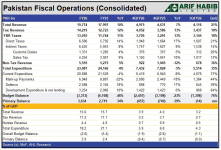
Interest expense has fallen from around 𝗥𝘀𝟴.𝟵𝘁𝗻 𝘁𝗼 𝗥𝘀𝟲.𝟵𝘁𝗻 — nearly 𝗥𝘀𝟮𝘁𝗻 𝗹𝗼𝘄𝗲𝗿 𝗶𝗻 𝗼𝗻𝗲 𝘆𝗲𝗮𝗿. More importantly, interest payments have significantly dropped from 𝟲𝟭% 𝗼𝗳 𝘁𝗼𝘁𝗮𝗹 𝗿𝗲𝘃𝗲𝗻𝘂𝗲𝘀 (𝗳𝗲𝗱𝗲𝗿𝗮𝗹 + 𝗽𝗿𝗼𝘃𝗶𝗻𝗰𝗶𝗮𝗹) 𝗶𝗻 𝗙𝗬𝟮𝟰, 𝘁𝗼 𝟯𝟱% 𝗶𝗻 𝗙𝗬𝟮𝟲.

𝗣𝘂𝘁 𝘀𝗶𝗺𝗽𝗹𝘆: 𝗥𝘀𝟲𝟭 𝗼𝘂𝘁 𝗼𝗳 𝗲𝘃𝗲𝗿𝘆 𝗥𝘀𝟭𝟬𝟬 𝗼𝗳 𝘁𝗼𝘁𝗮𝗹 𝗿𝗲𝘃𝗲𝗻𝘂𝗲 𝗴𝗼𝗶𝗻𝗴 𝘁𝗼 𝗶𝗻𝘁𝗲𝗿𝗲𝘀𝘁 𝗵𝗮𝘀 𝗳𝗮𝗹𝗹𝗲𝗻 𝘁𝗼 𝗮𝗿𝗼𝘂𝗻𝗱 𝗥𝘀𝟯𝟱.

Pakistan has delivered 𝟯 𝗰𝗼𝗻𝘀𝗲𝗰𝘂𝘁𝗶𝘃𝗲 𝗽𝗿𝗶𝗺𝗮𝗿𝘆 𝘀𝘂𝗿𝗽𝗹𝘂𝘀𝗲𝘀, while tax revenues grew 𝟭𝟭% 𝗶𝗻 𝗙𝗬𝟮𝟲 𝘃𝗲𝗿𝘀𝘂𝘀 𝗱𝗲𝗯𝘁 𝗴𝗿𝗼𝘄𝘁𝗵 𝗼𝗳 𝟳.𝟳% — revenues are now growing faster than debt.

1786552569496.png
 
@The SC

and the Pakistan Vision targeting the transition of the gross domestic product to 1 trillion dollars by the centennial of independence,

I think Pak would hit the target much earlier possibly by 2037 or 2038.

Regards

@hydrabadi_arab
 

Pakistan Records Strongest Fiscal Performance in 22 Years​

Pakistan has closed FY2025-26 with a historic strengthening of its public finances. This marks a decisive shift from recurring fiscal stress toward discipline, stability, and sustainable growth.

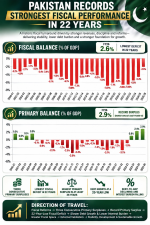
The fiscal deficit fell to just 2.6% of GDP—the lowest in 22 years—while the primary surplus reached a record 2.9% of GDP, the highest since at least FY2000-01.

A Historic Fiscal Turnaround​

In just three years, the fiscal deficit has improved by 5.2 percentage points of GDP, while the primary balance has swung by 3.9 percentage points (moving from a 1.0% deficit to a record 2.9% surplus).

Primary Balance: Three consecutive years of surpluses

  • FY24: +0.9% of GDP
  • FY25: +2.4% of GDP
  • FY26: +2.9% (Record high)
Fiscal Deficit: A 22-year low
  • FY22: 7.9% of GDP (Highest since FY2000-01)
  • FY23: 7.8% of GDP
  • FY24: 6.8% of GDP
  • FY25: 5.4% of GDP
  • FY26: 2.6% (Lowest in 22 years)

Revenue Up, Deficit Down: Rebuilding Fiscal Space​

(Note: All USD conversions are calculated at 1 USD = Rs 278)

Disciplined expenditure management and surging revenues helped deliver the strongest fiscal outcome in decades:

  • Total Revenues (FY26): Rs 19.8 trillion ($71.22 billion)
  • Tax Revenues: Rs 14.2 trillion ($51.08 billion)
  • Interest Payments: Dropped from Rs 8.9 trillion ($32.01 billion) last year to Rs 6.95 trillion ($25.00 billion) in FY26. This is a massive reduction of nearly Rs 2 trillion ($7.19 billion).
  • Interest Burden: Declined from 61% of total revenues in FY24 to just 35% in FY26, materially improving fiscal capacity.
  • Development & Net Lending: Rs 3.25 trillion ($11.69 billion)
The Result: A fiscal deficit of Rs 3.31 trillion ($11.91 billion), alongside a record primary surplus of Rs 3.63 trillion ($13.06 billion). This is not simple deficit reduction; it reflects a fundamental strengthening of Pakistan’s fiscal position driven by stronger revenues, expenditure discipline, and sustained reforms.

From Vulnerability to Strength​

Persistent fiscal deficits have historically been one of Pakistan’s biggest macroeconomic vulnerabilities—adding to debt, financing requirements, inflationary pressures, and external imbalances.

That cycle is being broken.

Three consecutive primary surpluses and sharply lower deficits are now translating into stronger debt dynamics:
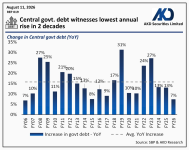
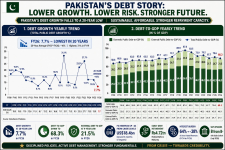
  • Debt growth has slowed to a 20-year low.
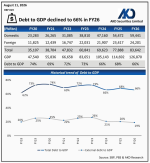
  • Debt-to-GDP has declined to around 68%.
  • Debt servicing costs have fallen materially.
This means lower financing pressure, improving debt sustainability, and greater fiscal space for development.

Stronger Stability, Stronger Growth​

The fiscal turnaround is reinforcing Pakistan’s broader macroeconomic stabilization. Lower fiscal imbalances, improving debt dynamics, stronger external accounts, and rebuilt reserves are reducing vulnerabilities and strengthening sovereign credibility.

The progress is also being externally recognized: S&P upgraded Pakistan's sovereign rating from B- to B with a Stable Outlook in July 2026. The agency specifically recognized faster fiscal consolidation, stronger revenue mobilization, rebuilding reserves, and declining government debt-to-GDP.

Together, these improvements provide a stronger foundation for investment, development, and sustainable, inclusive growth.

The Bottom Line​

Pakistan’s longstanding fiscal vulnerability is being transformed into a source of macroeconomic strength. Moving from a 7.9% fiscal deficit and 3.1% primary deficit in FY22 to a 22-year-low 2.6% fiscal deficit and record 2.9% primary surplus in FY26 is a remarkable turnaround.

Direction of Travel:Fiscal Reforms ➡️ Three Consecutive Primary Surpluses ➡️ Record Primary Surplus ➡️ 22-Year-Low Fiscal Deficit ➡️ Slower Debt Growth & Lower Interest Burden ➡️ Greater Fiscal Space ➡️ External Validation ➡️ Stability, Development & Sustainable Growth
1786609792992.png
 

📊 Summary of Provincial Fiscal Operations in Rs Trillion (FY2025–26)


Fiscal MetricPunjabSindhKhyber PakhtunkhwaBalochistanCombined Provincial Total
1. Total RevenueRs 4.651 Trillion ($16.73B)Rs 2.931 Trillion ($10.54B)Rs 1.620 Trillion ($5.83B)Rs 0.875 Trillion ($3.15B)Rs 10.077 Trillion ($36.25B)
🔹 Federal Transfers (NFC)Rs 3.790 Trillion ($13.63B)Rs 1.898 Trillion ($6.83B)Rs 1.245 Trillion ($4.48B)Rs 0.737 Trillion ($2.65B)Rs 7.669 Trillion ($27.59B)
🔹 Provincial Own TaxesRs 0.496 Trillion ($1.79B)Rs 0.593 Trillion ($2.13B)Rs 0.084 Trillion ($0.30B)Rs 0.035 Trillion ($0.13B)Rs 1.209 Trillion ($4.35B)
🔹 Provincial Non-TaxRs 0.259 Trillion ($0.93B)Rs 0.081 Trillion ($0.29B)Rs 0.095 Trillion ($0.34B)Rs 0.036 Trillion ($0.13B)Rs 0.471 Trillion ($1.69B)
🔹 Federal Loans & GrantsRs 0.106 Trillion ($0.38B)Rs 0.360 Trillion ($1.29B)Rs 0.197 Trillion ($0.71B)Rs 0.067 Trillion ($0.24B)Rs 0.729 Trillion ($2.62B)
2. Total ExpenditureRs 3.737 Trillion ($13.44B)Rs 2.582 Trillion ($9.29B)Rs 1.455 Trillion ($5.23B)Rs 0.854 Trillion ($3.07B)Rs 8.627 Trillion ($31.03B)
🔸 Current ExpenditureRs 2.778 Trillion ($9.99B)Rs 1.789 Trillion ($6.43B)Rs 1.179 Trillion ($4.24B)Rs 0.585 Trillion ($2.11B)Rs 6.331 Trillion ($22.77B)
🔸 Development (PSDP)Rs 1.225 Trillion ($4.41B)Rs 0.765 Trillion ($2.75B)Rs 0.371 Trillion ($1.33B)Rs 0.340 Trillion ($1.22B)Rs 2.701 Trillion ($9.72B)
🔸 Statistical Discrepancy-Rs 0.266 Trillion (-$0.96B)Rs 0.028 Trillion ($0.10B)-Rs 0.095 Trillion (-$0.34B)-Rs 0.072 Trillion (-$0.26B)-Rs 0.405 Trillion (-$1.46B)
3. Overall Budget Surplus+Rs 0.914 Trillion ($3.29B)+Rs 0.350 Trillion ($1.26B)+Rs 0.165 Trillion ($0.59B)+Rs 0.021 Trillion ($0.07B)+Rs 1.450 Trillion ($5.21B)
 

📊 Summary of Provincial Fiscal Operations in Rs Trillion (FY2025–26)


Fiscal MetricPunjabSindhKhyber PakhtunkhwaBalochistanCombined Provincial Total
1. Total RevenueRs 4.651 Trillion ($16.73B)Rs 2.931 Trillion ($10.54B)Rs 1.620 Trillion ($5.83B)Rs 0.875 Trillion ($3.15B)Rs 10.077 Trillion ($36.25B)
🔹 Federal Transfers (NFC)Rs 3.790 Trillion ($13.63B)Rs 1.898 Trillion ($6.83B)Rs 1.245 Trillion ($4.48B)Rs 0.737 Trillion ($2.65B)Rs 7.669 Trillion ($27.59B)
🔹 Provincial Own TaxesRs 0.496 Trillion ($1.79B)Rs 0.593 Trillion ($2.13B)Rs 0.084 Trillion ($0.30B)Rs 0.035 Trillion ($0.13B)Rs 1.209 Trillion ($4.35B)
🔹 Provincial Non-TaxRs 0.259 Trillion ($0.93B)Rs 0.081 Trillion ($0.29B)Rs 0.095 Trillion ($0.34B)Rs 0.036 Trillion ($0.13B)Rs 0.471 Trillion ($1.69B)
🔹 Federal Loans & GrantsRs 0.106 Trillion ($0.38B)Rs 0.360 Trillion ($1.29B)Rs 0.197 Trillion ($0.71B)Rs 0.067 Trillion ($0.24B)Rs 0.729 Trillion ($2.62B)
2. Total ExpenditureRs 3.737 Trillion ($13.44B)Rs 2.582 Trillion ($9.29B)Rs 1.455 Trillion ($5.23B)Rs 0.854 Trillion ($3.07B)Rs 8.627 Trillion ($31.03B)
🔸 Current ExpenditureRs 2.778 Trillion ($9.99B)Rs 1.789 Trillion ($6.43B)Rs 1.179 Trillion ($4.24B)Rs 0.585 Trillion ($2.11B)Rs 6.331 Trillion ($22.77B)
🔸 Development (PSDP)Rs 1.225 Trillion ($4.41B)Rs 0.765 Trillion ($2.75B)Rs 0.371 Trillion ($1.33B)Rs 0.340 Trillion ($1.22B)Rs 2.701 Trillion ($9.72B)
🔸 Statistical Discrepancy-Rs 0.266 Trillion (-$0.96B)Rs 0.028 Trillion ($0.10B)-Rs 0.095 Trillion (-$0.34B)-Rs 0.072 Trillion (-$0.26B)-Rs 0.405 Trillion (-$1.46B)
3. Overall Budget Surplus+Rs 0.914 Trillion ($3.29B)+Rs 0.350 Trillion ($1.26B)+Rs 0.165 Trillion ($0.59B)+Rs 0.021 Trillion ($0.07B)+Rs 1.450 Trillion ($5.21B)

Why Sindh total revenue is even higher then Punjab? Well they make like $700m/year from Karachi ports which is used by all of Pakistan! Its unfair but PPP as usual likely blackmailed to get its way.

Imagine that Balochistan could easily get half of that with Gwadar if there was peace! Now Pakistan is investing more and more in Karachi port upgradation, soon Sindh will be collecting $1 billion/year extra revenue from it.

Its another thing these bastards don't spend much from Sindh dev budget on Karachi.
 

Users who are viewing this thread

  • Pakistan Defence Latest

    Country Watch Latest

    Latest Posts

    Back
    Top