ChineseTiger1986
Trusted Member


It's between 5% to 10% now.
It will soon be evolved with the induction of the new EUV.
Follow along with the video below to see how to install our site as a web app on your home screen.
Note: This feature may not be available in some browsers.
It's between 5% to 10% now.

Correct. China didn't import more. Just paid more for soaring prices.The main reason is the periodic price increases in memory and storage.
Imports are trending downwards.View attachment 215181
China's customs data for July 2026 show imports of electronic integrated circuits worth about $63.83 billion in that single month. A UIBE trade-data analysis gives a closely related “chip products” figure of about $63.92 billion, up 70.9% YoY.
Even more remarkable, during January–July 2026, China imported roughly $361.8-362.4 billion of IC/chip products. Its largest sources were Taiwan (~$112.45bn), South Korea (~$108.89bn) and Japan (~$31.93bn).
There is also a fascinating change in China's import structure. January-July IC imports were up 58.3% in value but only about 8.2% in physical units. That means the average imported value per IC rose enormously, roughly 46% by one calculation.
And China simultaneously exported about $216bn of ICs during Jan–July. So its gross semiconductor trade looked approximately like:
IC imports → $361.8bn
IC exports → $216.0bn
Net IC imports → ~$145.8bn
Despite possessing one of the world's deepest semiconductor manufacturing ecosystems.
No major manufacturing economy has a perfectly national supply chain. China importing ~$64bn of ICs in one month is an extreme contemporary demonstration of it.
China's net physical IC imports still comfortably outclass exports lol. In Jan-Jul 2026 China imported 364.75 billion IC units while exporting only 211.84 billion. Imports were up 8.2% YoY meaning China needed an extra 27.5 billion imported chips over last year itself. And this happened when China's retail growth was basically dead and fixed investment was falling. Even Zheshang Securities points out the obvious reason: China occupies a huge chunk of the back end semiconductor and integrated assembly chain, so that gigantic manufacturing base itself keeps sucking in imported upstream chips.More semiconductors = more exports.
China has own DUV machines and soon own EUV machines with logic folding technique. This is why your source explains 216billion in semiconductor exports too. That will grow exponentially when EUV machines are in working order.
China cracking that 1.4trillion surplus in trade this year so all looking great!


China's net physical IC imports still comfortably outclass exports lol. In Jan-Jul 2026 China imported 364.75 billion IC units while exporting only 211.84 billion. Imports were up 8.2% YoY meaning China needed an extra 27.5 billion imported chips over last year itself. And this happened when China's retail growth was basically dead and fixed investment was falling. Even Zheshang Securities points out the obvious reason: China occupies a huge chunk of the back end semiconductor and integrated assembly chain, so that gigantic manufacturing base itself keeps sucking in imported upstream chips.
So yes, the mighty manufacturing superpower itself still needs an absolutely hilarious number of foreign chips just to keep that machine fed宏观专题研究:2026年7月进出口数据传递的信号:集成电路价格增速首度放缓 中美峰会前再起波澜__新浪财经_新浪网
宏观专题研究:2026年7月进出口数据传递的信号:集成电路价格增速首度放缓 中美峰会前再起波澜stock.finance.sina.com.cn
what about endia? Can you guys make DUV machines? What nm are you fabricating? OOO right...
Lmao why are you even looking at India, a middle power?what about endia? Can you guys make DUV machines? What nm are you fabricating? OOO right...
I thought China was supposed to be competing with the best of the West and East Asia. Why suddenly lower the benchmark? lol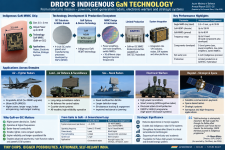


India can already make high purity photolithography intermediates for photoresists, anti-reflective coatings, photo acid generators and even conductive inks. Even some of the organic chemicals used to make semiconductor photoresists are being produced here now and shipped to South Korea and Japan.They are planning to build fabrication plant of the 28 nm chip with the western technology.
China has pretty much 100% controlled the entire supply chain of the 28 nm chip which no single nation can achieve it.
Now China is working for 100% 14 nm, and soon it gonna be 100% 7 nm.
India can already make high purity photolithography intermediates for photoresists, anti-reflective coatings, photo acid generators and even conductive inks. Even some of the organic chemicals used to make semiconductor photoresists are being produced here now and shipped to South Korea and Japan.

India does have its own chip-design startups now. And I don't mean those usual “design houses” doing contract work for foreign companies lol. I'm talking about Indian firms owning the semiconductor IP themselves and actually selling chips based on it.It is only in your shupapowah dream.
India celebrates first home-grown chip despite modest specs
: It’s been to space. It likely won’t launch India as a semiconductor superpowerwww.theregister.com
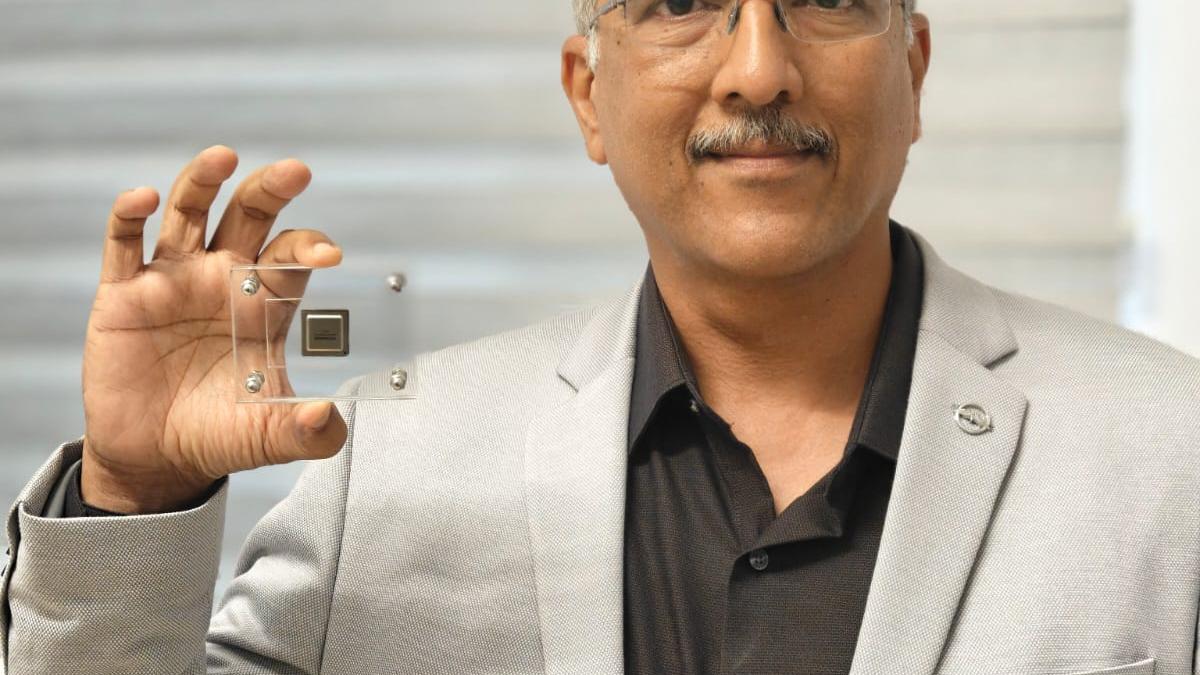
India does have its own chip-design startups now. And I don't mean those usual “design houses” doing contract work for foreign companies lol. I'm talking about Indian firms owning the semiconductor IP themselves and actually selling chips based on it.
Kerala start-up unveils first AI system-on-chip
Kerala's Netrasemi launches A2000, India's first AI system-on-chip, ready for commercial production to enhance edge AI applications.www.thehindu.com
What I found more interesting in Netrasemi is their heterogeneous graph stream architecture. NPU, vector processors, vision hardware, DMA, encryption and general compute can all chew through different parts of the same workload graph without everything constantly bouncing back to the CPU.India does have its own chip-design startups now. And I don't mean those usual “design houses” doing contract work for foreign companies lol. I'm talking about Indian firms owning the semiconductor IP themselves and actually selling chips based on it.
Kerala start-up unveils first AI system-on-chip
Kerala's Netrasemi launches A2000, India's first AI system-on-chip, ready for commercial production to enhance edge AI applications.

Yes, we are indeed still working hard to develop our chip industry. We currently still have a trade deficit of $100 billion.China's net physical IC imports still comfortably outclass exports lol. In Jan-Jul 2026 China imported 364.75 billion IC units while exporting only 211.84 billion. Imports were up 8.2% YoY meaning China needed an extra 27.5 billion imported chips over last year itself. And this happened when China's retail growth was basically dead and fixed investment was falling. Even Zheshang Securities points out the obvious reason: China occupies a huge chunk of the back end semiconductor and integrated assembly chain, so that gigantic manufacturing base itself keeps sucking in imported upstream chips.
So yes, the mighty manufacturing superpower itself still needs an absolutely hilarious number of foreign chips just to keep that machine fed宏观专题研究:2026年7月进出口数据传递的信号:集成电路价格增速首度放缓 中美峰会前再起波澜__新浪财经_新浪网
宏观专题研究:2026年7月进出口数据传递的信号:集成电路价格增速首度放缓 中美峰会前再起波澜stock.finance.sina.com.cn
I think I already answered that.Yes, we are indeed still working hard to develop our chip industry. We currently still have a trade deficit of $100 billion.
But...
A "powerful" India has been more than happy to help us bridge that $100 billion trade deficit.
Lmao why are you even looking at India, a middle power?what about endia? Can you guys make DUV machines? What nm are you fabricating? OOO right...
I thought China was supposed to be competing with the best of the West and East Asia. Why suddenly lower the benchmark? lol
bur even if China build those machines, they haven't companies with designs of cutting edge chips.China has set a governmental target of 2028 to produce working chips from its domestic extreme ultraviolet (EUV) lithography prototype, though industry experts and analysts view 2030 as a more realistic timeline. [1]
Current Prototype Status
- Location: A high-security laboratory in Shenzhen houses the prototype, which was assembled by former engineers from Dutch firm ASML. [1, 2]
- Capabilities: The machine successfully generates EUV light at the required 13.5-nanometer wavelength, but it has not yet printed functional, production-ready semiconductor chips. [1]
- Design Differences: The domestic prototype fills an entire factory floor—making it much larger than commercial ASML systems—and currently operates at a lower wattage and lower wafer throughput. [1]


