India pulled 500m people out of poverty many of them still barely survive

Yasser76

Elite Member
Joined
Jan 3, 2024
Messages
12,671
Reaction score
30,650
Reputation
25,805.3
Country of Origin
Country of Residence

India pulled 500m people out of poverty. Many of them still barely survive​

World Bank says India has pulled record numbers of citizens out of poverty, but millions among them are one shock away from being thrust back into destitution.

Listen (8 mins)
Save

Share India pulled 500m people out of poverty. Many of them still barely survive on social media
Share

Add Al Jazeera on Google
India poverty

People wait for free food outside an eatery in Ahmedabad, India, January 20, 2021 [Ajit Solanki/AP Photo]

By Yashraj Sharma
Published On 15 Nov 202615 Nov 2026
Rajsamand and New Delhi, India – Hema Prajapat, 25, says even “thorns growing inside her stomach” would not hurt as much as hunger does.

By the end of each month, her kitchen shelves are empty; her husband, Hari Prajapat, sinks deeper into debt; and an increasing share of their food supplies is set aside for their nine-year-old son, Divyansh.

Recommended Stories​


list of 4 itemslist 1 of 4

How Ambani’s Jio became India’s second-largest company​

list 2 of 4

How are Pakistan’s imports from India growing again despite tensions?​

list 3 of 4

‘Cruel joke’: How Indian H-1B dreams are crash-landing after Trump fee hike​

list 4 of 4

India’s Bengal drops eggs from school lunches: Why that’s stoking debate​

end of list
But Hema’s family is no longer poor – at least on paper.

She spends 11,000 rupees ($117) a month on her household of three. That is about 49 percent more than the roughly 7,380 rupees ($78) monthly threshold for a family of that size, based on the World Bank’s poverty line.

India, the world’s most populous country, no longer counts its poor. It has not published an official consumption-based poverty estimate in more than a decade. That leaves the World Bank to provide internationally comparable estimates, using newer consumption surveys and its own poverty thresholds.

A recent World Bank report says India lifted nearly 500 million people out of poverty between 2011 and 2023, with extreme poverty dropping from 27.1 percent to 2.6 percent during the period.

The only comparable poverty-reduction effort on this scale was achieved by China, which lifted more than 800 million people out of extreme poverty over four decades.

Several economists have said India’s achievement is significant, and that the World Bank’s mechanism for calculating these numbers is beyond reproach, even as they have argued that the planet’s most populous nation still has a long way to go before it can claim to have defeated poverty.

Advertisement

Other economists have questioned the World Bank’s sweeping conclusions and India’s unwillingness under Prime Minister Narendra Modi’s government to carry out its own poverty estimates.

But masked by that largely academic and political split is the lived reality of millions of Indians who have crossed the supposed poverty threshold yet lead a life marked by persistent deprivation, and a precarity that leaves families one shock away from losing everything that matters to them.

“This poverty line, this bar, is very low. No person can live a dignified life [on this amount],” Hema told Al Jazeera, sitting in a small garden where she moonlights as a caretaker.

“Did they even get out of their AC cars?” she asked, taking a dig at the officials who prepared the report for the World Bank.

‘Money now vanishes’​

India, home to 1.4 billion people, is one of the fastest-growing global economies – the fourth-largest by nominal gross domestic product (GDP), despite repeated recent shocks including the COVID-19 pandemic and the ongoing wars in Ukraine and the Middle East.

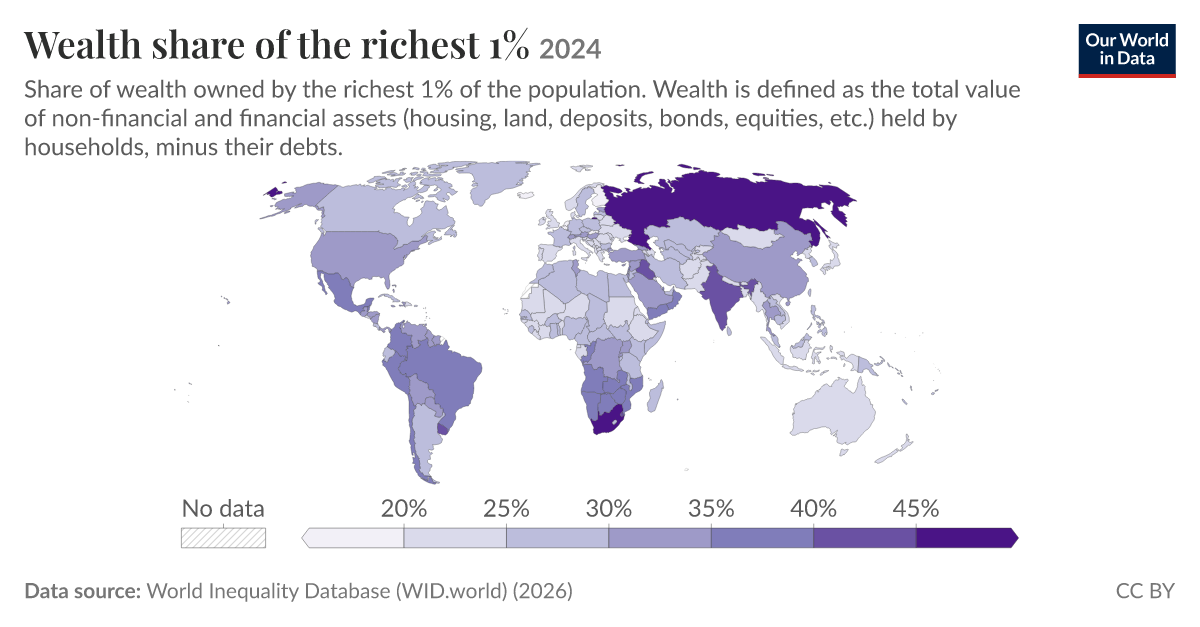
It is also one of the world’s most unequal countries, with the top 1 percent of its population owning 40 percent of its wealth – a concern highlighted in the World Bank report as well.

Hema was 11 when she was married off to a man who belongs to a family of traditional clay-pot makers in Rajsamand district of Rajasthan state.

When pot sales could no longer meet their financial needs, her husband, Hari, started a street food stall selling pani puri, a popular Indian snack. That did not last long because of the pandemic.

Hema started to look for work.

For the past year, she has been cleaning houses and washing utensils in the neighbourhood for 5,000 rupees ($53) a month, but the deprivation did not end.

“We have to buy every single thing from the market,” she said. The family has no agricultural land.

The World Bank pointed to rising female labour force participation as one of the factors behind India’s improving poverty rates, although women’s access to secure and adequately paid employment remains a challenge.

“Since I started working, our home has seen some comfort, but the money is now vanishing faster, and we are even more in debt,” Hema said, adding that she is unable to figure out the maths behind it.

“The prices have multiplied in recent years, and whatever we earn falls short,” she told Al Jazeera.

A girl stands at the door of a grocery shop at a slum in New Delhi
A girl stands at the door of a grocery shop at a slum in New Delhi [File: Anindito Mukherjee/Reuters]
The World Bank also noted that the Indian government’s provision of free or subsidised foodgrains to nearly 800 million citizens every month under its national food-security programme has helped tackle extreme poverty.

Advertisement

But a rising cost of living has meant that government subsidies and handouts are racing against growing economic pressures on families like Hema’s. India’s overall consumer prices rose by at least 51 percent between September 2016 and September 2025, according to the government’s Consumer Price Index. Wage rises in this period have not kept pace.

Some government schemes help, such as public schools for children or state-run hospitals that provide free or subsidised healthcare.

But Hema says free healthcare does not inspire much confidence in people. When her son Divyansh had a bad cold and the flu two months ago, she rushed him to a private hospital as waiting times at public hospitals are often longer, with crowded wards, overstretched doctors and limited resources.

“I was scared for him. His fever was getting worse,” she said.

Treatment at the private hospital cost Hema about 6,000 rupees ($64) – more than what she makes in a month. “I do not want my son to get used to private hospitals or their drugs. I cannot take him to one every time,” she said.

‘One shock’ away from poverty​

Millions of Indian households that appear to be rising above the World Bank’s poverty threshold live on the edge, desperately trying to avoid being pushed back.

Santosh Mehrotra, a developmental economist in New Delhi, said the poverty threshold in India is too low. All it takes is “one shock” to be pushed back into it, he said. “That shock could be a pandemic, drought, flood, or even a wedding.”

Hema’s neighbour Sushila Salvi received one such shock.

In December last year, Salvi, 31, realised she was “finally pregnant” again – her second child after a gap of 14 years. Salvi did not trust government hospitals and wanted to get all her treatment at a private clinic.

In some ways, she had prepared for it. Over the previous eight years, she learned makeup skills and opened a small, one-seater salon in Kankroli, a small town in Rajsamand. She had been saving for her 14-year-old daughter’s higher education. The daughter currently goes to a government school.

“But when I got pregnant, I could not rely on government hospitals,” she said.

Maternal care cost her nearly 65,000 rupees ($695) and drained her savings. She had to pull her daughter out of extra tuition classes that cost her 600 rupees ($6) a month.

Mehrotra, who previously worked with the government on rural economies and poverty, said the World Bank’s poverty threshold is “also problematic because it does not draw a distinction between the rural and the urban populations” despite their different realities.

Seema Kumar, 37, lives on the outskirts of New Delhi and spends 20,000 rupees ($214) on her family of three.

She turns to loans when expenses spiral, such as during a festival or her 17-year-old son’s birthday.

But some shocks come unseen.

As India celebrated Diwali, a festival of lights, last week, and people burst firecrackers, air quality in New Delhi – one of the world’s most polluted cities – hit a record.

The next morning, as dense and toxic smog hung over the city, all three members of Seema’s family left for work. By evening, her son had developed a sore throat, everyone in the family had a runny nose, and Seema went to bed with a terrible headache.

Advertisement

“I could not buy a mask for my son, and they say I am not poor any more,” Seema told Al Jazeera.

Back in Rajsamand, as Hema swept the garden in her neighbourhood, she called Hari, her husband, reminding him that their child was due for a routine medical checkup that day.

Hari said he could not afford to refill petrol any more due to the increase in oil prices caused by the conflict in the Middle East. Hema offered to refill his motorcycle’s tank to go to the nearest hospital.

“My only hope is that my son makes something out of his life,” said Hema. “If I do not work for a single day – let alone a month – we can go back to the days of extreme poverty and deprivation.”
 
Remarkable achievement by India.

Unfortunately the Indian government's policy of naked aggression against Pakistan threatens millions of people as PM Shehbaz Sharif highlighted in his meeting with many leaders of the world including Amreeki President Mr. Donald Trump. For his role in saving millions of people, Pakistan had advocated for the noble prize.

India's continued water terrorism policies and demographic changes to Kashmir is an act of war as per Pakistani narrative.

1% have 40% of wealth. So basically GDP per capita is effectively $1,500, not $2,750 once you take out the Billionaires. Never seen such unequal wealth distribution
 
1% have 40% of wealth. So basically GDP per capita is effectively $1,500, not $2,750 once you take out the Billionaires. Never seen such unequal wealth distribution

Logic is defined Indianly in India but even this is improving. In many parts they only recently started wearing clothes and footwear. Some Indians remain uncontacted by modern man like some Brazilians.
 
Logic is defined Indianly in India but even this is improving. In many parts they only recently started wearing clothes and footwear. Some Indians remain uncontacted by modern man like some Brazilians.

Sounds like some of the Indian members on here I know
 
Bonplan was the first indofrench neanderthal who painted the nagin dance cave art in South of France.

I kind of miss that little deranged Indian, used to be fun jousting with him and catching him out all the time
 
1% have 40% of wealth. So basically GDP per capita is effectively $1,500, not $2,750 once you take out the Billionaires. Never seen such unequal wealth distribution
Its basically saying that people went from destitute to very poor

India is definitely an unequal society, but what we're seeing is phase 1 effects of poverty alleviation, the real measure would be to sustain the momentum and continue to push large chunks of population up the value chain like China did

For the moment, the large ills affecting the country remain but this is definitely a positive step and welcome news to be celebrated

Fore sure, as India develops poverty goes down, the interesting bit of the article for me was the very small difference between absolute poverty and poverty as it highlights with individual cases.

Also the massive disparity in how wealth is divided. India has done very well and made some world class companies, but this data shows that with 1% having 40% of wealth, per capita GDP almost becomes meaningless. Other countries will of course have their very rich and the rest of the masses, but nowhere near the same level
You've highlighted a very valid feature of the current economic landscape. However, I'd argue that some degree of wealth inequality is a trade-off we may have to accept during this phase of development, particularly given that capitalism remains the principal mechanism available to us for generating wealth, encouraging enterprise and systematically lifting people out of poverty.

I agree with your central premise that wealth concentration can mask underlying economic inequalities, and that per capita GDP can sometimes be a misleading indicator of how prosperity is distributed.

However, I'd be hesitant to interfere with the mechanisms of wealth creation before we've established a sufficiently large and economically empowered middle class. Our immediate priority should be to expand the pool of people participating in economic prosperity, rather than risk undermining the very mechanisms that generate it.

That isn't to suggest that all forms of wealth concentration are desirable or that monopolies, political patronage and unequal access to opportunity should go unchecked. There's an important distinction between rewarding wealth creation and perpetuating structural privilege.

Unsure about it needing to be a trade off, China never had that (granted it is a communist country)

If you look at this interactive map no developing country comes close to India in terms of the top 1% and how wealthy they are. Without getting political, much of this happened under Modi's watch it seems

Respectfully, im unsure of the central primise of your argument, is it that the current system perpetuates inequality and the current polity enables it?

If so, then i would say the picture is not so straight-forward, polity has its self serving interests and yes, it is apparent that systematic inequality is being perpetuated, but the picture is not so straight forward.

I would counter, that, despite its flaw, the GoI has made and continues to make meaningful progress towards poverty alleviate, one cannot discount that effort

My point is the efforts GOI made are perhaps the bear minimum compored to other countries, yes the overallk numbers are impressive but that is because the sheer size of indias population. It has possibky the worst income inequaity in the world
 
My point is the efforts GOI made are perhaps the bear minimum compored to other countries, yes the overallk numbers are impressive but that is because the sheer size of indias population. It has possibky the worst income inequaity in the world
Yea, no doubt about it

But sometimes, progress is progress and that is enough of a win
 
Unsure about it needing to be a trade off, China never had that (granted it is a communist country)
Setting aside labels like capitalism, socialism, or communism, modern China has long maintained a unique "safety net" mechanism: the fundamental aspects of daily life are firmly controlled by the government or state-owned enterprises.

This includes essential services and commodities such as water, electricity, natural gas, heating, grain, vegetables, meat, telecommunications, and transportation.

While private or foreign-invested enterprises are permitted to operate in small segments of these sectors, the core areas—which constitute the bulk of the market—remain under the absolute control of the government and state-owned entities, protected by law.

Furthermore, local government bodies are subject to rigorous performance evaluations. The emergence of extreme poverty is strictly prohibited; should incidents occur—such as people dying from starvation or exposure to the cold—the local authorities are held strictly accountable. In today’s era of highly developed social media, such occurrences are virtually impossible to conceal.

However, China’s welfare policy differs fundamentally from those found in Europe. China does not tolerate scenarios where individuals use government assistance to fund, for instance, a trip around the world. If big-data monitoring or public reports reveal that someone is living a high-consumption lifestyle while receiving government aid, their eligibility for such benefits is immediately revoked, and they may even face legal or administrative repercussions.
That's an interesting perspective. I wasn't aware of the extent to which the Chinese state directly manages the provision of essential goods and services.

I'd be interested to understand how this social safety net works in practice, how widely it covers the population, and what impact it has had on living standards and poverty.
 

Users who are viewing this thread

Back
Top