Navigation
Install the app
How to install the app on iOS
Follow along with the video below to see how to install our site as a web app on your home screen.
Note: This feature may not be available in some browsers.
More options
Style variation
You are using an out of date browser. It may not display this or other websites correctly.
You should upgrade or use an alternative browser.
You should upgrade or use an alternative browser.
US Infrastructure Outages and Global Impact: FAA ground stop, Microsoft 365, Gmail, Airline, Banking, Hotel Systems, etc.
- Thread starter BHAN85
- Start date
More options
Who Replied?

Starlord
Trusted Member


When I talk about retiring in the country, this is kinda what i mean...If I ever get off my lazy butt and start to live a real 'country' life instead of being a city-boy, then there is so much game animals within a short walk from my house on my own property to be a proper 'prepper': Turkeys, deer, raccoons, bunnies, squirrels and even coyotes. An official from a County department once told me that they wouldn't notice or care what I killed on my own property; he even said to go ahead and kill some stray dogs. It was like his version of 'Dont ask, dont tell' policy. Hahaha!
Plus the land/soil is fertile: I have not even watered my fruit trees or lawn in at least a dozen years and some of them are still thriving and bearing fruit: Peaches, Nectarines, Pears, Apples, Apricots and even a couple of pomegranate bushes (Cold Hardy Russian variety). Sadly, some of the fruit trees are no more because of total neglect and too many pine trees taking them over but that's my fault.
but on a serious note, little bit of gardening will be good to grow some of your own food, and been in woods has its own perks, learn how to shoot and self defense and you are gucci from all that socio-economic failure or zombie Apcoplypse.
Davey Crockett
Elite Member


MNZGamerX
Trusted Member
The Real Reason Why Everything Seems to Be Crashing
To understand the recent spate of tech system failures, we need to turn a Silicon Valley adage on its head. Instead of “move fast and break things,” think more “move fast and fix things, but still break them inadvertently.”
Adam Segal
November 18, 2026
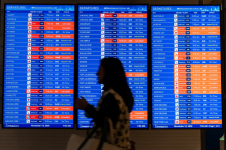
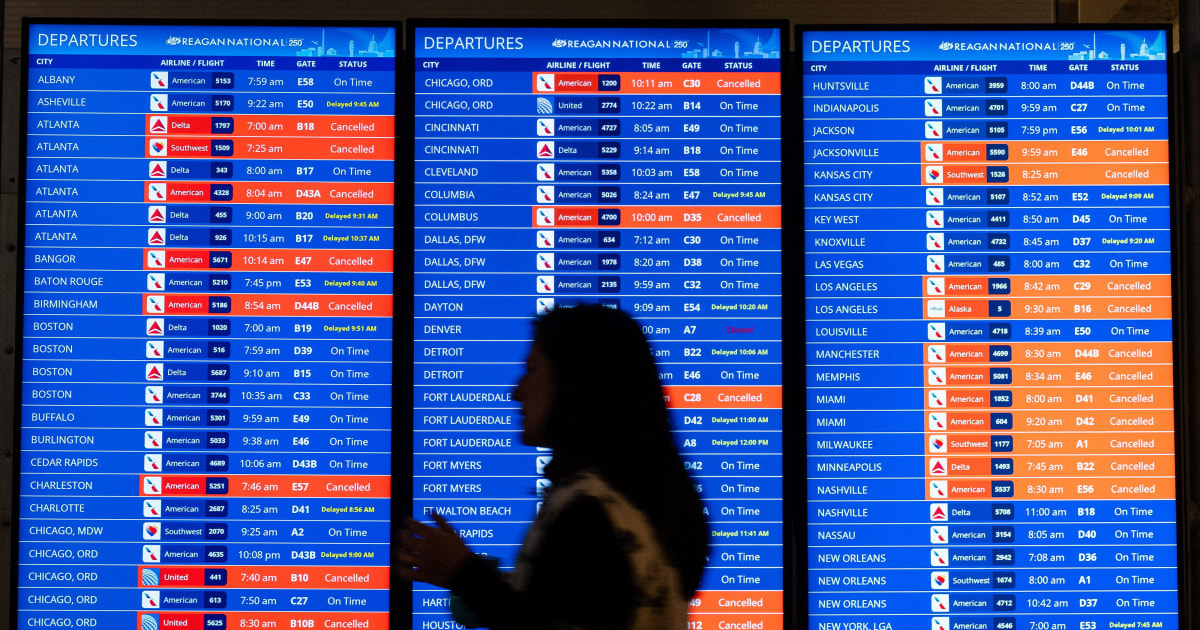
Over the last week, the American people have experienced multiple system failures, including a Microsoft outage, a nationwide ground stop by the Federal Aviation Administration (FAA), and the disruption of banking and Apple services. NSANet, the internal network of the National Security Agency (NSA), also went down, interrupting the communication of top-secret information. The quick succession of the failures, and their widespread impact, has left many wondering: what exactly is happening and why.
All the available public evidence suggests these events are unconnected, with different technical sources and causes. But big network interruptions tend immediately to provoke questions about malicious actors and the vulnerability of critical infrastructure. Many cybersecurity analysts and U.S. government officials have warned for years about a potential “cyber Pearl Harbor”, a devastating attack that causes physical destruction or social dislocation, and, as the war with Tehran has dragged on, the FBI, the Cybersecurity and Infrastructure Security Agency, the NSA, and the Department of Energy have issued advisories alerting critical infrastructure operators that hackers linked to Iran’s Islamic Revolutionary Guard Corps targeted programmable logic controllers and other operational technologies. Just last week, French authorities attributed to Iran an attack that reset temperatures on hundreds of supermarket refrigerators causing tens of millions of euros’ worth of food to spoil.
There is no doubt that U.S. critical infrastructure is vulnerable to cyber operations, especially from a highly capable actor such as China. But the events of the last week do not look to be cyberattacks. None of the victims have claimed that hackers are responsible, and U.S. officials have consistently said U.S. adversaries are not behind the disruptions. In response to questions about the outages, Director of National Intelligence Jay Clayton , for example, said, “This is not a cyberattack and this is not a coordinated effort by a nation state.”
With hackers seemingly ruled out, suspicion soon turned to artificial intelligence (AI) as having had either a direct or indirect role. On the direct line of thinking, the FAA was said to have installed a new AI-supported air traffic management tool—Strategic Management of Airspace, Routes and Trajectories (SMART)—a few days before the outage, leaving some wondering if that interacted with the old system in unexpected or uncontrollable ways. Transportation Secretary Sean Duffy, however, denied that the system was connected to core radar and tracking systems and the FAA has blamed a new router for the outage.
In terms of indirect role, there has been speculation over whether systems have gone down due to AI’s ability to discover new vulnerabilities at incredible pace and at scale. Over the last several weeks, security researchers have used AI tools to discover major bugs in PHP and Java, code used by thousands of businesses and governments. Security analysts for their part have warned of the risk of a “cyber apocalypse” in which defenders are overwhelmed by thousands of new attacks. This has created tremendous pressure on companies to patch and update software as quickly as possible. But as anyone with a laptop and cellphone knows, sometimes things work less than perfectly after the first update.
According to Senate Intelligence Committee Vice Chair Mark Warner, “What appears to be happening...is a consequence of how quickly artificial intelligence is changing the cybersecurity landscape.” Silicon Valley’s old adage of “move fast and break things” could be replaced with “move fast and fix things, but still break them inadvertently.”
So where does this all leave us? No matter the cause, the last week has been a clear reminder of how dependent U.S. society is on complex systems that are vulnerable to disruptions caused by technical mistakes and malicious actors. And it is only going to get worse before it gets better, as new AI systems are integrated with legacy software.
As this instability becomes a more constant part of our daily life, clear, timely communication from technology platforms and the government about what they know becomes even more critical, especially as people will often see patterns where none exist.
 www.cfr.org
To understand the recent spate of tech system failures, we need to turn a Silicon Valley adage on its head. Instead of “move fast and break things,” think more “move fast and fix things, but still break them inadvertently.”
Adam Segal
November 18, 2026
Over the last week, the American people have experienced multiple system failures, including a Microsoft outage, a nationwide ground stop by the Federal Aviation Administration (FAA), and the disruption of banking and Apple services. NSANet, the internal network of the National Security Agency (NSA), also went down, interrupting the communication of top-secret information. The quick succession of the failures, and their widespread impact, has left many wondering: what exactly is happening and why.
All the available public evidence suggests these events are unconnected, with different technical sources and causes. But big network interruptions tend immediately to provoke questions about malicious actors and the vulnerability of critical infrastructure. Many cybersecurity analysts and U.S. government officials have warned for years about a potential “cyber Pearl Harbor”, a devastating attack that causes physical destruction or social dislocation, and, as the war with Tehran has dragged on, the FBI, the Cybersecurity and Infrastructure Security Agency, the NSA, and the Department of Energy have issued advisories alerting critical infrastructure operators that hackers linked to Iran’s Islamic Revolutionary Guard Corps targeted programmable logic controllers and other operational technologies. Just last week, French authorities attributed to Iran an attack that reset temperatures on hundreds of supermarket refrigerators causing tens of millions of euros’ worth of food to spoil.
There is no doubt that U.S. critical infrastructure is vulnerable to cyber operations, especially from a highly capable actor such as China. But the events of the last week do not look to be cyberattacks. None of the victims have claimed that hackers are responsible, and U.S. officials have consistently said U.S. adversaries are not behind the disruptions. In response to questions about the outages, Director of National Intelligence Jay Clayton , for example, said, “This is not a cyberattack and this is not a coordinated effort by a nation state.”
With hackers seemingly ruled out, suspicion soon turned to artificial intelligence (AI) as having had either a direct or indirect role. On the direct line of thinking, the FAA was said to have installed a new AI-supported air traffic management tool—Strategic Management of Airspace, Routes and Trajectories (SMART)—a few days before the outage, leaving some wondering if that interacted with the old system in unexpected or uncontrollable ways. Transportation Secretary Sean Duffy, however, denied that the system was connected to core radar and tracking systems and the FAA has blamed a new router for the outage.
In terms of indirect role, there has been speculation over whether systems have gone down due to AI’s ability to discover new vulnerabilities at incredible pace and at scale. Over the last several weeks, security researchers have used AI tools to discover major bugs in PHP and Java, code used by thousands of businesses and governments. Security analysts for their part have warned of the risk of a “cyber apocalypse” in which defenders are overwhelmed by thousands of new attacks. This has created tremendous pressure on companies to patch and update software as quickly as possible. But as anyone with a laptop and cellphone knows, sometimes things work less than perfectly after the first update.
According to Senate Intelligence Committee Vice Chair Mark Warner, “What appears to be happening...is a consequence of how quickly artificial intelligence is changing the cybersecurity landscape.” Silicon Valley’s old adage of “move fast and break things” could be replaced with “move fast and fix things, but still break them inadvertently.”
So where does this all leave us? No matter the cause, the last week has been a clear reminder of how dependent U.S. society is on complex systems that are vulnerable to disruptions caused by technical mistakes and malicious actors. And it is only going to get worse before it gets better, as new AI systems are integrated with legacy software.
As this instability becomes a more constant part of our daily life, clear, timely communication from technology platforms and the government about what they know becomes even more critical, especially as people will often see patterns where none exist.
The Real Reason Why Everything Seems to Be Crashing | Council on Foreign Relations
To understand the recent spate of tech system failures, turn a Silicon Valley adage on its head, says CFR’s Adam Segal. Instead of “move fast and break things,” think more “move fast and fix things, but still break them inadvertently.”
www.cfr.org

Meengla
Elite Member
but on a serious note, little bit of gardening will be good to grow some of your own food, and been in woods has its own perks, learn how to shoot and self defense and you are gucci from all that socio-economic failure or zombie Apcoplypse.
The prepper arrangements are not going to matter for almost all Americans unless they are part of some relatively remote, well entrenched, well alarmed communities. It is a waste of time to invest in being a 'prepper'. At most, for most people in America: Have a few days supply of food and water. After just a week of crap hitting the fan, it will be 'The Walking Dead' like society.
MNZGamerX
Trusted Member
How to Defend Critical Infrastructure from AI Cyberattacks
November 18, 2026By: Clara Park
The US government and the private sector need a “grand bargain” to ensure the resilience and interoperability of the nation’s digital infrastructure.
The past week has seen a string of system failures, from the nationwide flight grounding to the Microsoft outage and banking transaction problems, making people worry about society-wide AI cyberattacks on critical infrastructure.
Imagine an adversary attacking our defense systems and critical infrastructure systems at the same time. The artificial intelligence (AI) defense system is hacked; the country’s key allies are attacked at the same time. Subsea cables are cut, and energy infrastructure is under attack. GPS communications are jammed, disrupting air and maritime traffic, among others.
Across the country, electricity, water, and communications systems are disrupted. During this chaos, hackers attack the financial system and transfer billions of dollars. AI-facilitated misinformation quickly spreads across the public, sowing internal division.
This type of scenario makes Multi-Domain Operations (MDO), the integration of activities across the space, cyber, air, sea, land, and cognitive domains, more urgent as AI capabilities grow more widely available. Given the increasing AI deployment in defense systems and critical infrastructure, such as communications, financial services, and transportation systems, contemporaneous attacks on these systems can quickly overwhelm defense capabilities.
While major cyberattacks on critical infrastructure occurred before AI became widely available, AI agents now let even less sophisticated groups attack indiscriminately and incessantly. These cyberattacks have already begun. Hackers from China, Iran, and Russia are linked to attacks on critical infrastructure, including government services, water and wastewater systems, and energy systems in the United States, Ukraine, and the UK.
Even some US military base commissaries experienced cyberattacks that threatened food security for military personnel, as did commercial supermarkets across Europe. North Korean hackers are stealing billions of dollars with cyberattacks, including the latest $6 billion crypto heists from Binance, that finance the country’s nuclear program.
How can we prepare for AI doomsday, with contemporaneous attacks on defense systems and critical infrastructures?
First, we should understand risks to defense systems and critical infrastructures. Each institution should take stock of vulnerabilities in its own and in its supply chain. Adversaries will try to find the weakest link to dismantle the system. Frameworks such as the Department of Homeland Security’s Roles and Responsibilities Framework for Artificial Intelligence in Critical Infrastructure, the Cybersecurity and Infrastructure Security Agency (CISA)’s Secure by Design, and Anthropic’s Cyber Missions can be good starting points for more detailed sector-specific and institution-specific protocols.
Second, we should build resilient systems, which are interoperable but separable. A system is interoperable for seamless operation but can be separated when attacked, allowing core services to continue. Once institutions identify and address risks, they should stress-test them. We should create contingency scenarios, protocols, and drills to prepare for risks, from energy blackouts and financial system collapses to defense system failures. We should also test interoperability not only across domestic institutions but with international partners. Multi-country, multi-domain attacks would weaken collective defense against common adversaries.
Not a single institution can do this alone. Thus, governments and AI companies need an AI grand bargain to create safety procedures that reduce risk to the public, the market, and governments. Safety measures can include trusted-user programs (allowing only verified users to access certain topics), ringfencing critical infrastructure (identifying relevant organizations and supporting additional safety measures), and algorithmic monitoring with immediate suspension of suspicious activity, coordinated with law enforcement and the intelligence community.
As organizations worldwide accelerate AI adoption, we should understand, fix, and stress-test security risks to multi-domain attacks on critical infrastructure and defense systems. The last thing society needs is to be too dependent on AI systems, lest they be wrested from our control.
Davey Crockett
Elite Member
I won't go into the full details here, for that you can read the Report URI blog post World's Largest Brands Infected With Malware Via Optimizely, which contains everything, but I will highlight my main concerns.
" A large provider of third-party JavaScript was compromised, their JavaScript was infected with malware, and that malware infected JS was served on some of the largest sites in the world"
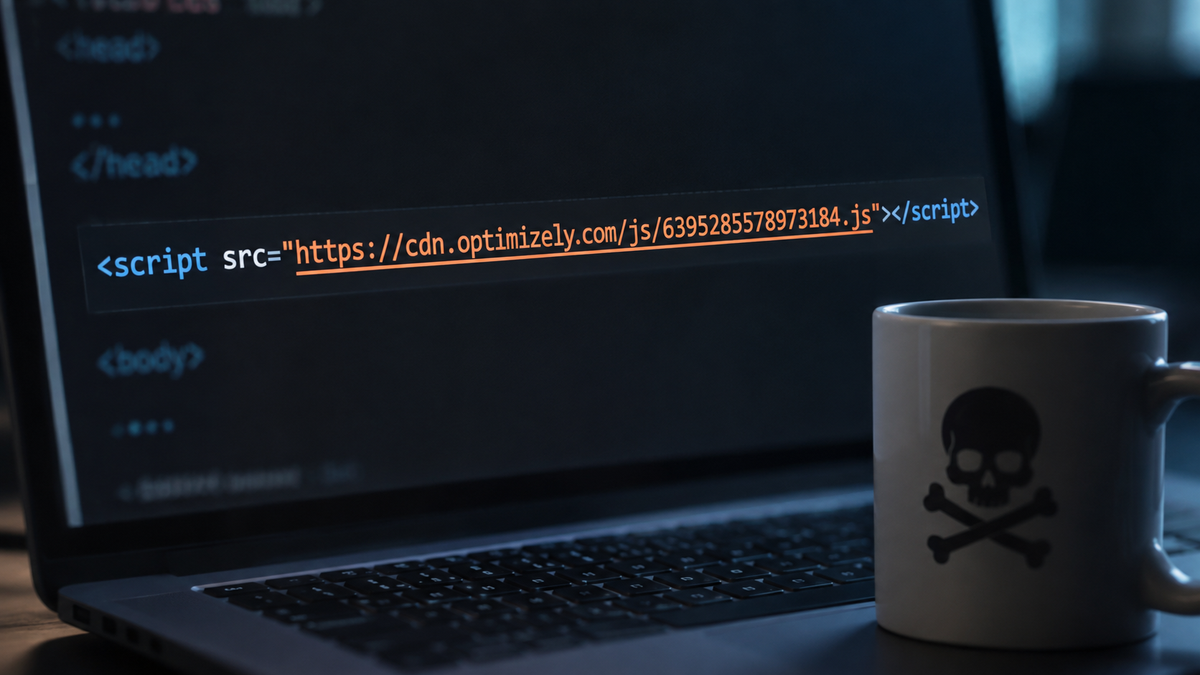
Reflecting on the Optimizely Incident and Why We Keep Failing
The Optimizely incident got a lot of coverage, and for good reason, but I can't help feeling frustrated that we find ourselves as an industry in the same position yet again. This post isn't about taking a shot at Optimizely, there was nothing particularly special about their incident,
 scotthelme.co.uk
Davey Crockett
Elite Member

Insight Partners (owner of Optimizely) is one of the biggest startup investors in the world, managing over $90 billion thanks to its bets on companies like Twitter, Wiz, Databricks and Anthropic — comparable in size to its noisier rivals Andreessen Horowitz and Sequoia Capital. Now, a new lawsuit and SEC filings show that it is in part owned by the government of Abu Dhabi via a private, Abu Dhabi-based investment firm called Lunate.
Davey Crockett
Elite Member
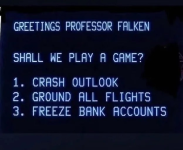
Shall we play a game?I remember learning about DEFCON from this particular movie.
Davey Crockett
Elite Member


AZ_HighCountry
INT'L MOD
Funny; someone forwarded me a post from X asking how come the IRS never gets hacked.
AZ_HighCountry
INT'L MOD
Or you happen to be an old guy whose parents came from the Depression Era. It's almost part of your psyche if not DNA.The prepper arrangements are not going to matter for almost all Americans unless they are part of some relatively remote, well entrenched, well alarmed communities. It is a waste of time to invest in being a 'prepper'. At most, for most people in America: Have a few days supply of food and water. After just a week of crap hitting the fan, it will be 'The Walking Dead' like society.
Meengla
Elite Member
Or you happen to be an old guy whose parents came from the Depression Era. It's almost part of your psyche if not DNA.
Way back in the 90s when I came to America as a college student, I knew of an old lady from the Depression Era: She even collected the little cotton balls from the medicine bottles!
Users who are viewing this thread
Total: 12 (members: 1, guests: 11)
Pakistan Defence Latest
-
 Pakistan-China Deal for 700 Advanced VT-4B Tanks: A Major Challenge for India (12 Viewers)
- Latest: Feroze
-
-

-

-


