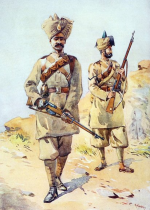
History of Pakistan Army

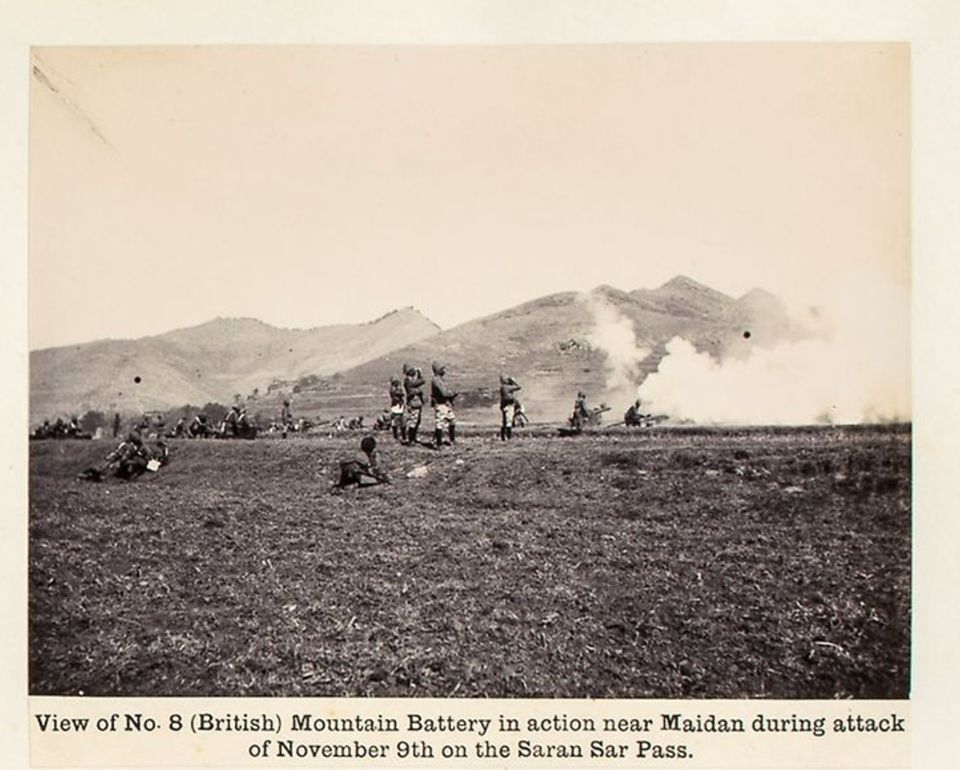
View Of No. 8 (British) Mountain Battery In Action Near Maidan During Attack Of November 9th On Saran Sar Pass, Tirah Valley, North-West Frontier, 1897-98 (c).

1640746491865.png


The Tirah Campaign proved the most difficult and protracted military operation during the rising costing the Army in India 287 dead and 853 wounded, despite initial expectations in many quarters that British and Indian troops would only be opposed by lashkars still reliant on hand-to-hand combat supported by limited jezail or occasional rifle fire.

3 In his final report dated 24th February 1898 Major-General Sir William Lockhart summed up the difficulties encountered by imperial troops, "No campaign on the frontiers of India has been conducted under more trying and arduous circumstances than those encountered by the Tirah Expeditionary Force".
 
Miranshah Aerodrome, Waziristan, 1930 (c).

1640806661919.png


Weapons Line Up For Westland Wapiti Biplane At Miranshah, (RFC 230, 112 And 20lb Bombs; BIB - Baby Incendiary Bombs, Lewis And Vickers Guns And Ammunition).
 
1966

1721861828089.png


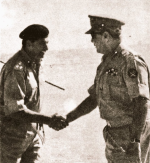
Brigadier Amir Abdullah Khan Niazi, commander of the 14ᵗʰ Parachute Brigade, receives General Yahya Khan, the new C-in-C, at Sialkot.
 
1721861900815.png


1944
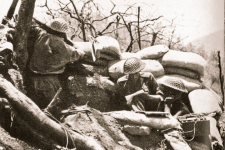
the 1/1ˢᵗ Punjab (62ⁿᵈ Punjabis) at Kohima, during the Burma Campaign. it had previously been in action in North Africa.
Probably the oldest infantry unit from the Raj lineage.
Lives on in the Pakistan Army as the 1ˢᵗ Punjab.
 
1721861974846.png


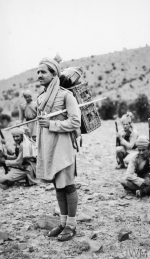
British officers and orderlies of the South Waziristan Scouts at lunch during a partridge shoot near Dhana in February 1936.

© Imperial War Museum
 
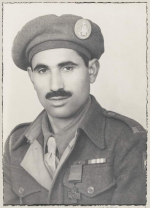
Sepoy Ali Haidar Victoria Cross, 13th Frontier Force Rifles, 13 August 1945.


1721862097341.png

Photograph, World War II, Italy, Europe, 1945.

Ali Haidar (1913-1999) was a Pashtun soldier from Kohat who won the VC on 9 April 1945 near Fusigano in Italy during 8th Indian Division's crossing of the River Senio.

According to the 'London Gazette' of 3 July 1945: 'In Italy, during the crossing of the River Senio, near Fusignano, in daylight on 9th April 1945, a Company of the 13th Frontier Force Rifles were ordered to assault the enemy positions strongly dug in on the far bank. These positions had been prepared and improved over many months and were mainly on the steep flood banks, some 25 feet high.

Sepoy Ali Haidar was a member of the left-hand Section of the left-hand Platoon. As soon as the Platoon started to cross, it came under heavy and accurate machine gun fire from two enemy posts strongly dug in about 60 yards away. Sepoy Ali Haidar's Section suffered casualties and only 3 men, including himself, managed to get across. The remainder of the Company was temporarily held up.

Without orders, and on his own initiative, Sepoy Ali Haidar, leaving the other two to cover him, charged the nearest post which was about 30 yards away. He threw a grenade and almost at the same time the enemy threw one at him, wounding him severely in the back. In spite of this he kept on and the enemy post was destroyed and four of the enemy surrendered.

With utter disregard of his own wounds he continued and charged the next post in which the enemy had one Spandau and three automatics, which were still very active and preventing movement on both banks. He was again wounded, this time in the right leg and right arm. Although weakened by loss of blood, with great determination Sepoy Ali Haidar crawled closer and in a final effort raised himself from the ground, threw a grenade, and charged into the second enemy post. Two enemy were wounded and the remaining two surrendered.

Taking advantage of the outstanding success of Sepoy Ali Haidar's dauntless attacks, the rest of the Company charged across the river and carried out their task of making a bridgehead. Sepoy Ali Haidar was picked up and brought back from the second position seriously wounded. The conspicuous gallantry, initiative, and determination combined with a complete disregard for his own life shown by this very brave Sepoy in the face of heavy odds were an example to the whole Company.

His heroism had saved an ugly situation which would - but for his personal bravery - have caused the Battalion a large number of casualties at a critical time and seriously delayed the crossing of the river and the building of a bridge. With the rapid advance which it was possible to make the Battalion captured 3 officers and 217 other ranks and gained their objectives'.

Ali Haidar was invested with his VC by King George VI at Buckingham Palace on 30 October 1945.
Sepoy Ali Haidar Victoria Cross, 13th Frontier Force Rifles, 13 August 1945.
 
The month of December has not augered well for Pakistan. We had the Tradegy of 1971 and much later we also had the assassination of Benazir Bhutto.
Lt. Gen Amir Abdullah Khan Niazi was the Commander of the Eastern Command during 1971 and had the dubious and shameful honour to surrender on 16th December to the invading Indian forces.
He was from the Punjab Regiment 5th Battalion. He was the CO in the mid 50s and my father was his 2iC.
He visited us much later after his release as POW. Meanwhile he had penned his version of the events in his book.
If you read the book you get the impression that GHQ had basically abandoned him and his command and we all know how it all ended. View attachment 4096View attachment 4097

I'm trying to upload more pics but unfortunately getting messages that the pictures are too large size wise. Maybe please adjust the uploading limit if possible. Thanks
Other thing is that when Dhaka was about to fall General Jacob a Jew General visited office of General Niazi and threatened him indirectly to kill his family residing at that time with him in Dhakka Cantt . Like Sir! If you surrender now i guarntee the lives of your wife and kids will be spared else you know they will be killed along you. When it comes to family and kids we all get weak. General Niazi too loved his family. And that tells about the so called ethics of Indian army,coercing a man to surrender by threatening to kill his family instead of making him surrender using military force.
 
2017
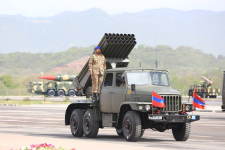
Rocket Delivery Mine System from 6th Armoured Division, Pakistan Army at Pakistan Day Parade.

The system has a range of 15 km.
1724700417061.png
 
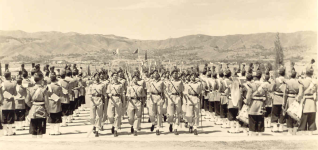
Passing out parade of 19th PMA Long Course.
Photo Courtesy: Lt Col. (Retd.) Hasan Iftikh

1729546897721.png
 
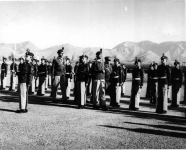
Maj. Gen. Tikka Khan reviews the parade at PMA Kakul in 1966.

1729546948624.png
 
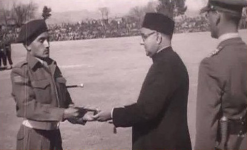
Raja Aziz Bhatti (Maj. Raja Aziz Bhatti Shaheed) receiving Sword of Honour from the Prime Minister, Liaquat Ali Khan during the Passing Out Parade of 1st PMA Long Course at PMA Kakul on Feb 4th, 1950.


1729547022610.png
 
Lady Cadets of Pakistan Military Academy Kakul during Fire Power demonstration and Battle Inoculation Training at Jhelum. 2010


1729547131175-png.74023
 
To view this content we will need your consent to set third party cookies.
For more detailed information, see our cookies page.
 
Niazi
@lone_wolf1727

Soldiers from 30 Punjabis, now 13 Punjab regiment "Haideri nishan" and 20 Punjabis, now 6 Punjab regiment "Quaid's guards"

1730463566495.png
 

Users who are viewing this thread

Latest Posts

Back
Top