c14-Isotope
Registered Member

The only message that goes to West from this is that India-China are capable of solving their issues themselves, nothing more than that. Disengagement is just the first step, India-China border issues remain at large.
Follow along with the video below to see how to install our site as a web app on your home screen.
Note: This feature may not be available in some browsers.
Do you think West will see this and "quarrel more with India"?

China wants India to feel good so that it will allow more Chinese investment and allow more Chinese exports to India.What does China gain from giving "relief" to India? & Why would India convince itself nothing will happen against China?

This may be the same for us. Winter has arrived, and both sides have withdrawn the remaining military personnel of non border troops. I think it may be to restore the patrol status between the Chinese and Indian patrol forces. But the actual control area we have formed since 2020 should still be controlled by border troops, with a typical example being the Galwan River Valley area. In 2020, India directly invaded the Galwan River Valley area patrolled by our army from the Galwan River mouth area, and established outposts. Through bloody conflicts, India was driven out of the valley by the People's Liberation Army. Later, through negotiations, both sides withdrew. The current situation is that the People's Liberation Army holds the valley, and the Indian army firmly controls the Galwan River mouth area. We cannot threaten their roads, and they cannot enter the Galwan River Valley area to threaten our rearWinter is coming, and India cannot guarantee the supply of front-line soldiers. Therefore, they pretend to reach an agreement with China, and when the weather warms up next year, they will provoke again. The result will be another beating from the PLA, but India media will claim victory. Every time, we'll see.
Of course, it also has something to do with the snubbing of the United States, and every time Modi is snubbed by the United States, he tries to get closer to China and Russia in order to ask for more benefits from the United States. We know Modi very well.
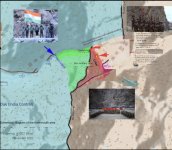

The opposite. Based on what is reported, India and China will commence patrolling up to their claim points which means patrols will cross each other and into what they consider their territories. This means India will patrol areas that were inaccessible earlier, and vice-versa for China.
If true, this is significant.
The opposite happened. India had not militarised its border with China before Galwan. Now the entire Indian military is re-orienting for a clash with China, military infrastructure has been and will continue to be built for a clash with China. You ended up shooting your foot.
This deal gives wings to the fact that China would like de-escalation.
We aren't as petty as the Indians. This deal is most likely a patrol deal to soothe their ego. I actually proposed a buffer zone long ago, an area few km wide which does not belong to either side and serve as a forest belt etc.This may be the same for us. Winter has arrived, and both sides have withdrawn the remaining military personnel of non border troops. I think it may be to restore the patrol status between the Chinese and Indian patrol forces. But the actual control area we have formed since 2020 should still be controlled by border troops, with a typical example being the Galwan River Valley area. In 2020, India directly invaded the Galwan River Valley area patrolled by our army from the Galwan River mouth area, and established outposts. Through bloody conflicts, India was driven out of the valley by the People's Liberation Army. Later, through negotiations, both sides withdrew. The current situation is that the People's Liberation Army holds the valley, and the Indian army firmly controls the Galwan River mouth area. We cannot threaten their roads, and they cannot enter the Galwan River Valley area to threaten our rearView attachment 74048
India doesn’t even realized what it has agreed to. It has to notify China and restrict its patrols to bi-weekly with around a dozen men. India has agreed to terms China will later hold up, first as law-fare, and then as a pre-text (if India tries something with regards to Tibet and the Dalai Lama), for a quick and decisive clash, possible with the PLA taking Leh, should it become necessary to end the danger of India designs on Tibet.India was the one begging for de-escalation for years and now suddenly we are the desperate one? Lolol. Bhai, wake up, China had been wanting to resolve the border for years but India owing to the trauma from 1962 refused.
The actual control line of the China India border may have returned to a state of mutual balance. To be practical, before 2020, the Indian military had been encroaching on one side of China's actual control line, and has not stopped making small moves since the 1990s. After the outbreak of the Galwan Valley conflict in 2020, we cleared them out of the valley, and Modi said that the Chinese military did not enter Indian territory. I think this means that the Galwan Valley did not enter India's actual control line, and now including several other disputed patrol areas between China and India, they are also intertwined. Overall, through the conflict since 2020, China has reversed India's offensive trend of encroaching on China's actual control line side of the border. It is estimated that both sides have returned to a state of balanceWe aren't as petty as the Indians. This deal is most likely a patrol deal to soothe their ego. I actually proposed a buffer zone long ago, an area few km wide which does not belong to either side and serve as a forest belt etc.
As for some people in India who are still thinking about xz, this is unrealistic. India did not make a breakthrough in China's weakest border defense from 1990 to 2010, and it is even more impossible in the future. At that time, China needed to develop its economy too much and adopted a passive defensive stance towards almost all border areas., Not only on the border between India and China, but also in the South China Sea. In the 1990s, Hong Kong television frequently reported that Philippine coast guard ships were close to Chinese controlled islands in the South China Sea, killing, injuring, and detaining Chinese fishermen. At that time, China did not even have decent coast guard ships, and Vietnam could often bully us, let alone Japan's control over the waters around the Diaoyu Islands. I will never forget the situation of China's military weakness in the 1990s. At that time, China's way of defending the Diaoyu Islands was through waves of civilians who risked their lives and boarded ships to declare sovereignty over the islandsIndia doesn’t even realized what it has agreed to. It has to notify China and restrict its patrols to bi-weekly with around a dozen men. India has agreed to terms China will later hold up, first as law-fare, and then as a pre-text (if India tries something with regards to Tibet and the Dalai Lama), for a quick and decisive clash, possible with the PLA taking Leh, should it become necessary to end the danger of India designs on Tibet.

India is also a winner. In areas that China has already taken control of, India can come in and patrol, This is not something to be happy about for us. Today, our media also reported it, and some netizens were extremely disappointed and angry,In addition, Chinese corporate capitalists, for the sake of money and the market, who knows how much technology they can sell to India in the future.I think it's not entirely military that determines politics,India has made three major commitments to China: a commitment not to attack or declare war on each other, a commitment not to allow its own territory, ports, and airspace to be used for attacks or hostile actions, and a commitment not to support any terrorist or separatist activities that harm China. It's just a promise, India may betray at any timeChina’s no nonsense approach with India worked. India blinked first & understood for normalcy to return and for India to patrol the areas occupied by China it has to agree to a new set of rules. China set the rules and India obliged.
In return for regaining lost territory, India agreed to be a good neighbor and not annoy China. A win from China, regardless because it shows China is not overbearing and overpowering India when it can and that it wants normalcy.

I'm just curious.China’s no nonsense approach with India worked. India blinked first & understood for normalcy to return and for India to patrol the areas occupied by China it has to agree to a new set of rules. China set the rules and India obliged.
In return for regaining lost territory, India agreed to be a good neighbor and not annoy China. A win from China, regardless because it shows China is not overbearing and overpowering India when it can and that it wants normalcy.


