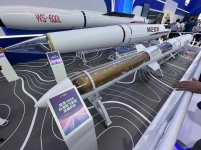
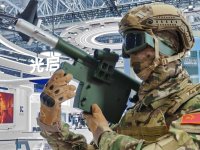
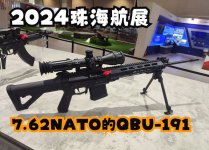
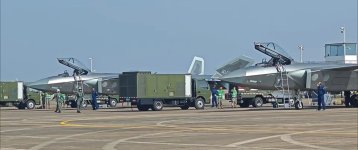
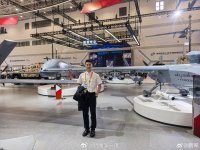
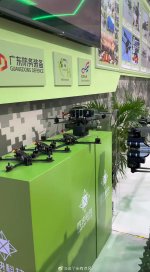
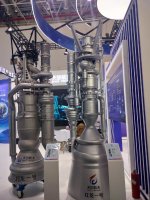
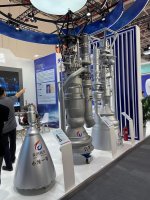
Zhuhai Airshow 2024

The official announcement states that the perpetrator is dissatisfied with the distribution of property, not the unequal distribution of property. Another rumor is that the killer gambled and was pursued for debt. In order to prevent the debtor from taking away his property, he divorced his wife in 2010 and shared more of the property with her. Later, the killer continued to gamble and had a dispute with his ex-wife over property issues. He sued twice in court and upheld the original verdict, so he was dissatisfied with the murderView attachment 79829
I don’t believe we should post about this incident in this thread anymore - it is proven to be not motivated by terrorism and is a sad case of coincidental domestic criminal act but only a personal motivation to it. It also has its own dedicated thread
 

China’s New W5000 Cargo Drone Is The Biggest Yet

With drones growing larger in size and ever more capable, China’s expanding portfolio of uncrewed cargo aircraft has major military implications.

THOMAS NEWDICK
POSTED ON NOV 12, 2024 3:29 PM EST

CHINESE-CARGO-DRONE.jpg


China’s development of uncrewed cargo aircraft continues apace, with the ongoing Airshow China including the first public appearance of the W5000, the biggest that we’ve seen so far, as well as a full-size mockup of one that can also operate from water, and a new concept for an air-launched cargo drone. China now has a multitude of cargo drones in development or under flight test, and beyond their clear civilian applications, their potential utility for helping maintain military logistics networks is very clear.

The various cargo drones are displayed at Airshow China, also known as the China International Aviation & Aerospace Exhibition, in Zhuhai. The event officially opened today and runs until November 17.

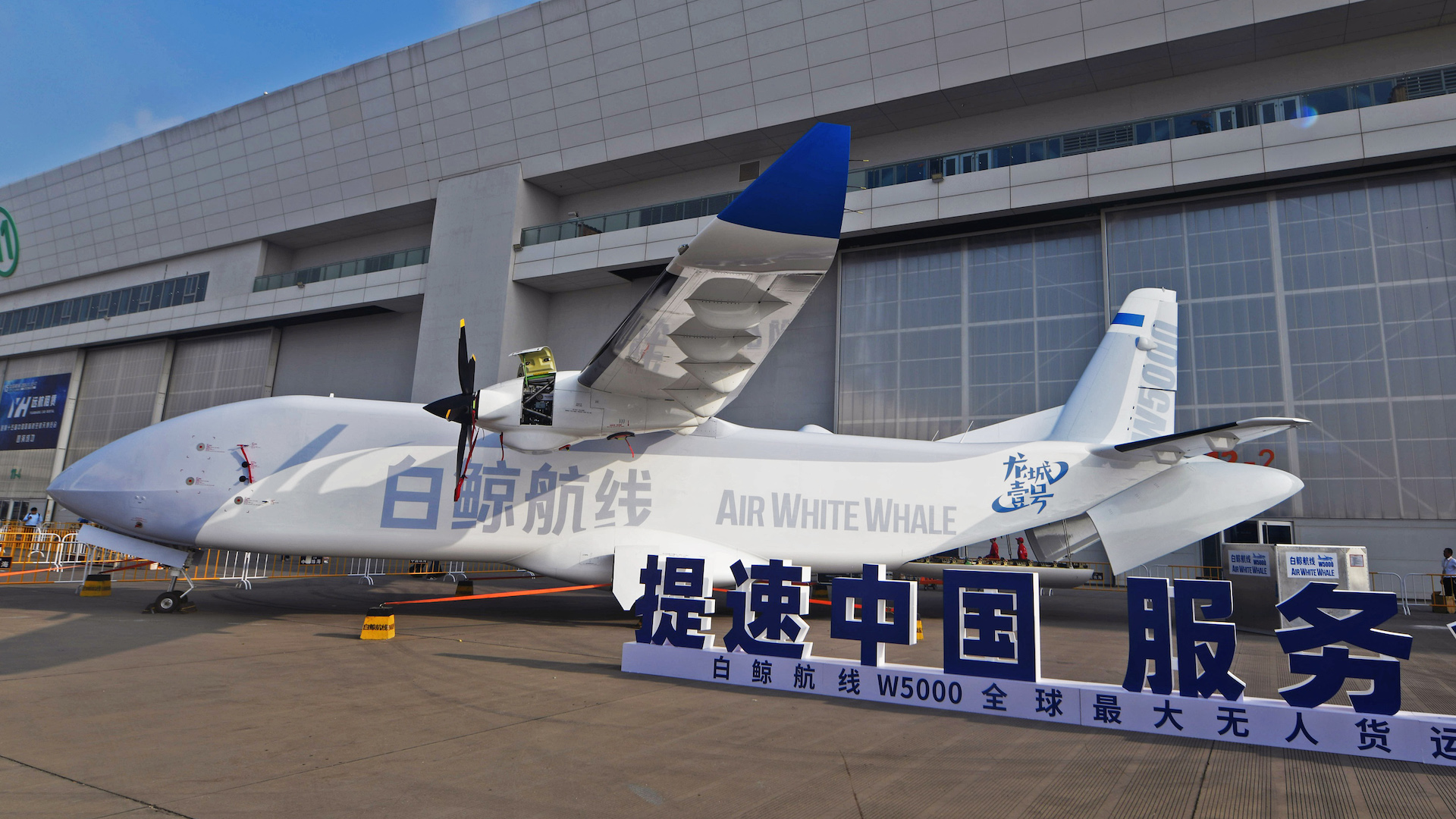
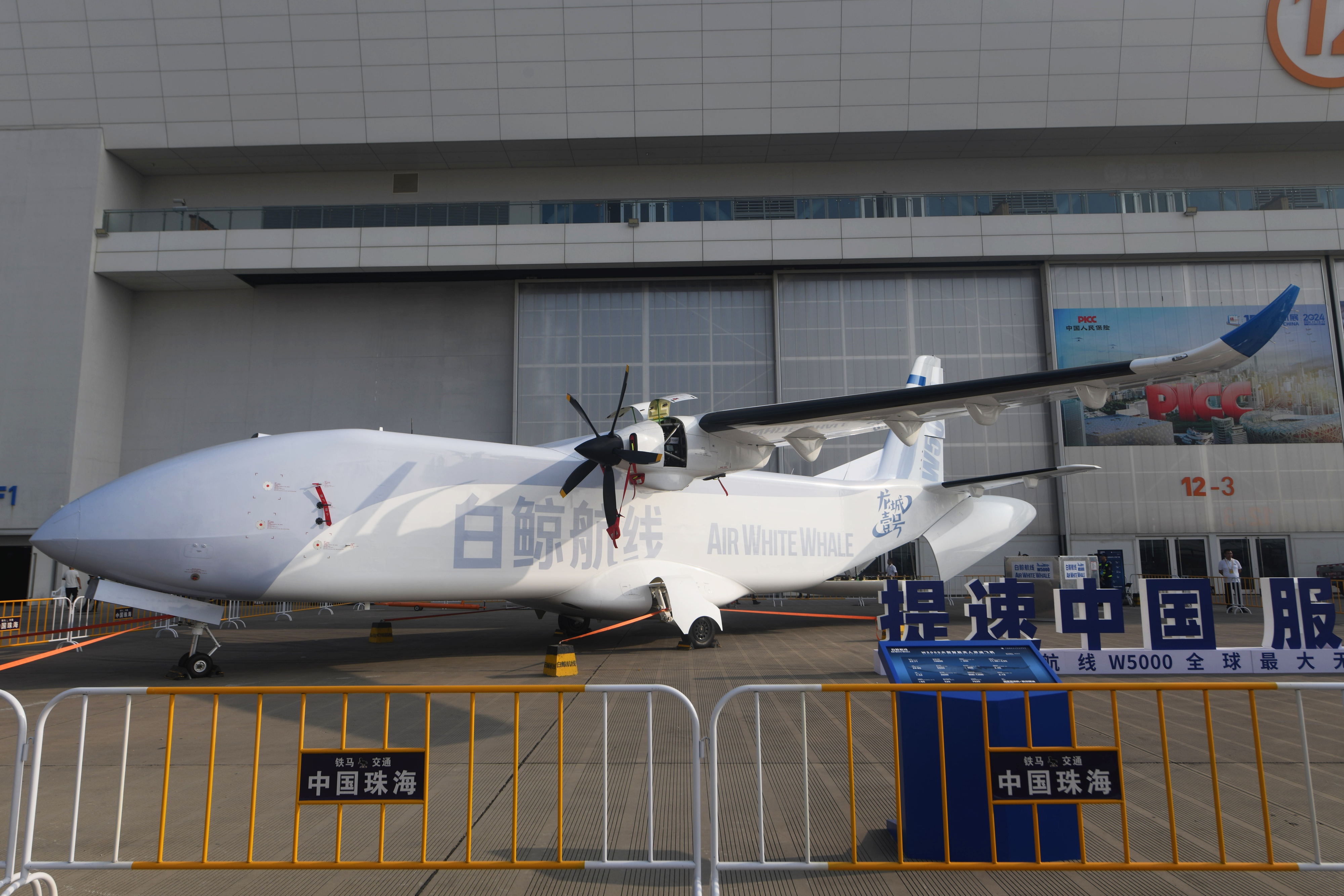
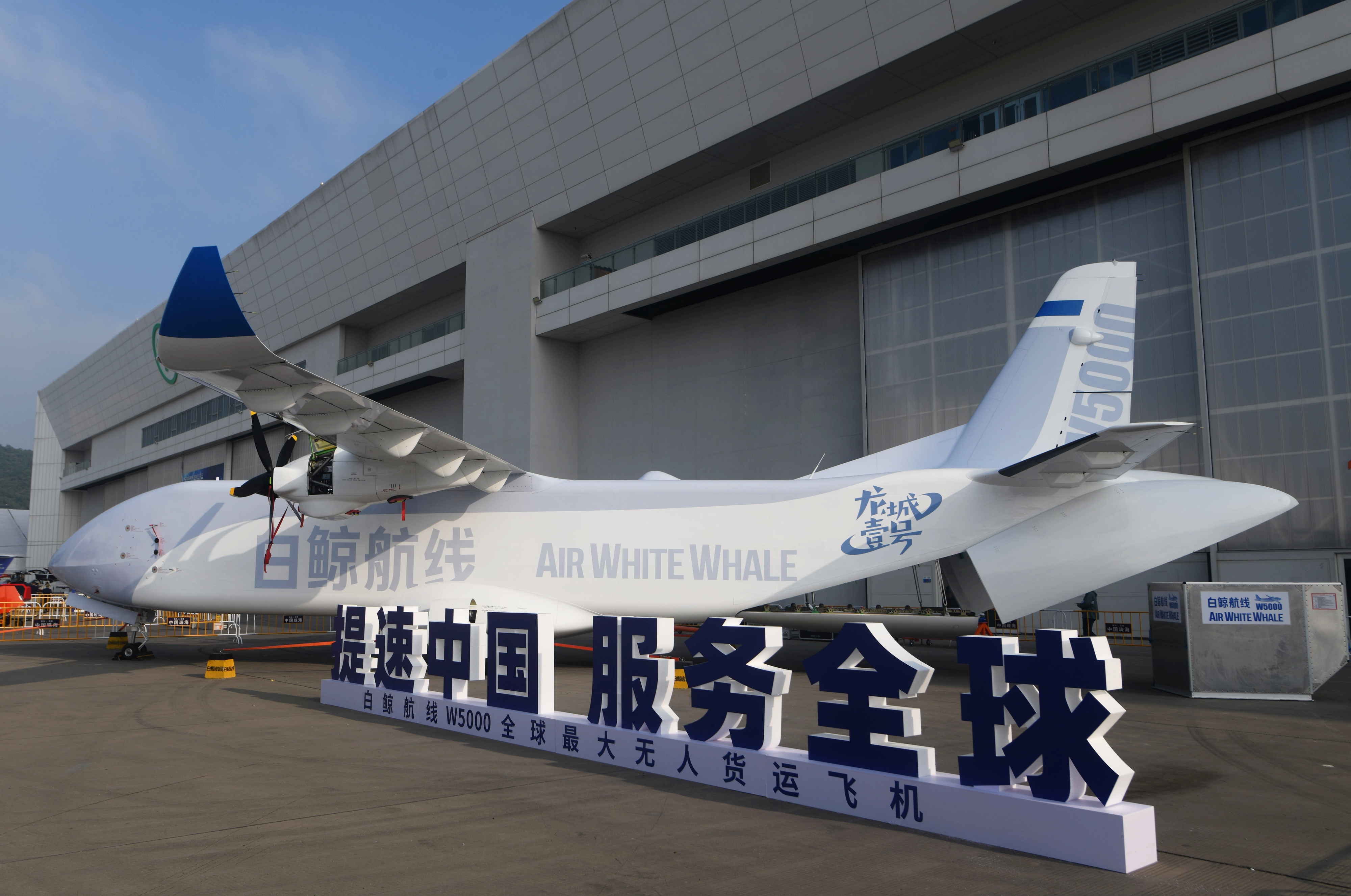
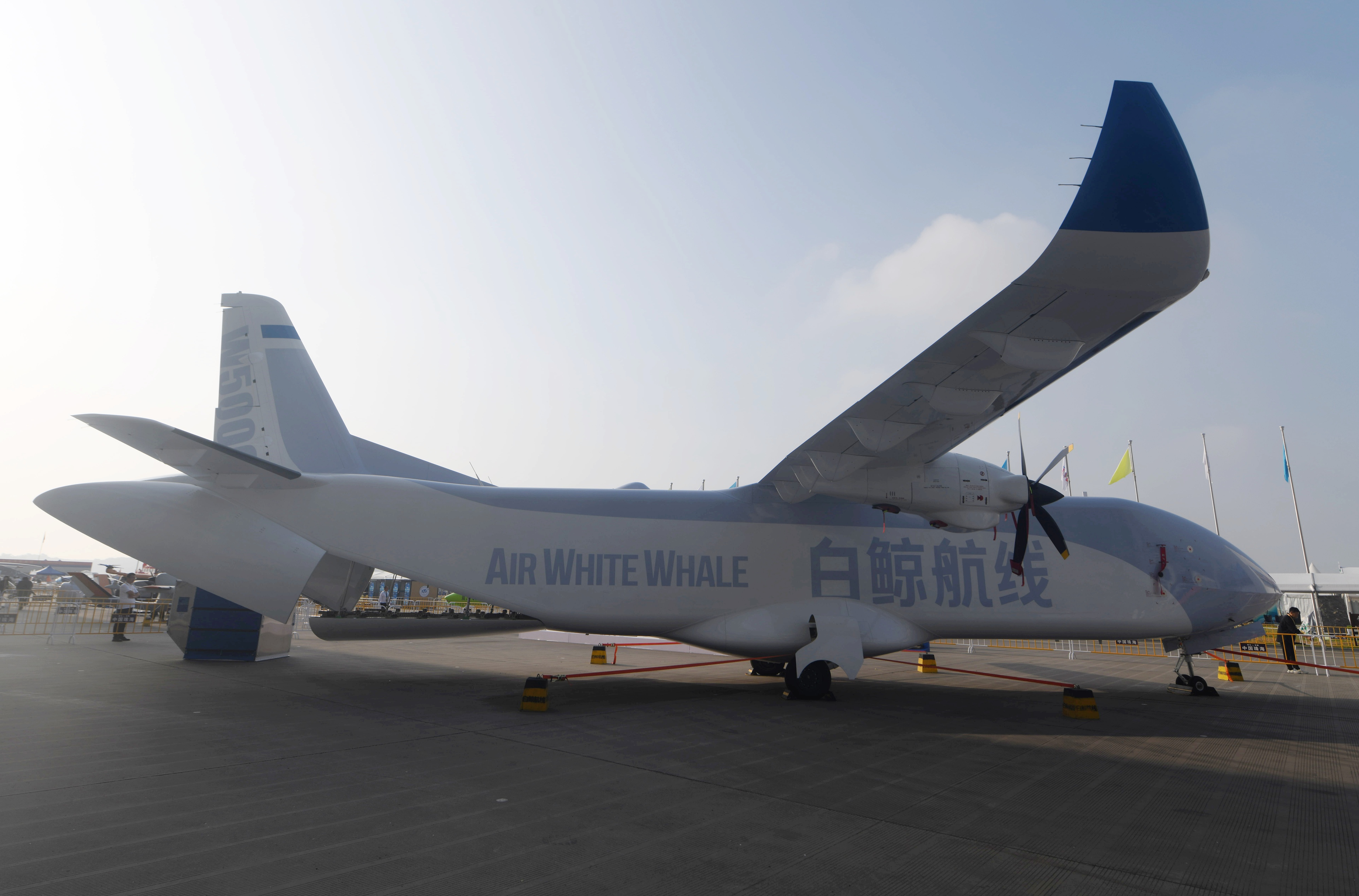
The big W5000 is from the Air White Whale company. This uncrewed cargo aircraft was unveiled last month when the first example rolled off the production line in the eastern Chinese city of Changzhou. A real example of the drone is part of the static display at Airshow China.

The W5000, the world's largest unmanned cargo plane, is shown at The 15th China International Aviation and Aerospace Exhibition in Zhuhai, China, on November 12, 2024. (Photo by Costfoto/NurPhoto via Getty Images)
The W5000, billed as the world’s largest unmanned cargo plane, is shown at the 15th China International Aviation and Aerospace Exhibition in Zhuhai, China, on November 12, 2024. Photo by Costfoto/NurPhoto via Getty ImagesCFOTO

The W5000, the world's largest unmanned cargo plane, is shown at The 15th China International Aviation and Aerospace Exhibition in Zhuhai, China, on November 12, 2024. (Photo by Costfoto/NurPhoto via Getty Images)
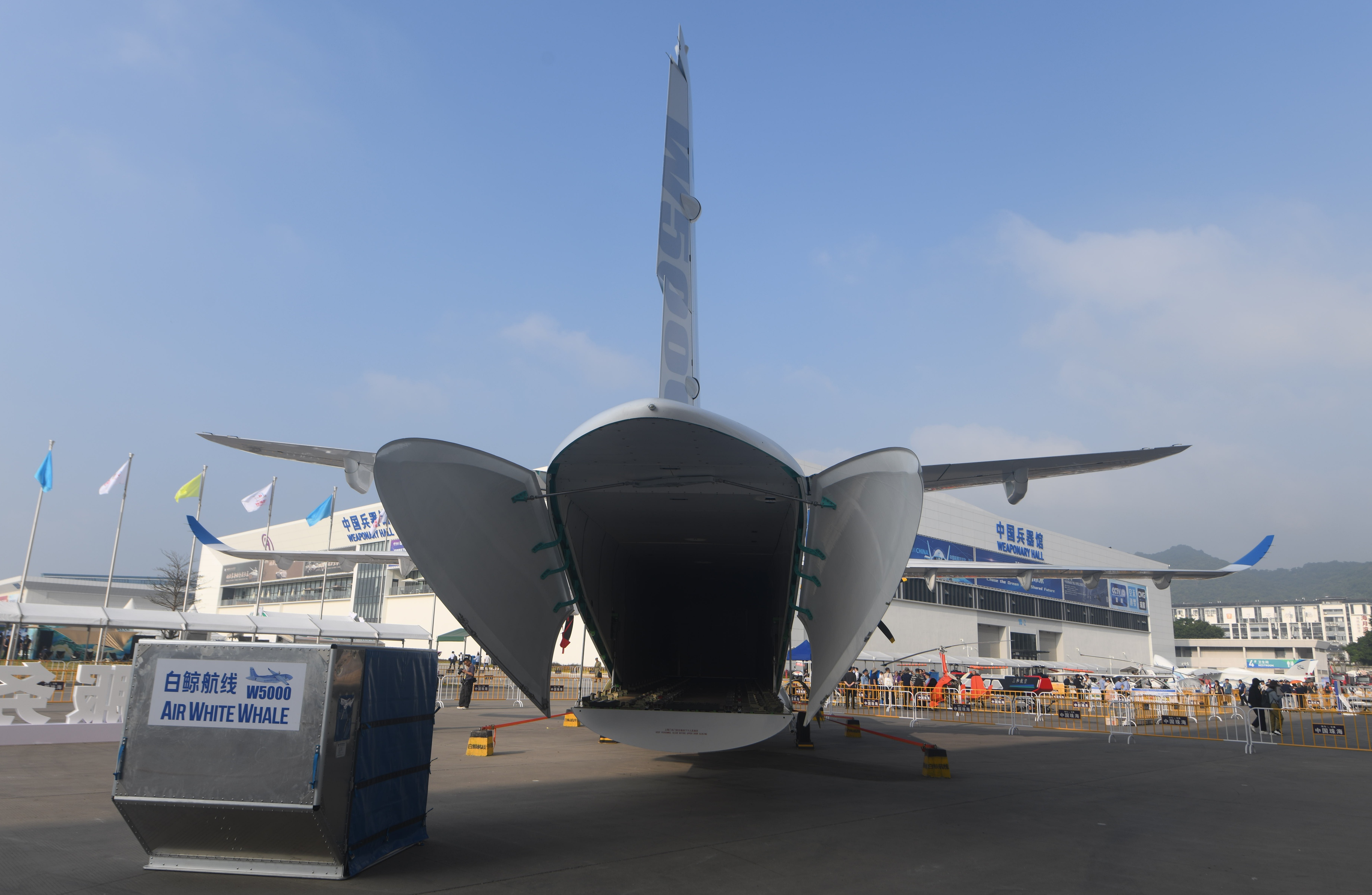
Another view of the W5000 at Zhuhai. Note the cargo container shown at the rear of the aircraft. Photo by Costfoto/NurPhoto via Getty Images CFOTO

The W5000 is named for its payload of 5,000 kilograms — 11,023 pounds — and is said to have a maximum range of 2,600 kilometers (1,616 miles), with a cruising speed of up to 526 km/h (284 knots). The maximum takeoff weight of the drone is 10,800 kilograms (23,810 pounds).

In comparison, the Xi’an Y-7 — a Chinese-produced version of the Soviet-era An-26 twin turboprop — still the main mid-size tactical transport used in China, has a payload of 5,500 kilograms (12,125 pounds).

Reportedly, the high-wing, twin-engine W5000 is powered by AEP-100 turboprops, which is produced by Aero Engine Corporation of China.

The W5000, the world's largest unmanned cargo plane, is shown at The 15th China International Aviation and Aerospace Exhibition in Zhuhai, China, on November 12, 2024. (Photo by Costfoto/NurPhoto via Getty Images)
The rear loading ramp of the W5000. Photo by Costfoto/NurPhoto via Getty Images CFOTO
The W5000, the world's largest unmanned cargo plane, is shown at The 15th China International Aviation and Aerospace Exhibition in Zhuhai, China, on November 12, 2024. (Photo by Costfoto/NurPhoto via Getty Images)
The W5000 at Zhuhai, China, on November 12, 2024. Photo by Costfoto/NurPhoto via Getty Images CFOTO

According to Air White Whale, the W5000 is compatible with standard cargo pallets, which can be loaded and unloaded via a rear ramp and clamshell-type doors in the rear fuselage. The drone is designed to be able to use smaller general aviation airports as well as commercial aviation airports.

The ground control system for the W5000 is said to allow a single operator to monitor up to five of the drones simultaneously.

When announced, Air White Whale said it had submitted certification documents for the W5000 to Chinese regulators and expected to deliver the first aircraft in the second half of 2026.

To view this content we will need your consent to set third party cookies.
For more detailed information, see our cookies page.


The unveiling ceremony for the W5000 on October 18 was attended by executives from different cargo and logistics firms, including JD.com, China Eastern Airlines Logistics, as well as China Post, suggesting one or more of these can be likely launch customers.

However, the W5000 would appear to have obvious military applications, too.

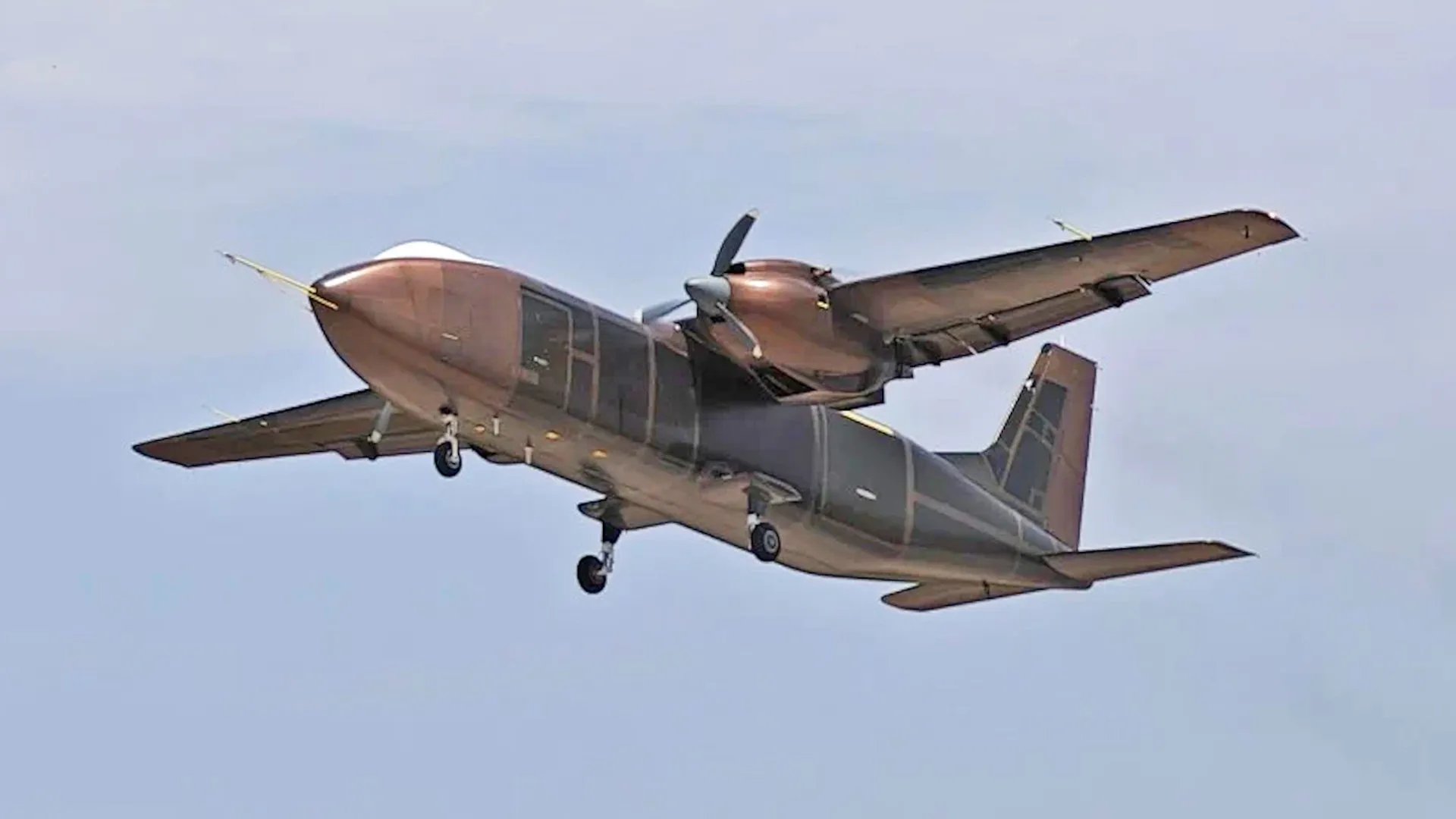
TWZ has already looked in detail at a similar Chinese uncrewed cargo aircraft, from the Tengen company, another high-wing, twin-engine design, but with a payload capacity of around 2,000 kilograms (4,410 pounds).

Tengen-drone.webp
The Tengen cargo drone with a payload of 2,000 kilograms that was first flown earlier this year. CCTV via China Daily
Making its public debut at Airshow China, after having been announced last week, the CH-YH1000 uncrewed cargo aircraft has been developed by the state-owned China Aerospace Science and Technology Corporation (CASC). This design was shown in mockup form and in a promotional video.

To view this content we will need your consent to set third party cookies.
For more detailed information, see our cookies page.


To view this content we will need your consent to set third party cookies.
For more detailed information, see our cookies page.


Smaller than either the W5000 or the Tengen drone, the CH-YH1000 is said to have a payload capacity of around 1,000 kilograms (2,204 pounds), a maximum takeoff weight of 2,300 kilograms (5,071 pounds), a ceiling of 8,000 meters (26,247 feet), and a mission endurance of around 10 hours.
 
The CH-YH1000 can accommodate different types of standard cargo pallets, which can be loaded and unloaded via the visor-type upward-opening nose door and via a rear ramp.

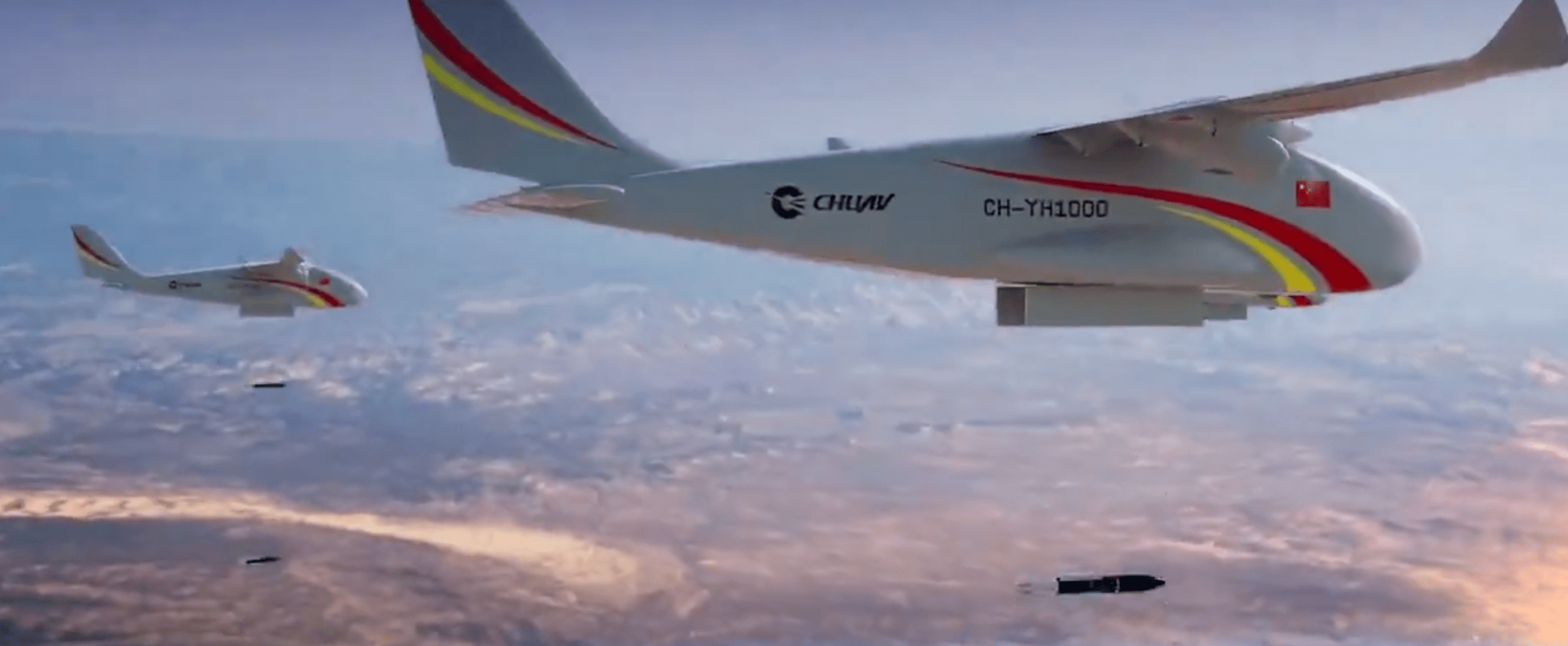
Interestingly, the CH-YH1000 is already being pitched directly to the military, as well as commercial and other government operators. CASC’s promotional video shows versions of the drone being used for airdropping cargo loads, as well as dropping precision-guided munitions against a land target from a weapons bay in the lower fuselage.

bombing.png

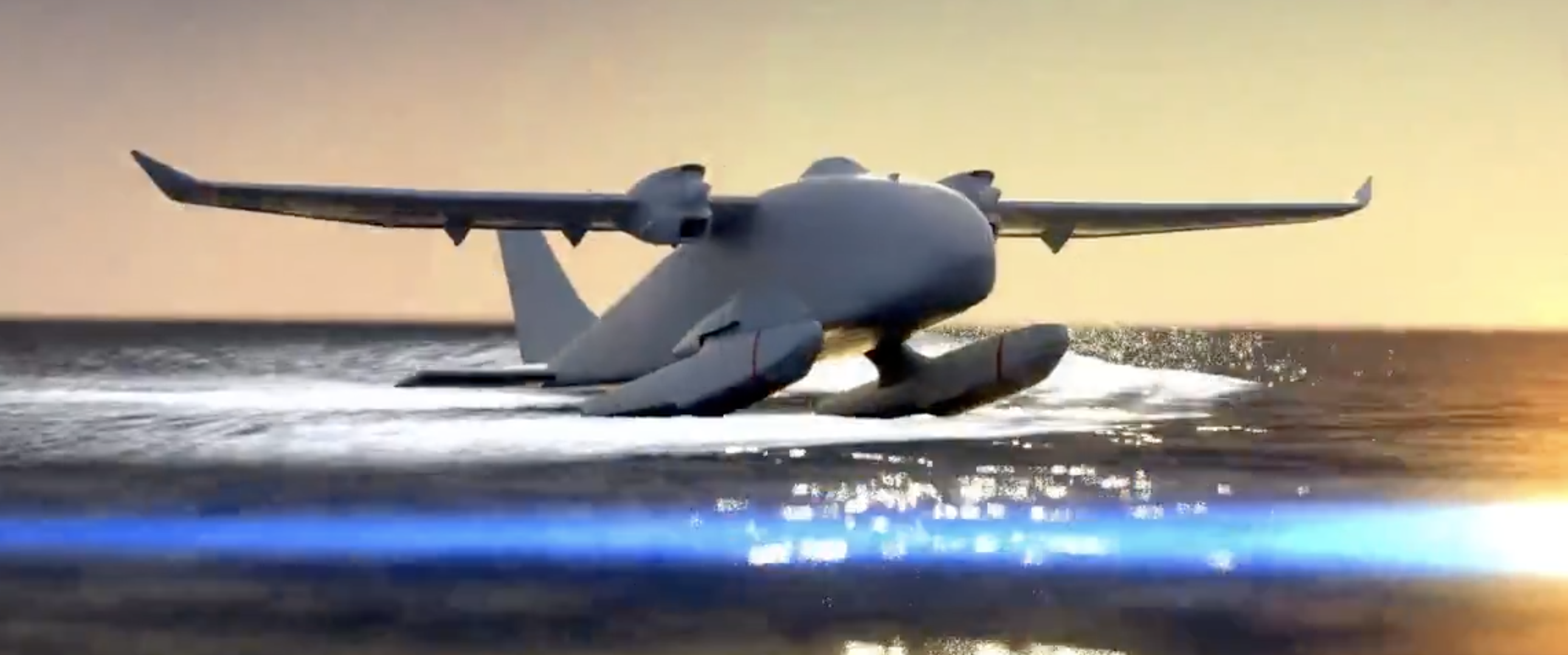
Most intriguingly, as well as having the option of tricycle landing gear to take off and land from traditional runaways, the CH-YH1000 can also be adapted for operations from water, taking off and landing using a pair of pontoon-type floats that are attached to either side of the lower fuselage. As well as cargo operations from water, this option means the CH-YH1000 is being pitched for specific maritime operations including search and rescue, reconnaissance, and anti-submarine warfare. Still, operating a drone like this from a variable operating surface like water would pose some real challenges.

on-water.png

As noted earlier, these are not the first Chinese uncrewed cargo aircraft to have emerged in recent years. The state-run Aviation Industry Corporation of China (AVIC) has developed the HH-100 cargo drone, with a stated payload capacity of around 700 kilograms (some 1,543 pounds).

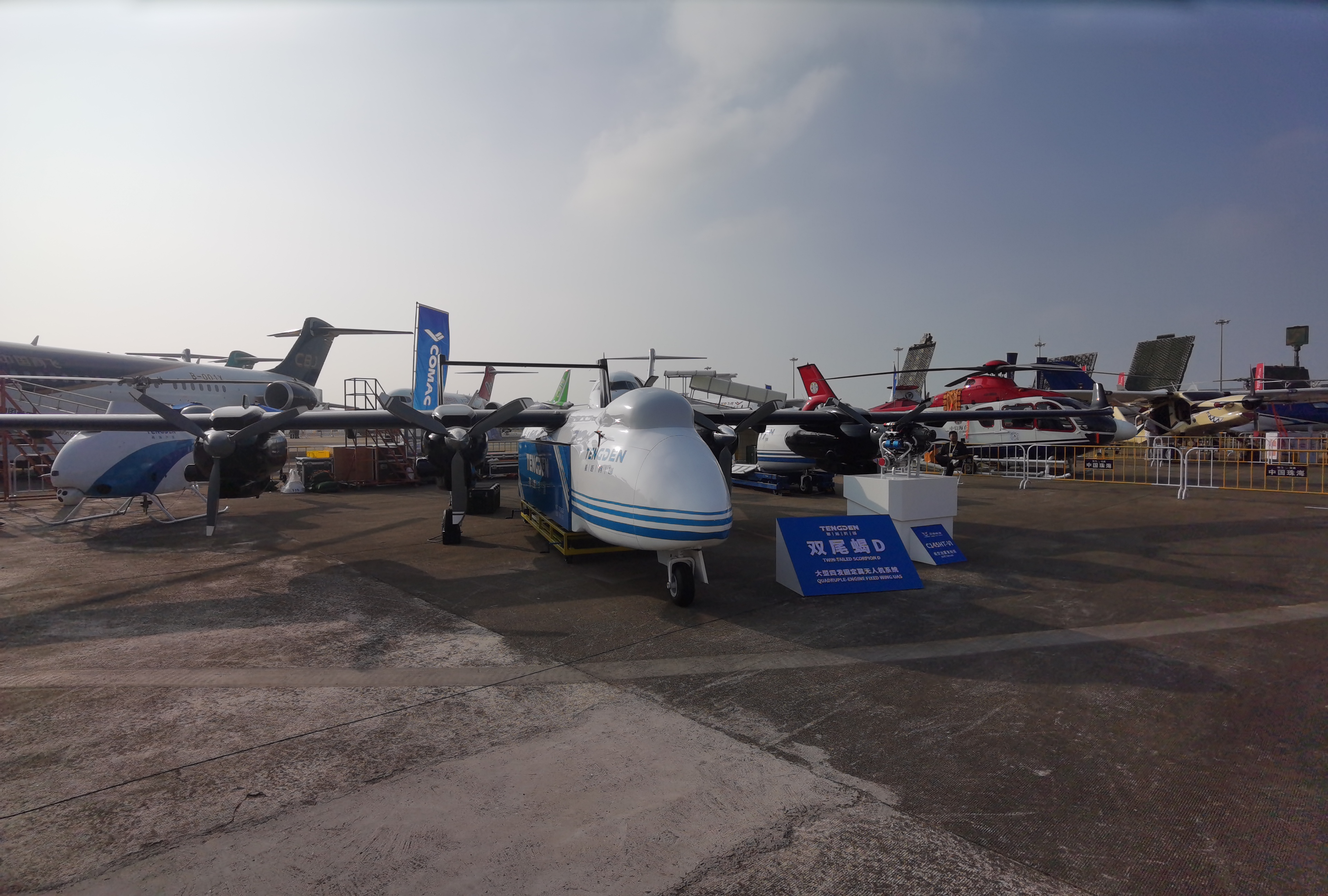
The Tengen company, too, has flown another cargo drone, the TB-001D Scorpion D, which began to be tested in 2022, which you can read about here. This is a four-turboprop design with a stated payload capacity of 1,500 kilograms (3,307 pounds).

ZHUHAI, CHINA - NOVEMBER 12: Twin-tailed Scorpion-D drone is on display at the Zhuhai International Air Show Center during the Airshow China 2024 on November 12, 2024 in Zhuhai, Guangdong Province of China. The 15th China International Aviation and Aerospace Exhibition kicks off on November 12 in Zhuhai. (Photo by Jiang Jurong/VCG via Getty Images)
The Tengen TB-001D Scorpion D on display during Airshow China 2024 on November 12, 2024. Photo by Jiang Jurong/VCG via Getty Images VCG

Other Chinese firms are working on larger cargo-carrying drone designs, as well.

All this activity is perhaps not surprising considering the lead taken by Chinese companies in conducting uncrewed commercial cargo flights, including using Feihong-98 (FH-98) drones, a biplane design based on the Yun-5B — itself a Chinese copy of the famous Soviet-era Antonov An-2.

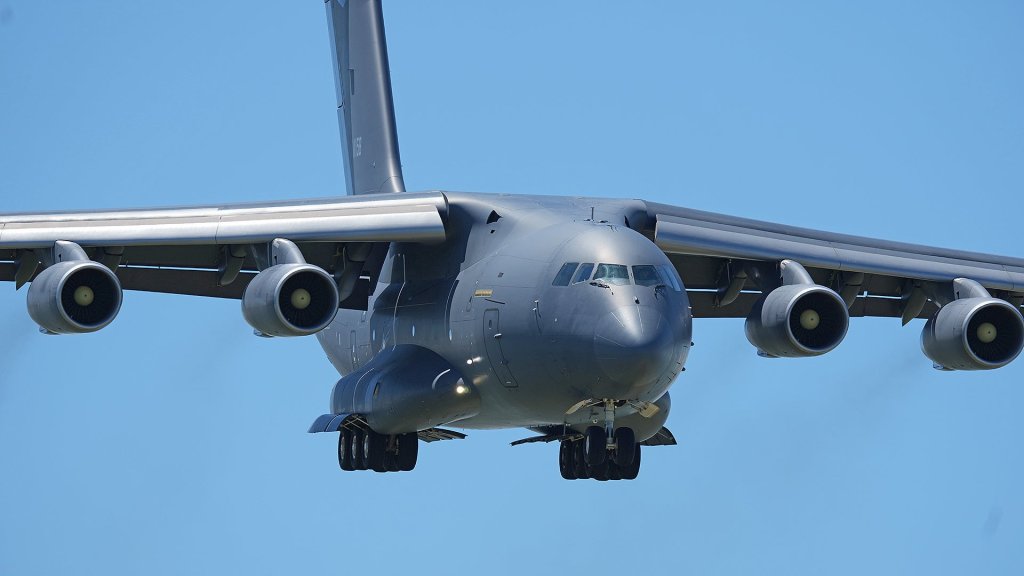
Although China is busy building traditional cargo aircraft, spearheaded by the increasingly capable Y-20 family, the People’s Liberation Army (PLA) has a clear requirement for moving supplies in and out of a growing number of remote and austere locations, often with limited runway capacity. Chief among these are the highly strategic island outposts cropping up across the South China Sea.

Y-20-Serbia.jpg
A Chinese Y-20 transport. via Chinese Internet www.twz.com
It’s easy to imagine how uncrewed platforms could be ideal for routine resupply operations into such locations, not all of which might even be able to accept crewed cargo aircraft, or which might not be able to do so safely or efficiently.

Outside of the South China Sea, there are plenty of other applications for PLA cargo drones, including some of the remote facilities on land in Western China, where the Chinese military presence is expanding and existing infrastructure is very often spartan. At the same time, the high altitudes involved in this region can be a challenge for some traditional transport aircraft.

As we have discussed before, the PLA has a clear interest in further developing its capability to conduct expeditionary operations further and further from the Chinese mainland. Bearing in mind the kinds of challenges that any armed forces would face in an active conflict or other high-risk scenario in the Pacific theater, the option of having a fleet of cargo drones to help maintain logistics here would surely be attractive to the PLA. In particular, drones would be preferable for flying supplies into particularly hazardous locales, without having to expose the crew of a cargo plane to additional risk.
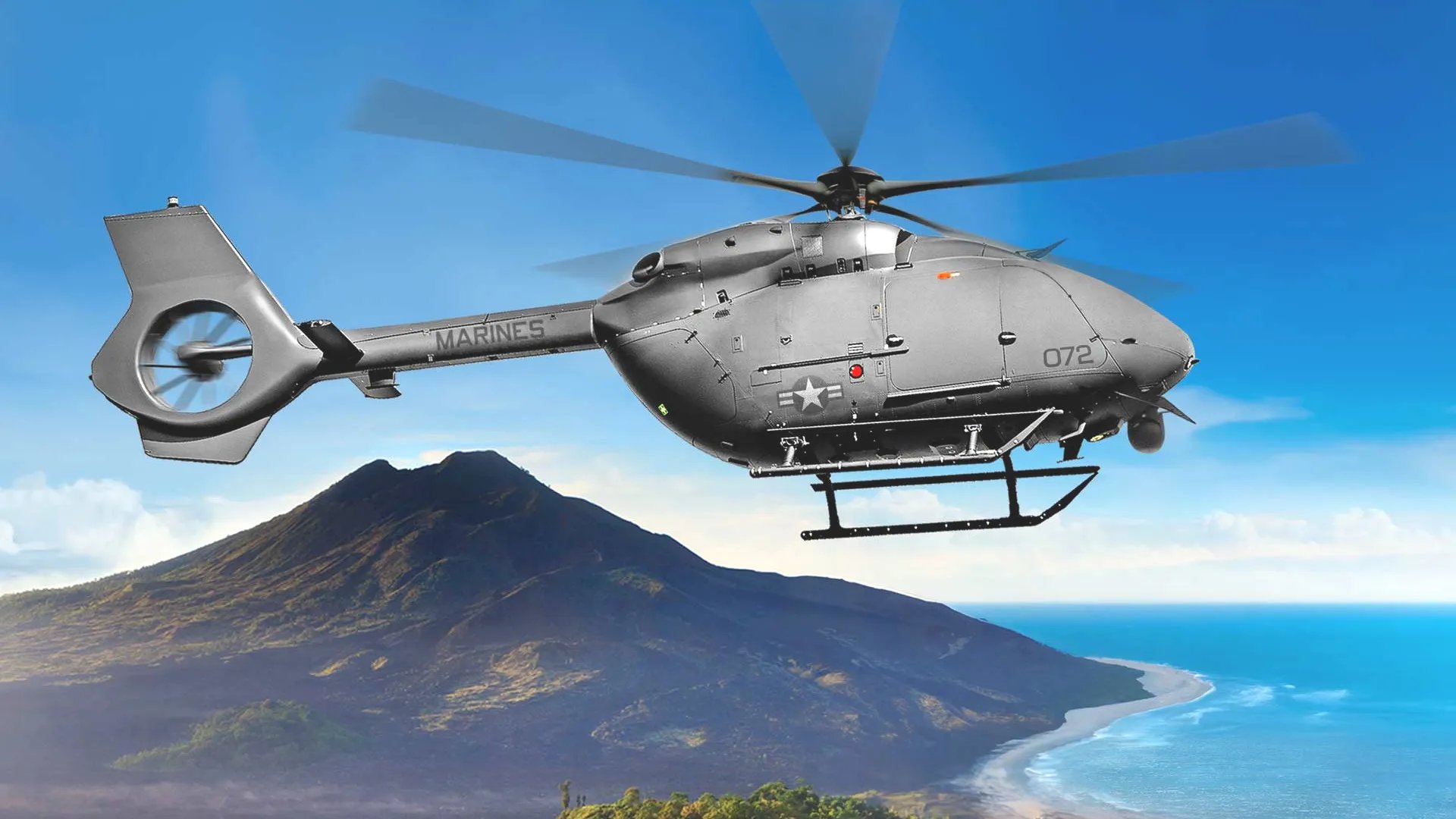
Similar thinking is also evident in the U.S. military now, in particular the U.S. Marine Corps, which is also increasingly looking to introduce multiple tiers of cargo-carrying uncrewed aerial systems to help support future expeditionary and distributed operations. Once again, the demands of the Pacific theater are very much a driver here. So far, however, the kinds of cargo drones being eyed by the U.S. military are smaller and shorter-ranged than many of the designs now coming out of China.

uh-72-ulc-render.webp
A rendering of the UH-72 Unmanned Logistics Connector — a cargo drone helicopter being offered to the U.S. Marine Corps. Airbus
Overall, the U.S. military seems to be facing a growing airlift problem, especially in view of a potential confrontation with China in the Pacific. While there has been talk of uncrewed transport platforms, most concepts so far have focused on optionally crewed solutions. This is less satisfactory bearing in mind the much greater scale of the logistical challenge facing the United States compared with China when fighting in the Indo-Pacific region. Meanwhile, existing U.S. airlifters and tankers are increasingly being eyed for new roles on top of their basic transport tasks.

Speaking last month, Brig. Gen. Shane Upton, director of the U.S. Army’s Contested Logistics Cross-Functional Team, reflected upon the scale of the challenge for the U.S. military. He told Breaking Defense, “We’re going to have to figure out how to resupply dispersed formations.”

“The Pacific, by nature, drives you to that. There’s no other option if you start putting a Multi-Domain Task Force lethal firing asset on a remote island chain, I have to resupply them with ammo and we may not be able to fly a traditional C-17 or C-130 in there,” Upton added. “The enemy will be like: ‘You’re not using that port because I just shot it up and it’s gone.’”
Finally, another type of cargo drone being shown at Zhuhai is CASC’s CH-103 (or Caihong-103, meaning Rainbow-103), described as a precision airdrop system and similar in concept to uncrewed cargo gliders that have been developed in the United States.

To view this content we will need your consent to set third party cookies.
For more detailed information, see our cookies page.


The manufacturer’s specifications for the CH-103 include a payload capacity of 200 kilograms (441 pounds), a maximum drop altitude of 3,000 meters (9,843 feet), and a maximum landing error of within 100 meters (328 feet). The range of the cargo glider was not stated and it’s unclear which transport aircraft it’s intended to be deployed from. The guidance system is also unclear, but some kind of inertial navigation system seems most likely at this point.

This year’s Airshow China has already brought its fair share of surprises, but the prominent place taken by uncrewed cargo aircraft designs—including newly developed ones—demonstrates just how much importance is being assigned to this sector. For the most part, this growing number of ever-larger and more capable cargo drones are being offered primarily for commercial applications. At the same time, however, the military value of these drones in terms of aerial logistics capabilities is unquestionable.


Zhuhai air show opens with orders for COMAC and a glimpse of a future spaceplane


November 12, 20246:23 PM GMT+8Updated 17 hours ago

Airshow China in Zhuhai


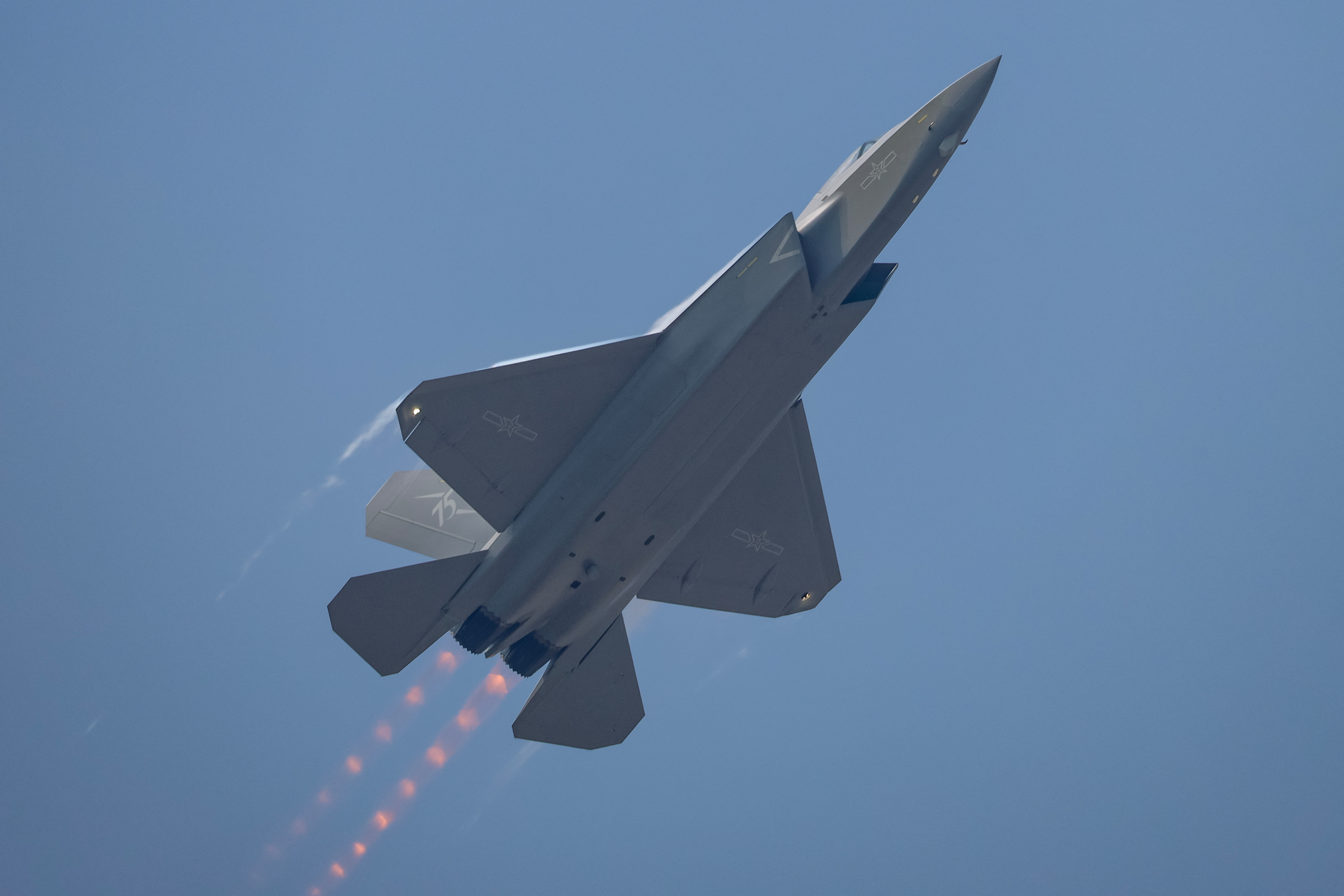
Item 1 of 6 A J-35A stealth aircraft flies during the China International Aviation and Aerospace Exhibition, or Airshow China, in Zhuhai, Guangdong province, China November 12, 2024. cnsphoto via REUTERS

  • Summary
  • Companies
  • Air China to be COMAC's first customer for the C929 widebody
  • COMAC gains orders from Hainan Airlines, Colorful Guizhou Airlines
  • COMAC rebrands an improved regional jet
  • AVIC displays model of uncrewed spaceplane
ZHUHAI, China, Nov 12 (Reuters) - China's aerospace ambitions took centre stage on the first day of the Zhuhai air show, with COMAC announcing Air China as the first customer for its C929 widebody jet, while a model of the country's first commercial uncrewed spaceplane was on display.

China's Bayi aerobatics team, a flight of four J-20 stealth jets, and the public debut of the country's J-35A stealth fighter were among the aircraft soaring overhead as attendees strolled across the airfield tarmac.

State-owned COMAC also said its regional jet, previously known as the ARJ21, had been improved and rebranded as the C909 for better branding uniformity across its aircraft.
"After careful consideration, a long gestation and asking opinions of many involved parties, we chose to use C909 as the new commercial name to build the brand," Zhang Xiaoguang, COMAC's marketing director, told reporters.

The C909, unveiled at China's biggest airshow painted in white with a blue tail, has also reduced weight, resistance and noise as well as some improvements in flying costs compared to the ARJ21, staff at COMAC's air show booth told Reuters.

COMAC did not disclose the number of C929s that flag carrier Air China (601111.SS), opens new tab would purchase or planned delivery dates. But it announced that Hainan Airlines (600221.SS), opens new tab had placed a firm order for 60 C919 narrowbody jets and 40 C909s.
Colorful Guizhou Airlines has signed a purchase agreement for 30 C909 planes, 20 of which were firm and the remainder provisional, it added.
Airbus China CEO George Xu said his company was not deterred by competition from Chinese jets, saying: "We want to focus our resources to develop with China partners".

The company said at the air show that Chinese certification of the A330neo jet was going smoothly and that the first delivery of the widebody model in the country could come in 2025.
He added that Airbus was "very much pro-free trade" despite a dispute between the European Union and China over electric vehicles and a potential new transatlantic spat after Donald Trump won the U.S. presidential election with a pledge to impose widespread tariffs.

The model of China's first commercial uncrewed spaceplane was displayed by state-controlled aerospace company AVIC which said it was being developed to deliver cargo to China's space station.
According to the official state-run China Daily, the craft "brings a low-cost reusable cargo shuttle solution with Chinese characteristics to space exploration". The China Manned Space Agency awarded AVIC a contract for engineering flight verification of the spaceplane on Oct. 29, the paper reported.

The military's Z-20 helicopter, which experts said was being modified into many useful variants, was also on display. One version, designed to track and attack submarines, was seen as being of particular interest, as it would help the People's Liberation Army Navy operate farther from home shores.
The air show runs to Nov. 17.

 
China reveals anti-stealth radar with new technical pattern
High energy, algorithmic performance enables piercing of cloaks

Global Times

By Yang Sheng and Ma Jun in Zhuhai
Published: Nov 12, 2024 08:14 PM

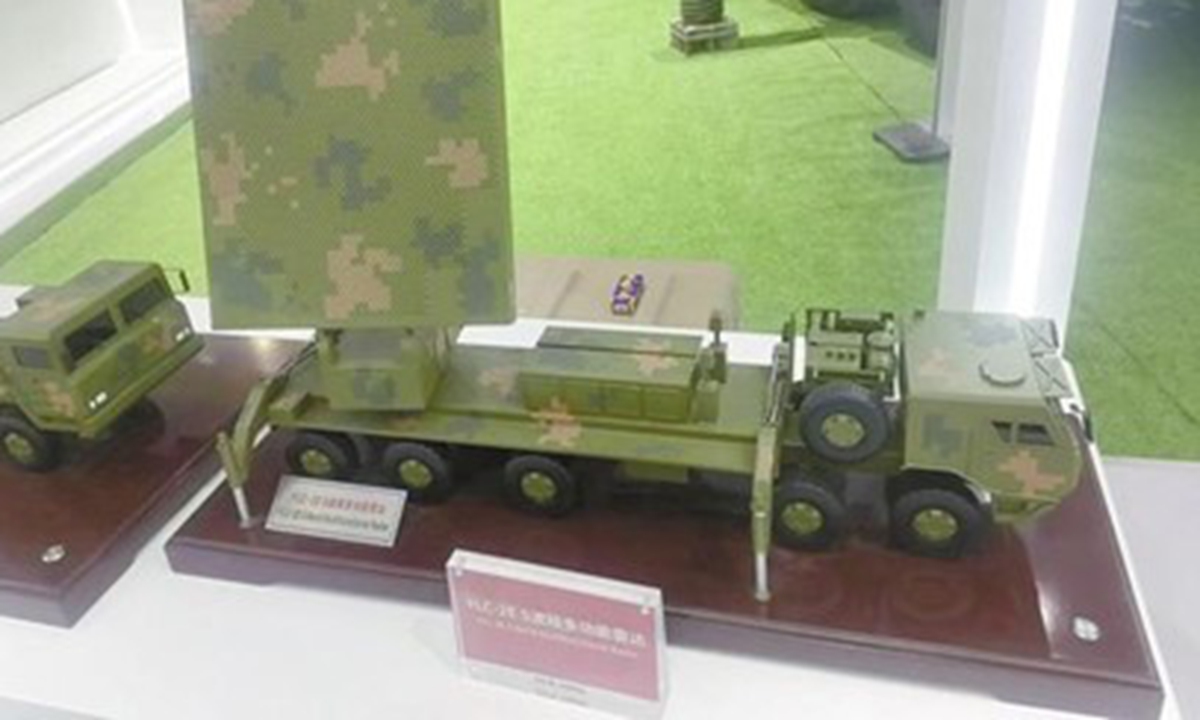
The YLC-2E S-band long-range multi-function radar Photo: Ma Jun/GT

The YLC-2E S-band long-range multi-function radar Photo: Ma Jun/GT

Apart from showcasing three types of new stealth fighters, J-35A, J-20S and J-35 fighters, China also presented its anti-stealth detection capabilities at Airshow China 2024. The Global Times learned from the No.14 Research Institute of China Electronics Technology Group Corp (CETC) that an advanced equipment has emerged in China's anti-stealth radar family, the YLC-2E S-band long-range multi-function radar, creating a new technical pattern in anti-stealth radar technology.

Experts from CETC told the Global Times that in the field of anti-stealth radar technology, the S-band was originally supposed to be unrelated to anti-stealth functions. It is explained that the common approach of current active anti-stealth radars is usually based on countering the basic principles of stealth technology: so-called stealth aircraft are not truly invisible, but through the use of radio wave-absorbing materials and special aerodynamic design, they greatly reduce their radar cross sections, thereby significantly shrinking the radar detection distance. Low-frequency radars, also known as meter wave radars, have a natural advantage in detecting stealth targets and have become the main means of detecting stealth aircraft, making meter wave radar synonymous with anti-stealth.

In the eyes of Chinese radar experts, meter-wave radar is not perfect. It has disadvantages in detection accuracy, for example, even if it detects the presence of stealth aircraft, it is difficult to directly serve as a fire control radar to guide air defense systems for interception, which means for the fleeting nature of modern aerial combat, this is not ideal.

The YLC-2E radar pioneered the use of the S-band, which offers high detection accuracy and is a classic band commonly used for target detection and tracking radars.

Therefore, the YLC-2E radar, utilizing the S-band, can effectively address the issue of detection accuracy. The S-band had faced challenges in anti-stealth technology. CETC experts said that to tackle this issue, the YLC-2E, as a new generation long-range multi-function radar, incorporates almost all of the latest international radar hardware and technological systems, including new-generation semiconductors and modularization. Based on these, the YLC-2E has acquired two key tools to pierce stealth cloaks - energy and intelligent algorithms.

The YLC-2E has a significant advantage in terms of energy. On a radar antenna array that covers an area equivalent to half a standard badminton court, a large number of high-power radar T/R modules are arranged. Through optimized design combined with extremely high energy application efficiency, the radar antenna can generate astonishing energy, forming the hardware foundation for energy-based stealth countermeasures. On top of this hardware foundation, YLC-2E employs intelligent algorithm software that can optimally schedule radar detection capabilities, ensuring the radar can identify tiny stealth targets in the vast sky, and it has strong anti-jamming capabilities, the CETC experts said.

According to the experts, the detection performance of the YLC-2E radar is comparable to that of conventional frequency band anti-stealth radars like YLC-8B and YLC-8E, making it a true high-performance anti-stealth radar that transcends the era of meter-wave radars. However, it is important to note that YLC-2E is not a replacement for conventional frequency band anti-stealth radars, but rather complements them, the experts said.


Users who are viewing this thread

Pakistan Defence Latest

Back
Top