
Navigation
Install the app
How to install the app on iOS
Follow along with the video below to see how to install our site as a web app on your home screen.
Note: This feature may not be available in some browsers.
More options
Style variation
You are using an out of date browser. It may not display this or other websites correctly.
You should upgrade or use an alternative browser.
You should upgrade or use an alternative browser.
Zhuhai Airshow 2024
- Thread starter Michael
- Start date
More options
Who Replied?


Relax buddy, it's just a bit of funI don't take any of those 'bros' seriously either, like Mr Mastan Khan
Thanks! Well ... when that deal was signed it had IMO three main reasons:
1. Production of the J-16 was not running on its current high level and the PLAAF was in need for a type that could be used to accompany the H-6K bombers on long-distance flights in the NTC, ETC and especially STC
2. It offered the unique opportunity to acquire a mature, operational fighter with TVC technology in order to test it in action and I am sure that the results influenced the decision not to equip the J-20 with TVC engines.
3. the political dimension: Russia urgently needed a buyer to boost exports ... which was only moderately successful.
All of these reasons (except number 3) are no longer valid.
Beijingwalker
Banned
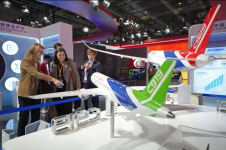
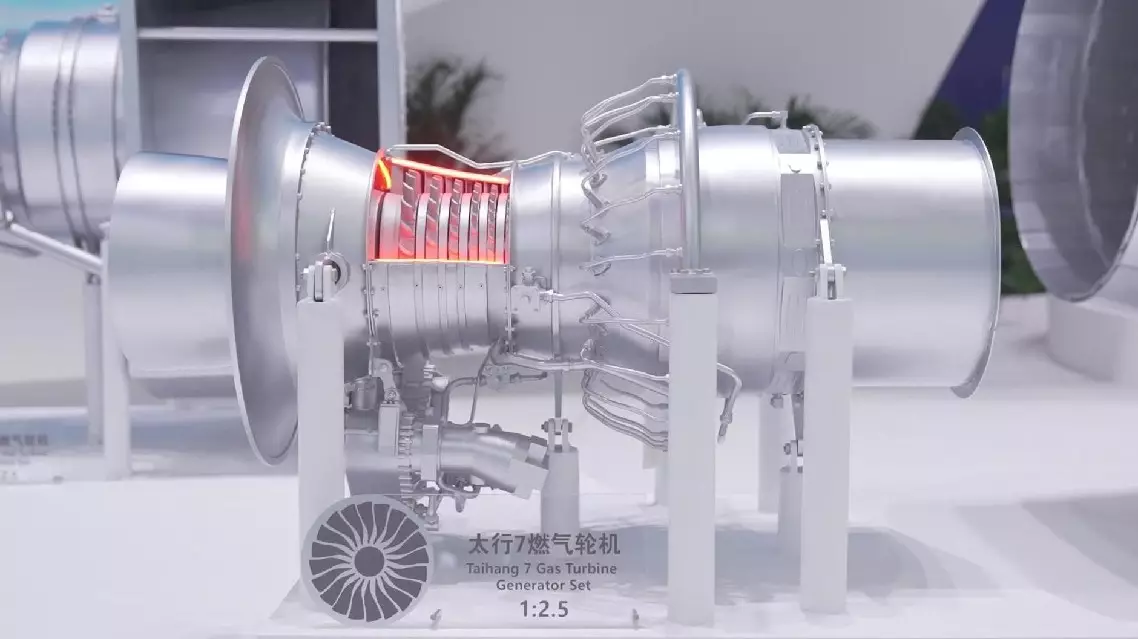
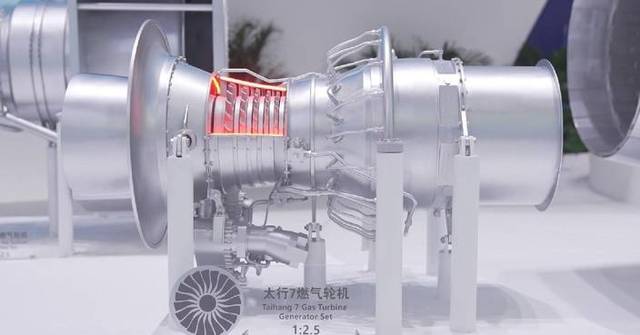
China's domestically developed aircraft engines are capturing the limelight at the ongoing 15th China International Aviation and Aerospace Exhibition in the southern coastal city of Zhuhai, wowing visitors with their cutting-edge technologies and energy-efficient designs.
The exhibition kicked off in Zhuhai City of Guangdong Province on Tuesday, showcasing the latest in aircraft, spacecraft, and weaponry, along with impressive aerial performances.
Among the attention-grabbing exhibits, a number of innovative aircraft engines are demonstrating China's gains in this competitive and fast-evolving industry, spanning the gamut from fighter jet engines to those for civilian aircraft.
As an important aviation enterprise, Aero Engine Corporation of China, or AECC, is engaged in the development, production and maintenance of aircraft engines, gas turbines, and more. Its turbojet engines, turbofans, and turbo-shafts have been widely installed in various types of military and civilian aircraft.
The company's star product, the AEF1200, debuted at the event, catching eyes with its sheer size. It is the country's first self-developed high bypass ratio dual rotor turbofan engine, a highly efficient type of jet engine that uses two sets of rotating blades to compress air, with most of the air bypassing the engine core to create thrust more quietly and with better fuel efficiency. This design will help China's large airplanes fly farther on less fuel while keeping engine noise down.
AECC also displayed new engines designed for helicopters and drones, which are expected to be increasingly important in coming years.
"Our AES100 engine is an advanced turbo-shaft engine independently developed by AECC in response to the national call for the development of the low-altitude economy, which is energy-saving and environmentally friendly. It is equipped with a very useful health-monitoring system. So, its stability and reliability can also be assured. The AEP100 is a 900-kilowatt turboprop engine developed by us using a turboshaft engine. It can also be used in drones, business jets, and trainer aircraft," said Liu Jie, a staff member at AECC.
Since its launch, the event, also known as Airshow China, has been one of the top five airshows worldwide. This year, nearly 900 enterprises from 47 countries and regions are participating, with 149 of them global attendees.
China's high-tech, energy-efficient aircraft engines showcased at Zhuhai Airshow
China's high-tech, energy-efficient aircraft engines showcased at Zhuhai Airshow
China's domestically developed aircraft engines are capturing the limelight at the ongoing 15th Chin
 www.bastillepost.com
Beijingwalker
Banned
China stuns everyone with new powerful missile, big challenge for US, it can hit enemy target before….,
PL-15E – most advanced air-to-air missiles in the world
The PL-15E missile's remarkable range with a potential maximum reach of up to 300 kilometers, it offers Chinese fighter pilots a significant tactical edge, enabling them to strike enemy aircraft before those aircraft can respond with their own missiles.
Published: November 13, 2024 11:12 AM IST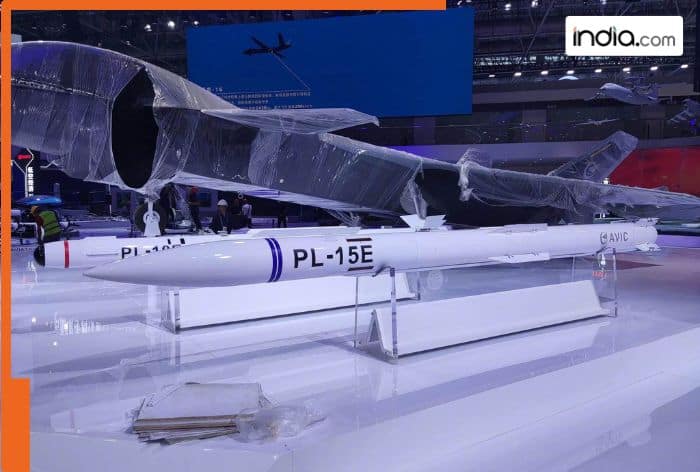
At the Zhuhai Airshow, China showcased two major military advancements, with one of the key highlights being the PL-15E missile, which features foldable fins. This missile can be equipped on China’s stealth fighter jets, the J-20S and J-35A, with a total of six missiles. This development showcases China’s focus on strengthening its influence in the Indo-Pacific region. The PL-15E, an air-to-air missile, represents a leap forward in China’s air combat capabilities.
After images of the missile surfaced on social media, military experts quickly recognized it as a significant upgrade for the J-20. At present, the J-20 can only carry four PL-15 missiles. The PL-15E is regarded as a powerful weapon that merges advanced aerodynamics with state-of-the-art technology. Overall, the missile is intended to provide Chinese fighter jets with a strategic advantage in long-range battles, boosting their capabilities while maintaining stealth performance.
It is still unclear whether the PL-15E shares the same features as the PL-15. The PL-15 is often compared to the U.S. AIM-120, with an estimated range of 200-300 kilometers. Earlier reports indicated that China is also developing the PL-16 and PL-17 missiles. At the airshow, China displayed a model of the J-20S, which is a two-seat version of the J-20 stealth fighter jet. This model was showcased alongside the PL-15E missile.
PL-15E features
The PL-15E missile incorporates advanced technology and aerodynamics, making it a formidable asset in aerial combat. Its folding tail design is especially significant, allowing it to be stored more efficiently within the internal weapon bays of stealth aircraft like the J-20 fighter. By carrying the missile internally, the aircraft preserves its low radar signature, a critical capability for operations in contested environments where evading detection is vital.Additionally, carrying the missile externally without compromising the aircraft’s agility and fuel efficiency is possible due to the reduced drag, which is especially important during high-speed maneuvers or when facing well-equipped adversary aircraft.
The folding tail also adds operational flexibility, enabling the PL-15E to be compatible with a variety of aircraft types. This versatility provides military planners with a significant advantage, streamlining logistics and broadening deployment possibilities for the missile.
The PL-15E’s impressive range is one of its most defining features. With a maximum reach that could it gives Chinese fighter pilots a significant tactical advantage, allowing them to engage enemy aircraft before they can retaliate with their own missiles. At speeds approaching Mach 4, the missile is also highly difficult to intercept, making it a formidable opponent in high-speed, high-altitude engagements.
PL-15E – most advanced air-to-air missiles in the world
The PL-15E missile’s remarkable range is one of its standout features. With a potential maximum reach of up to 300 kilometers, it offers Chinese fighter pilots a significant tactical edge, enabling them to strike enemy aircraft before those aircraft can respond with their own missiles. Its speed, nearing Mach 4, makes it exceptionally difficult to intercept, giving it a considerable advantage in high-speed, high-altitude engagements.The missile’s guidance system uses a combination of inertial navigation during the initial flight phase and radar homing in the terminal phase, improving trajectory accuracy and boosting the likelihood of hitting distant targets. Its small wings and tail stabilizers enhance stability and maneuverability during supersonic flight, making it more agile in complex combat scenarios.
The folding tail design not only optimizes storage space but also plays a crucial role in reducing both the missile’s and its carrier aircraft’s radar signature. By folding during storage, the missile minimizes its radar visibility, preserving the stealth characteristics of the aircraft throughout the mission.
The PL-15E is powered by a two-stage solid rocket motor, providing high speed and substantial range for engaging long-distance targets. Additionally, some versions of the missile may feature a variable-thrust engine, which adjusts performance during various flight phases, ensuring a stable trajectory across different speeds and altitudes.
Preparing for Conflict with the United States
The Pentagon’s annual China Military Power report from October last year mentioned that the People’s Liberation Army Air Force (PLAAF) is preparing upgrades for the J-20, which may include increasing the number of air-to-air missiles it can carry. Growing tensions in the South China Sea and the Taiwan Strait have heightened the likelihood of a conflict between the United States and China. As a result, both sides are preparing for a potential military confrontation, or at the very least, a limited show of force.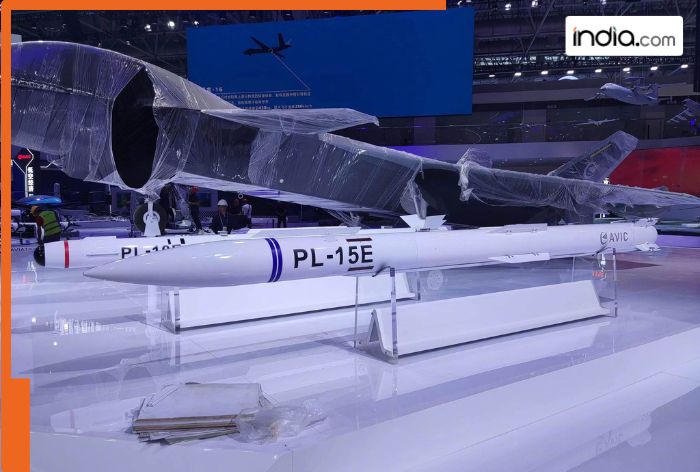
China stuns everyone with new powerful missile, big challenge for US, it can hit enemy target before....,
The PL-15E missile's remarkable range with a potential maximum reach of up to 300 kilometers, it offers Chinese fighter pilots a significant tactical edge, enabling them to strike enemy aircraft before those aircraft can respond with their own missiles.
 www.india.com
Beijingwalker
Banned
“100” J-10 Fighters: Iran Examines China’s Vigorous Dragon At Zhuhai Air Show Amid Rising Israel Tensions
November 13, 2024
Iran’s Air Force chief was spotted inspecting the Chinese J-10C, a 4.5th-generation aircraft, during a visit to the ongoing Zhuhai Air Show, sparking speculations that Tehran may be interested in acquiring the aircraft.
Iranian Air Force Commander Brigadier General Hamid Vahedi visited the Air Show on November 12 and, as reported by the Chinese media, got a first-hand experience of China’s J-10CE fighter jet.
According to reports, Vahedi assessed the capabilities of the J-10C Vigorous Dragon. General Vahedi also met with his Chinese counterpart, General Chang Dingqiu, to discuss possible areas of cooperation between the two services.
While Iran’s leadership has not expressly communicated its willingness to acquire a Chinese combat aircraft, the Iranian Air Force Commander’s inspection of the J-10C has piqued the interest of military observers. Some of whom observed that the aircraft was a viable option for the Iranian Air Force in terms of capability and price.
Publishing the photograph of the visit by the Iranian Commander, a popular Iranian news media outlet ‘Iran Observer’ wrote on the social media site X (formerly Twitter): “With a price tag of $40 million, 100 J-10s will cost $4 billion. The J-10s are better than the F-16s in terms of weapons and flight performance.”
The outlet did not reveal whether Iran had initiated talks with China regarding a potential purchase.
Moreover, neither China nor Iran has commented on speculations regarding Tehran’s potential acquisition of J-10C at the time of writing this report. Earlier this year, there were rumors that Iran was in talks with Beijing to acquire the JF-17 Block III aircraft jointly developed by Pakistan and China. However, they died down soon after.
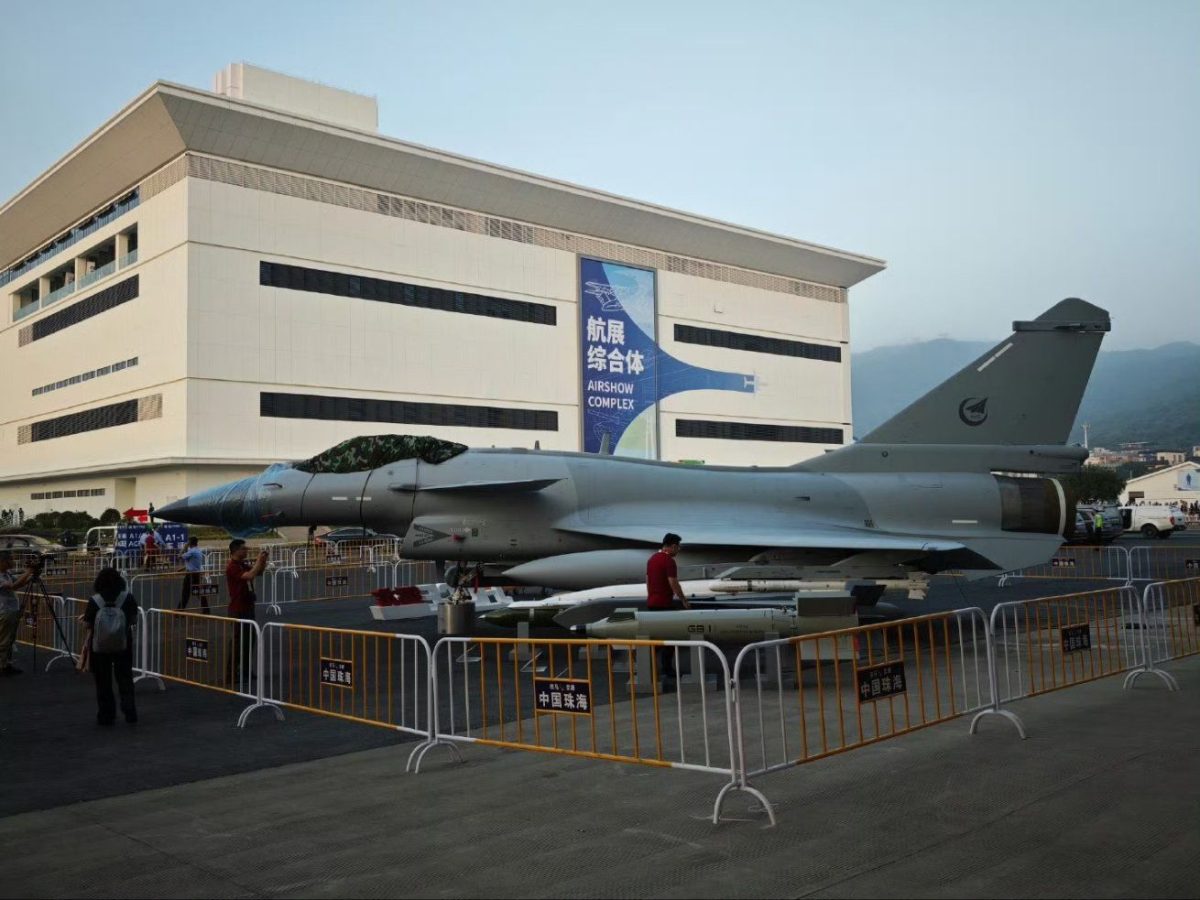
Engaged in protracted hostilities with regional adversaries like Israel, Iran’s inferior air power has become its Achilles heel. While it has developed deadly drones and ballistic missiles, it continues to fall short when it comes to fighter jets.
Earlier, Iran was expected to get as many as 24 Russian Su-35 Flanker-E in exchange for drones and ballistic missiles delivered to Moscow for its war against Ukraine. However, more than a year after these reports first emerged, Iran has yet to receive the delivery of the Russian combat aircraft.
With Russia’s Su-35 elusive, Iran’s only other option is a capable Chinese fighter jet. In fact, some reports in 2021 suggested that Iran was interested in buying 36 J-10C as a barter for its oil and natural gas, but China was reluctant to sell the fighter jet to Iran for fear of US sanctions. China’s reticence was also attributed to Iran’s inability to pay in cash.
The latest speculations about Iran’s interest in the J-10C follow reports hinting that the Egyptian Air Force could acquire the J-10C instead of upgrading its fleet of aging F-16 fighters. If Cairo goes ahead with the deal, it will become the second foreign operator of the aircraft after Pakistan.
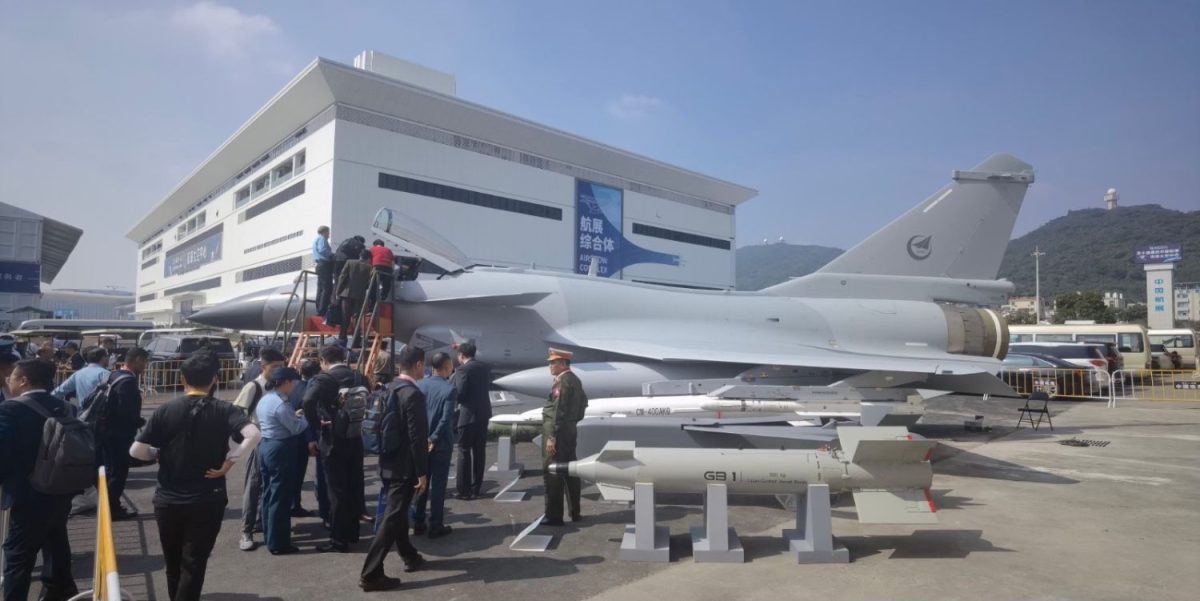
China has been actively targeting the Middle East market to export its aircraft, positioning the J-10C as a superior alternative for the French Rafale, the European Eurofighter Typhoon, and the US F-16 Fighting Falcons.
The Chinese aircraft cost just $40-50 million per unit, making them an attractive option for countries looking to upgrade their fleets without draining the state purse.
Chinese J-10C Vs U.S. F-16
The J-10C is frequently likened to upgraded US F-16 Fighting Falcon variants. Like the F-16, its fly-by-wire flight control system uses a computer to maintain its extremely agile, aerodynamically unstable airframe.The J-10C has an indigenous AESA radar, imaging infrared seeker (IIR) PL-10, WS-10B engine, and PL-15 air-to-air missiles. It features state-of-the-art capabilities, including electronic warfare, computerized glass cockpit instruments, precise air-to-ground strike, beyond-visual-range combat, and in-flight refueling.
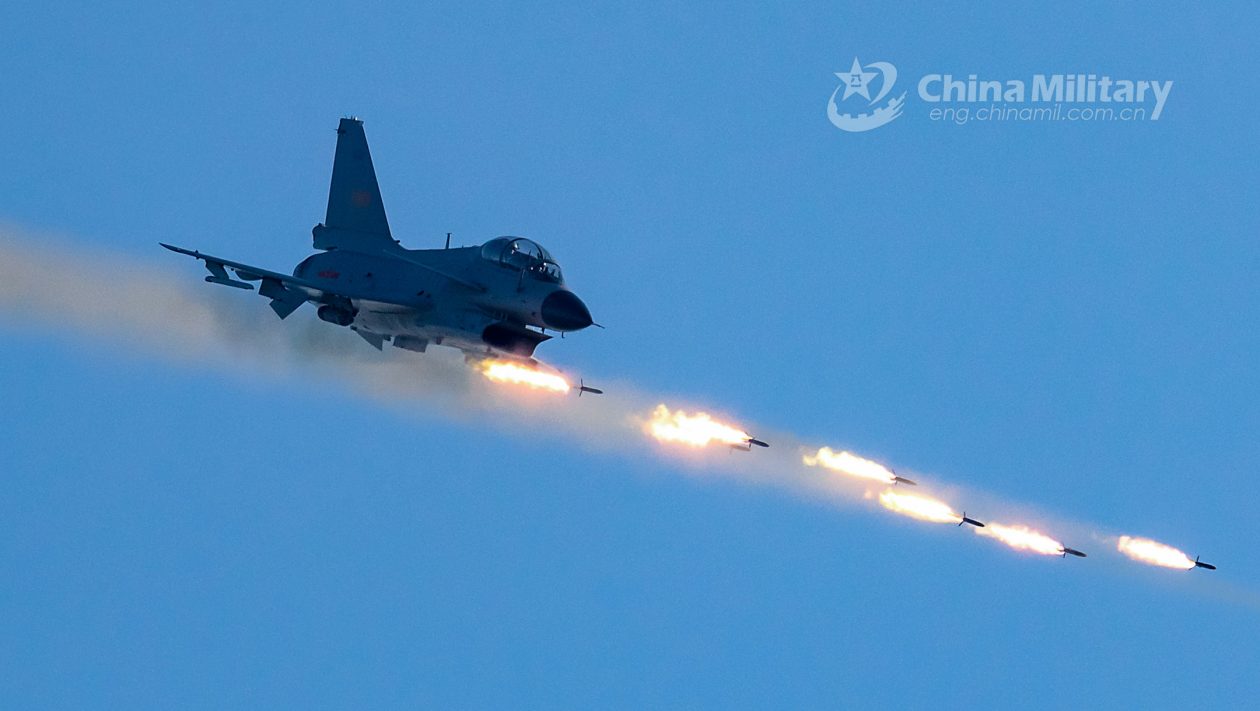
The aircraft is capable of all-weather operations. Its primary role is air-to-air combat, but it can also perform strike missions. Chinese experts have hailed the aircraft as a game changer for combat, often citing its improved sensors and weapons for visual and beyond-visual-range engagements and its reduced radar signature as a hedge over its global rivals.
The Chinese multirole fighter also has a forward-looking infrared and laser target designator pod. This pod was created to facilitate the use of weapons guided by satellite navigation and lasers.
Earlier this year, a video published by the Chinese People’s Liberation Army Air Force (PLAAF) showed a very rare refueling of seven J-10C Fighter jets by a single YY-20 refueling aircraft in a stunning display of PLAAF’s might. The J-10C aircraft were on their way to participate in the World Defense Show in Saudi Arabia.
Amid China’s concerted efforts to export the jet, the Iranian Commander’s visit to inspect the J-10C has definitely piqued the interest of defense experts globally, who will be keenly watching Tehran’s next step.
"100" J-10 Fighters: Iran Examines China's Vigorous Dragon At Zhuhai Air Show Amid Rising Israel Tensions
Iran’s Air Force chief was spotted inspecting the Chinese J-10C, a 4.5th-generation aircraft, during a visit to the ongoing Zhuhai Air Show, sparking speculations that Tehran may be interested in acquiring the aircraft. Iranian Air Force Commander Brigadier General Hamid Vahedi visited the Air...
 www.eurasiantimes.com
Beijingwalker
Banned
CHINA SHOWS OFF MASSIVE DRONE MOTHERSHIP AT ZHUHAI AIRSHOW’S FIRST-EVER DRONE ZONE
Haye KestelooNovember 12, 2024
China‘s largest aviation showcase has taken flight in Zhuhai, featuring a dedicated drone zone for the first time in the show’s history. The star attraction? A massive drone mothership capable of unleashing swarms of smaller UAVs for both intelligence gathering and strike missions. Source: VOA News
Meet the SS-UAV: China’s Drone Carrier of the Skies
The SS-UAV, also known by its Chinese name “Jiu Tian” (High Sky), is stealing the spotlight at the 15th China International Aviation and Aerospace Exhibition. This behemoth weighs in at an impressive 16 tonnes at maximum takeoff weight, showcasing China’s ambitious push into advanced drone warfare capabilities.More Than Just a Big Drone
What makes the SS-UAV particularly interesting is its role as a drone mothership – think of it as an aircraft carrier in the sky, but for drones. It’s designed to carry and rapidly deploy swarms of smaller drones that can perform various missions:- Intelligence gathering
- Electronic warfare operations
- Coordinated strike missions
Strategic Implications
The timing of this unveiling is particularly noteworthy, as it comes amid increasing global focus on drone warfare. The exhibition coincides with rising tensions around several regional flashpoints, including Taiwan, where China has been increasingly active with military aircraft operations.DroneXL’s Take
The introduction of a dedicated drone zone at China’s premier aviation event signals a significant shift in military aviation priorities. This development aligns with trends we’ve seen in modern conflicts, where drone technology is playing an increasingly crucial role. The SS-UAV’s unveiling, in particular, represents a significant leap in artificial intelligence and autonomous systems integration in military aviation.While commercial applications of such technology might seem distant, the rapid advancement in drone swarm capabilities could eventually influence developments in civilian BVLOS operations and autonomous flight systems.

China Shows Off Massive Drone Mothership At Zhuhai Airshow's First-Ever Drone Zone
China's largest aviation showcase has taken flight in Zhuhai, featuring a dedicated drone zone for the first time in the show's history. The star attraction?
 dronexl.co
Beijingwalker
Banned

Michael
VIP Member
- Thread starter
- #1,028
@Deino
Information Telegraphic Agency of Russia-TASS
===================================
We can confirm. the first export contract for the Su-57. But. The specific customer was not announced.
Shoigu will visit the Zhuhai Airshow tomorrow, according to Chinese social media. I guess it should be when he's there that the specifics of this contract will be announced.
Information Telegraphic Agency of Russia-TASS
===================================
We can confirm. the first export contract for the Su-57. But. The specific customer was not announced.
Shoigu will visit the Zhuhai Airshow tomorrow, according to Chinese social media. I guess it should be when he's there that the specifics of this contract will be announced.

Vi-va
Trusted Member

@guangdongt
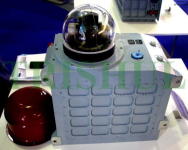
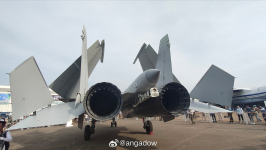
It's not the “菊花” of a fighter jet that I want to know about. I want to know about the thing in the red circle in the picture below.
View attachment 80110
I'd like to know what other fighters have this on their asses.
This is 101KS-O Russian Directional Infrared Counter Measures system
This is Northrop Grumman AN/AAQ-24 DIRCM
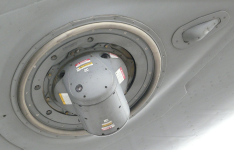
Directional Infrared Counter Measures
Take a closer look, it's rotatable.
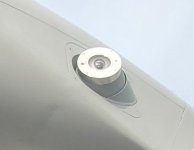
I suppose China adopted something similar.
Last edited:
Vi-va
Trusted Member
The IIR-missile approach sensor will only be mounted on one. the J-15 series is mounted on the vertical tail.
View attachment 80127
If you look closely, you will see Rear view sensor on both sides of the tailbone.
View attachment 80128
There is no official news on this.
There are two of them on both tails.

Yommie
Elite Member


guangdongt
Registered Member
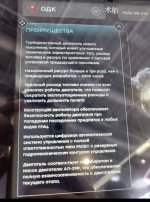
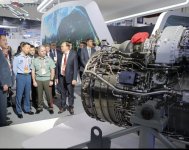
177S Fifth Generation Engine # China Airshow#
Technical parameters:
Thrust (at sea level, M=0, standard atmospheric pressure):
In full force combat mode: 14500 kilograms of force
In maximum combat mode: 9000 kilograms of force
Fuel consumption rate:
In maximum mode: ≤ 0.77 kg/kgf · hour
Application: Existing and future tactical aviation systems, including D25.
Advantages:
The new generation turbofan engine has better technical characteristics, including thrust, fuel consumption, and service life, which have significantly improved compared to the previous generation power system.
The designed service life is more than three times that of the previous generation product, at 6000 hours.
Reducing fuel consumption rate in all operating modes will help reduce operating costs and increase range.
The fan structure design ensures the safe operation of the engine when inhaling foreign objects and various birds.
Equipped with a full authority FADEC digital automatic control system and a backup hydraulic mechanical control system.
The engine size and weight are the same as the AL-31F engine, ensuring complete interchangeability with the engines currently in use.
Technical parameters:
Thrust (at sea level, M=0, standard atmospheric pressure):
In full force combat mode: 14500 kilograms of force
In maximum combat mode: 9000 kilograms of force
Fuel consumption rate:
In maximum mode: ≤ 0.77 kg/kgf · hour
Application: Existing and future tactical aviation systems, including D25.
Advantages:
The new generation turbofan engine has better technical characteristics, including thrust, fuel consumption, and service life, which have significantly improved compared to the previous generation power system.
The designed service life is more than three times that of the previous generation product, at 6000 hours.
Reducing fuel consumption rate in all operating modes will help reduce operating costs and increase range.
The fan structure design ensures the safe operation of the engine when inhaling foreign objects and various birds.
Equipped with a full authority FADEC digital automatic control system and a backup hydraulic mechanical control system.
The engine size and weight are the same as the AL-31F engine, ensuring complete interchangeability with the engines currently in use.

guangdongt
Registered Member
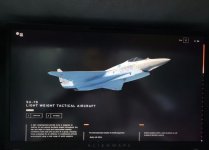
Su-75
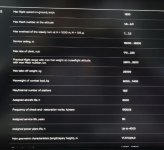
Maximum flight speed at sea level: 1300 kilometers per hour
Maximum Mach number at high altitude: 1.8... 2.0
Steady state hovering maximum overload (altitude=1000 meters, M=0.8): 7... 7.5G
Ceiling: 15000... 16500 meters
Maximum climb rate: 170... 220 meters per second
Maximum fuel weight and actual range at maximum Mach number during cruising flight altitude: 2800... 2900 kilometers
Maximum takeoff weight: 26000 kilograms
Maximum combat payload: 6000... 7400 kilograms
Maximum number of mount points/internal mount points: 13/5
Aircraft lifespan: 6000 hours
Inspection and maintenance cycle: 1500/12 flight hours/year
Service life: 30 years
Engine lifespan: up to 4000 hours
Main geometric features (length/wingspan/height): 17.7/11.8/4.0 meters
Engine thrust: 14500... 16500 kg force
Maximum target detection range (front hemisphere, RCS 5 m ² aerial target): up to 160 kilometers away
Number of aerial targets tracked/attacked simultaneously: up to 30/up to 6
Maximum detection range of ground targets (railway bridge/destroyer): 120/200 kilometers
Number of ground (sea) targets tracked simultaneously: 2
The Su-75 is a light tactical aircraft (LTA) designed to carry out missions during day and night, capable of destroying air and ground (sea) targets, including those protected by air defense systems, under visual and instrument weather conditions, whether in single aircraft combat or formation combat. It can also use multiple active weapons to carry out missions in complex electronic interference environments.
The most advanced onboard equipment system:
Radar with active phased array antenna (APAA)
Wide band stealth capability and passive detection system
Maximum flight speed at sea level: 1300 kilometers per hour
Maximum Mach number at high altitude: 1.8... 2.0
Steady state hovering maximum overload (altitude=1000 meters, M=0.8): 7... 7.5G
Ceiling: 15000... 16500 meters
Maximum climb rate: 170... 220 meters per second
Maximum fuel weight and actual range at maximum Mach number during cruising flight altitude: 2800... 2900 kilometers
Maximum takeoff weight: 26000 kilograms
Maximum combat payload: 6000... 7400 kilograms
Maximum number of mount points/internal mount points: 13/5
Aircraft lifespan: 6000 hours
Inspection and maintenance cycle: 1500/12 flight hours/year
Service life: 30 years
Engine lifespan: up to 4000 hours
Main geometric features (length/wingspan/height): 17.7/11.8/4.0 meters
Engine thrust: 14500... 16500 kg force
Maximum target detection range (front hemisphere, RCS 5 m ² aerial target): up to 160 kilometers away
Number of aerial targets tracked/attacked simultaneously: up to 30/up to 6
Maximum detection range of ground targets (railway bridge/destroyer): 120/200 kilometers
Number of ground (sea) targets tracked simultaneously: 2
The Su-75 is a light tactical aircraft (LTA) designed to carry out missions during day and night, capable of destroying air and ground (sea) targets, including those protected by air defense systems, under visual and instrument weather conditions, whether in single aircraft combat or formation combat. It can also use multiple active weapons to carry out missions in complex electronic interference environments.
The most advanced onboard equipment system:
Radar with active phased array antenna (APAA)
Wide band stealth capability and passive detection system
guangdongt
Registered Member
Su-57E
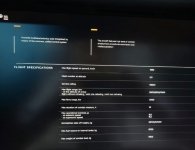
Maximum flight speed at sea level: 1350 kilometers per hour
Maximum Mach number at high altitude: 2.0
Height limit: 18800 meters
Maximum range, cruising altitude, no refueling/one refueling/two refueling: 2800/5200/7800 kilometers
Maximum transition range: 4000 kilometers
Maximum duration of combat mission: 10 hours
Maximum operational overload: Subsonic 8G - Supersonic 6G
Normal/maximum takeoff weight: 26700/34000 kilograms
Maximum fuel reserve of internal fuel tank: 9700 kilograms
Maximum combat payload weight: 7500 kilograms
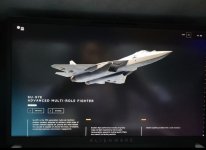
The Su-57E is a fifth generation multi-purpose cutting-edge aviation combat system designed to perform a wide range of combat missions against air, ground, and sea targets. This fighter jet has all-weather and all-weather combat capabilities, and can perform missions in complex electronic interference environments.
characteristic:
Excellent flight performance, including long range and endurance, outstanding maneuverability, supersonic cruise flight capability, and short takeoff and landing capability.
Wide band stealth capability.
A powerful multi band avionics system integrated with a unified control system.
Equipped with highly automated operational processes and intelligent features.
Maximum flight speed at sea level: 1350 kilometers per hour
Maximum Mach number at high altitude: 2.0
Height limit: 18800 meters
Maximum range, cruising altitude, no refueling/one refueling/two refueling: 2800/5200/7800 kilometers
Maximum transition range: 4000 kilometers
Maximum duration of combat mission: 10 hours
Maximum operational overload: Subsonic 8G - Supersonic 6G
Normal/maximum takeoff weight: 26700/34000 kilograms
Maximum fuel reserve of internal fuel tank: 9700 kilograms
Maximum combat payload weight: 7500 kilograms
The Su-57E is a fifth generation multi-purpose cutting-edge aviation combat system designed to perform a wide range of combat missions against air, ground, and sea targets. This fighter jet has all-weather and all-weather combat capabilities, and can perform missions in complex electronic interference environments.
characteristic:
Excellent flight performance, including long range and endurance, outstanding maneuverability, supersonic cruise flight capability, and short takeoff and landing capability.
Wide band stealth capability.
A powerful multi band avionics system integrated with a unified control system.
Equipped with highly automated operational processes and intelligent features.

Zarvan
Elite Member

Most likely Pakistan's future trainer/fighter Air Craft
Users who are viewing this thread
Total: 1 (members: 0, guests: 1)
Pakistan Defence Latest
-
 China to help Pakistan establish law enforcement center equipped with AI technology (12 Viewers)
- Latest: atmi_bum
-
-

-
-
Country Watch Latest


Latest Posts
-
Breaking News: Yemen's Houthis strike Saudi Arabia's Abha airport with missiles and drones in a sharp escalation (31 Viewers)
- Latest: mythbuster
-

-

-

-