Chinese 6th Generation Aircraft News & Discussions

I am a bit tired of seeing ppl keep saying it's not a 6th gen program just because they think the size is bigger than current heavy fighter and it has three engines.

You have to understand the requirements from the PLAAF for future warfare and for China's geopolitics, it is obvious now that the sixth gen of ours is a family aircraft concept which each model just being a sub system, and for CAC model, it is designed for high altitude, high cruise speed, ultra long range to break the second island chains as we don't have as much foreign bases as Yankee and ofc the European project also don't have such requirements and with the help of PL-17 accompany with new KJ-3000, Divine eagle AEWC drone the engagement range is going to be vastly extended, hence the boundary between a fighter and a bomber is getting more and more blurred.

I hope this clear a bit and please bear with my broken English.
What is also interesting about the J-36 is that its payload is probably comparable to the B-21 but can go supersonic, while the B-21 can’t. Both possible seen as long range missile trucks or fighters/interceptors in their own right. Carrying lots of munitions with long ranges, the boundaries between fighter, interceptor, and bomber are indeed getting blurred.

A lot of research done in the 80s seems to be finally yielding full scale demonstrators.
 
What is also interesting about the J-36 is that its payload is probably comparable to the B-21 but can go supersonic, while the B-21 can’t. Both possible seen as long range missile trucks or fighters/interceptors in their own right. Carrying lots of munitions with long ranges, the boundaries between fighter, interceptor, and bomber are indeed getting blurred.

A lot of research done in the 80s seems to be finally yielding full scale demonstrators.

J-36 payload is probably comparable to the B-21

It's too early to say that.
 
What is also interesting about the J-36 is that its payload is probably comparable to the B-21 but can go supersonic, while the B-21 can’t. Both possible seen as long range missile trucks or fighters/interceptors in their own right. Carrying lots of munitions with long ranges, the boundaries between fighter, interceptor, and bomber are indeed getting blurred.

A lot of research done in the 80s seems to be finally yielding full scale demonstrators.
The yankee rednecks on this forum seems to forget this when they bang on about it having 3 engines instead of 2. They forget that it is comparable in size and specs of the B21 yet it is likely to fly higher and faster. They think having 3 engines is a sign of weakness, yet their B21 is limited in kinematic performance because of its outdated flying wing design and only 2 non afterburning engines. The closest this they have at the moment is their B-1B, but that needs 4 engines and variable geometry swing wing design from the 70s to achieve supersonic cruise. There are very specific reasons for using 3 engines to achieve desired range, speed, and payload, with a predefined size and airframe geometry. The yankees are still obsessed with the outdated flying wing design. The NGAD is overly ambitious with it's engine design, and will most likely be a money pit to boost the profits of LockMart. The US navy sees the problems with the NGAD and have decided to lower the risk with a more conventional design.
 
Lol size doesn't matter much most of J36 technology in development hence J36 is also demonstrator, but no one knows the actual specifications of NGAD

And do search WHAT IS THE DIFFERENCE BETWEEN PROTOTYPE AND DEMONSTRATOR on Google

DEMONSTRATOR IS MORE MATURE/COMPLETE/REFINED PRODUCT THAN PROTOTYPE ACCORDING TO GOOGLE

AND DON'T SPEW NONSENSE AND CRAP IF YOU KNOW NOTHING LOL
As they say, where is the BEEF? All we hear is vaporware and rendering I haven't yet seen in flight or blurry image
 
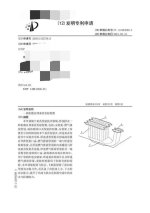
Does this patent from CAC in 2021 implying there might be an inner VLS hardkill system on the plane?

Yang wei the chief designer of J20 once said the way to achieved defensive hard kill system is beyond most people's imagination.

1000004364.jpg
 
Last edited:
The yankee rednecks on this forum seems to forget this when they bang on about it having 3 engines instead of 2. They forget that it is comparable in size and specs of the B21 yet it is likely to fly higher and faster. They think having 3 engines is a sign of weakness, yet their B21 is limited in kinematic performance because of its outdated flying wing design and only 2 non afterburning engines. The closest this they have at the moment is their B-1B, but that needs 4 engines and variable geometry swing wing design from the 70s to achieve supersonic cruise. There are very specific reasons for using 3 engines to achieve desired range, speed, and payload, with a predefined size and airframe geometry. The yankees are still obsessed with the outdated flying wing design. The NGAD is overly ambitious with it's engine design, and will most likely be a money pit to boost the profits of LockMart. The US navy sees the problems with the NGAD and have decided to lower the risk with a more conventional design.
The navy still has the limits of fitting the aircraft on a carrier. The USAF can go bigger, but they too probably have a design optimize for supersonic flight. But as I said in the earlier post. The US did a lot of research in the 80s. There are design on the shelf’s they can pull from and see if they work for current needs. The lambda wing heavily canted tails of the McDonnell Douglass JAST design could be very similar to the design from SAC. Only time will tell with better pictures.

To be frank, China has caught up, and it has caught many in the west off guard. Just look at how slow development is in Europe and Russia. They are basically second string to the US And China being in the first tier. Even Turkey and South Korea are reaching second tier status. A shock to many that remember the days of new designs coming out every few years from Dassault and the MiG design Bureau. MiG is basically dead, and had to be absorbed by Sukhoi.
 
Last edited:
China’s New Planes Send The U.S. Military Into Panic

Beijing has no qualms about making the eggheads at the Pentagon overreact to their latest fighter demonstration.

by Brandon J. Weichert

US_AIRFORCE_SS.jpg

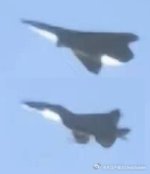
Shortly after the surprise mockup of China’s new sixth-generation “White Emperor” warplane appeared at this year’s Zhuhai Air Show in Guangdong, China, Beijing stunned the world by putting on a dazzling display of two different, working variations of their sixth-generation plane.

In fact, the science-fiction-like planes have sent many Western observers into a tailspin, at once denying that they are real planes and simultaneously calling it a “Sputnik” moment. Now, just as the U.S. Air Force was coming to grips with the fact that their own sixth-generation warplane dreams were dying under the weight of America’s harsh economic reality, the clamoring for the Air Force’s ghastly program has restarted.


Funny how that works.

Panic At The Pentagon

After all, many of the people publicly calling for the creation of what the Air Force has dubbed its “Next-Generation Air Dominance” (NGAD) fighters are the same people who routinely downplay China’s impressive technological capabilities. Now that it serves its own purposes, though, the storyline is shifting. We must have a plane that will take years to produce, cost up to $300 million per plane, and only marginally enhance American air superiority because China is readying to build its own.

Shortly after the Christmas festivities were finishing up in the United States, pictures from China emerged of what appeared to be not one, but two, distinct potential sixth-generation warplanes. One plane was larger than the other. The larger possible sixth-generation plane belonged to China’s Chengdu Aircraft Corporation (CAC), and the smaller one is believed to belong to China’s other major warplane developer, the Shenyang Aircraft Corporation (SAC).

Demonstrators Galore

Both planes are believed to be “demonstrator models.” This means that they may be test aircraft that the Chinese military will not ultimately use. The U.S. military has made countless demonstrator birds over the past several decades.

They are critical for learning about aerodynamics involved with next-generation planes and can be used as testbeds for an assortment of technologies undergirding advanced warplanes. While these are important steps toward developing next-level technologies that would outpace anything the Americans and their allies have, they are not necessarily the birds that China will ultimately mass produce and deploy over the next decade.

Further, it is believed that in 2020, the Americans did test their own demonstrator of a sixth-generation plane. This is to say nothing of the demonstrators of things like the SR-72 “Son of Blackbird” hypersonic unmanned aerial vehicle that Skunkworks has been playing with in the California desert for the last few years. That’s not to say that people should not be concerned about China leapfrogging the Americans in key technologies. Indeed, this author has spent the better part of a decade publicly warning about the probability that China is set to outpace the Americans and their allies in key technologies.

On the matter of a sixth-generation warplane, though, there are still many steps that China must go through to ensure that their demonstrators work properly and that mass-producing these birds as they are currently designed is worth the cost.

To be clear, if China decides to mass-produce these planes, it can and it will. Unlike the United States, China dominates global manufacturing and supply chains. It has the resources, domestic human capital, actual capital, and excess capacity to churn such systems out like sausages.

But will they want to?


A Giant Psyop

After all, the Chinese military is only now getting its fifth-generation warplanes humming along in terms of production quotas and domestically produced capabilities. For years, for example, the Chinese had difficulty making their indigenously produced engines work for the Chengdu J-20 “Mighty Dragon,” which was first unveiled in 2011. After years of trial and error, the J-20s are only now operating with the powerful Chinese-made WS-10 after-burning turbofan engines.

And China is only just now revealing the extent of its investment in its other fifth-generation warplane, the Shenyang Aircraft Corporation’s J-35. The J-20 is much more advanced than the J-35. But the J-35 is already advancing along. Despite these successes, why would China still be investing in their fifth-generation planes the way they are if they were already all-in on their proposed sixth-generation warplane?

The fact is, they’re not as invested as Western pundits assume.

But Beijing has no qualms about making the eggheads at the Pentagon believe that they’re already working on an arsenal of sixth-generation war machines. China’s rulers know the U.S. government has a massive spending problem. And the United States has a national debt to prove that view. Both Beijing and its allies, in places like Russia, dream of collapsing the U.S. economy. America’s onerous, self-inflicted debt load is the surest point of attack by these great powers.

What better way for China to hasten the American economic and financial collapse than by convincing us that they’re readying to field an arsenal of fantastical “air-space” fighter planes?

It is likely that China has no real intention (yet) of scaling its sixth-generation warplane demonstrators. Instead, it wants the Americans to overreact and bankrupt themselves trying to counter the mythical Chinese “air-space” fighter. Washington cannot fall for this obvious ruse.

 
To view this content we will need your consent to set third party cookies.
For more detailed information, see our cookies page.
 
To view this content we will need your consent to set third party cookies.
For more detailed information, see our cookies page.

To view this content we will need your consent to set third party cookies.
For more detailed information, see our cookies page.
 
Last edited:
according to chinese military analysis not using the above engine. WS15+ ramjet
Just a rumors nothing is confirmed so far, it's too early to assume J36 using advance version of WS-15

And remember STANDARD WS-15 is just starts mass production recently (1 year or so), so I have doubts in WS-15 + (+ ramjet) theory, most probably J36 is using 3 STANDARD WS-15 as an interim engines
 

Users who are viewing this thread

Pakistan Defence Latest

Latest Posts

Back
Top