China’s DeepSeek Is America’s AI Sputnik Moment

MNZGamerX

Registered Member
Joined
Dec 12, 2023
Messages
1,797
Reaction score
1,964
Reputation
1,046.7
Country of Origin
Country of Residence
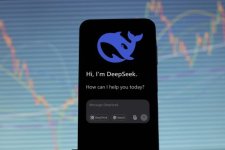
A Chinese AI model is now as good as leading U.S. AI models, using only a tiny fraction of GPU resources available. This is a gamechanger for the global AI arms race.

By Selina Xu
January 29, 2025
thediplomat_2025-01-28-155029.jpg

There’s a common saying in tech circles: The United States is good at innovation, going from zero to one, while China is good at commercial applications, that is, going from one to 100. For a while it seemed like the same would hold true for artificial intelligence (AI), where the most cutting-edge frontier models and research were created by U.S. startups like OpenAI, which were thought to be two to three years ahead of their Chinese counterparts. Yet the rapid release of two new models by Chinese company DeepSeek – the V3 in December and R1 this month – is upending this deep-rooted assumption, sparking a historic rout in U.S. tech stocks.

DeepSeek’s R1 reasoning model matches (and sometimes beats) OpenAI’s O1 across a range of math, code, and reasoning tasks – and at 2 percent of the latter’s price. A Chinese AI model is now as good as the leading U.S. AI models, using only a tiny fraction of GPU resources available.

This is remarkable and a gamechanger for the global AI arms race. One, this means that the game is no longer reserved for deep-pocketed players with chip stockpiles (like the United States and China). This was also a key American advantage, once thought to be a critical moat in maintaining the capability gap between U.S. and Chinese models. DeepSeek showed that algorithmic innovations can overcome scaling laws. Faced with limited chips due to U.S. export controls, the Chinese company employed innovative software optimization techniques, from sparse Mixture-of-Experts architectures to quantization, which allowed them to reach unprecedented cost efficiency while outperforming competing models.

As DeepSeek founder Liang Wenfeng, who is an AI researcher by training, said in an interview last year, “In the face of disruptive technologies, moats created by closed source are temporary. Even OpenAI’s closed source approach can’t prevent others from catching up.”

DeepSeek’s ability to catch up to frontier models in a matter of months shows that no lab, closed or open source, can maintain a real, enduring technological advantage. We’ve entered an era of AI competition where the pace of innovation is likely to become much more frenetic than we all expect, and where more small players and middle powers will be entering the fray, using the training strategies shared by DeepSeek.

Two, China is becoming the global leader in open source AI. DeepSeek is but one of many Chinese AI companies that are all fully open-sourcing their models – allowing developers worldwide to use, reproduce, and modify their model weights and methods. China’s Big Tech giant Alibaba has made Qwen, its flagship AI foundation model, open source. So have newer AI startups like Minimax, which also launched in January a series of open source models (both foundational and multimodal, that is, able to handle multiple types of media).

Competitive benchmark tests have shown that the performance of these Chinese open source models are on par with the best closed source Western models. On Hugging Face, an American platform that hosts a repository of open source tools and data, Chinese LLMs are regularly among the most downloaded. Not only does this bring more global developers into their ecosystem, but it also induces more innovation.


Think of an LLM as an operating system – akin to Apple’s iOS and Google’s Android – where users can develop new applications on top of it. Keeping the United States’ best models closed-source will mean that China is better poised to expand its technological influence in countries vying for access to the state-of-the-art offerings at a low cost. These Chinese AI companies are also ironically democratizing access to AI and keeping the original mission of OpenAI alive: advancing AI for the benefit of humanity. Countries outside of the AI superpowers or well-established tech hubs now have a shot at unlocking a wave of innovation using affordable training methods.

Three, U.S. export controls no longer have a stranglehold on AI progress. Chinese companies like DeepSeek have demonstrated the ability to achieve significant AI advancements by training their models on export-compliant Nvidia H800s – a downgraded version of the more advanced AI chips used by most U.S. companies – and by leveraging sophisticated software techniques. Much of the United States’ “chokepoint” tactics have thus far focused on hardware, but the fast-evolving landscape of algorithmic innovations means Washington may need to explore alternate routes of technology control. As many have pointed out, necessity is truly the mother of invention. Unable to rely on the latest chips, DeepSeek and others have been forced to do more with less and with ingenuity instead of brute force.

There’s no understating this milestone. While many had earlier counted China out on the AI race due to the barrage of crippling U.S. export controls, DeepSeek shows that China is back, and might be in the lead. If Western efforts to hamper or handicap China’s AI progress is likely to be futile, then the real race has only just begun: lean, creative engineering will be what wins the game; not sheer financial heft and export controls.
 

DeepSeek’s Sputnik moment: Five ways in which US-China AI race plays out for India​

One is the strategic salience of the moment. Historical comparisons are odious, but in terms of the sheer shock it produced, DeepSeek reminds us of the Soviet Union’s launch of Sputnik, the Earth’s first artificial satellite in October 1957.​

Written by C. Raja Mohan

Mumbai | Updated: January 29, 2025

Deepseek-4col1.webp

As Prime Minister Narendra Modi travels to Paris to co-chair the AI summit convened early next month by French President Emmanuel Macron, and may also go to Washington — if plans to meet President Donald Trump work out — the Indian establishment has to get its sums right in assessing the implications of the AI race between US and China, shaken up by the release of Chinese AI assistant DeepSeek R1 over the weekend.

Five of them stand out.

One is the strategic salience of the moment. Historical comparisons are odious, but in terms of the sheer shock it produced, DeepSeek reminds us of the Soviet Union’s launch of Sputnik, the Earth’s first artificial satellite in October 1957. The stunning demonstration of Soviet Russia’s capabilities in frontier technology set off panic within the smug American establishment that was so confident of its dominance in science and technology. It also spurred Washington into a massive space programme ofits own, including the landing of the first human on the Moon.

Monday’s bloodbath on Wall Street of AI stocks dramatises the surprise that shattered Silicon Valley’s Second is the intensification of the geopolitical rivalry between the US and China. If Sputnik ratcheted up the Cold War that had begun a decade earlier between America and the Soviet Union, DeepSeek heralds an escalation of the geopolitical rivalry between the US and China that has been unfolding for nearly a decade. Much like the Sputnik in the 1950s, DeepSeek brings a new technological frontier into the great power competition.

But the Sputnik moment did not tell us how the tech race would play out in subsequent decades. Moscow offered vigorous competition to Washington during the Cold War, but could not sustain its technological parity after the collapse of the Soviet Union. China is a different kind of power, with a large GDP and massive investments in frontier technologies. Yet there is no telling how its rivalry with America will unfold in the coming years. For now, though, it is reasonable to assume that the US and China are way ahead of other major powers and poised to make the AI race a bipolar one.

Third, DeepSeek is a reminder that money buys many things, but it is not everything; certainly not love or the capacity for innovation. If the US is seen as pouring billions of dollars into building more computing power and better AI models, DeepSeek has shown it is possible to do more with less.

That should give hope for India and other middle powers like France. The gap between the US and China is much less than that between the two of them and the rest. While the middle powers can’t keep pace with the US and China, they could do enough to stay in the AI game.

Both India and France (Europe) talk about “Sovereign AI”. They will need strategies that will emphasise both cooperation with the US and independent development of AI. Although the AI world might never be truly multipolar, there would be considerable room for other players capable of research, development, and innovation.

Fourth, that room would be much larger if the US chooses the partnership model with allies to compete with China, instead of going it alone. The Biden Administration was open to partnership with India, but concerns about leakage of technology from India to Russia had put a dampener on the kind of access the US is willing to offer India on AI chips. For Delhi, the time is now to decide on how much weight it is willing to give Russia in advancing its interests with the US on the AI game.

Finally, Sputnik is an important reminder that great powers will also embark on cooperation in advanced technologies. Although Sputnik’s launch in 1957 set off an arms race, outer space eventually provided a venue to cooperate and demonstrate their shared commitment to humanity’s technological advancement and global peace. The detente years (the 1970s) saw Moscow and Washington begin cooperation in outer space that endures to the day.

There are many in the US and China who think the two sides should cooperate on AI for the benefit of the world, much in the manner America and Russia did in outer space. It is indeed possible: AI cooperation could be on the table when Washington and Beijing begin a substantive engagement. The Biden years have seen the US and China start a dialogue on AI to prevent its misuse and potential destabilisaton of nuclear deterrence in the AI age.

As the military applications of AI begin to proliferate, it is not difficult to imagine US-China cooperation in the creation of a set of rules to control the spread of AI, much in the manner that the US and Russia developed a nuclear control regime in the 1960s and 1970s.

India found itself on the wrong side of these nuclear lines, thanks to Delhi’s ideological confusion on atomic issues, policy incoherence, and geopolitical sentimentalism. It took nearly four decades to undo that nuclear blunder. Hopefully, Delhi is smarter today and can define its strategic interests in the AI domain clearly and ensure that India will be part of shaping the global governance of AI rather than a mere subject of it.

 
I don't see the reason why people hate on Deepseek, it is open aource, it is free, it gives the chance to people around the globe to access, to study about the model, even for normal American as well.

The only people might get triggered are probably from those big corps who created this mythical story of this is some sort of god tier tech where only they had the power to control and only paid members can access.
 
I don't see the reason why people hate on Deepseek, it is open aource, it is free, it gives the chance to people around the globe to access, to study about the model, even for normal American as well.
There is no hate... it just upended the whole next century of US dominance on a subscription model ala Windows.
 
Breakthrough Chinese AI app a ‘wake-up call’ for US – Trump

DeepSeek’s sudden rise should prompt American companies to come up with cheaper, faster platforms, the US president has said

67989709203027541238fba2.jpg

President Donald Trump has described China’s DeepSeek AI as a significant “wake-up call” for US technology firms, highlighting its cost-effectiveness. He said American companies would need to intensify AI development to stay competitive.

Developed by Hangzhou-based startup DeepSeek Inc., the AI assistant of the same name was released last week and has since become the most popular program on Apple’s US App Store, surpassing US-based OpenAI’s ChatGPT.

The success comes despite the US usinng export controls to block Chinese firms from using advanced micro-chips. DeepSeek performs as well as its competitors on key benchmarks running on less advanced chips than that more expensive US and Indian-owned options.

Speaking in Florida on Monday, Trump commented on the app’s success, pointing to its faster and more cost-effective development. “That’s good because you don’t have to spend this much money. I view that as a positive, as an asset,” he said.

“The release of DeepSeek AI from a Chinese company should be a wake-up call for our industries that we need to be laser focused on competing to win,” he urged, adding that it should prompt rival US firms to come up with more cost-effective solutions.

“So instead of spending billions and billions, you’ll spend less” to achieve the same results, the president said. Trump stated that the US has “the greatest scientists in the world” so it should not be hard for them to compete with DeepSeek.

US officials are divided on DeepSeek. David Sacks, Trump’s White House AI and cryptocurrency chief, shared Trump’s cautiously positive view, writing on X that it “shows that the AI race will be very competitive.” However, House Speaker Mike Johnson called the new AI “a serious threat,” accusing China of “abusing” the trade system and “stealing” US intellectual property.

Rep. John Moolenaar, the chair of the US House Select Committee on China, also alleged the app poses a threat to US national security and suggested Washington should look for a way to slow its spread.

“The US cannot allow CCP [Chinese Communist Party] models such as DeepSeek to risk our national security and leverage our technology to advance their AI ambitions. We must work to swiftly place stronger export controls on technologies critical to DeepSeek’s AI infrastructure,” he said.

 
There are too many sputnik moments recently, I almost lose track, actually it is more like sputnik year instead of sputnik moment, lets hope our poor American friends it is not sputnik century, lol
"Sputnik Moment" soon will be a new norm for US.
 
The DEEPSEEK Team average age below 35 and none of them went to foreign universities
To view this content we will need your consent to set third party cookies.
For more detailed information, see our cookies page.
 
The DEEPSEEK Team average age below 35 and none of them went to foreign universities
To view this content we will need your consent to set third party cookies.
For more detailed information, see our cookies page.

Look like a bunch of freshmen in a college...
 
Russia indeed shocked America when it launched Sputnik in 50s..... after that America only became number 1 super power and Russia today is a failed state.... history will repeat for China too.....
 
Russia indeed shocked America when it launched Sputnik in 50s..... after that America only became number 1 super power and Russia today is a failed state.... history will repeat for China too.....
lol, most part of history didn't repeat itself, only a few isolated cases did. You never know where history will take us, or you can just claim you do.
Anyway, have to say it again, Indians are always way more confident in America than Americans themselves, a very strange phenomenon indeed.
 
Russia indeed shocked America when it launched Sputnik in 50s..... after that America only became number 1 super power and Russia today is a failed state.... history will repeat for China too.....
so now you are relying on witchcraft and fortune telling, dude, I thought you said you are already 40 years old plus.
 
Cyberattacks against DeepSeek escalate with botnets joining, command surging over 100 times: lab

By Global Times
Published: Jan 30, 2025

97e24a48-b8b8-4188-b508-7db9280fb7b7.jpeg

Cyberattacks targeting Chinese AI start-up DeepSeek suddenly escalated on early Thursday with attack commands surging by more than 100 times compared to a previous wave of attacks on Tuesday, the Global Times learned from Chinese cybersecurity firm XLab on Thursday.

The lab said that it observed at least two botnets participating in the attacks on Thursday, launching two waves of assaults.

DeepSeek has been subjected to large-scale and sustained DDoS attacks since January 3 or 4, according to XLab.

"At first, the attacks were SSDP and NTP reflection amplification attacks. On Tuesday, a large number of HTTP proxy attacks were added. Then in early this morning, botnets were observed to have joined the fray. This means that the attacks on DeepSeek have been escalating, with an increasing variety of methods, making defense increasingly difficult and the security challenges faced by DeepSeek more severe," a security expert from XLab told the Global Times on condition of anonymity.

Through nearly a month of continuous monitoring of DeepSeek, XLab told the Global Times that they had discovered that the attacks on DeepSeek have been gradually evolving: from easy-to-mitigate amplification attacks at beginning, to HTTP proxy attacks (application-layer attacks, which are harder to defend against) on Tuesday and now to primarily botnet-based attacks. Attackers are using multiple techniques and methods to target DeepSeek, XLab said.

According to a report XLab sent to the Global Times, in the early hours of Thursday, the lab observed two Mirai variant botnets, HailBot and RapperBot, participating in the attacks. These attacks, divided into two waves separately at 1 am and 2 am, involved 118 C2 ports across 16 C2 servers.

"The involvement of botnets indicates that professional attackers have entered," the XLab expert said.

According to XLab, botnets are networks of devices infected and controlled by attackers through malicious software, known as "zombies" or "bots." Attackers use Command and Control (C&C) servers to send commands to these devices, executing various tasks such as launching DDoS attacks on target servers simultaneously. The scale and intensity of the attacks will continue to increase, exhausting the target servers' network bandwidth and system resources, rendering them unable to respond to normal business operations, ultimately leading to paralysis or service disruption.

The two botnets used in this attack, HailBot and RapperBot, are two long-active botnets that provide professional DDoS services to attack global targets. RapperBot attacks an average of more than 100 targets daily, with peak command volumes in the thousands. Its targets are distributed across Brazil, Belarus, Russia, China, Sweden, and other regions. HailBot's attacks are more stable than RapperBot's, with an average of thousands of attack commands daily targeting more than 100 targets distributed in the Chinese mainland, the US, the UK, China's Hong Kong region, Germany, and other regions, according to XLab.

XLab found that these two botnets frequently "take orders," fitting the profile of typical "professional hitmen." The lab believes that while botnet attacks are an old method, they remain effective. "Clearly, in the wave of attacks early this morning, hackers have procured professional botnet attack services," said the XLab expert.

DeepSeek gained widespread attention after it released the latest open-source model DeepSeek-R1 earlier in January. The model has achieved an important technological breakthrough - using pure deep learning methods to allow AI to spontaneously emerge with reasoning capabilities.

On Tuesday, the eve of Chinese New Year, the company launched a new open-source multimodal model Janus-Pro, an upgraded version of its earlier Janus model, which significantly enhances multimodal understanding and visual generation capabilities and reportedly outperforms OpenAI in benchmark tests.

The attacks in the past months have affected the registration and services of DeepSeek. DeepSeek reportedly released an announcement on Tuesday saying that its online services had recently been subjected to large-scale malicious attacks. To ensure continued service, the company had temporarily restricted registration methods other than those with +86 mobile phone numbers.

Tuesday attacks on DeepSeek also caused global concerns over security of AI services. "The attack, which forced DeepSeek to disable new user registrations, is believed to be a distributed denial-of-service attack targeting its API and web chat platform. While existing users can still access the platform, this incident raises broader questions about the security of AI-driven platforms and the potential risks they pose to consumers," read a Forbes report on Tuesday.

 
Cyberattacks against DeepSeek escalate with botnets joining, command surging over 100 times: lab

By Global Times
Published: Jan 30, 2025

View attachment 98027

Cyberattacks targeting Chinese AI start-up DeepSeek suddenly escalated on early Thursday with attack commands surging by more than 100 times compared to a previous wave of attacks on Tuesday, the Global Times learned from Chinese cybersecurity firm XLab on Thursday.

The lab said that it observed at least two botnets participating in the attacks on Thursday, launching two waves of assaults.

DeepSeek has been subjected to large-scale and sustained DDoS attacks since January 3 or 4, according to XLab.

"At first, the attacks were SSDP and NTP reflection amplification attacks. On Tuesday, a large number of HTTP proxy attacks were added. Then in early this morning, botnets were observed to have joined the fray. This means that the attacks on DeepSeek have been escalating, with an increasing variety of methods, making defense increasingly difficult and the security challenges faced by DeepSeek more severe," a security expert from XLab told the Global Times on condition of anonymity.

Through nearly a month of continuous monitoring of DeepSeek, XLab told the Global Times that they had discovered that the attacks on DeepSeek have been gradually evolving: from easy-to-mitigate amplification attacks at beginning, to HTTP proxy attacks (application-layer attacks, which are harder to defend against) on Tuesday and now to primarily botnet-based attacks. Attackers are using multiple techniques and methods to target DeepSeek, XLab said.

According to a report XLab sent to the Global Times, in the early hours of Thursday, the lab observed two Mirai variant botnets, HailBot and RapperBot, participating in the attacks. These attacks, divided into two waves separately at 1 am and 2 am, involved 118 C2 ports across 16 C2 servers.

"The involvement of botnets indicates that professional attackers have entered," the XLab expert said.

According to XLab, botnets are networks of devices infected and controlled by attackers through malicious software, known as "zombies" or "bots." Attackers use Command and Control (C&C) servers to send commands to these devices, executing various tasks such as launching DDoS attacks on target servers simultaneously. The scale and intensity of the attacks will continue to increase, exhausting the target servers' network bandwidth and system resources, rendering them unable to respond to normal business operations, ultimately leading to paralysis or service disruption.

The two botnets used in this attack, HailBot and RapperBot, are two long-active botnets that provide professional DDoS services to attack global targets. RapperBot attacks an average of more than 100 targets daily, with peak command volumes in the thousands. Its targets are distributed across Brazil, Belarus, Russia, China, Sweden, and other regions. HailBot's attacks are more stable than RapperBot's, with an average of thousands of attack commands daily targeting more than 100 targets distributed in the Chinese mainland, the US, the UK, China's Hong Kong region, Germany, and other regions, according to XLab.

XLab found that these two botnets frequently "take orders," fitting the profile of typical "professional hitmen." The lab believes that while botnet attacks are an old method, they remain effective. "Clearly, in the wave of attacks early this morning, hackers have procured professional botnet attack services," said the XLab expert.

DeepSeek gained widespread attention after it released the latest open-source model DeepSeek-R1 earlier in January. The model has achieved an important technological breakthrough - using pure deep learning methods to allow AI to spontaneously emerge with reasoning capabilities.

On Tuesday, the eve of Chinese New Year, the company launched a new open-source multimodal model Janus-Pro, an upgraded version of its earlier Janus model, which significantly enhances multimodal understanding and visual generation capabilities and reportedly outperforms OpenAI in benchmark tests.

The attacks in the past months have affected the registration and services of DeepSeek. DeepSeek reportedly released an announcement on Tuesday saying that its online services had recently been subjected to large-scale malicious attacks. To ensure continued service, the company had temporarily restricted registration methods other than those with +86 mobile phone numbers.

Tuesday attacks on DeepSeek also caused global concerns over security of AI services. "The attack, which forced DeepSeek to disable new user registrations, is believed to be a distributed denial-of-service attack targeting its API and web chat platform. While existing users can still access the platform, this incident raises broader questions about the security of AI-driven platforms and the potential risks they pose to consumers," read a Forbes report on Tuesday.


Indian cyber coolies doing the work of their US Zionist masters?
 
Russia indeed shocked America when it launched Sputnik in 50s..... after that America only became number 1 super power and Russia today is a failed state.... history will repeat for China too.....
Of course, such has always been the wet dream of Indians.
 

Users who are viewing this thread

Pakistan Defence Latest

Latest Posts

Back
Top