Chinese Society and Infrastructure

Status
Not open for further replies.
They are the best of the best. Another sensational video which got 4 million likes in one day is this 8 years old little girl in the 500 meters skating race in Beijing, she falls right after the start but doesn't give up and miraculously wins the race in the end.

To view this content we will need your consent to set third party cookies.
For more detailed information, see our cookies page.
 
In the Gangwon 2024 Winter Youth Olympics, Chinese skaters win gold and sliver by fooling all the foreign competitors

Female skaters Li Jinzi and Yang Jingru repeated their feats on January 21 in the girls' 1,000 meters, after Yang led a one-two finish in the 1,500 meters on Saturday in spectacular fashion. Male skater Zhang Xinzhe also won the 1,000 meters on Sunday.

The female pairs' tactics on Saturday were hotly discussed on the Chinese social media throughout the weekend.

Yang skated to lap the entire field in the early phase of the final - often a self-destructive move in distance races - but then lurked at the tail of the pack, a move that left the other competitors seemingly unaware that they were actually lagging behind.

When the referee sounded the bell to notify Yang it was her final lap, the other skaters sped up to cross the "finish" line - but they were still one lap behind.

Yang's teammate Li then continued her pace to finish the race in the second place. The pair high-fived each other after Li crossed the line.

Yang finished in 2 minutes and 33.148 seconds, followed by teammate Li in 2:41.543.

To view this content we will need your consent to set third party cookies.
For more detailed information, see our cookies page.

The two girls just won another gold and silver with ease, they have unrivaled capability, don't really have to play tricks with foreign skaters.

To view this content we will need your consent to set third party cookies.
For more detailed information, see our cookies page.
 

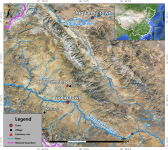
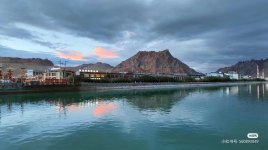
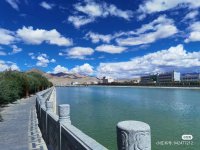
Shiquanhe river, origin of the Indus River in Aksai Chin, a new town emerges in 20 years​

Shiquanhe river is the origin of the Indus River in Aksai Chin region between Xinjiang and Tibet. The surrouding area had no human settlements due to it's harsh environment and weather.

In order to better and effectively adiminter this region, China started to build a town in Shiquanhe river region from scratch 20 years ago.

Now a new town, Shiquanhe river town emerged from out of nothing.

To view this content we will need your consent to set third party cookies.
For more detailed information, see our cookies page.
 
Shiquanhe river ( Indus river)
调整大小 main-qimg-82a12cf5db2f3fa86669b347d98db6f9-pjlq.jpg
12520_2022_1528_Fig1_HTML.png
 
Last edited:
Shiquanhe river town, the origin of The Indus River, rised up from nothing in just 20 years

W020211005323291552894.jpg
 

Shiquanhe river, origin of the Indus River​

To view this content we will need your consent to set third party cookies.
For more detailed information, see our cookies page.
 
Foreign traveler is amazed to learn that a trip from Hami to Turpan in Xinjiang, which would take several days in the past, now takes only one and half an hour.

To view this content we will need your consent to set third party cookies.
For more detailed information, see our cookies page.
 

Why China Has Lost Interest in Hollywood Movies

No American films ranked among the 10 highest grossing in China last year as viewers who once flocked to foreign blockbusters continued to disappear.

Jan. 23, 2024, 10:21 a.m. ET

Before the sequel to “Aquaman” was released in China last month, Warner Bros. did everything it could to sustain the original movie’s success.

The Hollywood studio blanketed Douyin, the Chinese version of TikTok, with movie clips, behind-the-scenes footage and a video of an Aquaman ice sculpture at a winter festival in Harbin, a city in China’s northeast. It sent the franchise’s star, Jason Momoa, and director, James Wan, on a publicity tour in China — the type of barnstorming that had disappeared since the Covid pandemic. Mr. Momoa said China’s fondness for the first “Aquaman” was why the sequel was debuting in China two days before the U.S. release.

“I’m very proud that China loved it, so that’s why we brought it to you, and you guys are going to see it before the whole world,” he said in an interview with CCTV 6, China’s state-run film channel.

The big push didn’t work.

“Aquaman and the Lost Kingdom” has collected only about $60 million in China after a few weeks of release. That was nowhere near the 2018 original’s $90 million opening weekend in China on its way to a $293 million haul, accounting for a quarter of that movie’s $1.2 billion box office success.
Video

The official Douyin account for the “Aquaman” sequel posted videos of its star, Jason Momoa, and director, James Wan, promoting the film, as well as of an ice sculpture of the superhero at an ice festival in China.CreditCredit...Aquaman 2 Film via Douyin

The producers of the “Aquaman” movies are not the only ones finding that China has become a lost kingdom.

In 2023, no American films ranked among the 10 highest grossing in China despite highly anticipated sequels in the “Mission: Impossible,” “Fast & the Furious” and “Spider-Man” franchises.

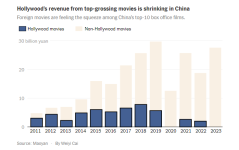
Neither “Oppenheimer” nor “Barbie,” two of Hollywood’s biggest hits last year, cracked the top 30 in China at the box office, according to Maoyan, a Chinese entertainment data provider that has tracked ticket sales since 2011. The only other recent year when Hollywood was shut out of China’s top 10 was 2020, during the pandemic.
微信图片_20240124000832.png

Hollywood’s revenue from top-grossing movies is shrinking in China​

Foreign movies are feeling the squeeze among China’s top-10 box office films.

Chinese moviegoers who once flocked to Hollywood films have been steadily disappearing. China is, by far, the biggest movie market outside the United States, and a place that American studios rely on for growth and profitability as the film industry struggles.

“The days when a Hollywood film would make hundreds of millions of U.S. dollars in China — that’s gone,” said Stanley Rosen, a professor at the University of Southern California who studies Chinese politics and the film industry.

China’s film industry is producing more high-quality movies that resonate with domestic audiences. The country’s top two films last year highlight the diversity of offerings: “Full River Red,” a dialogue-rich suspense thriller, and “The Wandering Earth II,” a science-fiction blockbuster heavy with special effects.

A nearly full house watching the screen in a movie theater.

A Saturday evening audience in Beijing this month. Chinese moviegoers have been responding to government efforts to bolster the domestic film industry. Credit...Gilles Sabrié for The New York Times

Against the backdrop of growing tensions with the United States, Beijing has advanced its ambitions to become a cultural influence, supporting efforts by local filmmakers to create films that are in line with the ruling Communist Party’s doctrines.

In recent years, some of the highest-grossing films have played up themes of a stronger and more assertive China. The top-grossing Chinese films of all time are “The Battle at Lake Changjin,” a 2021 film that depicts an against-all-odds defeat of the United States during the Korean War; and “Wolf Warrior 2,” a 2017 nationalist action flick in which a Chinese Jason Bourne-like character takes on an American soldier of fortune.

Shi Chuan, vice chairman of the Shanghai Film Association, said many American studios once viewed China as a market where they could always make money. That is no longer the case. Wary Chinese consumers are spending less, and box office sales have not returned to prepandemic levels.

“Now I am telling American film companies that this mentality is no longer viable,” Mr. Shi said. “You must study deeply to understand the Chinese market, Chinese audiences and Chinese pop culture.”

Hollywood’s love affair with China goes back years. “The Fugitive,” in 1994, was the first imported American blockbuster, and a year later China started to allow 10 foreign films to be released in the country every year. In 2012, seven of the 10 highest-grossing movies were U.S.-made. At the time, U.S. movie attendance was in a slow, decades-long decline. DVD sales were sputtering. Streaming was in its infancy.

The Hollywood studios, desperate for growth, saw the fast-expanding Chinese market as the solution. When Joseph R. Biden Jr. was vice president, he helped Hollywood win greater access to Chinese cinemas, which were opening at breakneck speed. China raised the quota on American movies allowed into the country to 34 from 20. China agreed to share 25 percent of the ticket revenue for movies that gained entry, up from around 13 percent.

Since most movies struggle to eke out a profit, the additional revenue from China was valuable. Studios began to change the content of movies to appeal to Chinese ticket buyers. In: visual-effects-driven spectacles. Out: dialogue-heavy dramas and comedies.

Studios bent over backward to appease Chinese censors, often heeding what they knew to be Chinese red lines in advance. In one highly publicized example, the Japanese and Taiwanese flags on Tom Cruise’s bomber jacket in 1986’s “Top Gun” were replaced with ambiguous patches in the same color scheme in a 2019 preview for the sequel from Paramount Pictures. The flags had been restored by the time “Top Gun: Maverick” was released in 2022.

But when trade and diplomatic tensions between Beijing and Washington worsened, Hollywood was caught in the middle. Studios came under increased scrutiny for yielding to China, most notably in 2020 when a scathing watchdog report got the attention of American politicians, both Democrats and Republicans.

Over the last year, studio executives have decided that the demand for American films in China, at least for now, has changed so drastically that movie budgets must be recalibrated. Franchise sequels must be made for less money because China can no longer be counted on for the same level of revenue, even though the number of movie theater screens has quadrupled over the last decade.

In 2014, “Transformers: Age of Extinction” topped China’s box office with $280 million. Last year, the most recent installment in the franchise, “Transformers: Rise of the Beasts,” brought in about one-third that amount and ranked 24th.

Part of the problem is that Hollywood has been slow to promote its movies on Douyin, where the Chinese public spends vast amounts of time.

Zhao Jin, chief executive of Parallax Films, an international film sales company in Beijing, said that Hollywood studios were reluctant to reveal plot lines and key scenes on social media before a movie’s release, but that doing so was essential in China to build audience interest.

“Hollywood blockbusters haven’t quite caught up with China’s marketing yet,” Mr. Zhao said.

Many of the biggest Hollywood releases last year, including the “Transformers” sequel, the latest “Mission: Impossible” entry, “Oppenheimer” and “Barbie,” did not have their own official Douyin accounts.

Hannah Li, 27, works at a technology company in Beijing. She used to watch only foreign films, she said, but that has changed recently. She said her favorite film last year was “The Wandering Earth II,” a story about how the world came together to save Earth from being engulfed by the sun. The film’s message, Ms. Li said, promotes a type of collectivism that she rarely sees in Hollywood movies — and should send a signal to American producers.

“If you don’t want to get off your high horse to see what we like, then it’s natural that you will be washed-out,” Ms. Li said. “Hollywood movies can no longer bring novelty to Chinese audiences.”

 
American movies lost its appeal to the Chinese young population, same as foreign cars , phones and other imported stuff. In China we call this phenomenon 文化自行, Faith and self confidence in our own culture and capabilities.

W020200714827489091553.jpg
 
Girl passes out in the freezing cold waiting to visit the museum of 731 Japanese war crimes in Harbin in NE China

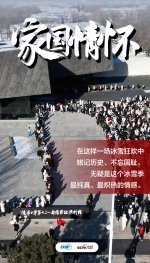
Habrin is known as the "ice city" in China, the temperature during the day in winter is usually below -20 degrees celsius. and so many visitors wait to visit the museum of 731 Japanese war crimes in the outskirts of Harbin, many have to wait in the lone queues in the freezing cold for up to one hour to get in.
This young girl passed out during her long wait in the snow

To view this content we will need your consent to set third party cookies.
For more detailed information, see our cookies page.
 
Tourists in Harbin gather at museum of Japanese war crimes
Travelers remember history in top tourist city

By Bi Mengying in Harbin
Published: Jan 15, 2024 10:55 PM

Around 9:30 am on a blisteringly cold Sunday morning in China's "ice city" Harbin, people were lining up quietly in long queues in front of a museum, which is about an 80-minute subway ride from the city's center. No one complained about waiting in the cold for more than half an hour.

Harbin has emerged as one of the top tourist destinations this winter. During the three-day New Year holiday alone, the city welcomed nearly 3.05 million visitors, raking in 5.91 billion yuan ($832 million) in tourism revenue. The enthusiasm of visitors from across the country toward Harbin has remained unabated.

Far from the hustle and bustle at these hot tourist spots in the city, the Museum of Evidence of War Crimes by the Japanese Army Unit 731 is located in Pingfang district. Yet, many visitors came here, and a lot of them were tourists from other parts of the country, dragging their luggage behind them, apparently to catch a train or flight afterward. Some were holding bouquets of white or yellow chrysanthemums, which are traditional Chinese symbols for mourning.

"Welcome to Harbin. Welcome to visit the museum," a local resident handed out small stick flags of China's national flag, greeted every visitor with a genuine smile, his face turned red from standing too long in the cold. To keep visitors warm, some local residents also set up stalls to give hot ginger tea and heating pads. The museum told the Global Times that they weren't volunteers with the museums. "They were just warm-hearted residents who live nearby and offered to help."

Unit 731 was a top-secret biological and chemical warfare research base established in Harbin in 1935 as the center of Japan's biological warfare in China and Southeast Asia during the war. In August 1945, the retreating Japanese invaders destroyed most of the facilities that produced germ weapons, which reportedly included bubonic plague, typhoid, anthrax and cholera.

In the 1980s, an exhibition hall was established to strengthen the protection and investigation of the evidence of war crimes, such as their notorious human experiments in the development of germ warfare by the Japanese Army Unit 731. In 2015, a new museum at the site was opened to the public. The new museum is divided into six exhibition rooms, displaying relics excavated from the remains of Unit 731's headquarters.

"Local schools or companies organize student visits to the museum regularly. I just live right across the street from the museum. But I have never seen so many people waiting in lines," a taxi driver told the Global Times.

During the tourism boom, some tourists visited the museum and shared their experiences on social media. A Douyin user with the handle xiaoshiya, who traveled from East China's Zhejiang Province, chose the museum as her last stop for her two-day visit to Harbin based on recommendations from netizens in Harbin.

She noted that she didn't know there was a biological warfare committed by the Japanese Army Unit 731 in Ningbo (a city in Zhejiang Province). "The excruciatingly painful memory shouldn't solely be carried by our brothers and sisters in the Northeast. It's a history that should be known and remembered by all of us," she wrote. The video has received 1.79 million likes, more than 56,000 comments, and has been shared over 182,000 times.

The museum announced on Saturday to carry out a strict reservation system, starting from Sunday, to maintain its daily maximum reception to 12,000 visitors. "Since the New Year holiday this year, the number of visitors to the museum has surged significantly," said the announcement.

"Visitors will be admitted to the museum during their reserved time slot upon presenting their ticket code. Visitors who have not made a reservation can enter our museum's lecture hall under the guidance of staff to watch the documentary on the Japanese Army Unit 731 (each session not exceeding 200 people) or visit the core area of the site. They may enter the museum to visit only after all reserved visitors have been admitted."

On Monday, the museum issued another announcement that it was opening the museum on Mondays to better address the situation.

Inside the museum, there was a pillar-shaped installation with names of victims on the top and some running numbers below. "The numbers are increasing one by one, standing for the loss of one life of our people," the museum introduced. In silence, visitors laid down China's national flags in memory of the victims who lost their lives to the atrocities committed by the Japanese Army Unit 731.

Many visitors shared videos of them walking inside a long, dark tunnel toward the end of the exhibition on social media, with a caption that went viral online. "Don't look back. Keep walking. At the other end of the tunnel, there's light, the simple beauty of life, the prosperity of our country and the peaceful life of our people. Yet don't forget the journey we weathered through to get here."

 
Huge crowds brave the freeze waiting for hours to visit The Museum of 731 Japanese war crimes

rBABCWWtt2CAUcG1AAAAAAAAAAA215.800x1400.750x1313.jpg
调整大小 v2-b9fc58554a3533c7aa4392ee31b2ce9b_720w.jpg
调整大小 rBABC2Wtt2GAT9a2AAAAAAAAAAA674.1259x839.750x500.png
 
Status
Not open for further replies.

Users who are viewing this thread

Pakistan Defence Latest

Back
Top