
Navigation
Install the app
How to install the app on iOS
Follow along with the video below to see how to install our site as a web app on your home screen.
Note: This feature may not be available in some browsers.
More options
Style variation
You are using an out of date browser. It may not display this or other websites correctly.
You should upgrade or use an alternative browser.
You should upgrade or use an alternative browser.
Just a Nice Pic
- Thread starter Fatman17
- Start date
More options
Who Replied?
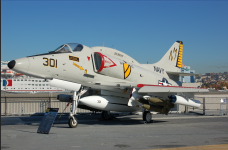
AZ_HighCountry
INT'L MOD
And for the jarheads:
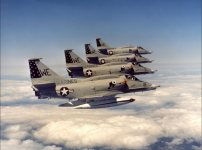
AZ_HighCountry
INT'L MOD
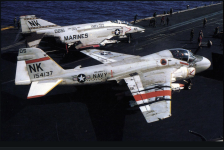
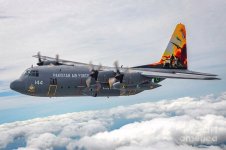
On board USS Coral Sea 1980

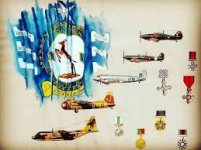
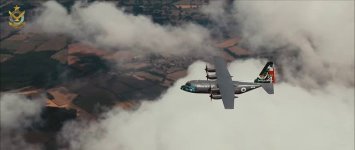
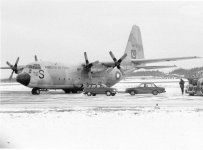
AZ_HighCountry
INT'L MOD
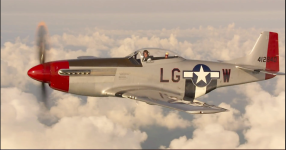
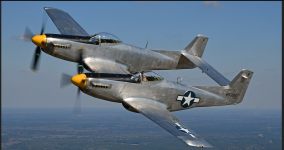
Yes, Maverick really does own his own P-51. He once landed at Marana Field in Marana, AZ several years ago during the filming of Top Gun: Maverick.
AZ_HighCountry
INT'L MOD
FIFY. I'm a little persnickety in that regard.Jarheads = Marines
Rust-pickers = Navy

Fatman17
THINK TANK: CONSULTANT
- Thread starter
- #474
VICTORY IN ITALY
- Aviation Features
- Victory in Italy
By THOMAS McKELVEY CLEAVER
26th March 2025
FEATURE
With World War Two approaching a conclusion, the climactic air combats during the last days of the Italian campaign are documented.
Spring finally arrived in northern Italy in mid-March 1945 as the deep snow in the Apennine Mountains began to melt. The war was in what turned out to be its final stages, with the battle for Europe reaching a desperate climax.
At the end of the month, 1st Lt Dave Lewis of the USAAF’s P-47-equipped 57th Fighter Group (FG) wrote in his diary about ‘the big picture’ as he saw it: “During the last weeks of the winter, the fifteen daily missions the group flies had become somewhat frustrating because there weren’t as many juicy targets left to shoot up, but the flak was still intense. Everyone was thinking that the way had been cleared so when does the offensive start? On a few occasions, the group escorted bombers into Austria without losing a single bomber under its control.”

‘Yellow Tail Mustangs’ – a superb colour view of North American P-51D Mustangs from the 52nd Fighter Group in 1944. Nearest the camera is 44-13287 WD-M ‘Miss Ruth’
USAAF/NARA
The finale to the war in Italy saw the 57th Bomb Wing’s (BW) North American B-25 Mitchell bombers leave Corsica in early April, a year after their arrival, for bases on the mainland. With new targets in Austria and northern Yugoslavia, and the front lines in the Apennines moving north, Corsica was too distant to allow the bombers to operate with full loads.
Gaining ground in Italy had been a long and hard struggle. The previous year, 1944, had notably seen the arrival of the 332nd Fighter Group, better known as the Tuskegee Airmen. Operating out of Ramitelli airfield and flying red-tailed North American P-51 Mustangs, they escorted Fifteenth Air Force bombing raids into Czechoslovakia, Austria, Hungary, Poland, and Germany. The unit, famously comprising all-black fighter pilots, earned an impressive combat record.

A Boeing B-17G Flying Fortress of the 97th Bomb Group hits the Gothic Line in 1945
USAAF/ NARA
The 57th’s 310th Bomb Group (BG) began the move from Ghisonaccia to Fano, an airfield on the Adriatic coast, on March 30, 1945. The main group arrived on April 6 and the entire move was finished by the 10th. Everyone was impressed that Fano was a well-built seaside town located at the end of the old Roman Via Flaminia, an ancient high road that had escaped the ravages of war. The airfield was located a mile south of the town. The new quarters were long, single-storey structures which had been divided into three-room apartments. Most importantly for the groundcrews, there were dedicated hangars for maintenance work.
The 321st BG commenced its move from Solenzara to Falconara airfield on the Adriatic coast on March 31, when the advance ground echelon departed for the mainland. The group flew its first mission from Falconara on April 5, when Dan Bowling, a newly promoted captain, led 20 bombers as the 321st’s contribution to an 80-aircraft strike against German Defence Area ‘Harry’, where they dropped fragmentation bombs on troop positions and gun emplacements. While sorties were still flown to hit targets in the Brenner Pass, situated on the Italian border with Austria, the focus was now on missions directly supporting the forthcoming Allied ground offensive.

Lockheed P-38 Lightning 43-28650 ‘Nellie Ann’ of the 82nd Fighter Group, the top-scoring P-38 group in the Mediterranean theatre
USAAF/NARA
Mitchells in action
On April 4, the 340th BG commenced its move to Rimini, south of Venice on the Adriatic coast. Morale perked up when it was discovered that quarters would be in Miramare and Riccione, which were fashionable summer resorts that had been popular with holidaymakers before the war. After nearly three years under canvas from North Africa onwards, they would be indoors at last.The 340th’s war diarist wrote: “The rooms have running water, are wired for lights, and have suffered no bomb or shell damage. Everybody is blinking with amazement at finding himself plunked down in these pleasant little towns with fairly well-dressed people, attractive girls, and small shops.”
All the wing’s personnel quickly discovered the widespread presence of military police. The days back on Corsica of not worrying whether one had shaved, if clothes were oil stained, and that all officers were saluted properly by enlisted men were gone. Crew chief Fred Lawrence noted in his diary that “people are complaining about having rejoined the Army.”
The final Allied offensive in Italy began with massive aerial and artillery bombardments on April 9, 1945. The 57th FG flew 30 missions that day, targeting enemy command posts and heavy artillery positions. Groundcrews worked with renewed vigour, seeing the tangible results of their work.
Meanwhile, the 57th BW were now operating with “maximum effort” to support the Allied armies. All three groups and the 12 component squadrons flew multiple missions every day. Capt Jackson, the 321st BG war diarist, wrote on April 11: “With the new Italian offensive rolling along, the target for today was the Argenta Reserve Area. Wing called for another maximum effort day, and we came through with 48 Mitchells taking off at 0758 hours, and 24 more taking off at 0853 hours. The past three days, briefings have begun in the early morning darkness, but no one seems to mind, just so the offensive keeps going.”
Mission 846, bombing the troop assembly area at Argenta in front of the Eighth Army’s Australian division, was Capt Dan Bowling’s 60th and most memorable mission of the war. He led eighteen 445th Bomb Squadron (BS) Mitchells at the head of 48 B-25s from all four 321st group squadrons in Flo, one of the newest bombers in the 445th.
The pre-mission briefing had emphasized that timing was of the essence. It was feared that the two German divisions at Argenta were ready to mount a counterattack. Bowling and his bombardier Joe Silnutz were told Allied troops would light smoke pots to mark their lines; the target was very close to the Allied positions. “If the white smoke changes to yellow, do not bomb,” they were told, as yellow smoke would mean the Allied troops had started their attack.
The thousands of fragmentation bombs they were to drop over the enemy would give Allied troops the cover needed when they commenced their advance. Bowling asked for information regarding the defences and was told there were over 200 anti-aircraft guns. “We were to bomb at 10,500 feet and 200 miles per hour,” he recalled. “This was the most heavily defended target we had gone against. I knew it was going to be tough.”

A P-51D Mustang of the USAAF’s 31st Fighter Group. The aircraft displays 13 ‘kill’ markings
USAAF/NARA

Republic P-47D Thunderbolt 'Torrid Tessie' of the 346th Fighter Squadron escorting bombers while being flown by Lt Homer St Onge on February 25, 1945
USAAF
Take-off time was confirmed to be 0758hrs. A preview of things to come came when it took three tries to get Flo’s right engine to turn over and start. When Bowling stopped short of the runway to make his pre-flight check, there was a sharp drop on the right engine magnetos. With one turn over the field for joinup, Bowling led the 48 Mitchells on a 40-minute flight over the Adriatic to Ravenna, the point where they turned inland to head for Argenta. “When we were climbing to 10,500 feet, I realized the plane was very sluggish,” he wrote. “When we got to altitude, I had to set the engines at nearly full throttle to maintain 200mph, and the cylinder head temperatures on both engines were nearly at the red line.
“I had to do something to save the engines, so I notified the formation I was reducing speed [by] 20mph and climbing 500 feet. Three minutes from the target, we would dive back down to the correct altitude and pick up the right speed.” It was crucial that the bombers were flying at the right speed and altitude when they dropped their loads; those were the settings in the Norden bombsights.
The formation arrived over the target three minutes early. Bowling increased power and dived back to 10,500 feet, picking up speed to 200mph. When the bombers turned on to their run, co-pilot Mitchell announced he could see yellow smoke on the ground. Silnutz replied: “Bomb doors closing.” Sensing something wrong, Bowling screamed at Silnutz to re-open the doors. “Roll forward six or seven hundred feet and bomb! I’ll take the blame!”
Mitchell argued they were too late. “Then the flak was all around us,” Bowling remembered. “The plane on our right was hit twice and gone. I pulled to the right and had both engines past the red line, waiting for the explosion.” The formation followed. Enemy gunners then put a solid field of fire right into the place they would have been. Bowling turned back left and 45 seconds later Silnutz called “bombs away!”
Bowling immediately rolled left and reduced power. “The engines sounded ready to blow, so I got us headed back to the Adriatic, where at least we’d have a chance of being picked up. Moments later, the cylinder head temperatures came back down to red line.”
When the bombers returned to Ancona, there were two jeeps with four officers waiting at Flo’s hardstand. “I thought we’d done it, hit our own troops,” Bowling rued. Silnutz and Mitchell climbed out while Bowling shut down. “I saw it was the intel officer, ops officer, group bombardier and the deputy group CO. I figured we’d had it. And then they grabbed Silnutz and Mitchell and were shaking their hands.” When Bowling crawled out, he was told the mission had been perfect – they had hit the enemy directly on target with a 100 percent drop.

Five pilots of the 332nd Fighter Group, popularly known as the Tuskegee Airmen, at Ramitelli airfield. Left to right: Lt Dempsey W Morgan, Lt Carroll S Woods, Lt Robert H Nelson Jr, Capt Andrew D Turner, and Lt Clarence P Lester
USAAF
Fatman17
THINK TANK: CONSULTANT
- Thread starter
- #475
The next day, Bowling was informed by Line Chief Master Sgt Mitchell that Flo’s engines had not been re-set after she arrived in the group. When crossing the South Atlantic, engine power settings were adjusted for long-range cruise power needed for the lengthy delivery flight. It had been a stroke of good fortune that Bowling had not lost both engines on his attack run.
He learned the officer in charge of setting the smoke pots on the ground had mistakenly fired the flare for lighting the yellow rather than the white pots. Troops reported the Germans were in shock from the bombing. Several thousand had been killed or wounded, and the Australians took over 3,500 prisoners.

One of the Tuskegee Airmen’s distinctive redtailed P-51D Mustangs at Ramitelli airfield in Italy
USAAF
The 57th FG’s 1st Lt Harm Diers’ most memorable mission occurred on April 25. Now an experienced element leader, Diers was flying his Republic P-47 Thunderbolt on an armed reconnaissance mission with his wingman near Lake Garda, the beautiful long narrow lake in northern Italy, walled on its eastern bank by steep cliffs rising vertically, and pierced by highway tunnels. The main route to the Brenner Pass ran along the lake’s eastern edge. “Flying over the lake, I noticed a large oil or gasoline tank truck stopped near the mouth of a tunnel through the cliffs,” he recalled. Since he was out of position to make a run at the truck, Diers directed his wingman to attack it. “He claimed he couldn’t see it, so I got into position and dived to strafe the truck, wondering why it hadn’t taken cover in the tunnel opening. I soon found out. It was a trap, using the truck as bait!”

Capt Dan Bowling of the 445th Bomb Squadron, 321st Bomb Group. Fellow pilots described him as “the group leader; that's different from the group commander.”
USAAF
Anti-aircraft guns immediately opened up on the P-47, firing not just from the tunnel, but from the cliff above the tunnel, and hillside positions to either side of the road. “I was flying almost at water level over the lake when I was hit. I called on my wingman to come down and help me, but he said, ‘They’re shooting at you!’ (as if I didn’t know it) so I just radioed back, ‘Let’s get out of here!’”
Diers engaged the emergency water injection system, giving him a 20 percent boost in horsepower. “The system was intended for just such a time as I was having. But it has one negative drawback - when used, it created a dark trail of smoke, which the German gunners saw and interpreted as evidence that they made a hit. They thus assumed that I was really damaged and so concentrated their fire. Black puffs of explosions surrounded me, but that wonderful P-47 roared on.” He pulled back on the stick and gradually gained altitude where he located his wingman, and made it back home safely, “thanking the ‘angel on my shoulder’ once more.”
The mission proved to be ‘hot’, with intense German flak reaching for the bombers. B-25 27, a survivor of Cassino, southern France, the first assault on the Gothic Line (the major Axis defence line in the Apennines) and the Battle of the Brenner, had its left engine knocked out by flak and set afire. Shrapnel slashed the thin aluminium skin, wounding bombardier Sgt Robert Lattin, turret gunner Staff Sgt Joseph Dalpos, radioman Sgt Henry Nichols and tailgunner Sgt George W Darnielle. The latter baled out, but tragically his parachute failed to open. Pilot Jackson was able to keep 27 in the air until they crossed Allied lines, and he crash-landed at the first airfield he spotted. Jackson and his co-pilot pulled the wounded bombardier out of the nose and ran from the burning bomber before it exploded minutes later. The unfortunate Sgt Darnielle was the last member of the 57th BW to be killed in action. Mission 897 proved to be the 321st’s last mission of the war.

North American B-25 Mitchells of the USAAF’s 321st Bomb Group unleash their load over German positions in Italy
USAAF
On April 28, the bomb group’s war diarist Capt Jackson noted: “Well, it looks like the inevitable has happened, because without doubt, we have run out of targets. Today was a good flying day, but wing did not assign any targets. The battle lines are more fluid than ever before, and wherever our troops haven’t entered, reports are that the partisans are holding the towns. Milan, Turin and Venice were taken over by the partisans and our forces moved up to make connection with them. It seems that the Allied command is reluctant to assign targets to us because of the possibility of assigned objectives [having been] already taken by rapidly moving ground forces. The day climaxed with an announcement from General Clark that ‘German resistance in Italy has virtually been eliminated’.” That day, Benito Mussolini and his mistress, Clara Petacci, were captured by partisans while they were attempting to escape to Switzerland. They were taken to Milan, where they were shot and killed, their bodies strung up by their heels from a service station sign while the people celebrated the death of their dictator.
The German Army Group C retreated on all fronts, having lost most of its fighting strength. By April 29, Gen Heinrich von Vietinghoff, the commander who had stymied Allied armies from Salerno to the Gothic Line, had little option left but to surrender. That morning, he signed the instrument of surrender, with hostilities to formally end on May 2, 1945. Capt Jackson wrote: “After almost two-and-a-half years of slugging, bombing, mud and mountains, the enemy collapsed practically overnight, and the Italian campaign closed in a blast of superlatives. We’ve made greater gains than any other theater, we’ve taken the biggest bag of prisoners on all fronts, we’re the first theater to wind up, and we’re the first to receive an unconditional surrender from an army group. As for the group, we just wound up our busiest month in existence and set a lot of records for future operations to aim at.”

Tuskegee Airmen veterans stand alongside a P-51D Mustang at Luke Field, Arizona, in either January or February 1946
San Diego Air and Space Museum Archive
Losses in the 57th and 350th FGs, the P-47 units most directly involved in the campaign, were 35 and 40 percent of flying personnel, respectively. By the end of the war, the 57th FG’s 64th FS commander Lt Col Gil Wymond, the only original member of the group still in combat, had flown across Africa to Egypt in the summer of 1942 to bring the first American reinforcements, and then fought over the Western Desert, Tunisia, Pantelleria, Sicily and Italy. He flew P-47D-30-RE Thunderbolt Hun Hunter XVI.
The 57th’s 21-year-old group operations officer Maj Michael McCarthy reflected on how he and the group had survived the war. “One distinguishing characteristic of our performance was the willingness to take care of each other,” he wrote. “True leadership is unselfish. When you take risks to care for your people, the attitude is contagious and will always pay dividends far beyond your expectations. The fallout in loyalty, respect, dedication, and esprit de corps contributed to the ability of the unit to get tough jobs done with better results.”
On Memorial Day, May 30, 1945, Fifth Army commander Gen Lucian K Truscott Jr came to the Sicily-Rome American Cemetery in Nettuno, Italy, to give a speech dedicating the cemetery on behalf of America and President Harry Truman. The speech was not recorded, but GI cartoonist Bill Mauldin, who chronicled the Italian campaign through his characters Willie and Joe, was there. He later wrote of the event in his memoir The Brass Ring:
“The general’s remarks were brief and extemporaneous. He apologized to the dead men for their presence here. He said everybody tells leaders it is not their fault that men get killed in war, but that every leader knows in his heart this is not altogether true. He said he hoped anybody here through any mistake of his would forgive him, but he realized that was asking a hell of a lot under the circumstances. He would not speak about the glorious dead because he didn’t see much glory in getting killed if you were in your late teens or early twenties. He promised that if in the future he ran into anybody, especially old men, who thought death in battle was glorious, he would straighten them out. He said he thought that was the least he could do.”
Adapted from Mediterranean Sweep - The USAAF in the Italian Campaign (Osprey) by Thomas McKelvey Cleaver
He learned the officer in charge of setting the smoke pots on the ground had mistakenly fired the flare for lighting the yellow rather than the white pots. Troops reported the Germans were in shock from the bombing. Several thousand had been killed or wounded, and the Australians took over 3,500 prisoners.
Lake Garda Thunderbolts
On April 18, British Eighth Army units broke through the Argenta Gap, sending armour to encircle the Tenth Army and meet the American IV Corps advancing from the Apennines. Three days later, the Polish Third Carpathian Division and Italian Friuli Group, and the Fifth Army’s 34th Infantry Division, entered Bologna and the Germans retreated from the Po River Valley.
One of the Tuskegee Airmen’s distinctive redtailed P-51D Mustangs at Ramitelli airfield in Italy
USAAF
The 57th FG’s 1st Lt Harm Diers’ most memorable mission occurred on April 25. Now an experienced element leader, Diers was flying his Republic P-47 Thunderbolt on an armed reconnaissance mission with his wingman near Lake Garda, the beautiful long narrow lake in northern Italy, walled on its eastern bank by steep cliffs rising vertically, and pierced by highway tunnels. The main route to the Brenner Pass ran along the lake’s eastern edge. “Flying over the lake, I noticed a large oil or gasoline tank truck stopped near the mouth of a tunnel through the cliffs,” he recalled. Since he was out of position to make a run at the truck, Diers directed his wingman to attack it. “He claimed he couldn’t see it, so I got into position and dived to strafe the truck, wondering why it hadn’t taken cover in the tunnel opening. I soon found out. It was a trap, using the truck as bait!”
Capt Dan Bowling of the 445th Bomb Squadron, 321st Bomb Group. Fellow pilots described him as “the group leader; that's different from the group commander.”
USAAF
Anti-aircraft guns immediately opened up on the P-47, firing not just from the tunnel, but from the cliff above the tunnel, and hillside positions to either side of the road. “I was flying almost at water level over the lake when I was hit. I called on my wingman to come down and help me, but he said, ‘They’re shooting at you!’ (as if I didn’t know it) so I just radioed back, ‘Let’s get out of here!’”
Diers engaged the emergency water injection system, giving him a 20 percent boost in horsepower. “The system was intended for just such a time as I was having. But it has one negative drawback - when used, it created a dark trail of smoke, which the German gunners saw and interpreted as evidence that they made a hit. They thus assumed that I was really damaged and so concentrated their fire. Black puffs of explosions surrounded me, but that wonderful P-47 roared on.” He pulled back on the stick and gradually gained altitude where he located his wingman, and made it back home safely, “thanking the ‘angel on my shoulder’ once more.”
More advances
While the end of the war was expected to come soon, there was – sadly – still time for fighting and dying. On April 25, the 321st flew Mission 895, to bomb the Cavarzere road bridge. The flight was led by 445th BS Capt Wayne Kendall in Spirit of Portchester, with nine other Mitchells. The nine accompanying 446th BS bombers included the veteran 27, flown by 1st Lt Roland Jackson. The formation was rounded out by three bombers from the 447th.The mission proved to be ‘hot’, with intense German flak reaching for the bombers. B-25 27, a survivor of Cassino, southern France, the first assault on the Gothic Line (the major Axis defence line in the Apennines) and the Battle of the Brenner, had its left engine knocked out by flak and set afire. Shrapnel slashed the thin aluminium skin, wounding bombardier Sgt Robert Lattin, turret gunner Staff Sgt Joseph Dalpos, radioman Sgt Henry Nichols and tailgunner Sgt George W Darnielle. The latter baled out, but tragically his parachute failed to open. Pilot Jackson was able to keep 27 in the air until they crossed Allied lines, and he crash-landed at the first airfield he spotted. Jackson and his co-pilot pulled the wounded bombardier out of the nose and ran from the burning bomber before it exploded minutes later. The unfortunate Sgt Darnielle was the last member of the 57th BW to be killed in action. Mission 897 proved to be the 321st’s last mission of the war.
North American B-25 Mitchells of the USAAF’s 321st Bomb Group unleash their load over German positions in Italy
USAAF
On April 28, the bomb group’s war diarist Capt Jackson noted: “Well, it looks like the inevitable has happened, because without doubt, we have run out of targets. Today was a good flying day, but wing did not assign any targets. The battle lines are more fluid than ever before, and wherever our troops haven’t entered, reports are that the partisans are holding the towns. Milan, Turin and Venice were taken over by the partisans and our forces moved up to make connection with them. It seems that the Allied command is reluctant to assign targets to us because of the possibility of assigned objectives [having been] already taken by rapidly moving ground forces. The day climaxed with an announcement from General Clark that ‘German resistance in Italy has virtually been eliminated’.” That day, Benito Mussolini and his mistress, Clara Petacci, were captured by partisans while they were attempting to escape to Switzerland. They were taken to Milan, where they were shot and killed, their bodies strung up by their heels from a service station sign while the people celebrated the death of their dictator.
The German Army Group C retreated on all fronts, having lost most of its fighting strength. By April 29, Gen Heinrich von Vietinghoff, the commander who had stymied Allied armies from Salerno to the Gothic Line, had little option left but to surrender. That morning, he signed the instrument of surrender, with hostilities to formally end on May 2, 1945. Capt Jackson wrote: “After almost two-and-a-half years of slugging, bombing, mud and mountains, the enemy collapsed practically overnight, and the Italian campaign closed in a blast of superlatives. We’ve made greater gains than any other theater, we’ve taken the biggest bag of prisoners on all fronts, we’re the first theater to wind up, and we’re the first to receive an unconditional surrender from an army group. As for the group, we just wound up our busiest month in existence and set a lot of records for future operations to aim at.”
Tuskegee Airmen veterans stand alongside a P-51D Mustang at Luke Field, Arizona, in either January or February 1946
San Diego Air and Space Museum Archive
Final Reckoning
During the Battle of the Brenner Pass between November 6, 1944, and April 9, 1945, supplies for the German armies had been cut by some 80 percent, leading to the swift finale. The 57th BW flew 380 missions in the campaign, during which 10,267 tons of bombs were dropped. A total of 46 B-25s were lost, while 532 were flak-damaged, with 500 aircrew killed or wounded.Losses in the 57th and 350th FGs, the P-47 units most directly involved in the campaign, were 35 and 40 percent of flying personnel, respectively. By the end of the war, the 57th FG’s 64th FS commander Lt Col Gil Wymond, the only original member of the group still in combat, had flown across Africa to Egypt in the summer of 1942 to bring the first American reinforcements, and then fought over the Western Desert, Tunisia, Pantelleria, Sicily and Italy. He flew P-47D-30-RE Thunderbolt Hun Hunter XVI.
The 57th’s 21-year-old group operations officer Maj Michael McCarthy reflected on how he and the group had survived the war. “One distinguishing characteristic of our performance was the willingness to take care of each other,” he wrote. “True leadership is unselfish. When you take risks to care for your people, the attitude is contagious and will always pay dividends far beyond your expectations. The fallout in loyalty, respect, dedication, and esprit de corps contributed to the ability of the unit to get tough jobs done with better results.”
On Memorial Day, May 30, 1945, Fifth Army commander Gen Lucian K Truscott Jr came to the Sicily-Rome American Cemetery in Nettuno, Italy, to give a speech dedicating the cemetery on behalf of America and President Harry Truman. The speech was not recorded, but GI cartoonist Bill Mauldin, who chronicled the Italian campaign through his characters Willie and Joe, was there. He later wrote of the event in his memoir The Brass Ring:
“The general’s remarks were brief and extemporaneous. He apologized to the dead men for their presence here. He said everybody tells leaders it is not their fault that men get killed in war, but that every leader knows in his heart this is not altogether true. He said he hoped anybody here through any mistake of his would forgive him, but he realized that was asking a hell of a lot under the circumstances. He would not speak about the glorious dead because he didn’t see much glory in getting killed if you were in your late teens or early twenties. He promised that if in the future he ran into anybody, especially old men, who thought death in battle was glorious, he would straighten them out. He said he thought that was the least he could do.”
Adapted from Mediterranean Sweep - The USAAF in the Italian Campaign (Osprey) by Thomas McKelvey Cleaver
AZ_HighCountry
INT'L MOD
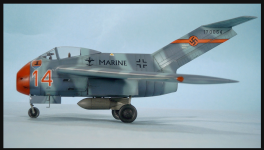
A shame this never made it into production and the air. Would have been an awesome plane. Not hard to see where the MiG-15 got its start in life.
AZ_HighCountry
INT'L MOD
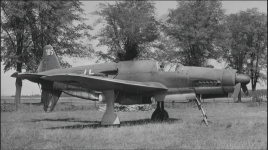
From the "Too little too late" files:
AZ_HighCountry
INT'L MOD

Users who are viewing this thread
Total: 1 (members: 0, guests: 1)
Pakistan Defence Latest


Country Watch Latest


Latest Posts
-
-

-

-
-
 FlyDubai Incident: Pilot was stabbed on flight to Israel - diverted to Saudi Arabia (17 Viewers)
- Latest: Hakwa Nadro