Navigation
Install the app
How to install the app on iOS
Follow along with the video below to see how to install our site as a web app on your home screen.
Note: This feature may not be available in some browsers.
More options
Style variation
You are using an out of date browser. It may not display this or other websites correctly.
You should upgrade or use an alternative browser.
You should upgrade or use an alternative browser.
Beautiful Pakistan
- Thread starter ghazi52
- Start date
More options
Who Replied?


ghazi52
THINK TANK: CONSULTANT
- Thread starter
- #182
Basho Valley: The Hidden Gem of Pakistan
Amara HassanDecember 2, 2023

Basho valley: The least explored place in Skardu, Pakistan. (All photos by author)
Yahoo is using AI to generate takeaways from this article. This means the info may not always match what's in the article. Reporting mistakes helps us improve the experience.
Being a mountain person is like having a love affair with nature — a connection that captivates you with its indescribable charm. The rugged landscapes, the crisp mountain air, and the tranquil surroundings make my soul dance with life. Whether facing majestic peaks or listening to leaves rustling in the wind, there’s a simple enchantment in the mountains that brings me peace and joy.
When the yearning for a breath of fresh mountain air strikes, my compass always directs me to Northern Pakistan. Renowned worldwide for its natural beauty, it has become my sanctuary for a rejuvenating escape. The landscapes aren't just stunning; they're like poetry in motion, and the serene atmosphere acts like a balm for my spirit, always leaving me refreshed.
Two years ago, I embarked on such a journey to the breathtaking Skardu with my family—a trip etched in my heart with profound gratitude. The sheer magnificence and beauty left me in awe; it wasn’t just a trip, but a soul-stirring experience. Come on join me on this beautiful journey!

Capturing the beauty of valley.
Basho Valley-Skardu
Have you ever visited a place that took your breath away? Well Basho Valley is just like that!
Nestled in Skardu, Pakistan, this valley is like stepping into a dream. Imagine vast, stunning landscapes widening your eyes in awe, mountains wearing blankets of snow, and air so crisp you can almost taste it. It’s not just about what you see; it’s about how the valley makes you feel.
The valley is located in the Gilgit-Baltistan region of northern Pakistan, at an elevation of 3,600 meters (11,800 feet). With its Basho Glacier and other ice wonders, it’s a stunning travel spot. Surrounded by tall mountains, it offers awesome views and loads of outdoor fun—a truly beautiful place to visit in Pakistan!
Our Thrilling Adventure to This Mini Heaven
But before reaching this mini heaven, we had to navigate death-defying trails! After an hour's drive from our hotel, we finally reached Basho Valley. It was time to switch from our SUV to a local jeep, as the roads were so narrow and steep that only their local drivers could navigate them.Our thrilling adventure to Basho started as we entered the valley through a wooden bridge hanging with ropes over a gushing river below. The sign at the start indicated that only one jeep could cross at a time.
After conquering this perilous bridge, the real twists and turns of the steep two-way road began, where barely one jeep could drive at a time. I closed my eyes to avoid watching the drive through these perilous roads, even though the breathtaking view surrounded us.
We drove for about an hour, and after this nerve-wracking trail, a mini heaven awaited us. Upon reaching the top of the valley, our mouths hung open in awe of the beauty. A lush green area with streams flowing between mountains and clouds hovering above, creating a fairytale-like scenery.

It was drizzling there, enchancing the beauty of valley.
As it drizzled, the view became even more enchanting. We sat on chairs under a big umbrella, ordered some food, and watched the kids play around the tents on the ground. Unexpectedly, the food turned out to be the best on the entire trip. The drizzle evolved into heavy rain, and with the temperature dropping, we decided to order some hot tea, which we thoroughly enjoyed.
Due to a shortage of time and the heavy rain, we had to forgo many planned activities like camping, hiking, and fishing. Nevertheless, the kids still found joy in crafting their own fishing rods and trying their luck at catching fish. The unique twist was the opportunity to have any successfully caught fish cooked on the spot, adding a delightful element to our adventurous trip.
As everything got wet, we realized we had to navigate the steep and dangerous road back before it got dark. We made the decision to leave and hopped back into our jeeps before it was too late. I must applaud the driving skills of the local drivers who safely guided us down the valley.

Photo captured on the way by author.
I was still lost in its beauty; my heart was left behind. But what makes Basho Valley truly special is the peace it brings. It’s not just a place; it’s a feeling. Standing there, you can’t help but be grateful for the simplicity of the moment, for the beauty that nature generously shares. It’s a memory that stays with you, a little piece of paradise tucked away in the mountains of Skardu.
This content is accurate and true to the best of the author’s knowledge and is not meant to substitute for formal and individualized advice from a qualified professional.
© 2023 Amara Hassan


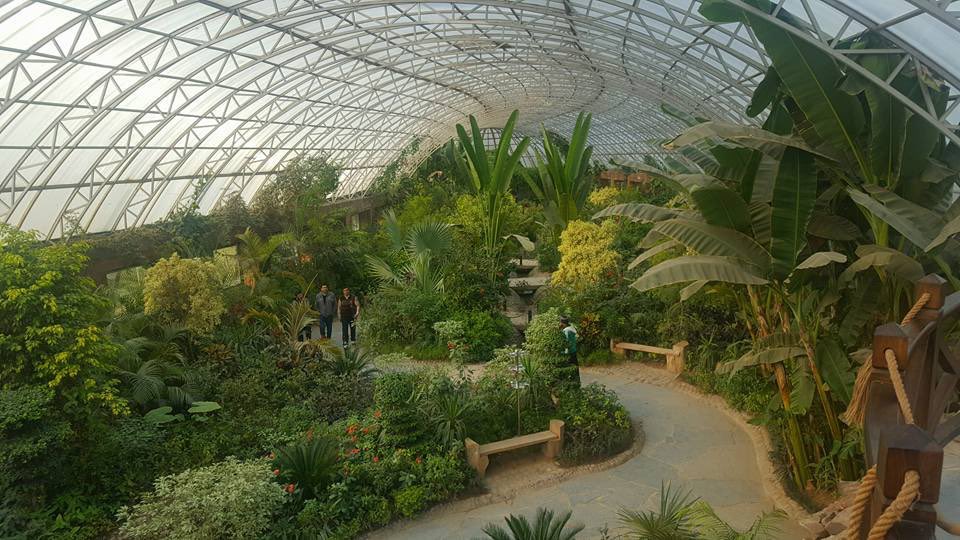
ghazi52
THINK TANK: CONSULTANT
- Thread starter
- #185
Partake in the independence spirit with a look at some of the landmarks across the country we love.
Published August 14, 2015
This is a compilation of some of the country's well known – and lesser known – landmarks, where Pakistan is looking its best.Here is to our cherished country on its 69th Independence Day. Happy birthday, Pakistan!
[The photographs were published in the DAWN National Weekend Advertiser. Photographs courtesy White Star.]
[td]
 [/td]
[/td]
Quaid-e-Azam Library
The Quaid-e-Azam Library in Bagh-e-Jinnah, a park previously known as "Lawrence Gardens", in Lahore has a collection of more than 100,000 volumes, both in English and Oriental languages (Urdu, Arabic and Persian). Special attention is being paid to the acquisition of comprehensive literature on Islam and the Muslim world.[td]
 [/td]
[/td]
Fatima Jinnah Park
Located 13 kilometres from Islamabad’s Zero Point, Fatima Jinnah Park (also known as F-9 Park) is one of Pakistan’s – and South Asia’s – largest parks.Four separate entrances lead into the park and at one of them stands a Mughal-inspired, white structure, which serves as the Park’s centrepiece. It is there that many visitors choose to pose for photographs. There is also a rock in a small pond which carries an inscription of the date when the park’s foundation stone was laid by the then Prime Minister Nawaz Sharif (June 8, 1992). However, it wasn’t until the mid-90s that that the Park was landscaped and became a full-fledged recreation spot.
[td]
 [/td]
[/td]
Hill Park
Spread over 62 acres, Hill Park is one of Karachi’s largest parks. For decades, Hill Park has been attracting visitors from all over Karachi, who come to enjoy the open space, the hilly landscape and the ‘cooler’ breeze at the top of the hill. Before the construction of high rise buildings, Hill Park was one of the best places to get a bird’s eye view of Karachi.[td]
 [/td]
[/td]
Wah Gardens
The impressive Wah Gardens were established during the Mughal era; they are easily accessible via GT Road.The Gardens were inaugurated during the 1580s by Raja Maan Singh, a general stationed at Wah during Emperor Akbar’s reign. Maan Singh and his army stayed in Wah because of the stream that flowed through the area; he also built a swimming pool and a small rest house there.
[td]
 [/td]
[/td]
Khanpur Lake
Built in 1983, the picturesque Khanpur Dam is located on Khanpur Lake, which is fed by the Haro River. It is a popular recreational venue, especially over the weekend.Visitors are rewarded with some breathtaking views. On one side stand the lush green Margallas, while on the other lies the vast expanse of the lake’s sapphire blue waters.
[td]
 [/td]
[/td]
Nishat Cinema
Located on M.A Jinnah Road, Nishat Cinema was Pakistan’s first movie theatre, and despite facing competition from cinemas that were established later, including the nearby, Bambino, Capri and Prince, which boasted 70 mm screens and plush interiors, it continued to entertain crowds for almost six decades. According to its Director, Nawab Hasan Siddiq, Nishat Cinema was inaugurated by Fatima Jinnah in 1947.Unfortunately, Nishat Cinema was burnt down during a protest in 2012, and any hope of its restoration were dashed when it was put on sale
ghazi52
THINK TANK: CONSULTANT
- Thread starter
- #186
[td]
 [/td]
[/td]
Sethi House
Sethi Mohallah is an area in the heart of the walled city of Peshawar. The Mohallah contains seven houses (including Sethi House a cultural heritage) built by the Sethis.These unique houses are a blend of the art and architecture of Gandhara and Central Asia, are rare architectural masterpieces located in the walled city.The first was built by Haji Ahmed Gul in 1882.
[td]
 [/td]
[/td]
The Ghulam Rasool Building
One of the most impressive examples of colonial architecture on Lahore's Mall remains Number 60, popularly known as the Ghulam Rasool Building.Named after Haji Ghulam Rasool Tarar, a real estate tycoon and one of Lahore’s wealthiest men of the times, the building was erected in 1916 and covers 5,000 square yards. The building is truly an architectural masterpiece; with a striking central dome, it is divided into five sections or modules with a grand staircase located in the central module. Each module is separated by a 36-inch thick stone wall.
The building now houses a number of shops on rent. Its most famous tenant remains the Ferozsons Book Shop, once the largest book store in the country.
[td]
 [/td]
[/td]
Golra Railway Station
Located near the ancient Buddhist civilisation of Taxila, Golra is strewn with splendid archaeological examples of art and artifacts.During the British Raj, Golra was considered important enough to warrant an architecturally elaborate, colonial style railway station that was built in 1882, having a stone platform. The Golra junction connected Peshawar, Kohat and Havelian via Taxila. Although railway travel has diminished over the years, the special Safari Train that departs from Golra to Rawalpindi is reminiscent of train journeys from the past.
[td]
 [/td]
[/td]
Raj Kapoor’s House
The ancestral home of legendary Indian actor, Prithviraj Kapoor, is located deep inside Dhaki Nalbandi, in a narrow street called Dhaki Munawar Shah in Peshawar. The family did not have filmi roots and it was on a whim that Prithviraj left Peshawar for Bombay, against his father’s wishes, to pursue his dream of becoming a ‘film star’ at the age of 22, in 1929.Despite its dilapidated state, the house exhibits fine craftsmanship, particularly with regard to the jharokas that adorn it. It is owned by a Peshawar-based family, although nobody lives in it anymore. Last year, the local government announced that the house would be converted into a museum, but the plans have yet to materialise.
[td]
 [/td]
[/td]
The Azadi Chowk Flyover
Constructed in a record six months at a cost of approximately five billion rupees, the Azadi Chowk Flyover stretches for 2.53 kilometres and is believed to be Pakistan’s longest signal-free corridor.It is also Pakistan’s only five-ramp flyover, (most flyovers in Pakistan usually have a maximum of two ramps) and is accessible via Ahmad Ali Road, Ravi Road, Taxali Chowk, Timber Market and Shahdara.
[td]
 [/td]
[/td]
Pakistan Chowk
Pakistan Chowk remains the go-to place for wedding planners, event managers and ambitious DIYers who need personalised invitation cards and stationery printed at reasonable rates in Karachi.Stepping into the narrow lanes of Pakistan Chowk is not for the uninitiated. The maze like streets, the wide variety of cards and designs (from the ‘classic’ red and gold shaadi cards to luxurious gold stamped ‘invites’) that can be found within myriad printers shops can be an overwhelming experience.
In the 68 years since its inception, Pakistan Chowk remains the undisputed hub of commercial printers
ghazi52
THINK TANK: CONSULTANT
- Thread starter
- #187
.
It was named after the blue-domed mausoleum of the mystic Sheikh Abdul Razzaq, believed to have travelled to Lahore from Mecca in the reign of Mughal Emperor Humayun.
The domes are gold-plated and the front of the Gurdwara is built in marble. Parakash takes place daily here.
The Gurdwara’s dome is seen in juxtaposition with the minaret of the Badshahi Mosque in the above image.
Today, the building stands out amidst its dilapidated surroundings, shining bright in the spring sunshine, adorned with engravings of the faravahar (a winged figure that represents Zoroastrianism). Although the temple is the venue where Parsis from across the city congregate to pray daily, it is most frequented on Nauroz.
The mosque is named after Sheikh Ilm-ud-din Ansari – a wazir at Emperor Shah Jehan’s court, who conceived, designed and oversaw the mosque’s construction, which began in 1634. The Mosque boasts of an impressive dome and octagonal minarets; its walls are embellished with eye-catching calligraphy.
[td]
 [/td]
[/td]
Nila Gumbad
Named after the blue-domed mausoleum of Shaikh Abdul Razzaq, the Nila Gumbad (which means ‘blue dome’) is one of Lahore’s lesser known commercial pockets and is located between Mayo Hospital and New Anarkali Road.It was named after the blue-domed mausoleum of the mystic Sheikh Abdul Razzaq, believed to have travelled to Lahore from Mecca in the reign of Mughal Emperor Humayun.
[td]
 [/td]
[/td]
Saint Andrew’s Church
Despite the cacophony that defines Saddar, Saint Andrew’s Church emanates serenity. Surrounded by verdant lawns spread over two acres, this Scottish church opened on the last day of 1868 in Karachi; it was designed by T.G. Newnhan in the Gothic style. One characterising feature of the Church are its windows.[td]
 [/td]
[/td]
Gurdwara Dera Sahib
The Sikh temple, situated opposite Lahore Fort near Badshahi Mosque, houses Ranjit Singh’s tomb. The Sikh Gurdwara was built in memory of the place where the 5th of the 10 Gurus of the Sikhs Guru Arjan Dev was martyred in June 1606 AD.The domes are gold-plated and the front of the Gurdwara is built in marble. Parakash takes place daily here.
The Gurdwara’s dome is seen in juxtaposition with the minaret of the Badshahi Mosque in the above image.
[td]
 [/td]
[/td]
Fire Temple
The Parsi Dar-e-Meher or Agyari (Fire Temple) is located on Dr Daud Pota Road, Karachi and was constructed in 1948.Today, the building stands out amidst its dilapidated surroundings, shining bright in the spring sunshine, adorned with engravings of the faravahar (a winged figure that represents Zoroastrianism). Although the temple is the venue where Parsis from across the city congregate to pray daily, it is most frequented on Nauroz.
[td]
 [/td]
[/td]
Wazir Khan Mosque
The magnificent Wazir Khan Mosque is one of Lahore’s most iconic landmarks. It can be reached by traversing along the Shahi Guzargah (Royal Trail), through the Delhi Gate.The mosque is named after Sheikh Ilm-ud-din Ansari – a wazir at Emperor Shah Jehan’s court, who conceived, designed and oversaw the mosque’s construction, which began in 1634. The Mosque boasts of an impressive dome and octagonal minarets; its walls are embellished with eye-catching calligraphy.
ghazi52
THINK TANK: CONSULTANT
- Thread starter
- #188
Kalasha Valleys – one of the most intriguing places to visit in Pakistan
The Kalasha people, one of the smallest tribal groups in Pakistan, live in the Kalasha valleys, an area close to the border with Afghanistan in the province of Khyber Pakhtunkhwa. They follow a religion which is similar to an ancient form of Hinduism, which makes the Kalasha people incredibly unique in the Muslim-majority country.The friendly Kalasha people wear colourful clothes and headdresses and celebrate their own festivals, whilst the landscape of the Bumburet, Rumbur and Biriu valleys is simply breath-taking. The Kalasha valleys is easily one of the most beautiful places to visit in Pakistan, if you’re interested in nature and unique tribal life!


Getting to the Kalash Valley in Chitral, Pakistan
I was on a three-week guided trip in Pakistan with two other girls I go to know on a travel group, who also wanted to explore the country. After having planned out an itinerary including all the best places to see in Pakistan, we contacted a well-known local guide who planned out the logistics of our trip.Our first stop on the trip was Chitral town (more on that below), the gateway to the Kalash Valley. Since we had our own driver for the full course of our three-week trip in Pakistan, we made our way from Islamabad (where we landed) to the Kalash Valley by car, stopping overnight in Chitral town.
You can travel from Islamabad to the Kalash Valley with a private car, or alternatively, if you don’t wish to hire a driver to take you all the way from Islamabad to the Kalash Valley, you could travel from Islamabad to Chitral by bus and then hire a driver in Chitral to take you straight to the Kalasha Valleys, or else take a shared taxi directly from Chitral to the Kalash Valley.

The vehicles headed directly to the Kalash valley can be located near Bank Alfalah in Chitral town and usually leave for the Valleys early afternoon. You can also take a shared car from Chitral to Ayun and then another car from Ayun to the Kalasha Valleys.
I definitely don’t recommend anybody to rent a car and drive to the Kalash valley. The roads leading there are extremely bumpy, and at time dangerous. Luckily, our driver was just great, but there are some road safety considerations you should take note of!


Karakoram Highway
The Karakoram Highway (or KKH) has perhaps become synonymous with travelling in Pakistan and is one of the main Pakistan tourist spots despite not actually being a ‘spot’, and spanning most of the north part of Pakistan.The Karakoram highway, which connects Pakistan to China, is the highest paved international road in the world. Originally, it was a caravan trail across the Karakoram mountain range, before the highway was constructed in the 60’s and 70’s.
Many of the best places to visit in Pakistan are located along the KKH, and are mentioned separately below, but the highway itself (sometimes referred to as the ‘eight wonder of the world’, as are so many other destinations around the world), should definitely be considered as a worthy attraction in itself, especially due to all the beautiful viewpoints, mountain landscape and glaciers that can be seen from the highway!
It should be noted that 5 of the 14 mountains that are taller than 8,000m are accessible via the highway.
ghazi52
THINK TANK: CONSULTANT
- Thread starter
- #189
Kalash Valley in Chitral
Indulge in the local cuisine
One of the tastiest items I got to try in the Kalash Valley is walnut bread for breakfast, locally called bilili! This is not your typical thick hunk of cake but more similar to something in between a chapati and pancake with large bits of walnuts in it. Nonetheless, it is truly delicious especially when served with spoonfuls of local honey!
Other noteworthy dishes were a hearty pumpkin stew and some delicious spinach, besides the more usual chicken and lentil dishes. Do let your host know if you are vegetarian…. you’re sure not to go hungry; the veg dishes were just as tasty as the non-veg ones!
During one of our walks, we also observed a string of thick walnuts drying in the sun. Our guide explained that the walnuts are coated in juice and left to dry until they are eaten during special occasions such as festivals. They reminded me a lot of the chuchkhela we had enjoyed so much in Georgia! I was dying to try some, but unfortunately there didn’t seem to be any occasion we could celebrate!


ghazi52
THINK TANK: CONSULTANT
- Thread starter
- #190
The people of the Kalash Valley in Chitral, Pakistan
There are currently only around 4,000 Kalash people, constituting the tiny minority in Pakistan. Their unique language is considered to be endangered by UNESCO and of course, the ethnic population itself is at risk. The Kalash people have been struggling to preserve their lifestyle, identity and animist tradition, and people frequently convert to Islam, the major religion in Pakistan.The origin of the Kalash people remains a bit of a mystery. They are thought to be either of Indo-Aryan or of Greek origin, but how they wound up in this isolated corner of the world is uncertain. Many of the Kalash people are fair-skinned with light-coloured eyes, starkly different to the darker-skinned Muslims in other areas of Pakistan.


The Kalashas are animist and have more than one deity. They observe religious festivals, during which would actually a great time to be in the Kalash Valley!
You should be aware however, that some Kalasha traditions may not be as agreeable to tourists coming from the western world. Kalasha women are considered to be impure during menstruation and pregnancy and are made to live in a house called a Bashali outside the village. Despite this, women are free to marry whomsoever they may wish, which may be considered to be a far cry from what happens in some other areas of Pakistan.


ghazi52
THINK TANK: CONSULTANT
- Thread starter
- #195
Skardu, GB
The image shows Skardu International Airport, located in Skardu, Gilgit-Baltistan, Pakistan. It is situated at an elevation of 7,316 feet above sea level, nestled between steep mountain slopes, offering passengers breathtaking views of the surrounding rugged terrain and snow-capped mountains.
Here are some key details about Skardu International Airport:
Location: Skardu, Gilgit-Baltistan, Pakistan
Elevation: 7,316 feet (2,230 meters)
IATA Code: KDU
ICAO Code: OPSD
Operator: Pakistan Civil Aviation Authority
Runway Length: 13,200 feet
Skardu Airport serves as a domestic civil airport and military airbase. It is known for its scenic beauty and challenging landings due to its high altitude and mountainous landscape. It connects to major cities in Pakistan through regular flights, including Islamabad, Lahore, Multan, Faisalabad, Sialkot, and Karachi. Pakistan International Airlines and Airblue are among the airlines that operate flights to Skardu.
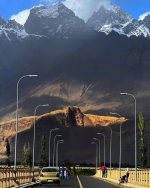
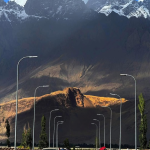
The image shows Skardu International Airport, located in Skardu, Gilgit-Baltistan, Pakistan. It is situated at an elevation of 7,316 feet above sea level, nestled between steep mountain slopes, offering passengers breathtaking views of the surrounding rugged terrain and snow-capped mountains.
Here are some key details about Skardu International Airport:
Location: Skardu, Gilgit-Baltistan, Pakistan
Elevation: 7,316 feet (2,230 meters)
IATA Code: KDU
ICAO Code: OPSD
Operator: Pakistan Civil Aviation Authority
Runway Length: 13,200 feet
Skardu Airport serves as a domestic civil airport and military airbase. It is known for its scenic beauty and challenging landings due to its high altitude and mountainous landscape. It connects to major cities in Pakistan through regular flights, including Islamabad, Lahore, Multan, Faisalabad, Sialkot, and Karachi. Pakistan International Airlines and Airblue are among the airlines that operate flights to Skardu.
Users who are viewing this thread
Total: 3 (members: 0, guests: 3)
Pakistan Defence Latest
-
-
 KP govt backs out of counterterrorism commitments during talks: Naqvi (5 Viewers)
- Latest: hydrabadi_arab
-

-
Country Watch Latest

Latest Posts
-
-
 Makkah Defence Alliance: Turkey, Saudi Arabia, and Pakistan, news & updates (67 Viewers)
- Latest: Yasser76
-
KP govt backs out of counterterrorism commitments during talks: Naqvi (5 Viewers)
- Latest: hydrabadi_arab
-

-
