China “Outproducing” US In Fighter Jets; Can “Deny” Air Superiority In First Island Chain: Top Commander

Beijingwalker

VIP Member
Joined
Nov 4, 2011
Messages
91,996
Reaction score
112,948
Reputation
2,146.6
Country of Origin
Country of Residence

China “Outproducing” U.S. In Fighter Jets; Can “Deny” Air Superiority In First Island Chain: Top Commander​

By Sumit Ahlawat
-April 23, 2025

After building the world’s largest maritime fighting force, China has gained a 1.2 to 1 production rate advantage over the US in fighter jets. Together with modern fifth-generation combat aircraft and advanced ‘long-range’ air-to-air missiles, Beijing can prevent the US from achieving air superiority within the key first island chain, a top US Commander has warned.

Admiral Samuel Paparo, the head of U.S. Indo-Pacific Command, told the US Senate Armed Services Committee that China is rapidly advancing its air combat capabilities, and Beijing is in a position to “deny” the US air superiority in the first island chain, the strategic archipelagos in East Asia comprising Taiwan, Japan, and the Philippines.

“China’s unprecedented aggression and military modernization poses a serious threat to the homeland, our allies, and our partners (in the Indo-Pacific),” Admiral Paparo warned the Senate Committee earlier this month, adding that in 2024, the People’s Liberation Army (PLA) increased its military pressure on Taiwan by “300 percent.”

Furthermore, Admiral Paparo emphasized that, after building the world’s largest naval force, China is also rapidly developing its air combat capabilities.

“China is outproducing the United States in air, missile, maritime, and space capability and accelerating these,” he said.

China’s Rising Air Combat Capabilities

Discussing China’s growing air combat capabilities, Admiral Paparo informed the Senate Armed Services Committee that China has 2,100 fighters and 200 H-6 bombers.

Further, Admiral Paparo warned that China is “producing fighters at a rate of 1.2 to 1 over the United States.”

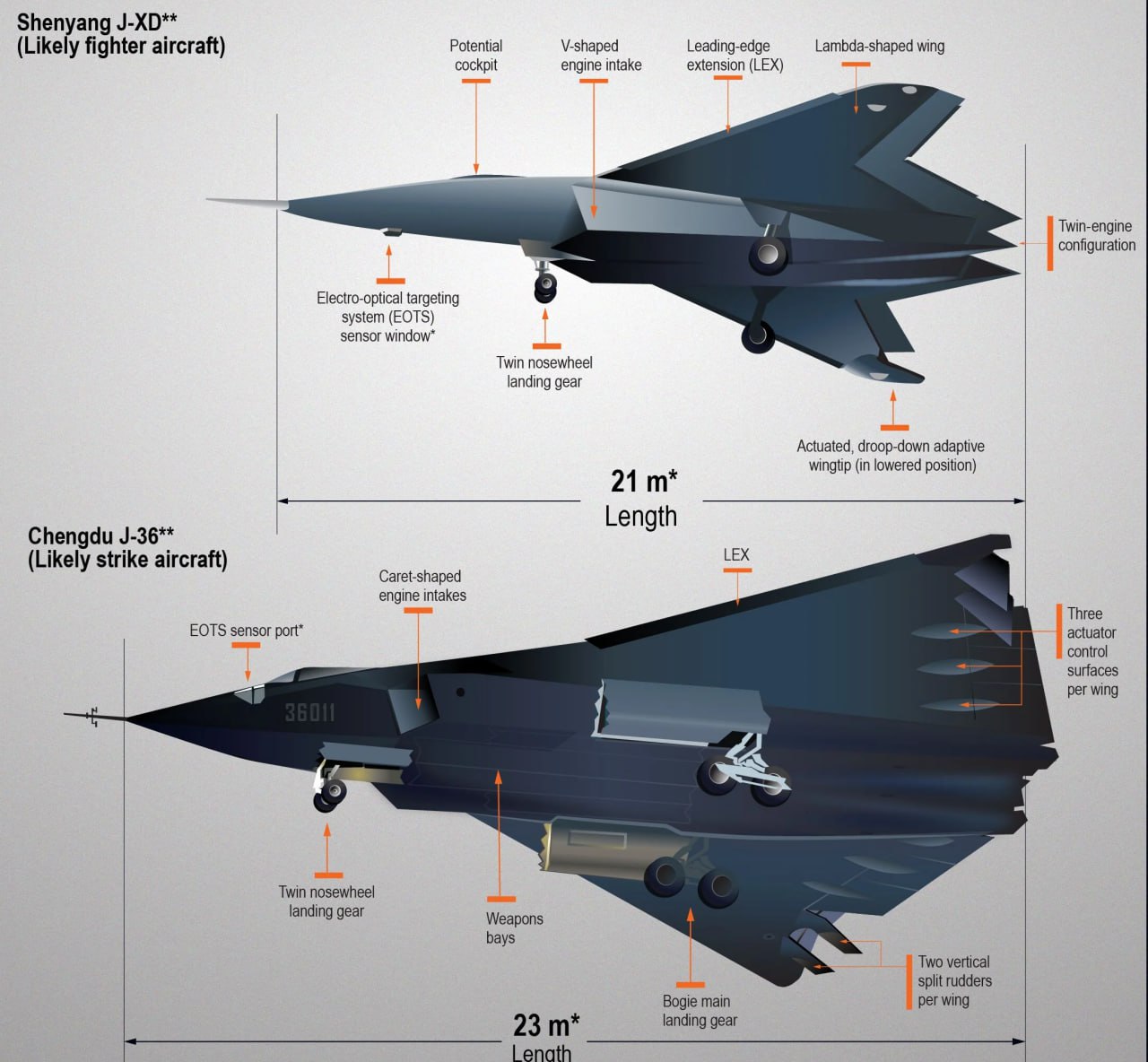
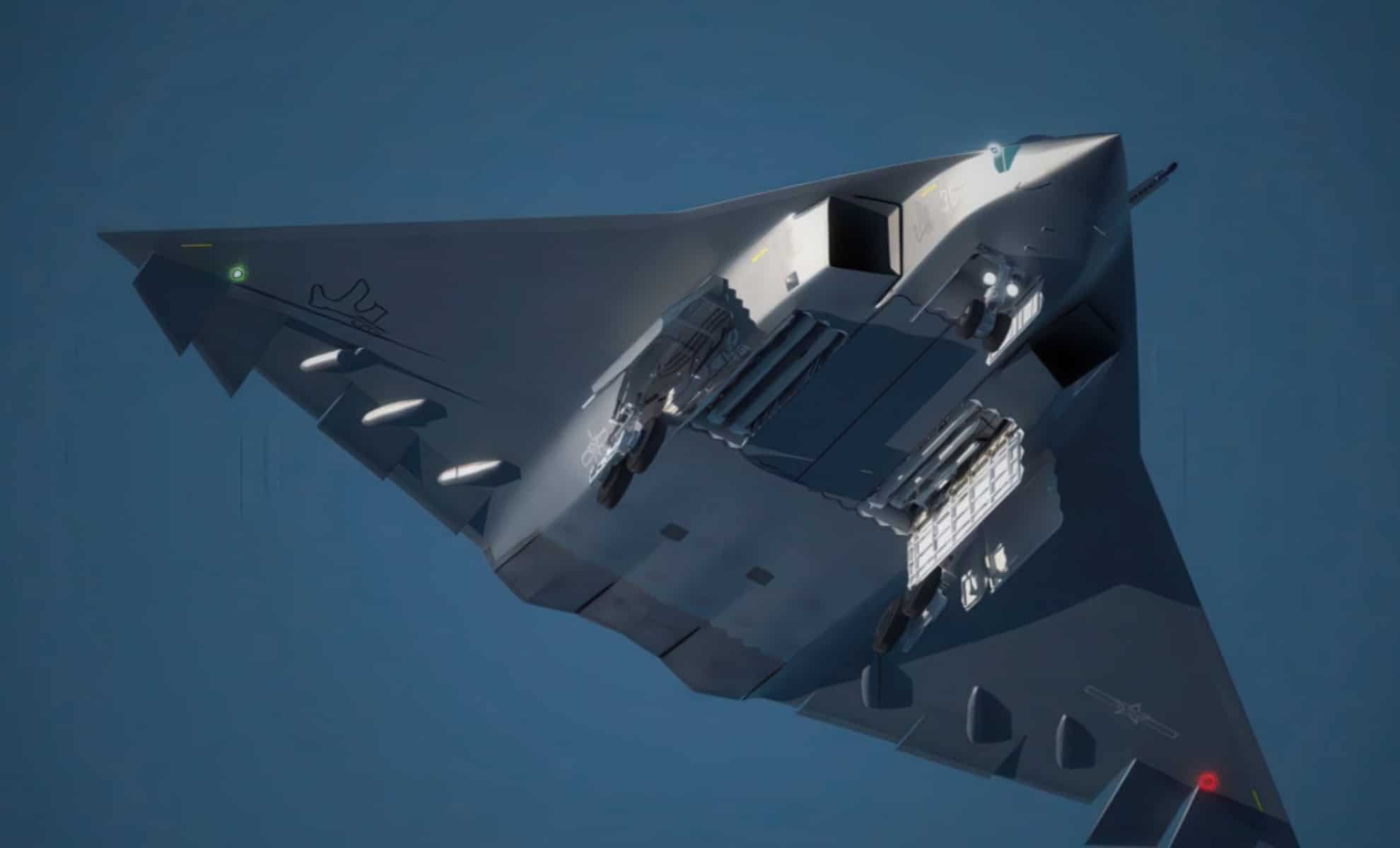
Also, China is investing heavily in modern combat aircraft. Beijing already has over 200 fifth-generation J-20 stealth fighter jets. Last year, China also revealed its second fifth-generation stealth aircraft, J-35. China is also working on two sixth-generation fighters, the J-36 and J-50. Both next-generation aircraft are currently undergoing flight testing.


Su-57-1290-x-650-px-6.png
US vs China: Edited Image.

Furthermore, the admiral warned that China’s “advanced long-range air-to-air missiles also present a tremendous threat.”

Underlining the criticality of maintaining air superiority in a potential conflict with China, Admiral Paparo said: “If you do not hold the high ground along the first island chain, you are vastly limited in your ability to operate. I think everybody knows the importance of the high ground. So ceding air superiority is not an option if we intend to maintain capability against our adversaries and the ability to support our allies.”

Swiftly establishing air superiority over your adversary is key to winning modern conflicts. One key reason the Ukraine-Russia war has dragged on for more than three years is that Moscow failed to establish air superiority in the early days of the battle.

The presence of state-of-the-art air defense capabilities on both sides meant that the air force could play only a limited role in this battle. This necessitated a far more central role for the infantry and artillery battalions, resulting in first-world-war-style trench warfare and high casualties on both sides.

In contrast, the US has enjoyed air superiority in all its recent wars. Be it in Afghanistan or Iraq, or the recent hostilities with the Houthis in Yemen, the US was quickly able to establish unchallenged air superiority, giving it a critical edge in the battle.

However, China’s rapid progress in air combat capabilities means that the US is not confident of establishing air superiority over Beijing in a future conflict in the Indo-Pacific.

When asked if China can deny U.S. air superiority in the first island chain, Admiral Paparo replied: “I give them high marks in their ability to do that.”

Analysts have warned that, with both sides employing modern fifth-generation aircraft equipped with advanced sensors, long-range precision-guided missiles, and cutting-edge air defense systems, it will be impossible for either side to establish permanent air superiority.

Instead, the objective would be to establish air supremacy for brief periods.

Admiral Paparo also acknowledged this limitation.

“Air supremacy is the complete mastery of the air. Neither side will enjoy that. But it will be my job to contest air superiority, to protect those forces that are on the first island chain, such as the 3rd Marine Expeditionary Force, and also to provide windows of air superiority in order to achieve our effects,” he added.

Advantage To China In A Future War With The US

Some researchers have warned that in a future conflict between China and the US, Beijing could devastate US air power in the Indo-Pacific region far more easily than the other way around.

A new report by the Hudson Institute, “Concrete Sky: Air Base Hardening in the Western Pacific,” argues that China’s extensive fortification of its air bases in recent years has given it a significant advantage over US military airfields, particularly in the event of a conflict over Taiwan.

China has engaged in what the report describes as a “nationwide, systematic campaign” to expand and harden its airfields. The goal is to withstand large-scale attacks, with a particular focus on safeguarding aircraft during intense air combat.

The analysis highlighted that the number of hardened aircraft shelters—designed to protect planes from enemy strikes—has more than doubled, from 370 to over 800.

Meanwhile, the number of non-hardened shelters has surged from 1,100 to more than 2,300, bringing the total number of shelters across the country to over 3,100. These shelters will be crucial in protecting China’s vast fleet of combat aircraft during a conflict.

Similarly, in a dire warning last year, the US lawmakers, citing recent war games analysis, cautioned that the United States faces the harrowing prospect of losing a staggering 90% of its aircraft on the ground, as opposed to in aerial engagements, in a potential conflict with China.

The lawmakers cautioned that China possesses sufficient weaponry to overpower the air and missile defenses safeguarding US bases. They warned that potential strikes on these bases could have dire consequences, including the immobilization of critical air assets, disruption of logistical chains, and a substantial weakening of the nation’s capacity to respond in a conflict situation.

The lawmakers pointed out, “Many US bases in the Indo-Pacific remain unprotected by any hardened structures, and aircraft are often kept close to each other to facilitate maintenance and other supporting tasks. The result is that critical US air assets are highly vulnerable to Chinese strikes.”

They further added, “Unsurprisingly, in recent war games simulating a conflict with China over Taiwan, 90 percent of US aircraft losses occurred on the ground, rather than from air combat.”

These repeated warnings by researchers, think tanks, lawmakers, and military officials highlight China’s growing air combat capabilities in the Indo-Pacific region, which could have dire consequences for the US and its regional allies in the first island chain.

Underlining the urgency of addressing the China challenge, Admiral Paparo recommended “investing in key readiness and capability.”

“Deterrence remains our highest duty,” Admiral Paparo said, adding that deterrence, however, must be backed up by the “real capability to prevail in combat.”
 
US and China are NEVER fighting a war one on one. They will fight via proxies just like the US and Soviet Union back in the day. The US studies and prepares against near-peer militaries but never goes against them.
 

Jet by jet, US losing Pacific air superiority over China

China rapidly building the fleet to deny US superiority in First Island chain and win a fast-hit Taiwan war

J-20-China-Air-Force.jpg
China's fighters fly in formation at an air show. Image: China Daily

China is racing to shatter US air dominance in the Pacific—one stealth jet, long-range missile and cratered runway at a time.

This month, a top US official stated that China is rapidly building its capacity to challenge US air superiority in the Pacific, particularly within the strategically vital First Island Chain.

Testifying before the US Senate Armed Services Committee, Admiral Samuel Paparo, head of US Indo-Pacific Command (INDOPACOM), warned that the People’s Liberation Army Air Force (PLAAF), with an order of battle of 2,100 fighters and over 200 H-6 bombers, is outproducing the US in fighter aircraft at a ratio of 1.2 to 1.

Paparo credited China with “high marks” for its ability to deny US air superiority along the First Island Chain, citing its fast-growing fighter fleet, advanced long-range air-to-air missiles and sweeping modernization across all warfighting domains.

Holding air superiority along the First Island Chain, which stretches from Japan to the Philippines, is essential for the US to operate and support allies like Taiwan.

Paparo stressed that air supremacy—total control of the air—will not be enjoyed by either side, but warned that without credible investment in long-range fires, integrated air and missile defenses, and advanced command and control systems, the US risks falling behind. “Ceding air superiority is not an option,” he cautioned.

Seth Jones and Alexander Palmer mention in a March 2024 report for the Center for Strategic and International Studies (CSIS) that while China’s fighter production capacity is impressive, it is still behind the US in aircraft numbers, with the US maintaining an advantage in fifth-generation aircraft such as the F-22 and F-35 in particular.

However, Jones and Palmer point out that China is closing the production gap with the US. They note China is reportedly producing 100 fifth-generation J-20 fighters annually and tripling the production of other aircraft types, such as the J-10C and J-16, suggesting a high production rate. Jones and Palmer attribute China’s high fighter output to its centralized, whole-of-government approach to defense production.

In terms of long-range air-to-air missiles, Tyler Rogoway mentions in a December 2023 article for The War Zone (TWZ) that China’s new PL-17 is most likely a very long-range air-to-air missile with an estimated 300-kilometer range.

Rogoway notes that the PL-17 may be intended against airborne early warning and control (AEW&C) aircraft, other aircraft close to the target, ground-based radar or satellites. He mentions that the size of the PL-17 may restrict it to being carried externally by China’s J-16 or J-20 fighters.

As for China’s rapid airpower growth, the US Department of Defense’s (DOD) 2024 China Military Power Report (CMPR) states that the PLAAF and PLA Naval Aviation comprise the Indo-Pacific’s largest air force, with 3,150 aircraft—1,900 of them fighters—an increase of 400 in the last three years, per Aquilino.

Aquilino warns that if trends persist, China could soon overtake the US in total airpower, complementing its dominance on land and sea.

Given China’s looming quantitative fighter advantage, Matthew Revels mentions in an April 2023 Journal of Indo-Pacific Affairs article that in an invasion of Taiwan, the PLA would likely mass air assets over the self-governing island to achieve localized, tactical air superiority instead of fighting to achieve strategic air dominance.

Beyond sheer fighter numbers, China’s missile capabilities pose an even greater threat to US air operations in the region.

Eamon Passey mentions in a December 2024 article for the American Foreign Policy Council that when it comes to conventional missiles, the PLA Rocket Force (PLARF) has a significant hardware advantage over the US.

Passey notes China has developed an extensive array of ballistic and cruise missiles that are oftentimes more numerous and sophisticated than their US counterparts. He says that while the US invests in hypersonic weapons technology, it lags behind China in development and deployment due to high costs and the complexity of integrating those weapons into its military framework.

Passey observes that China can make substantial investments in its missile capabilities mainly due to the absence of constraining arms control treaties. He also points out that the PLARF manages an autonomous, intensely focused and extensive missile program that has quickly developed to unite nuclear and conventional capabilities under a single command structure.

The PLARF is critical in China’s counter-intervention strategy in regional conflicts. Christopher Mihal mentions in a 2021 Military Review article that China, as of that year, has 2,200 conventional ballistic missiles and enough anti-ship missiles to attack every US surface combatant in the South China Sea, with sufficient firepower to overcome each ship’s missile defenses.

Further, Kelly Grieco and other writers mention in a December 2024 Stimson Center report that the PLARF is expected to play a leading role in neutralizing US airbases in Japan, Guam, and other Pacific locations, launching coordinated missile attacks to destroy US aircraft on the ground and cratering runways to make them unusable.

These missile capabilities threaten the US’s forward-deployed airpower, which remains highly vulnerable due to inadequate base fortifications, Greico writes.

Thomas Shugart III and Timothy Walton mention in a January 2025 Hudson Institute report that in a worst-case scenario, most US aircraft losses will occur on the ground, as its Pacific airbases lack hardened aircraft shelters (HAS) and individual aircraft shelters (IAS).

They mention that US operational concepts have assumed mainly that its aircraft would operate from forward airfields uncontested and that minor threats to those facilities would abate with the cessation of hostilities.

They say that thinking disregards China’s growing ability to strike those vulnerable facilities with missiles, aircraft and special forces. Shugart and Walton say China has enough firepower to make dispersal alone an ineffective countermeasure.

These shortcomings could prove catastrophic in the event of a Chinese assault on Taiwan, where a rapid US response would be critical to deterrence and defense.

Timothy Heath and other writers mention in a June 2023 RAND report that Taiwan is vulnerable to defeat in the first 90 days after an invasion, with that time being the minimum required for the US to marshal enough forces for military intervention.

In contrast, Bonny Lin and other writers mention in an August 2024 CSIS report that China can sustain major combat operations against Taiwan for six months as part of a larger blockade, with PLAAF and PLARF strikes aiming to neutralize the latter’s naval bases, coastal and air defense batteries and command and control with the option of unleashing more missile and air attacks should Taiwan continue to resist.

Lin and others say those intensified attacks also aim to prevent Taiwan from reconstituting damaged equipment and deploying additional weapons systems. If the US doesn’t act fast, the next battle for air superiority could be over before its aircraft even get off the ground.

 
Becoming biggest navy first and now biggest air force, and China has always had the biggest army.
 
This will become more pronounced as rare earth sanctions solidify
 
Chinese 6th gen jets fly everywhere everyday and US NGAD 6th generation fighters are still flying on PPT.

GoGCGwkXgAASHYo.jpg:large
 
The only way for China to defeat the US is to play the same game US plays - which is - have enough Carriers, destroyers, Subs and jets to go to the US and surround the US. THIS IS THE ONLY WAY.
 
The only way for China to defeat the US is to play the same game US plays - which is - have enough Carriers, destroyers, Subs and jets to go to the US and surround the US. THIS IS THE ONLY WAY.
Why?China never has that western colonial mentality of global domination, don't judge China based on what the west did to this world.
 
Quality over quantity. This is where the US is unmatched. China can produce all the jets it wants, but the US will retain the qualitative edge for at least a generation to come. The F-22, B-2 etc are all products of the 1970s/1980s and there’s no equivalent system anywhere in the world. Even today, China is incapable of matching the technology of the F-22 & B-2 bombers, technology that’s decades old.
 
Quality over quantity. This is where the US is unmatched. China can produce all the jets it wants, but the US will retain the qualitative edge for at least a generation to come. The F-22, B-2 etc are all products of the 1970s/1980s and there’s no equivalent system anywhere in the world. Even today, China is incapable of matching the technology of the F-22 & B-2 bombers, technology that’s decades old.
With your flying on PPT NGAD fighters:D:D
Besides, quantity is quality in its own right.
 
Quality over quantity. This is where the US is unmatched. China can produce all the jets it wants, but the US will retain the qualitative edge for at least a generation to come. The F-22, B-2 etc are all products of the 1970s/1980s and there’s no equivalent system anywhere in the world. Even today, China is incapable of matching the technology of the F-22 & B-2 bombers, technology that’s decades old.
That's your bias, we are both, future is bright and we are working hard to secure it, not interested in changing your pov as only times will tell, just like people in the "biggest democracy" called J10C+PL-15 junk.
 

Users who are viewing this thread

Pakistan Defence Latest

Back
Top