Old pictures of Pakistani Cities

1751057473197.png

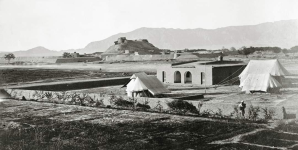
Distant view of the Miri Fort, Quetta, 1880 (c).

Quetta is situated beneath the slopes of Murdar in Baluchistan at the northern end of the Quetta-Pishin valley at an elevation of 5,500 feet above sea level. The military station was designed by Sir Hugh Barnes and laid out on systematic lines of which broad roads were a predominant feature.

Sir Thomas Holdich writing in 1884 in the Baluchistan District Gazetteer stated that, 'The crown of Quetta was the Miri Fort.' The Miri has been the fortress of Quetta from time immemorial and the basis of the fortress is what was probably a mud volcano in days that are prehistoric'. This is a view looking across the fort to distant hills and was taken during the Second Afghan War (1878-80).

Three wars waged between Britain and Afghanistan to counter the threat to British India from expanding Russian influence in Afghanistan.

Photograph of Quetta, from the Macnabb Collection (Col James Henry Erskine Reid): Album of Miscellaneous views, taken in the 1880's.

This Image Is Restored And Watermarked By East India Company And Raj Research Group.

© Macnabb Collection / British Library
 
1751057555635.png

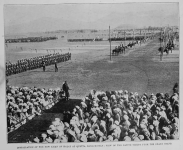
Installation Of Mir Mahmud Khan II As Beglar Begi And Khan Of Kalat At Quetta, November 10, 1893. View Of The Native Troops From The Grand Stand.

Source - The Illustrated London News.
Issue - January 13, 1894.
 
1751057686046.png


Murree, Punjab, Now Pakistan, 1861 (c).

An early John Burke photograph captioned "View of the Murree Hills," shows William Baker's Peshawar business and branch office, which opened in Murree in 1861.

© John Burke / Philip Thornton
 
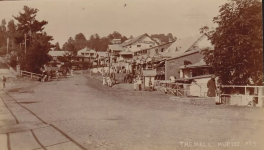
The Mall, Murree, Punjab, 1910's - 1920's (c).

1751057724792.png
 
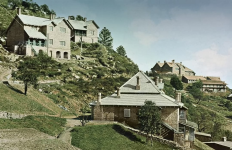
British Houses at Murree, Punjab, 1864 (c).

Murree, or Marhee as it was then called, was first identified as a potential hill station by Major James Abbott in 1847.

© Samuel Bourne / Philip Thornton


1751057802671.png
 
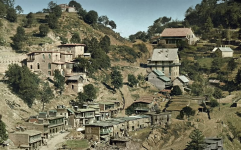
View of Murree Bazaar, Murree, Punjab, 1864 (c).

Murree, or Marhee as it was then called, was first identified as a potential hill station by Major James Abbott in 1847.

© Samuel Bourne / Philip Thornton


1751057879960.png
 
1751057932652.png

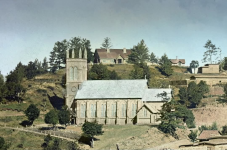
Holy Trinity Church, Murree, Punjab, 1864 (c)

Murree, or Marhee as it was then called, was first identified as a potential hill station by Major James Abbott in 1847.

© Samuel Bourne / Philip Thornton
 
1751058006772.png

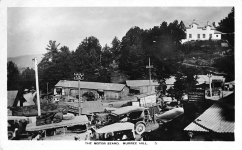
The Motor Stand, Murree Hill, 1928 (c).

Motor travel made accessing hill stations much easier; note the the 1920's eras car and smaller buses in this image on the road from Rawalpindi to Murree (the transportation company advertised on the sign is the "Simla Motor Service").

The trip into the hills, which could take a day or two in a horse-drawn cart, was now a matter of hours once roads were properly paved.

In 2011 a better highway was completed, which shortened the time it takes to get to Murree but also has led to even more visitors, destroying some of the charm of visiting this once lovely outpost some seven thousand feet high.

© Paper Jewels
 
1751144495654.png

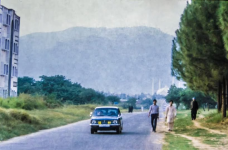
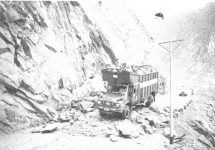
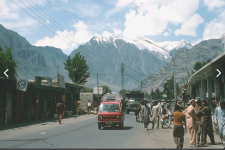
Karakoram highway gilgit Rawalpindi Road 1979.
 

Users who are viewing this thread

Latest Posts

Back
Top