South Korea Defence and News Forum

ety

Trusted Member
Joined
Dec 11, 2023
Messages
6,253
Reaction score
3,741
Reputation
1,126.4
Country of Origin
Country of Residence

South Korean tourists flock to Shanghai for weekend

2024-12-24 17:23 Last Updated At:12-25 01:07


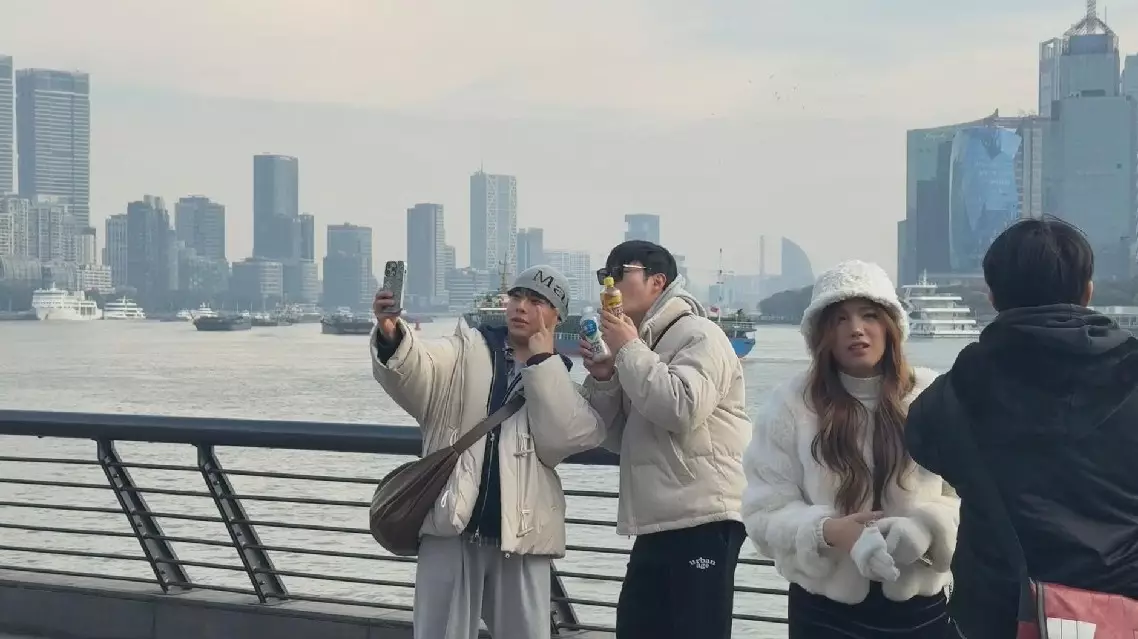
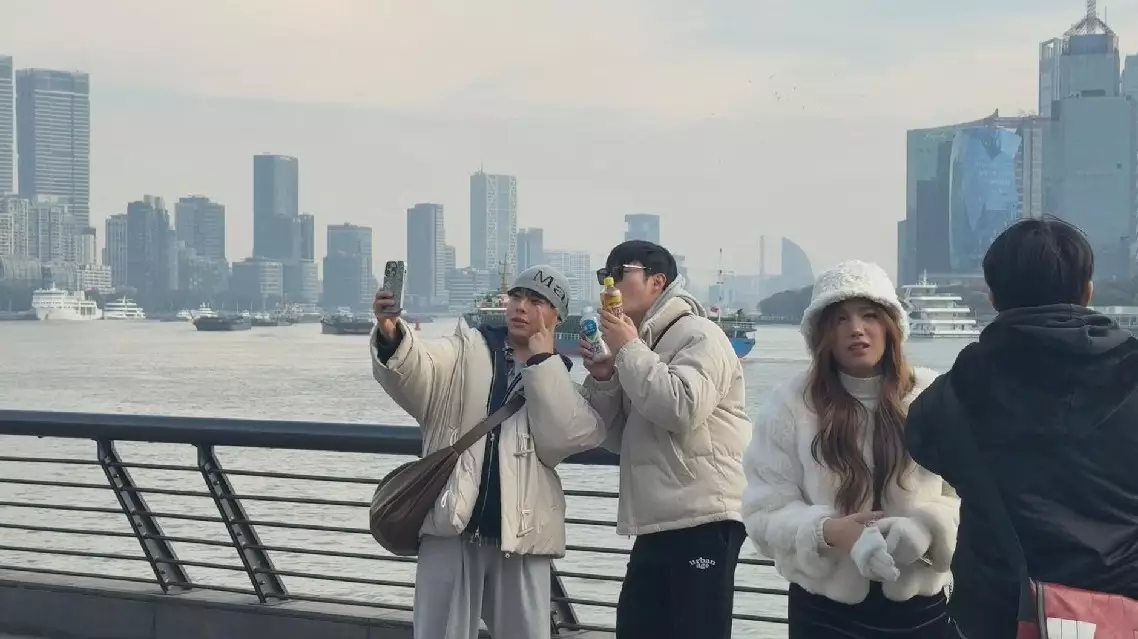
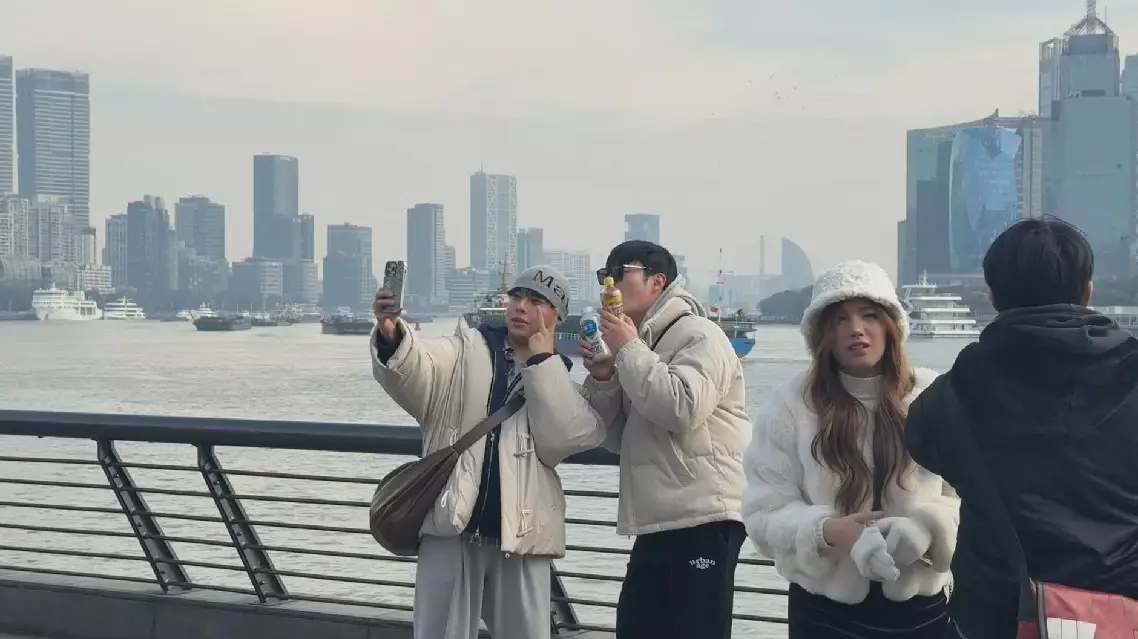
Shanghai has become a popular destination for South Korean tourists enjoying their days off, especially at weekends.


Since China began to implement trial visa exemption to ordinary passport holders from South Korea for short-term business, tourism, family visits, and transit on Nov 8, 2024, major hotspots in Shanghai have been filled with South Korean visitors every weekend.


For South Korean visitors to Shanghai, the former site of the Provisional Government of the Republic of Korea on the Madang Road is a must "check-in" spot. The nearby trendy shopping area of Xintiandi is also high on their itinerary.


Other iconic attractions such as the Bund, traditional Chinese garden Yuyuan, and century-old Wukang Mansion designed by the renowned Hungarian-Slovak architect László Hudec (1893–1958) which has been the residence of many celebrities, are also top spots among South Korean visitors.


Many of them appreciate the blend of traditional Chinese charm and European-style appeal in Shanghai.


"(It's) very clean, magnificent, and charming. (The Oriental Pearl), it's something you cannot see in South Korea. It's so spectacular," said a South Korean tourist.


Youngsters from South Korea have developed new ways to enjoy themselves in Shanghai, such as attired in traditional Chinese Hanfu costumes to have a photo taken at a studio at Yuyuan Garden.


A newlywed couple was spotted having wedding photos taken in front of the Wukang Mansion. China's visa-free transit extended from previous 72 and 144 hours to 240 hours has inspired them to capture their romance in Shanghai.


"It feels good to have our wedding photos taken here and so we made it. The landscape here is more exotic as compared with Seoul, and it's really nice," said the bridegroom.


Tourism data show that since China implemented the unilateral visa-free policy for South Korea, Shanghai has been the hottest destination for inbound tourists from the country, with booking orders increased by more than 180 percent year on year, or by 40 percent month on month, followed by Qingdao and Beijing.

South Korean tourists flock to Shanghai for weekend


South Korean tourists flock to Shanghai for weekend
 
Source:
Fatman
To view this content we will need your consent to set third party cookies.
For more detailed information, see our cookies page.
 
S.Koreans’ travel surges in China, but visa-free policy boosts more than tourism

By Li Yuche Published: Dec 22, 2024 11:22 PM


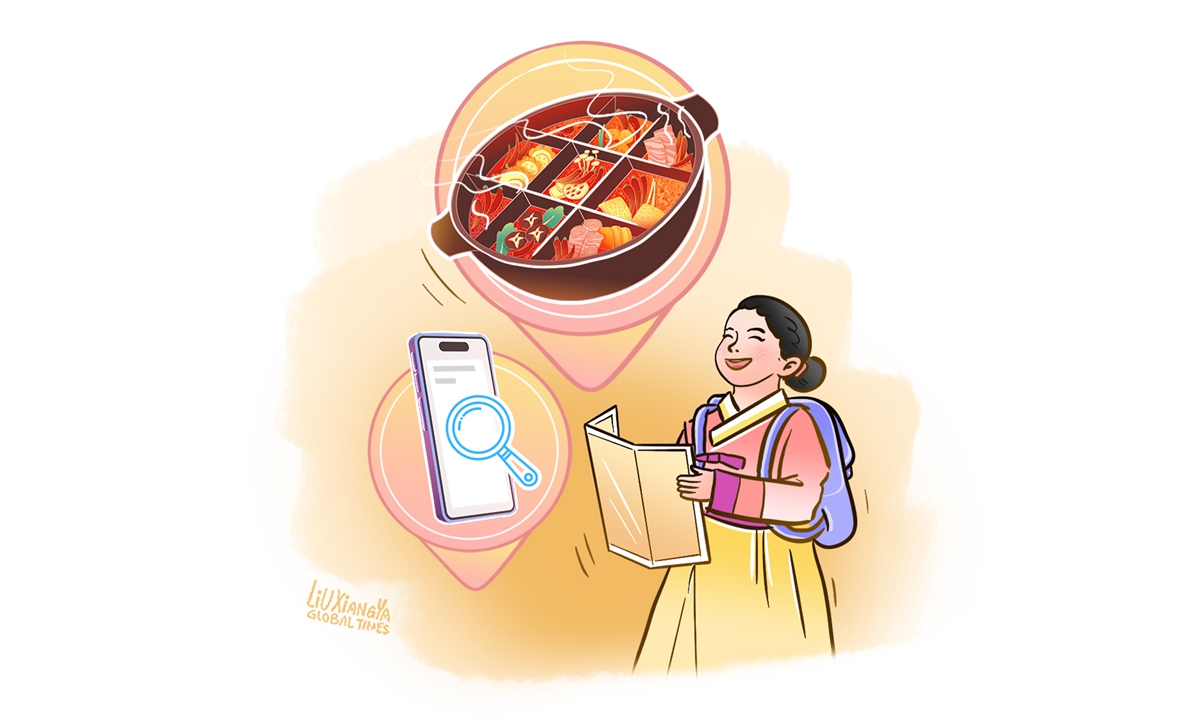
Illustration: Liu Xiangya/GT

Illustration: Liu Xiangya/GT


Posting a video of his travels around Southwest China's Sichuan Province on social media platform Bilibili two days ago, South Korean vlogger Dayi is one of many South Korean travelers who have flocked to China recently after the implementation of a visa-free policy for South Korea. From early November till now, the policy has not only brought tourists, but also ignited a cultural interplay between the two countries.

Dubbing himself a "travel commando," Dayi is the epitome of South Korean visitors' burning desire for "China Travel."

Before Dayi made his trip, 26-year-old South Korean tourist Yvonne jumped on a plane to Shanghai right after the policy was launched. According to data from Ctrip, bookings for Shanghai among South Korean tourists rose more than 180 percent year-on-year after the policy was introduced.

Noting that China is a "place of wonder," Yvonne told the Global Times that the policy has allowed her to come to China "every two weeks on average."

Yvonne's story shows the policy has not only enticed people to come on a single trip, but also set the stage for return visits. Multiple visits have enabled South Korean visitors to enjoy China's comprehensive and diverse cultures.

This might be the reason why, in addition to Beijing, Shanghai and Zhangjiajie, Central China's Hunan Province, the policy has inspired South Korean tourists to explore lesser-known sites in China.

Taking 34-year-old Heejung as an example, she told the Global Times that she just paid a trip to South China's Guangxi Zhuang Autonomous Region to satisfy her curiosity about the local dish luosifen (river snails rice noodle) and the brocade art unique to the Zhuang ethnic minority group.

"Chinese culture is unfamiliar to me, yet by tasting the food here and watching Chinese handicrafts being made, I felt a kinship since they share some similarities with South Korean culture," Heejung noted.

When the visa-free policy was first introduced, the surge in South Korean tourists made the hashtag "leaving work on Friday to go to China" a trending topic on social media.

It can be seen that China's unilateral 30-day visa-free policy has truly sparked the cultural interplay between China and South Korea.

"China's extension of the visa-free policy from 72 hours to 30 days can be viewed as a strategy aimed at making a journey here not just a trip but a genuine cultural tourism experience," Gao Zhanyang, a tourist industry expert, told the Global Times.

Indeed, South Korean tourists are starting to embrace smaller spots and cultural events such as the former site of the Provisional Government of the Republic of Korea, China's TV and filmmaking base Hengdian World Studios, and Sichuan Opera in Chengducapital of Sichuan Province. Such diverse travel demand needed even a broader range of tourism services.

Providing local guided tours is one of the services that are in high demand. According to financial news outlet Lanjinger, the price per day of a Korean-speaking guide for custom tours is generally between 600 ($82) and 2,000 yuan. If the tourist also needs a car, the price can increase on this basis by 1000-2000 yuan more.

On the one hand, this high demand can boost local tourist growth, on the other hand it can enhance cultural exchanges. For instance, on the lifestyle-sharing platform Little Red Book, or Xiaohongshu, there are Chinese tour guides offering free guide services because they are curious about South Korean culture, too.

"Located in Harbin, I don't want anything but to help tourists while practicing my Korean," one netizen posted on Xiaohongshu.

Whether it is a paid or free tour guide services, through communication, people get to know each other and introduce their hometown culture, demonstrating how China's travel policies are subtly promoting people-to-people exchanges.

These person-to-person exchanges may not fully capture the cross-cultural exchange; but when one person trusts another, they begin to take an interest in that person's country and culture. This is why Yvonne told the Global Times that she has made many friends in China and gradually has learned how to apply Chinese-style makeup from them and began filming Chinese-themed short videos on Douyin.

Although South Korean tourists visiting China has become something of a phenomenon recently, these tourists are not the only ones who have benefited from China's visa-free policy. As of the end of November 2024, China had granted unilateral visa-free entry to travelers from 38 nations, allowing stays of up to 30 days, the Xinhua News Agency reported.

The stamp in each passport is not just a permit, but an invitation - an invitation for more people to see the diverse aspects of China in person.

The author is a reporter with the Global Times. [email protected]


Zhangjiajie becomes popular tourist destination for South Korean tourists flock​


2023-11-22 08:56:24Ecns.cnECNS App Download


As inbound trips gradually recover, Zhangjiajie, a world-famous scenic spot in central China's Hunan Province, has once again become a popular tourist destination for South Korean tourists. According to statistics, from January to August 2023, one-third of the 289,700 inbound tourists received by Zhangjiajie came from South Korea.


At present, five of the nine international flight routes opened by Zhangjiajie head to multiple cities of South Korea, and the flights take about three hours on average. In Zhangjiajie, the major service venues and scenic spots have signs in Korean language. Many of the staff members can speak Korean, and tourists can even use the South Korean won.


At the same time, tour operators of Zhangjiajie and South Korea have kept close touch with each other, helping Zhangjiajie gain popularity in South Korea.


In Chinese culture, mountain climbing is closely linked to filial piety. The filial piety culture that China and South Korea have in common is one of the reasons that make Zhangjiajie a preferred travel destination for South Korean people, according to Tian Hongman, deputy director of Culture, Tourism, Radio, Television and Sports Bureau of Zhangjiajie.
 
Last edited:

Exclusive: South Korea plans to acquire 36 more U.S. AH-64E Apache attack helicopters amid rising tensions​


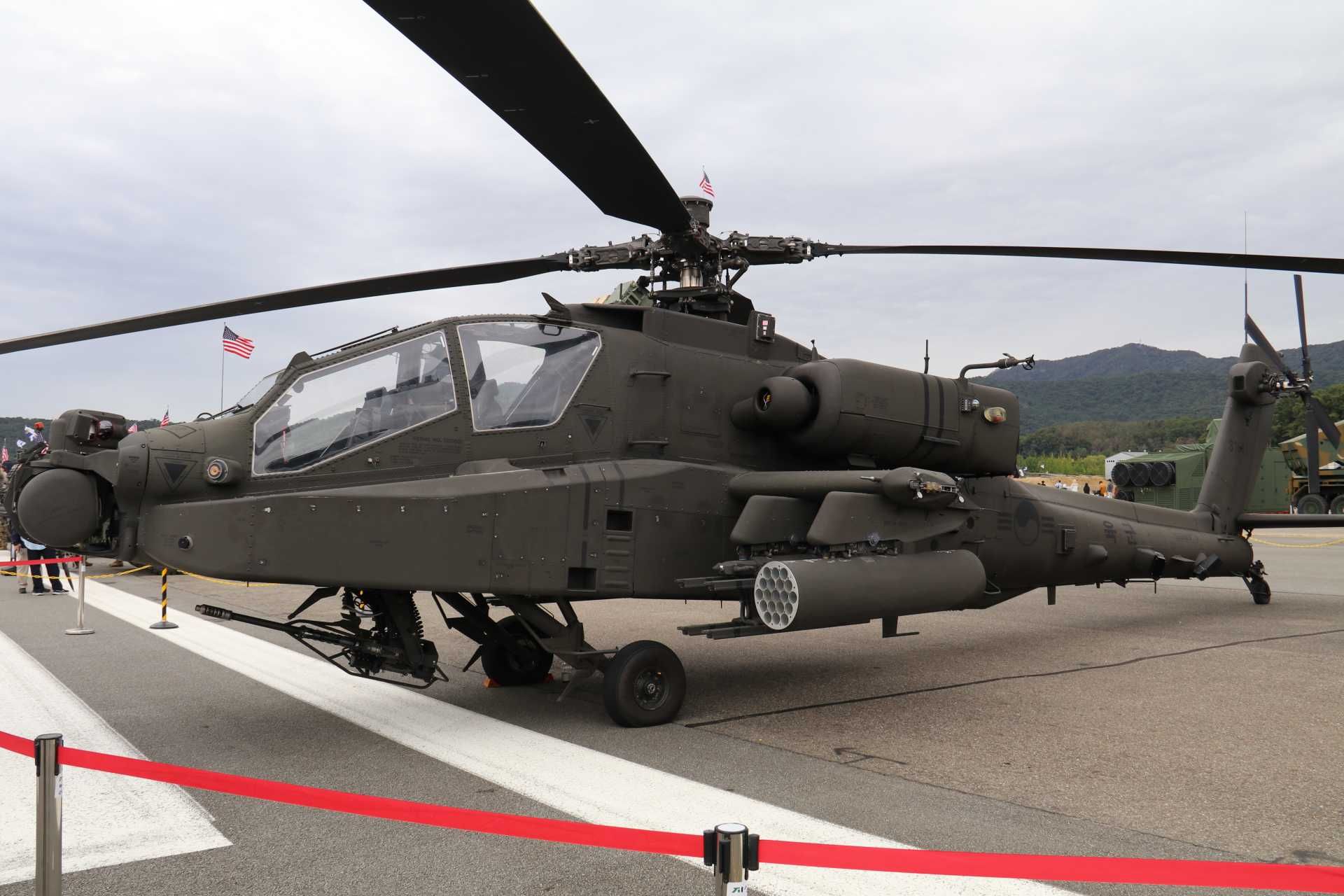
According to information published by the South Korean Yonhap News Agency on July 6, 2025, South Korea plans to purchase 36 additional AH-64E Apache Guardian attack helicopters from the United States. The new acquisition reflects Seoul’s commitment to expanding its advanced rotary-wing combat capabilities amid evolving regional security challenges and growing concerns over North Korea's military posture.

South_Korea_plans_to_acquire_36_more_U.S._AH-64E_Apache_attack_helicopters_amid_rising_tensions_Exclusive_1920_001-251b1f4d.jpeg

A South Korean Army AH-64E Apache Guardian on the ground, as the country already operates 36 units and plans to acquire 36 more to expand its attack helicopter fleet. (Picture source: Army Recognition Group)


The South Korean Army currently operates a mix of dedicated attack helicopters, including 36 AH-64E Apache Guardians and 55 AH-1F Cobra helicopters. The AH-64E Apaches, delivered between 2016 and 2017, represent the most modern and capable rotary-wing attack assets in South Korea’s arsenal, equipped with advanced targeting systems, long-range precision munitions, and improved battlefield connectivity. In contrast, the AH-1F Cobras, which date back several decades, are aging platforms with limited survivability and outdated avionics by current standards. Despite their obsolescence, the Cobras continue to serve in frontline roles until they are fully replaced. South Korea’s plan to acquire 36 additional Apache helicopters reflects a strategic effort to create a unified, high-performance attack helicopter force capable of responding to evolving regional threats with increased lethality and effectiveness.


The AH-64E Apache Guardian is the most advanced production model in the Apache series, optimized for high-intensity operations in complex and contested environments. It incorporates a powerful T700-GE-701D engine and composite main rotor blades, offering enhanced speed, lift capacity, and maneuverability. The airframe has also been reinforced for better survivability, while the fire control system includes the AN/APG-78 Longbow radar, which provides superior target detection and engagement in all-weather and obscured battlefield conditions. This radar capability allows the AH-64E to locate and prioritize targets beyond visual range, giving it a decisive edge in fast-moving engagements.

The AH-64E also features advanced avionics and networked communication systems, enabling full interoperability with other aircraft, drones, and ground units. These systems support real-time data sharing and cooperative targeting, significantly enhancing the helicopter's role in modern joint operations. With updated mission software, digital cockpit displays, and satellite communications, the AH-64E can operate more effectively in dynamic combat scenarios. This combination of firepower, survivability, and connectivity makes it a vital component of South Korea's strategy to maintain air dominance and battlefield effectiveness in the face of evolving regional threats.

This strategic procurement is part of a broader modernization initiative within the South Korean military, aimed at responding effectively to North Korea’s evolving threats and expanding regional security challenges. The acquisition reflects South Korea’s continued reliance on proven U.S. defense technology to reinforce its military posture while preparing for future battlefield scenarios involving high-intensity conflict and joint operations.

While specific delivery schedules and contract terms are yet to be fully disclosed, the deal has already been cleared under the U.S. Foreign Military Sales program. Once finalized, the helicopters will be integrated into the Republic of Korea Army’s aviation command structure, significantly enhancing its combat helicopter capability for years to come.


The continued investment in advanced attack helicopters like the AH-64E Apache Guardian underscores South Korea’s strategic priority to maintain a robust and technologically superior defense posture in the face of persistent threats from North Korea. Given the North’s heavily fortified artillery positions, armored units, and asymmetric warfare capabilities, possessing a fleet of highly mobile, precision-strike attack helicopters allows the Republic of Korea Army to conduct rapid counteroffensive operations, neutralize high-value targets, and provide close air support to ground forces under combat conditions. The AH-64E's sensor fusion, network connectivity, and lethal firepower provide a decisive tactical advantage in potential cross-border engagements, enhancing deterrence and ensuring the ROKA remains fully prepared to respond to any escalation on the Korean Peninsula.
 
To view this content we will need your consent to set third party cookies.
For more detailed information, see our cookies page.

Boeing AH-64E Apache Guardian 16-03098 (63098) US Army walk around​


South Korea's military has shrunk by 20% in six years as male population drops​

By Jack Kim
August 10, 202512:45 PM GMT+5Updated 21 hours ago


Item 1 of 3 Cadets march during a celebration to mark 76th anniversary of Korea Armed Forces Day, in Seongnam, South Korea, October 1, 2024. REUTERS/Kim Hong-Ji/Pool/File Photo

[1/3]Cadets march during a celebration to mark 76th anniversary of Korea Armed Forces Day, in Seongnam, South Korea, October 1, 2024. REUTERS/Kim Hong-Ji/Pool/File Photo Purchase Licensing Rights, opens new tab

SEOUL, Aug 10 (Reuters) - South Korea's military shrank by 20% in the past six years to 450,000 troops, largely due to a sharp drop in the population of males of enlistment age for mandatory service in the country with the world's lowest birthrate, a report said on Sunday.

The dramatic decline in the pool of available males for military service is also causing a shortfall in the number of officers and could result in operational difficulty if it continues, the defence ministry said in the report.

The Reuters Daily Briefing newsletter provides all the news you need to start your day. Sign up here.


The report was made to the ruling Democratic Party member of parliament Choo Mi-ae, whose office released it.

South Korea's military has steadily declined since the early 2000s when it had about 690,000 soldiers. The pace accelerated during the late 2010s and there were about 563,000 active-duty soldiers and officers in 2019.

North Korea is believed to have an active-duty military of about 1.2 million, according to the latest estimate by the defence ministry in 2022.

In the period between 2019 and 2025, the population of 20-year-old males declined by 30% to 230,000, according to government data, the age when most men who pass a physical exam enlist for military service, which is now 18 months long.


The military has cited improved capabilities as a key reason for shortening service periods, made possible by a military alliance with the United States and the development of a defence industry that has become a major exporter of arms.

Able-bodied men served 36 months in 1953 when the Korean War ended in an armistice.

South Korea's defence budget, at more than 61 trillion won ($43.9 billion) in 2025, is larger than the estimated size of North Korea's economy.

Still, the military is 50,000 troops short of the number of troops adequate for maintaining defence readiness, the ministry said. About 21,000 of the shortfall is in the non-commissioned officer ranks, it said.

South Korea is one of the world's fastest ageing societies and has the lowest fertility rate in the world at 0.75 in 2024, which signifies the average number of babies a woman is expected to have during her reproductive life.


Its population, which hit a peak of 51.8 million in 2020, is expected to shrink to 36.2 million by 2072, according to a government projection.
($1 = 1,388.6900 won)

Reporting by Jack Kim; Editing by Christian Schmollinger
Our Standards: The Thomson Reuters Trust Principles.
 
What the heck is the US still doing in Korea ? Another forever war that benefits the MIC in america and the host country only. Look at South Korea in 1950 and look at it today. They will never let go of America, they have to be shoved off.
 
South Korea has a military pact with the USA if I'm not mistaken

Yeah just like NATO, once countries start enjoying the American gravy train they formalize it with a treaty. Then the US is permanently stuck. Fools in Americs think this makes America great even though the reality is the only American beneficiaries are the MIC and national security racket and the host country.
 
What the heck is the US still doing in Korea ? Another forever war that benefits the MIC in america and the host country only. Look at South Korea in 1950 and look at it today. They will never let go of America, they have to be shoved off.

US and SK have a strategic military pact for like half a century or more now.

SK has a very robust and one of the fastest growing MIC with big investments from Indonesia, UAE and other nations. But both the US and SK MIC benefit, just the way it is.
 
US and SK have a strategic military pact for like half a century or more now.

SK has a very robust and one of the fastest growing MIC with big investments from Indonesia, UAE and other nations. But both the US and SK MIC benefit, just the way it is.
Only South Korea benefits. The US is getting very little and stuck in a forever war. Who cares today if North Korea takes the south ? And shouldn't it be a china problem now ? We keep hearing about China the next great Power blah blah but Chinese never want to get their hands dirty, they just want to machinate behind the scenes and make money. Hence the US remains stuck.

Same with effing Japan, mooching off America for 70 plus years whole refusing American access to its markets but selling every last item in the US market.
 

Users who are viewing this thread

Pakistan Defence Latest

Country Watch Latest

Back
Top