Asfandyar Bhittani
THINK TANK: CONSULTANT

Since most of the "Pakistani" media only voices those directly involved in this grand human trafficking industry, it's refreshing to see Ambassador Osman shares the view of a the silent majority in this piece.
_________________________
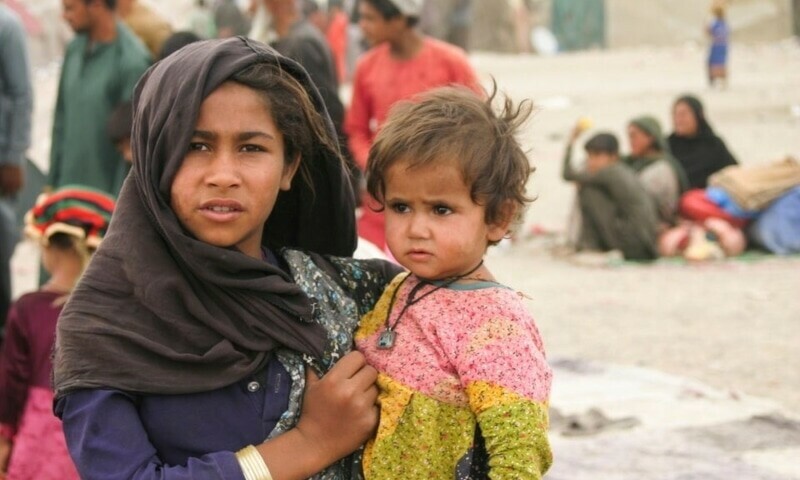
Afghan refugees.
The Afghan refugees, and other Afghans in Pakistan without passports and visas, are finally being repatriated. For the registered refugees, there is a grace period until the end of August, after which they will be deported. The Afghan refugees started coming in 1979, and now that they are going home, a number of questions arise. First of all, what are the different categories of Afghans sheltering in Pakistan? Secondly, why has it taken the government so long to implement a decision repeatedly made to send them back? Thirdly, what have been the pressures on Pakistan not to send them back? Fourthly, is it safe for them to return? Fifthly, as many Afghans being repatriated want to continue to work in Pakistan, with others wanting to study and still others to avail themselves of medical treatment, how will this be dealt with after the exodus? Sixthly, how is a new visa regime to be operationalised to prevent recycling the problem?
The different categories are: 1) 1.36 million Afghans with Proof of Registration (POR) identity cards granted in 2005 after a GOP census. 2) Some 800,000 Afghan Citizen Card (ACC) holders the government granted identity cards to after agreeing with the Afghan government that they would then be issued passports to return, which Afghanistan never implemented. 3) An estimated other 2 million Afghans are illegally residing in Pakistan, the majority of whom are economic migrants, as those in the ACC category. 4) An unknown number of Afghans who came over after the second Taliban takeover in 2021; 221,000 of whom have registered with UNHCR, which is undertaking a verification exercise to ascertain how many have left Pakistan. This category includes Afghans who were working with the various occupying countries and their armed contingents. These, the former occupying countries, considering them vulnerable, and wanting to protect them, amount to around 110,000, of which some 90,000 have been resettled in some manner by these countries. Some 20,000 remain, particularly since the USA has changed its policy.
5) Finally, there are some 12,000 Afghans registered under the UNHCR mandate. Irrespective of all and any registration, all Afghans will be repatriated. So far, 1.1 million Afghans have been sent back. Pakistan has given a wide latitude to Afghans these almost 50 years. People forget that under the Foreigners Act, to enter or to be in Pakistan without passports and visas is a transgression liable to imprisonment and deportation, as is the case in all other countries.
It has taken Pakistan so long to take this step despite repeated government decisions at the Cabinet level due to three main reasons. Foremost, a lack of seriousness coupled with weak implementation capacity. Internally, government bodies dealing with refugees have been reluctant to remove a continuing presence that justified, in large part, their funding and jobs. Externally, pressure from the West and that the Afghan refugees and others remain in Pakistan. The unstated objective was that this issue be treated as managed migration with the Afghans permanently absorbed into Pakistan, reducing the risk of illegal immigration flows westwards. Of course Afghan governments have not been keen to see the return of refugees who left owing to their opposition, either.
The UNHCR, which facilitated the voluntary return of 4.46 million refugees since 2002, despite its substantive and longstanding assistance for the refugees, has been caught in a dilemma of wanting to continue to best protect them and the compulsions of the host country.
Operationally, the easement rights enjoyed by border tribes led to infiltration deeper inland. At one stage, when visas were being discussed, President Karzai angrily said, ‘Afghans don’t need visas to go to Pakistan’. Karzai and many Afghans took Pakistan for granted. Because of the nature of the 2,560 km border with Afghanistan, it took time for the military to build a border fence, and that in the face of constant physical opposition from the Afghan side. When Pakistani forces from 2003 started moving towards the border, replacing local levies, they were opposed by Afghan forces, whom one could hear on the radio net being urged on by their Indian defence attache handlers.
In the early days, the World Food Program and others provided essential rations till 1995, and Western financial assistance through UNHCR declined every year, standing at approximately $42 million now for UNHCR admin costs and refugees’ assistance. This is in contrast to the 8.2 billion Euros given by the EU to Turkey for the Syrian refugees to prevent their further illegal immigration into Europe. In the fifteen years from 2001 to 2015, only 9,996 Afghans from Pakistan were resettled abroad: mainly vulnerable categories, including women under threat and those having worked for coalition forces. Of this number, only 6.7% or 249 families numbering 674 individuals have been POR refugees. There has been no actual burden sharing.
Is it safe for the refugees to return? Afghanistan is not an ideal state, but there is stability, and there has been no persecution of Afghans who supported the previous regimes. Just recently, the UK authorities, when pressed to take more Afghans into the UK, stated publicly that the situation in Afghanistan was not such that it would impel them to do so. In any case, there is nothing to stop any country from giving shelter to as many Afghans as they want. After the Algerian war of independence in 1962, the retreating French took and resettled in France 42,000 Harkis or Algerian soldiers who had fought for them, and these families account now for almost half a million French citizens.
The refugees and illegals have imposed a strain on Pakistan’s economic resources, high unemployment rate and security situation. It has been estimated that with an open border, some 14 million would gladly enter Pakistan to find work.
What will happen to Afghans who want to continue to work in Pakistan? The GOP message is that the Afghan authorities, Afghan citizens, and the international community should realise that Pakistan, aware of the legitimate travel needs of Afghans, wants to facilitate regulated, legitimate, security-cleared, and predictable flows between the two countries, without the hindrance of the continued presence of illegal Afghans in Pakistan.
The 1.36 million POR refugees, around 80% born in Pakistan, are composed of some 320,000 families with around 300,000 adult workers. A sustainable and just visa regime, based on skilled and other labour needs, should give special priority to these POR workers, whose one million family members will remain in Afghanistan as per the model of our workers in the Gulf. Their data is with NADRA.
However, the visa regime needs a drastic revision. At present internet based visas have already led to security loopholes, and massive exploitation by middlemen/ sponsors/agents and perhaps by the different visa clearance authorities. Pakistan’s Embassy and Consulates in Afghanistan have been issuing an unsustainable 240,000 visas a year for some years. It is time to end that, to be replaced by in- person interviews, otherwise we will only be recycling the overall problem, particularly its security aspects.
Ambassador Tariq Osman Hyder negotiated the 2004 POR agreement with UNHCR and, in 2015, wrote, as requested by UNHCR, an independent study on the future management of Afghan refugees and other Afghans in Pakistan.
Ambassador Tariq Osman Hyder
The writer is a former Ambassador and a Distinguished Visiting Fellow at the National Defence University.
_________________________
Afghan refugees.
The Afghan refugees, and other Afghans in Pakistan without passports and visas, are finally being repatriated. For the registered refugees, there is a grace period until the end of August, after which they will be deported. The Afghan refugees started coming in 1979, and now that they are going home, a number of questions arise. First of all, what are the different categories of Afghans sheltering in Pakistan? Secondly, why has it taken the government so long to implement a decision repeatedly made to send them back? Thirdly, what have been the pressures on Pakistan not to send them back? Fourthly, is it safe for them to return? Fifthly, as many Afghans being repatriated want to continue to work in Pakistan, with others wanting to study and still others to avail themselves of medical treatment, how will this be dealt with after the exodus? Sixthly, how is a new visa regime to be operationalised to prevent recycling the problem?
The different categories are: 1) 1.36 million Afghans with Proof of Registration (POR) identity cards granted in 2005 after a GOP census. 2) Some 800,000 Afghan Citizen Card (ACC) holders the government granted identity cards to after agreeing with the Afghan government that they would then be issued passports to return, which Afghanistan never implemented. 3) An estimated other 2 million Afghans are illegally residing in Pakistan, the majority of whom are economic migrants, as those in the ACC category. 4) An unknown number of Afghans who came over after the second Taliban takeover in 2021; 221,000 of whom have registered with UNHCR, which is undertaking a verification exercise to ascertain how many have left Pakistan. This category includes Afghans who were working with the various occupying countries and their armed contingents. These, the former occupying countries, considering them vulnerable, and wanting to protect them, amount to around 110,000, of which some 90,000 have been resettled in some manner by these countries. Some 20,000 remain, particularly since the USA has changed its policy.
5) Finally, there are some 12,000 Afghans registered under the UNHCR mandate. Irrespective of all and any registration, all Afghans will be repatriated. So far, 1.1 million Afghans have been sent back. Pakistan has given a wide latitude to Afghans these almost 50 years. People forget that under the Foreigners Act, to enter or to be in Pakistan without passports and visas is a transgression liable to imprisonment and deportation, as is the case in all other countries.
It has taken Pakistan so long to take this step despite repeated government decisions at the Cabinet level due to three main reasons. Foremost, a lack of seriousness coupled with weak implementation capacity. Internally, government bodies dealing with refugees have been reluctant to remove a continuing presence that justified, in large part, their funding and jobs. Externally, pressure from the West and that the Afghan refugees and others remain in Pakistan. The unstated objective was that this issue be treated as managed migration with the Afghans permanently absorbed into Pakistan, reducing the risk of illegal immigration flows westwards. Of course Afghan governments have not been keen to see the return of refugees who left owing to their opposition, either.
The UNHCR, which facilitated the voluntary return of 4.46 million refugees since 2002, despite its substantive and longstanding assistance for the refugees, has been caught in a dilemma of wanting to continue to best protect them and the compulsions of the host country.
Operationally, the easement rights enjoyed by border tribes led to infiltration deeper inland. At one stage, when visas were being discussed, President Karzai angrily said, ‘Afghans don’t need visas to go to Pakistan’. Karzai and many Afghans took Pakistan for granted. Because of the nature of the 2,560 km border with Afghanistan, it took time for the military to build a border fence, and that in the face of constant physical opposition from the Afghan side. When Pakistani forces from 2003 started moving towards the border, replacing local levies, they were opposed by Afghan forces, whom one could hear on the radio net being urged on by their Indian defence attache handlers.
In the early days, the World Food Program and others provided essential rations till 1995, and Western financial assistance through UNHCR declined every year, standing at approximately $42 million now for UNHCR admin costs and refugees’ assistance. This is in contrast to the 8.2 billion Euros given by the EU to Turkey for the Syrian refugees to prevent their further illegal immigration into Europe. In the fifteen years from 2001 to 2015, only 9,996 Afghans from Pakistan were resettled abroad: mainly vulnerable categories, including women under threat and those having worked for coalition forces. Of this number, only 6.7% or 249 families numbering 674 individuals have been POR refugees. There has been no actual burden sharing.
Is it safe for the refugees to return? Afghanistan is not an ideal state, but there is stability, and there has been no persecution of Afghans who supported the previous regimes. Just recently, the UK authorities, when pressed to take more Afghans into the UK, stated publicly that the situation in Afghanistan was not such that it would impel them to do so. In any case, there is nothing to stop any country from giving shelter to as many Afghans as they want. After the Algerian war of independence in 1962, the retreating French took and resettled in France 42,000 Harkis or Algerian soldiers who had fought for them, and these families account now for almost half a million French citizens.
The refugees and illegals have imposed a strain on Pakistan’s economic resources, high unemployment rate and security situation. It has been estimated that with an open border, some 14 million would gladly enter Pakistan to find work.
What will happen to Afghans who want to continue to work in Pakistan? The GOP message is that the Afghan authorities, Afghan citizens, and the international community should realise that Pakistan, aware of the legitimate travel needs of Afghans, wants to facilitate regulated, legitimate, security-cleared, and predictable flows between the two countries, without the hindrance of the continued presence of illegal Afghans in Pakistan.
The 1.36 million POR refugees, around 80% born in Pakistan, are composed of some 320,000 families with around 300,000 adult workers. A sustainable and just visa regime, based on skilled and other labour needs, should give special priority to these POR workers, whose one million family members will remain in Afghanistan as per the model of our workers in the Gulf. Their data is with NADRA.
However, the visa regime needs a drastic revision. At present internet based visas have already led to security loopholes, and massive exploitation by middlemen/ sponsors/agents and perhaps by the different visa clearance authorities. Pakistan’s Embassy and Consulates in Afghanistan have been issuing an unsustainable 240,000 visas a year for some years. It is time to end that, to be replaced by in- person interviews, otherwise we will only be recycling the overall problem, particularly its security aspects.
Ambassador Tariq Osman Hyder negotiated the 2004 POR agreement with UNHCR and, in 2015, wrote, as requested by UNHCR, an independent study on the future management of Afghan refugees and other Afghans in Pakistan.
Ambassador Tariq Osman Hyder
The writer is a former Ambassador and a Distinguished Visiting Fellow at the National Defence University.