Indonesia blending sharia, mainstream economy: deputy minister
Indos

INT'L MOD
Joined
Jul 25, 2013
Messages
31,543
Reaction score
26,139
Reputation
2,944.1
Country of Origin
Country of Residence

Indonesia blending sharia, mainstream economy: deputy minister​


1728053075743.webp
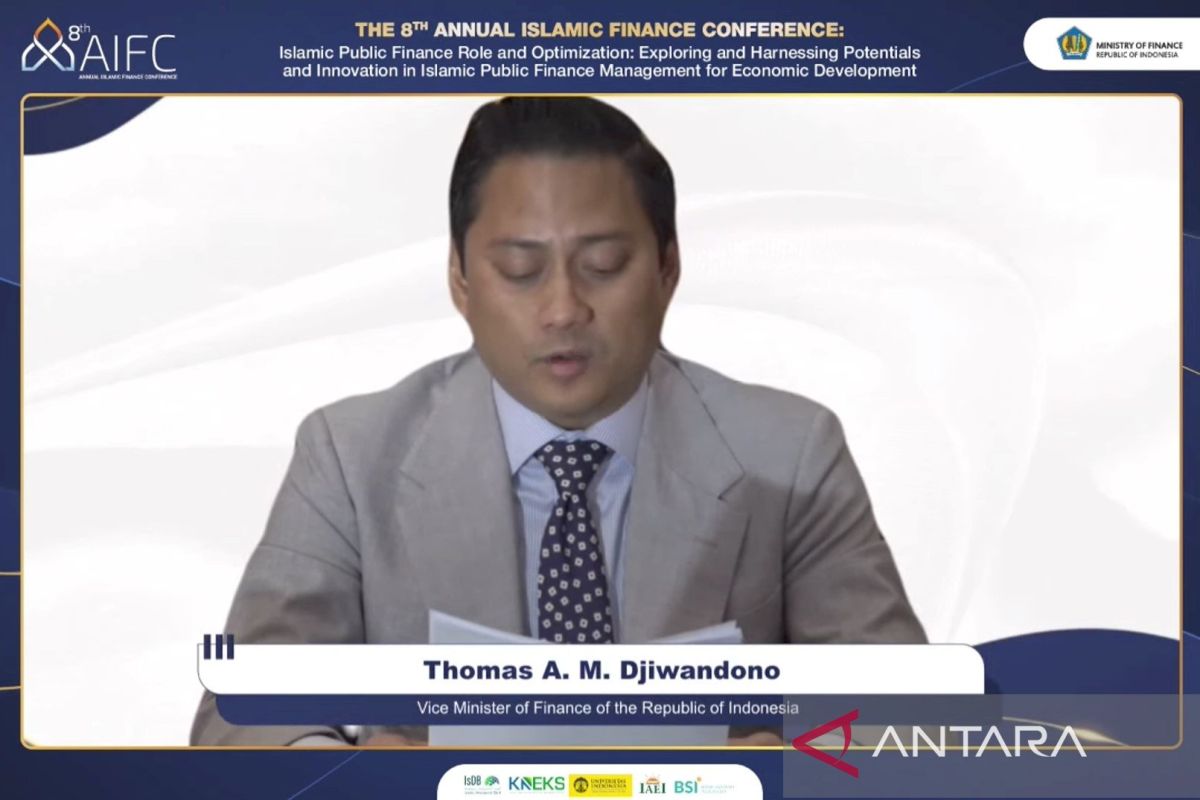
Deputy Minister of Finance II, Thomas Djiwandono, delivering his remarks at the 8th Annual Islamic Finance Conference (AIFC) in Jakarta on Thursday (October 3, 2024). (ANTARA/Uyu Septiyati Liman)


Jakarta (ANTARA) - Deputy Minister of Finance (Wamenkeu) II, Thomas Djiwandono, has said that Indonesia has managed to integrate the sharia economy and Islamic public finance principles with mainstream or conventional economic policies.

“Indonesia has made substantial progress in incorporating Islamic public finance principles into mainstream economy policies,” Djiwandono highlighted at a video conference broadcast here on Thursday.

He said that by collaborating with various stakeholders, the government is actively promoting the development and integration of Islamic finance principles into the national fiscal policy framework.

He noted that the attempt aims to ensure sustainable and inclusive economic development as well as improve social welfare.

“In regulatory and institutional framework, the government, through the collaboration of the Finance Ministry, the National Sharia Board (DSN), and the Financial Services Authority (OJK), has developed a robust regulatory framework to support the growth of Islamic finance,” he said.

He added that Indonesia has devised and enforced various laws based on Islamic economic principles, such as the management of sharia banking, zakat, and waqf.

He said that the principles of the sharia economy have also been accommodated in Law Number 4 of 2023 concerning the Development and Strengthening of the Financial Sector (UU P2SK), which seeks to modernize and adapt government regulations to the development of the current economic system.

“In addition, Indonesia has established the National Committee for Sharia Economy and Finance (KNEKS) and the Indonesian Association of Islamic Economists (IAEI) to accelerate the development and innovation of Islamic economy and finance, including Islamic public finance,” he pointed out.

According to the Islamic perspective, public financial policies should encourage investment and productive activities that create real value for society, Djiwandono said.

He added that public spending and investment must support development projects that contribute to sustainable economic growth and climate change mitigation, such as the development of renewable energy, green economy, and disaster-resilient infrastructure.

To fulfill the funding needs for the projects, the government has issued several sharia financial instruments in recent years, he noted.

In 2018, Indonesia became the first country to issue green sukuk to raise funds for environmentally friendly and sustainable projects related to energy, reforestation, and agriculture.

Later, the government launched the SDGs (Sustainable Development Goals) Government Securities Framework in 2021 worth more than US$10 billion (Rp152.68 trillion, exchange rate on Thursday = Rp15,268) for the development of renewable energy and waste management.

Meanwhile, for social purposes, the government issued Cash Waqf Linked Sukuk --- a cash waqf investment in state sukuk, whose returns were distributed by nazhir (a managerial body for waqf funds and activities) -- to finance social programs and community economic empowerment.

The issuance of sukuk in 2020 helped raise US$65 million (Rp992.42 billion) from more than 3 thousand waqf contributors.

“The government also regularly issues retail sukuk to tap into domestic retail investors. This provides a sharia-compliant investment option that also helps fund national development projects and contributes to the deepening of Indonesia’s financial sector,” Djiwandono said.

Related news: Sharia principle of tax fairness can improve welfare: Deputy Minister
Related news: Indonesia Islamic Financial Center for integrated sharia economy: Govt
 
Source:
Not Applicable

When one mixes religion and the economy nothing good can come out of it Indonesia now faces substantial problems in their economy because they took the worst aspect of a socialist economy too many monopolies by an incompetent state economy Now you want to add a Sharia economy?
To view this content we will need your consent to set third party cookies.
For more detailed information, see our cookies page.
 

Indonesia to check grocery shelves as deadline for halal labels nears​

1729925361355.jpeg


Reuters

SHARE/SAVE

Oct 16, 2024


JAKARTA –

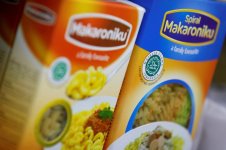
Indonesian authorities plan to inspect grocery store shelves to check compliance with a law requiring halal labels on food items from Friday, officials said, although some importers and restaurants face hurdles in complying.

The world's biggest Muslim-majority country adopted a measure in 2014 requiring the labeling for restaurants and food products, setting an Oct. 17 deadline to ensure items are suitable for consumption under Islamic law.

While most businesses in the nation of 280 million have complied, along with some major global food producers, others say they need more time.

"They (some members) want to be part of Indonesia's strong market for halal products, but are still encountering complex supply chains and lack of clear guidelines," said Lydia Ruddy, managing director of the American Chamber of Commerce.

"These potentially can lead to trade disruptions and higher costs," she said, adding that the chamber was in talks with the government on the matter.

She called for more foreign certifiers to speed inspection of products and raw materials abroad so as to help the affected American Chamber of Commerce members.

The law requires products or restaurants without the certification to declare they do not comply with Islamic law, a step that could hit sales.

Islamic law prohibits consumption of pork or intoxicants such as alcohol, while meat can only be eaten if the animals were slaughtered by prescribed methods.

The halal certifying body BPJPH has asked the government for a two-year waiver on some raw materials used in the food and beverages industry, as well as products of small businesses, but the president has yet to sign off, its head, Aqil Irham, said.

With Indonesia's President-designate Prabowo Subianto set to take over from the incumbent Joko Widodo next weekend, it was not clear if such a dispensation could be issued in time.

The presidential office did not immediately respond to request for comment.

The trade ministry deferred questions on the waiver to the BPJPH.

Authorities plan inspections on Friday to check compliance and issue a formal warning to producers of items that lack clear labels, said domestic trade official Moga Simatupang.

"We will take administrative action against non-compliance, so we urge importers to immediately register to get halal labels," he added.

In the absence of compliance, such products will be removed from stores, he added, without setting a time frame.

Most of the 400 members of the Indonesian Food and Beverage Industries Association have complied, but restaurants and hotels face difficulties because authorities need time to check menu offerings, said Adhi Lukman, the group's chairman.

Conservative interpretations of Islam have gained ground in Indonesia in the past few years, ushering in major changes to the economy, across industries from entertainment to banking.


Indonesia Officially Becomes the Third Largest Shareholder in the Islamic Development Bank​


SP -45/KLI/2023


Jeddah, Arab Saudi, 14 May 2023 – In the face of current global challenges, the role of multilateral development banks in international cooperation is increasingly crucial for addressing financing needs and enhancing the resilience of poor and vulnerable countries. As a member and founder since 1974, Indonesia recognizes the potential of the Islamic Development Bank (IsDB) development to optimize its capacity and significantly impact the global development agenda.

As a country with the largest Muslim population and considerable experience in handling and leading global agendas, Indonesia aims to become a more vital partner to IsDB. The goal is to enhance IsDB's role, realize its reform agenda, and fulfil its mandate of assisting member countries, particularly those that are impoverished and vulnerable, as well as Muslim communities worldwide.

Moreover, Indonesia seeks to further promote the role of IsDB in various development activities within the country, particularly in the development of Islamic economics and finance. As of December 2022, IsDB has already provided significant financial support for Indonesia amounting to USD 6.3 billion. These funds have primarily been directed towards sectors such as agriculture, education, industry, and mining, facilitated through various instruments such as project financing, trade finance, and technical assistance.

During the 48th IsDB Annual Meeting held on 10-13 May 2023 in Jeddah, Saudi Arabia, the IsDB Board of Governors unanimously approved the proposal to increase Indonesia’s shares. Consequently, Indonesia is now ranked as the third largest shareholder of IsDB following Saudi Arabia and Libya .

IsDB is a multilateral development bank that has a comparative advantage not only as the only multilateral development bank that applies Sharia principles, but also the majority of its members are developing countries, enabling it to promote South-South Cooperation. IsDB remains committed to carrying out reforms, including increasing low-cost or concessional financing for the development needs of its member countries, the majority of which are middle and low-income countries.

With this new shareholding position, Indonesia will ensure IsDB realizes its reform agenda to serve its member countries better. Indonesia will also ensure the effectiveness and affordability of IsDB's Sharia-based funding instruments in providing optimal impact and benefits for member countries, including supporting South-South Cooperation. It implements through the development of blended finance, which combines low-cost funds or grants from various sources, such as the state and philanthropy, with regular funds and facilities from multilateral development banks such as IsDB, plus commercial funds, which can come from the private sector. In addition, Indonesia itself can contribute through several existing programs and institutions, such as the International Development Cooperation Fund (LDKPI/Indonesia Aid) and SDG-Indonesia One, managed by PT Sarana Multi Infrastruktur. These mixed funds can be used for various development programs, such as poverty alleviation, climate change, food security, health, human resource development, and other strategic development agendas, which will ultimately help improve people's welfare.

During her remarks at the IsDB 48th Annual Meeting in Jeddah on 13 May 2023, the Minister of Finance Sri Mulyani Indrawati expressed, "Indonesia is committed to working closely with IsDB to have a long-term positive impact on Muslims and the global community. The global community, and Muslims in particular, need to rebuild better and stronger cooperation, especially in facing various challenges in the world economy today. It will be realized through Indonesia's role, which will increase in line with Indonesia's share position in IsDB."


Media Contact:

Deni Sujantoro
Head Of Communication and Information Services Bureau
[email protected]

 
1729926586338.png

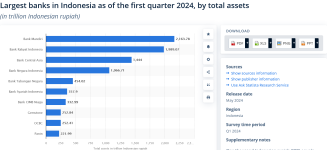
State Shariah Bank become the 6th largest bank in Indonesia.
The banking sector dominated by SOE banks (Bank Mandiri, Bank Rakyat Indonesia, Bank Negara Indonesia, Bank Tabungan Negara, and Bank Syariah Indonesia)
 
State Shariah Bank become the 6th largest bank in Indonesia.
The banking sector dominated by SOE banks (Bank Mandiri, Bank Rakyat Indonesia, Bank Negara Indonesia, Bank Tabungan Negara, and Bank Syariah Indonesia)

Indonesia: Financial Sector Assessment Program-Financial System Stability Assessment​

Publication Date:

August 8, 2024

Electronic Access:

Free Download. Use the free Adobe Acrobat Reader to view this PDF file

Summary:

The financial system appears to be broadly resilient, has strong capital and liquidity buffers but remains relatively small and dominated by banks, especially few state-owned banks. Household and corporate indebtedness and public debt are low.

The macroprudential policy framework features both financial stability and development objectives. The recently passed Financial Sector Omnibus Law (FSOL) will make notable reforms to the financial sector.

Series:

Country Report No. 2024/272


State-Owned Banks Disburse $69 Billion Microloans So Far​


Herman

November 4, 2024 | 1:04 pm

Jakarta. State-owned banks have disbursed Rp 1,088 trillion (approximately $69 billion) worth of the government’s microloans, better known by its Indonesian acronym KUR in 2020-2023.


KUR mainly targets Indonesia’s micro, small and medium enterprises (MSMEs), which largely contribute to the country’s gross domestic product (GDP). The microfinance program targets Indonesian MSMEs who are productive and feasible but lack collateral to borrow money to grow their businesses.


“State-run banks were responsible for 92 percent of the disbursed microloans so far. Private-owned banks granted 8 percent of the remaining KUR loans,” State-Owned Enterprise Minister Erick Thohir said in a hearing with the House of Representatives in Jakarta on Monday.


Indonesia's state-owned banks include Mandiri, BNI, and BRI. These three banks have also merged their respective sharia units into a single entity called Bank Syariah Indonesia (BSI). Bank Mandiri offers super microloans worth up to Rp 10 million with an annual interest rate of 3 percent. The bank also lets MSMEs take out loans starting from Rp 10 million and can go up to Rp 100 million.

The government is currently reviewing the targeted disbursed microloans for next year.


“We are mulling to disburse between Rp 200 trillion and Rp 300 trillion in microloans for agricultural and food security sectors. I think this aligns with [the state banks’] track record [of disbursing] Rp 1,088 trillion. We will push for figures that are similar to what we have achieved so far,” Erick said.


Indonesia is home to 65 million MSMEs, which contribute 61 percent of Indonesia’s gross domestic product (GDP) and absorb 97 percent of the country’s total workforce, government data showed.


Airlangga: Bullion Bank Aligns with Indonesia’s Muslim Population​


Erfan Maruf, Heru Andriyanto
February 19, 2025 | 2:57 am


1740059331522.webp
This undated provided by Freeport Indonesia shows a pile of gold bars that will be sent to state-owned gold supplier Aneka Tambang (Antam). (Photo courtesy of Freeport Indonesia)


Jakarta. The establishment of Indonesia’s first bullion bank will provide a Sharia-compliant savings method for the country’s predominantly Muslim population, Chief Economic Minister Airlangga Hartarto said on Tuesday.


The government plans to launch two bullion banks, which will offer financial services backed by precious metals such as gold. The official inauguration, attended by President Prabowo Subianto, is set to take place next week.


According to Airlangga, bullion banking aligns well with Islamic financial principles, making it a viable option for saving for Hajj pilgrimages or other financial needs.


He described gold as a safe investment, similar to the US dollar, but with key advantages.

Gold offers a steady increase in value and reliable returns without relying on bank interest, which is prohibited in Islamic finance.


Additionally, he noted that gold is free from currency fluctuations, making it a more stable asset in uncertain economic conditions.


“We need to start using gold as a savings method, especially for religious purposes. When Indonesian Muslims plan to perform Hajj, they need to save money -- and gold could be a smart part of their savings strategy,” Airlangga said during the Indonesia Economic Summit in Jakarta.


The two bullion banks will be operated by Bank Syariah Indonesia (BSI) and state-owned pawnshop company Pegadaian, with financial backing from Bank Rakyat Indonesia (BRI).


Economic Independence
Indonesia is among the world's top gold producers, with significant mining operations in Papua, North Sumatra, and West Java. However, much of its gold trading and storage has been conducted overseas, primarily in Singapore and Switzerland.


According to Airlangga, Indonesia produces up to 60 tons of gold annually, and the government is now focused on gold industrialization, aiming to produce high-purity gold bars that increase economic value and support the domestic financial system.


By establishing its own bullion bank, Indonesia aims to reduce dependency on foreign markets and create a more self-sufficient gold ecosystem.


The bullion bank will allow domestic gold deposits to be managed within the country instead of being stored abroad. The initiative aims to strengthen Indonesia’s gold reserves, enhance the domestic gold trading system, and reduce reliance on foreign institutions.


The government also believes that robust gold reserves will help strengthen the local currency.


Earlier, Bank Indonesia Governor Perry Warjiyo confirmed that the central bank is working with the Financial Services Authority (OJK) and the Indonesian government to set up the bullion bank.


The plan follows President Prabowo’s directive to enhance Indonesia’s financial sovereignty by maximizing the potential of its gold and precious metal reserves.


In the global financial system, bullion banks play a crucial role in gold trading, storage, and financing. These institutions facilitate gold transactions between central banks, mining companies, refiners, and investors. Major bullion banks such as JP Morgan, HSBC, and UBS operate in the London Bullion Market Association (LBMA), the world’s largest gold trading hub.


Indonesia Has the Potential to Become a Key Player in the Global Halal Industry​


Salman Mardira

February 28, 2025 | 9:08 am

1740922177822.webp

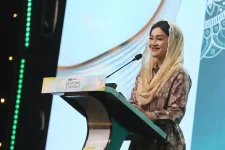
Financial Services Authority (OJK) Commissioner Friderica Widyasari Dewi delivers a speech during a Sharia economy seminar at the Ritz Carlton-Pacific Place Hotel in Jakarta, Thursday, Feb. 27.,2025. (B-Universe Photo)


Jakarta. Indonesia, home to one of the world’s largest Muslim populations, must strive to become a dominant force in the global halal industry, rather than merely serving as a major market destination, an official said on Thursday.


The country should play a more active and strategic role in shaping the halal economy and sharia-based services, said Friderica Widyasari Dewi, a commissioner at the Financial Services Authority (OJK).


“We must not fall behind, and we should not let Indonesia remain just a market for halal products and sharia-based services,” Friderica said during the "Sharia Economy 2025: Halal Lifestyle and Consumer Trends" seminar, hosted by B-Universe Media Holdings at the Ritz Carlton-Pacific Place Hotel in Jakarta.


“Instead, we must position ourselves as a key global player and ensure that the halal industry contributes significantly to our nation, economy, and society,” she added.

The Expanding Global Halal Industry
The global halal economy is witnessing rapid growth, fueled by rising Muslim consumer spending, increasing demand for sharia-compliant products, and greater government support for halal certification worldwide.


According to the State of the Global Islamic Economy Report 2023, Muslim consumer spending across halal food, pharmaceuticals, cosmetics, fashion, tourism, and media reached $2.29 trillion in 2022 and is projected to surpass $2.8 trillion by 2025.


The halal food industry alone accounted for $1.27 trillion, while Islamic finance assets have exceeded $4 trillion globally. Leading countries such as Malaysia, Saudi Arabia, the UAE, and Turkey have successfully established strong halal ecosystems and captured significant shares of the global market.


Indonesia’s Competitive Standing in the Halal Economy
Friderica revealed that Indonesia is already making significant strides in the halal industry and currently ranks third in the Global Islamic Economy Indicator (GIEI).


The country’s halal sectors are gaining global recognition:
  • 2nd in the world for the halal food industry
  • 3rd in Muslim fashion
  • 5th in pharmaceutical and halal cosmetics
  • 6th in the media and recreation industry
  • 7th in Islamic finance

In Muslim-friendly tourism, Indonesia has taken the top spot, ranking 1st in the Global Muslim Travel Index 2024.


With its vast domestic market, strong production capacity, and increasing government initiatives, Indonesia has the potential to lead the global halal industry by expanding exports, strengthening halal certification standards, and enhancing the sharia financial sector to attract international investment, she said.


Halal industry is vital, the Muslim world is now over 2 billion people and Muslim countries need to take advantage of that and create industries and Financial organisations that can utilise this massive population
 

The story of the owner of the largest beauty company in Indonesia was taken into a film​


Linda Hasibuan, CNBC Indonesia

28 February 2025 13:20

1741340123945.jpeg

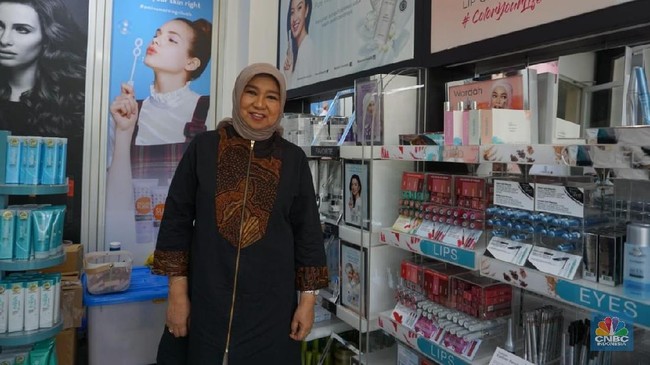
Jakarta, CNBC Indonesia - ParagonCorp presents a premiere of the film titled Seeking Divine Assistance to mark its 40th anniversary. This short film tells the inspiring journey of Nurhayati Subakat in building Wardah and Paragon to become the largest cosmetics company in Indonesia.

The film brings the audience diving into a full journey of meaning, values, and toughness that has brought Paragon to this point. ParagonCorp is the largest beauty company in Indonesia that houses leading cosmetic brands, including Wardah, Make Over, Emina, Kahf, and Tavi.

"Initially we made a novel with Ahmad Wadi, we kept thinking about making a short film so that it was easy for people to understand," said dr. Sari Chairunnisa, Deputy CEO of ParagonCorp when met in the Central Jakarta area, Friday (28/2/2025).

ParagonCorp is working with director Gina S. Noer and Kurnia Cahya Putra to bring the inspiring story of Nurhayati to the big screen.

The film stars Nafiza Fatia Rani, Revalina S. Temat and Widyati as the figure of Nurhayati Subakat in three epochs.


Nurhayati's journey to build Paragon, the factory was on fire​

Paragon’s success is not achieved in one night. There was an uphill battle at the beginning of the establishment of the company.

After graduating from the ITB pharmacy department as the best graduate, Nurhayati Subakat had felt frustrated because she had not yet got a job.

“I’ve been rejected when I’m applying for a job and that’s it many times. At first I wanted to be a lecturer, but I was rejected," she said, to the ITB community 2019.

After repeated rejection, Nurhayati finally accepted work as well. His first job was a pharmacist in the hospital. However, this job did not last long because she had to move to Jakarta with her husband.

While in Jakarta, the Minang woman restarted life from scratch. She sought another job until he was accepted. Then, a few years later resigned because of taking care of the child. While taking care of this child, she thought of becoming an entrepreneur.

"With the knowledge obtained in college and work experience, I am determined to open a quality cosmetics business at competitive prices," Nurhayati said.

So, she also sold the Princess brand women's shampoo in 1985 under the banner of the Mother Tradition Center (PTI).

At first, Nurhayati’s business was just small. Moved home industry and marketed from home to home. It is not easy for him to do soampus business because there are many players in the market.

Slowly but surely, the Princess's shampoo began to sell well in the market. To increase production, he set up a larger factory in 1990. Unfortunately, the existence of the factory was not long due to fire and threatened by bankruptcy.

Nurhayati was also slumped. She was worried about having to continue the business or not.

Halal cosmetic pioneer​

After her business was down, Nurhayati got a glimmer of hope when the government was eager to socialize halal products. She saw that at that time there was no halal-certified non-consumption product, especially in the cosmetic world. As a result, the company also shifted the target market to millions of Muslim women in 1995.

"The reason is none other than because they believe the market share is quite large and women need calmness in makeup," wrote Trend Hijaber in the World of Indonesian Fashion.

Since then PT Pusaka Tradition Mother again existed. They make a cosmetic product called Wardah that carries halal guarantees. What Nurhayati saw about halal cosmetic opportunities was ultimately proven. Wardah was successful in the market.

From here, Nurhayati began to climb the ladder of success. Its name is starting to smell in the cosmetics industry from the local market. Similarly, the Mother Tradition Heritage which later changed its name to PT Paragon Technology and Innovation in 2011. This name change is also accompanied by a child-based business

Currently, Paragon Corp has successfully become the largest beauty company in Indonesia that has exported to neighboring countries.


Indonesia boosts halal exports amid growing global demand​


Friday, 27 Jun 2025

JAKARTA (Xinhua): Indonesia's shipments of halal food reached US$41.9 billion in 2024, Director-General of National Export Development at the Trade Ministry, Fajarini Puntodewi, has announced.

Puntodewi said that halal food products dominated Indonesia's halal exports last year. The ministry would continue efforts to expand international markets for Indonesian halal products.


In addition, fashion, pharmaceutical, and cosmetic products were also major contributors to Indonesia's halal exports.

Fashion products exports were recorded at US$8.28 billion, followed by pharmaceuticals at US$0.73 billion, and cosmetics at US$0.43 billion. - Xinhua


Indonesia launches 5-year US dollar Islamic bond, 10-year green sukuk, term sheet shows​


By Reuters -
July 16, 2025 @ 12:16pm


JAKARTA: Indonesia has launched a five-year US dollar-denominated Islamic bond, or sukuk, with an initial price guidance of 4.85 per cent, along with a 10-year green sukuk at 5.5 per cent, according to a term sheet reviewed by Reuters today.


The document does not specify the size of the issuance, and the Indonesian government has not yet provided an official comment.


US President Donald Trump announced a 19 per cent tariff on goods from Indonesia on Tuesday, down from the 32 per cent rate he had proposed earlier this year.


The tariff was significantly reduced from the initial plan, Indonesia President Prabowo Subianto's spokesperson told reporters today.

Indonesian equities climbed to their highest point in a month following the latest tariffs announcement. The news came ahead of a policy meeting by Bank Indonesia scheduled for later in the day.


The sukuk bonds are being issued by Perusahaan Penerbit SBSN Indonesia III, with the Indonesian government acting as the obligor, according to the sheet, which added that they will be listed on both the Singapore Exchange and Nasdaq Dubai.

The bonds will hold credit ratings in line with the sovereign ratings of Indonesia, Southeast Asia's largest economy, at Baa2 by Moody's, BBB by S&P and BBB by Fitch.


Indonesia will use the proceeds to meet part of its general financing requirements, with proceeds from the 10-year green sukuk going to finance or re-finance eligible green expenditures, according to the document.


Deutsche Bank and HSBC are the joint green structuring coordinators.


Bank of America, Deutsche Bank, Dubai Islamic Bank , HSBC and Mandiri Securities are the bookrunners, while BRI Danareksa Sekuritas and Trimegah Sekuritas Indonesia are the co-managers, the sheet showed.


BSI (BRIS) to Move Up a Level, Directly Under Danantara’s Control


By Akbar Evandio, Aprianto Cahyo Nugroho

June 3, 2025
3–4 minutes

To view this content we will need your consent to set third party cookies.
For more detailed information, see our cookies page.


Bisnis.com, JAKARTA — PT Bank Syariah Indonesia Tbk. (BRIS) is preparing to enter a new chapter. The Ministry of State-Owned Enterprises (SOEs) is reviewing the spin-off of this Islamic finance giant — formed through the merger of three Himbara-owned banks — from PT Bank Mandiri (Persero) Tbk. (BMRI).


SOE Minister Erick Thohir said that BSI will later be placed directly under the management of Badan Pengelola Investasi Daya Anagata Nusantara (BPI Danantara). The spin-off process is still ongoing and has not yet reached the final stage.


"Not yet, it’s still in process. Later, Danantara will submit a proposal to us, and then we will see its prospects," Erick said at the Presidential Palace complex in Jakarta, Monday (June 2, 2025).


He stressed that the SOE Ministry now acts as a regulator. This means that the study and official submission are entirely under Danantara’s domain. "Yes, later there will be an assessment from them. My current position is as a regulator," he explained.


For context, BSI was the result of a major merger of three state-owned Islamic banks: Bank Syariah Mandiri, BNI Syariah, and BRI Syariah. Bank Mandiri became the majority shareholder.


Currently, Bank Mandiri holds 51.47% of BSI’s shares, followed by Bank Negara Indonesia (BNI) with 23.24%, Bank Rakyat Indonesia (BRI) with 15.38%, and the remaining 9.91% is publicly owned.


Strengthening the Islamic Finance Sector​


The spin-off plan is believed to be part of the government’s broader effort to strengthen the national Islamic finance sector. Transferring ownership from Bank Mandiri to Danantara is considered strategic in forming a more independent and dynamic sharia ecosystem under one investment umbrella.


Changes in Leadership and Dividends​


Meanwhile, BSI recently held its Annual General Meeting of Shareholders (AGMS) on Friday (May 16, 2025). One key decision was the appointment of Anggoro Eko Cahyo as the new President Director, replacing Hery Gunardi.


Anggoro previously served as President Director of BPJS Ketenagakerjaan. Hery, on the other hand, has now been appointed as the top executive at Bank Rakyat Indonesia (BRI).


The AGMS also approved the distribution of dividends amounting to Rp1.05 trillion, or 15% of the company’s 2024 net profit of Rp7.01 trillion. This equals Rp22.78 per share, a 22.86% increase from last year’s dividend of around Rp18.54 per share.


A counter-view - how Sharia/Islam is incompatible with Democracy. Frankly, I can extend several arguments to other faiths but religious leaders/ few believers of Islam are militant and highly motivated to implement Sharia
To view this content we will need your consent to set third party cookies.
For more detailed information, see our cookies page.


Frankly, I don't see how a book can have all answers to humanity or be so perfect that it can't be made better. Where is the reformation... where is the space for debate, discussion but above all change
 

Users who are viewing this thread

Latest Posts

Back
Top