
Distant_Observer
Trusted Member


This is the moment Trump realised Modi is a tyrant and could risk a genocide or a nuclear war. 10 months ago.
US know they enabled a monster.
US know they enabled a monster.
Follow along with the video below to see how to install our site as a web app on your home screen.
Note: This feature may not be available in some browsers.

The US Is Rethinking the India-Pakistan Dynamic
Washington’s South Asia strategy is shifting, and it is this recalibration – rather than tariffs – that threatens to inject lasting volatility into ties with New Delhi.
September 03, 2025
https://thediplomat.com/2025/09/the-us-is-rethinking-the-india-pakistan-dynamic/
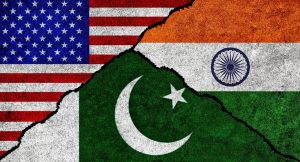
The real story in South Asia today is not tariffs or Russian oil, but Washington’s quiet reassessment of Pakistan, and its implications for both the India-U.S. relationship and China’s role in South and West Asia. While critics of President Donald Trump focus on his personality and unpredictable diplomacy, they miss a deeper truth: U.S. strategy is shifting, and it is this recalibration – rather than short-term irritants – that threatens to inject lasting volatility into ties with New Delhi.
This ongoing shift is a major departure from existing policy, where successive administrations in Washington have sought to deepen relations with India while simultaneously limiting their relationship with Pakistan. Two trends drove this policy direction: growing U.S. frustration over Pakistan’s conduct during the war in Afghanistan, and a greater focus on the strategic competition with China, which increased the centrality of India as a potential net security provider in the Indo-Pacific region. These trends granted policymakers the space to limit the relationship with Pakistan, and by extension be seen as being respectful of New Delhi’s sensitivities with regards to U.S. security and economic engagement with Pakistan.
The Trump administration, however, has apparently reconsidered this approach. Many have argued that the ongoing shift is simply a function of Trump’s own unique personality. And while this may be true to some extent, much of the change in strategy is informed by a reassessment of the United States’ global geostrategy and the ways in which the competition with China is being approached.
As far as the region is concerned, the Trump administration seems to have concluded that Pakistan offers things that are of importance to the United States, especially as it relates to the country’s role in West Asia and the Middle East. Furthermore, Pakistan is home to some of the world’s largest undeveloped copper and gold reserves, which are currently being developed by a Canadian mining company that is seeking a “G-7 financing package.” Washington does not want a Chinese flag to fly over Pakistan’s critical mineral assets, and policymakers also see U.S. investments as a means to guard against a potential Chinese military footprint in Gwadar. As such, engagement with Pakistan is being seen through a different lens, where the alignment of interests is sharper than it has been in decades.
On the China front, Washington is waking up to the reality that Beijing is now a peer competitor, with economic and technological capabilities rivaling – and in some areas surpassing – the United States. At the same time, policymakers know the deep interconnectedness of the two economies cannot be unwound anytime soon, making it imperative for Washington and Beijing to find terms of coexistence. This recalibration, in turn, reduces India’s relative salience as a partner to offset U.S. dependency on China.
Finally, the recent conflict between India and Pakistan also seems to have changed Washington’s net assessment of each country’s military capabilities. More specifically, there is a belief that India is likely to be tied up in the Himalayas for the foreseeable future. As a result, it will be much more difficult for India to commit the expected level of resources into building maritime capabilities that can position it as a net security provider in the Indo-Pacific.
@PAKISTANFOREVER @Hakikat ve Hikmet @pwfi @Hakwa Nadro @NA71 @TOPGUN @TAC @Dalit @FuturePAF @Rationale @Raj-Hindustani @SoulSpokesman @Paro @Beijingwalker @chinasun @Michael @PK781 @ghazi52 @PK781

The US wants India to become what they wanted China to become in the 80s, a larger but less competent Japan. A market for US goods, and to be a part of the development of India; earning large profits on modest modernization. China developed itself beyond this expectation; the reason it was allowed into the WTO and other preferences.I don't think their is a realignment. The americans and he west are extremely angry with india for showing how weak and incompetent they are by being militarily defeated by Pakistan. Their investments of trillions of dollars in trying to build up india as a bulwark against China failed spectacular and the west and america have NOTHING to show for it. The americans and the west are just acknowledging Pakistan for being able to defeat an enemy that is more than 7x bigger than Pakistan that was backed by america, the west, israel and russia. They feel they can have some transactional relationship with Pakistan.
The US wants India to become what they wanted China to become in the 80s, a larger but less competent Japan. A market for US goods, and to be a part of the development of India; earning large profits on modest modernization. China developed itself beyond this expectation; the reason it was allowed into the WTO and other preferences.
The US doesn’t want to make that mistake with India. It wasn’t a partner that is willing to risk its neck. India’s reluctance when Pakistan has shown itself to be militarily capable to be such a partner, time and time again, has given Pakistan a “return to the 80s” nostalgia for the older US admin officials, with their hopes probably being that Pakistan will be a bulwark against Iranian influence as well as a backdoor into Russia, while keeping its relations with China “measured”. That is probably the hope in the US administration.
If Pakistan can be seen to be containing and working with Afghanistan, it would be even more useful in this regard. The Ludo board of Central Asia, as I call it, and the US wants to piggyback on Pakistan to play.

Question wasn't directed to you due obvious reason. I have learnt of @SoulSpokesman's sense of sarcasm over the years, hence it was directed to him.For Pakistan, perfect blessing.
Is your 1.4 billion population blessing or curse? It's not letting you go up. Still have over 400 million people below poverty............
 .
.
Blessing or curse?
Both. Even when its poor it remains relevant. When it becomes wealthy, a major power and a net security provider to the region.
The US wants India to become what they wanted China to become in the 80s, a larger but less competent Japan. A market for US goods, and to be a part of the development of India; earning large profits on modest modernization. China developed itself beyond this expectation; the reason it was allowed into the WTO and other preferences.
The US doesn’t want to make that mistake with India. It wasn’t a partner that is willing to risk its neck. India’s reluctance when Pakistan has shown itself to be militarily capable to be such a partner, time and time again, has given Pakistan a “return to the 80s” nostalgia for the older US admin officials, with their hopes probably being that Pakistan will be a bulwark against Iranian influence as well as a backdoor into Russia, while keeping its relations with China “measured”. That is probably the hope in the US administration.
If Pakistan can be seen to be containing and working with Afghanistan, it would be even more useful in this regard. The Ludo board of Central Asia, as I call it, and the US wants to piggyback on Pakistan to play.
it is not like China disappearedIt was a relationship out of necessity to counter China.

it is not like China disappeared
Any State Department official who was 30 in 1988 is 67 nowThe US wants India to become what they wanted China to become in the 80s, a larger but less competent Japan. A market for US goods, and to be a part of the development of India; earning large profits on modest modernization. China developed itself beyond this expectation; the reason it was allowed into the WTO and other preferences.
The US doesn’t want to make that mistake with India. It wasn’t a partner that is willing to risk its neck. India’s reluctance when Pakistan has shown itself to be militarily capable to be such a partner, time and time again, has given Pakistan a “return to the 80s” nostalgia for the older US admin officials


We use essential cookies to make this site work, and optional cookies to enhance your experience.


