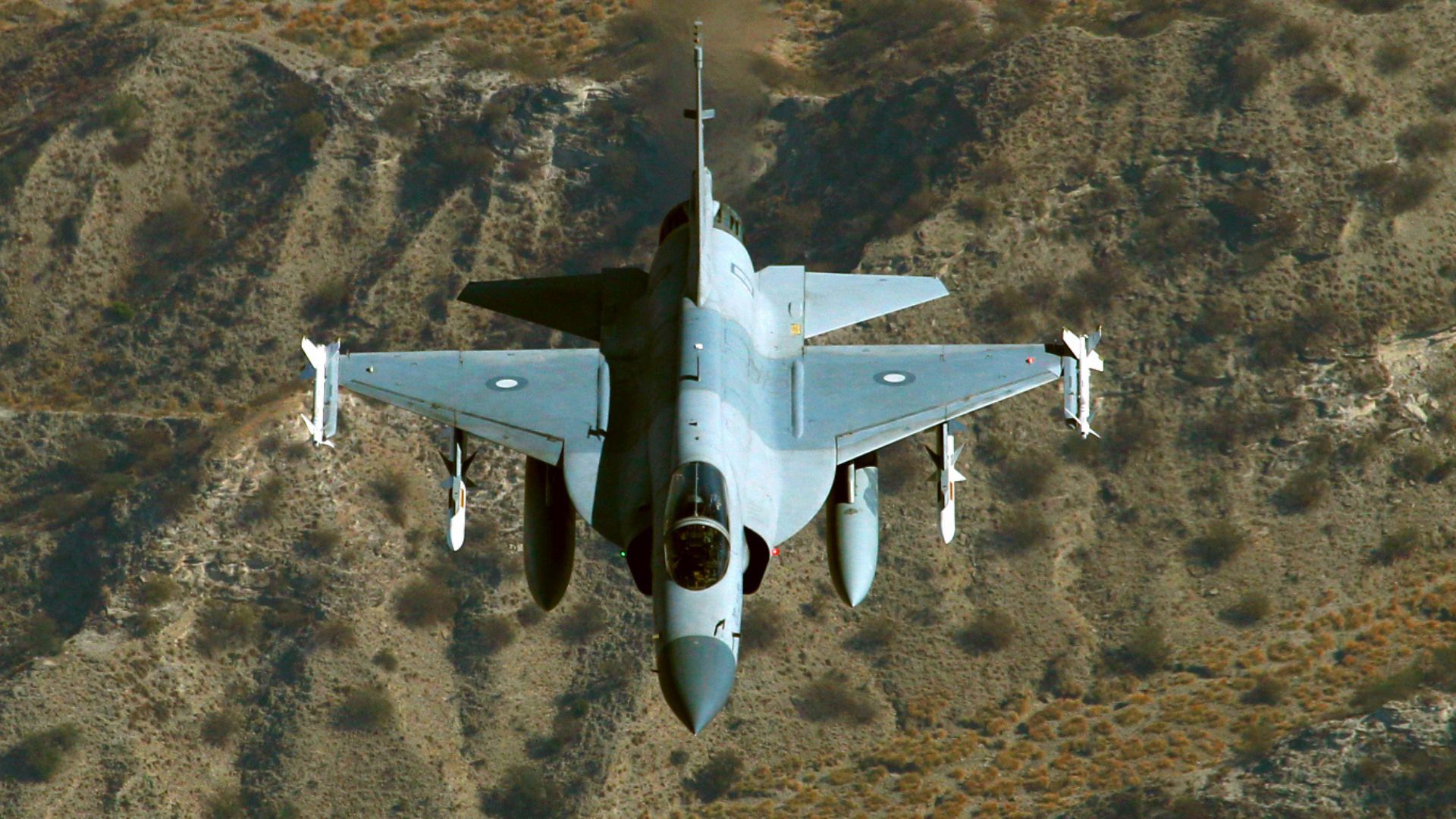
22 Years On, The Sanction-Proof JF-17 is More Important Than Ever.

Fatman17

Moderator
Joined
Apr 24, 2007
Messages
51,441
Reaction score
62,180
Reputation
12,726.8
Country of Origin
Country of Residence
Skip to contentSkip to footer
Quwa


JF-17-Thunder.jpg

22 Years On, The Sanction-Proof JF-17 is More Important Than Ever​

Defence Uncut by Quwa Team
In this week’s episode of Defence Uncut, we mark the 22nd anniversary of the JF-17 Thunder’s maiden flight by taking a deep dive into the platform’s history, evolution, and future with Usman Shabir and Yawar Mazhar, authors of the definitive Pakistan Air Force (PAF) history, Eagles of Destiny.

The JF-17 program represents a seminal moment in the PAF’s history, not merely for the affordable, multi-role capability it delivered, but for the strategic pragmatism and shrewd project management that brought it to fruition. Born from the crucible of crippling Western sanctions, the Thunder’s journey from a collaborative concept to a mature, combat-proven workhorse offers a masterclass in risk mitigation, iterative development, and building indigenous capacity against the odds.

The discussion unpacks the long and often-stalled road to a locally produced fighter, from early post-independence ambitions to the first serious attempt with Project Sabre II in the late 1980s. Ultimately, it was the severe geopolitical pressures of the 1990s that provided the final impetus for the PAF to take control of its own destiny, leading to the co-development partnership with China that would yield the JF-17. This episode explores how the PAF’s disciplined, end-user-driven approach allowed it to succeed where other regional programs have faltered, creating not just an aircraft, but a sustainable foundation for Pakistan’s future aerospace ambitions.

Listen to the full episode on YouTube or your favorite podcast platform.

A Program Forged by Sanctions​

The story of the JF-17 is inextricably linked to the history of Western sanctions against Pakistan. While vague ideas of local aircraft manufacturing existed since the 1950s, these were largely aspirational and lacked serious backing from a PAF pragmatically focused on building a modern force with proven, off-the-shelf hardware. The PAF’s early focus was correctly placed on developing foundational technical capabilities, such as establishing gas turbine maintenance facilities and depot-level maintenance capacity, which would prove vital in the long run.

The first serious endeavor toward an indigenous fighter was Project Sabre II in the late 1980s. This ambitious program aimed to re-engineer the Chinese F-7 airframe with a powerful American General Electric F404 engine and Western avionics, with Grumman serving as the primary systems integrator. Conceptually similar to the Northrop F-20 Tigershark’s redevelopment of the F-5, Sabre II was a pragmatic attempt to create a modern, lightweight fighter. However, the imposition of the Pressler Amendment sanctions in 1990 abruptly killed the project and halted the delivery of new F-16s, leaving the PAF in a critical capability gap.

This strategic isolation proved to be the catalyst for the JF-17. With Western suppliers out of the picture, the PAF deepened its existing partnership with China’s Chengdu Aerospace Corporation (CAC). After years of negotiations, a formal contract was signed in June 1999 for the co-design, co-development, and co-production of a new fighter, then known as the Super-7 or FC-1. The objective was clear: to develop an affordable and sanction-proof workhorse to replace the PAF’s large but aging fleets of A-5s, F-7Ps, and Mirages in the numbers required to maintain credible conventional deterrence.

Disciplined Program Management​

Perhaps the most critical factor in the JF-17’s success was the PAF’s disciplined and pragmatic approach to program management, a stark contrast to the troubled development of India’s HAL Tejas. When new US sanctions in 1999 blocked the planned integration of Western avionics, the PAF made the pivotal decision to decouple the airframe and avionics development streams. Instead of allowing the program to stall while searching for new subsystems, the PAF instructed CAC to focus solely on maturing the airframe, while it explored avionics options in parallel. This decision prevented catastrophic delays and ultimately led to the adoption of a mature avionics suite derived from China’s J-10 program.

This philosophy of incremental, risk-managed development defined the program’s entire lifecycle. The PAF adopted a block-based production strategy, inducting the aircraft in batches of 50 and introducing new capabilities with each successive variant.

  • Block 1 served as the baseline, establishing the production line and getting a capable, modern aircraft into service quickly.
  • Block 2 introduced key enhancements such as an air-to-air refueling probe and an improved Environmental Control System (ECS), while also fielding the dual-seat JF-17B trainer. The JF-17B itself served as an aerodynamic testbed for the subsequent Block 3.
  • Block 3 represents a generational leap, incorporating a modern Active Electronically Scanned Array (AESA) radar, a new Helmet-Mounted Display and Sight (HMD/S), and an advanced digital fly-by-wire flight control system.
This iterative approach ensured that the program was never held hostage by a single, undeveloped technology. It allowed the PAF to field a credible capability in the near term while methodically building toward its ultimate requirements, all while absorbing technology and building indigenous industrial capacity at a manageable pace.


Building True Self-Reliance​


A common critique of the JF-17 program questions its “indigenous” credentials, pointing to its foreign-sourced engine and other key components. This view, however, conflates the distinct concepts of an Original Equipment Manufacturer’s (OEM) capability with a nation’s overall industrial base. The PAF’s primary strategic goal was not 100% turnkey production, but rather securing its supply chain from the threat of Western political coercion.


Viewed through this lens, the program has been an unmitigated success. Through a comprehensive Transfer of Technology (ToT) agreement, Pakistan Aeronautical Complex (PAC) Kamra now manufactures approximately 60% of the JF-17’s airframe, including critical components like the wings and vertical tail. Furthermore, PAC has progressively localized the production of key avionics, including the mission computer, the KLJ-7 radar, and the head-up display. This deep involvement in manufacturing and systems integration gives the PAF sovereign control over the aircraft’s maintenance, overhaul, and crucially, its weapons integration — a level of autonomy it never had with Western platforms. The capacity and expertise built through the JF-17 program have served as the direct foundation for more ambitious national projects, such as the National Aerospace Science and Technology Park (NASTP).


The next stage of this evolution, outlined under the forthcoming PFX program, will see further upgrades to the JF-17 platform, including a new Gallium Nitride (GaN) AESA radar and an integrated electronic countermeasures (ECM) suite. This demonstrates a clear path forward, ensuring the JF-17 remains the adaptable, high-quantity, and cost-effective backbone of the PAF for decades to come. In an era where modern conflicts have underscored the critical need for a sustainable mass of platforms capable of deploying precision standoff munitions, the wisdom of the PAF’s investment in the JF-17 has never been clearer.


Thus, in Quwa’s estimation, the Pakistan Air Force will likely aim for a total JF-17 fleet size of around 200-250 aircraft in the long term, including future upgraded variants. This number would not only ensure a full one-for-one replacement of its remaining legacy Mirage III/5 strike aircraft but also provide a sustainable and sovereign industrial base for maintaining a large force of platforms essential for massed conventional standoff strikes, a capability of ever-increasing importance in the regional strategic calculus.


Source:
Quwa
Skip to contentSkip to footer
Quwa


JF-17-Thunder.jpg

22 Years On, The Sanction-Proof JF-17 is More Important Than Ever​

Defence Uncut by Quwa Team
In this week’s episode of Defence Uncut, we mark the 22nd anniversary of the JF-17 Thunder’s maiden flight by taking a deep dive into the platform’s history, evolution, and future with Usman Shabir and Yawar Mazhar, authors of the definitive Pakistan Air Force (PAF) history, Eagles of Destiny.

The JF-17 program represents a seminal moment in the PAF’s history, not merely for the affordable, multi-role capability it delivered, but for the strategic pragmatism and shrewd project management that brought it to fruition. Born from the crucible of crippling Western sanctions, the Thunder’s journey from a collaborative concept to a mature, combat-proven workhorse offers a masterclass in risk mitigation, iterative development, and building indigenous capacity against the odds.

The discussion unpacks the long and often-stalled road to a locally produced fighter, from early post-independence ambitions to the first serious attempt with Project Sabre II in the late 1980s. Ultimately, it was the severe geopolitical pressures of the 1990s that provided the final impetus for the PAF to take control of its own destiny, leading to the co-development partnership with China that would yield the JF-17. This episode explores how the PAF’s disciplined, end-user-driven approach allowed it to succeed where other regional programs have faltered, creating not just an aircraft, but a sustainable foundation for Pakistan’s future aerospace ambitions.

Listen to the full episode on YouTube or your favorite podcast platform.

A Program Forged by Sanctions​

The story of the JF-17 is inextricably linked to the history of Western sanctions against Pakistan. While vague ideas of local aircraft manufacturing existed since the 1950s, these were largely aspirational and lacked serious backing from a PAF pragmatically focused on building a modern force with proven, off-the-shelf hardware. The PAF’s early focus was correctly placed on developing foundational technical capabilities, such as establishing gas turbine maintenance facilities and depot-level maintenance capacity, which would prove vital in the long run.

The first serious endeavor toward an indigenous fighter was Project Sabre II in the late 1980s. This ambitious program aimed to re-engineer the Chinese F-7 airframe with a powerful American General Electric F404 engine and Western avionics, with Grumman serving as the primary systems integrator. Conceptually similar to the Northrop F-20 Tigershark’s redevelopment of the F-5, Sabre II was a pragmatic attempt to create a modern, lightweight fighter. However, the imposition of the Pressler Amendment sanctions in 1990 abruptly killed the project and halted the delivery of new F-16s, leaving the PAF in a critical capability gap.

This strategic isolation proved to be the catalyst for the JF-17. With Western suppliers out of the picture, the PAF deepened its existing partnership with China’s Chengdu Aerospace Corporation (CAC). After years of negotiations, a formal contract was signed in June 1999 for the co-design, co-development, and co-production of a new fighter, then known as the Super-7 or FC-1. The objective was clear: to develop an affordable and sanction-proof workhorse to replace the PAF’s large but aging fleets of A-5s, F-7Ps, and Mirages in the numbers required to maintain credible conventional deterrence.

Disciplined Program Management​

Perhaps the most critical factor in the JF-17’s success was the PAF’s disciplined and pragmatic approach to program management, a stark contrast to the troubled development of India’s HAL Tejas. When new US sanctions in 1999 blocked the planned integration of Western avionics, the PAF made the pivotal decision to decouple the airframe and avionics development streams. Instead of allowing the program to stall while searching for new subsystems, the PAF instructed CAC to focus solely on maturing the airframe, while it explored avionics options in parallel. This decision prevented catastrophic delays and ultimately led to the adoption of a mature avionics suite derived from China’s J-10 program.

This philosophy of incremental, risk-managed development defined the program’s entire lifecycle. The PAF adopted a block-based production strategy, inducting the aircraft in batches of 50 and introducing new capabilities with each successive variant.

  • Block 1 served as the baseline, establishing the production line and getting a capable, modern aircraft into service quickly.
  • Block 2 introduced key enhancements such as an air-to-air refueling probe and an improved Environmental Control System (ECS), while also fielding the dual-seat JF-17B trainer. The JF-17B itself served as an aerodynamic testbed for the subsequent Block 3.
  • Block 3 represents a generational leap, incorporating a modern Active Electronically Scanned Array (AESA) radar, a new Helmet-Mounted Display and Sight (HMD/S), and an advanced digital fly-by-wire flight control system.
This iterative approach ensured that the program was never held hostage by a single, undeveloped technology. It allowed the PAF to field a credible capability in the near term while methodically building toward its ultimate requirements, all while absorbing technology and building indigenous industrial capacity at a manageable pace.


Building True Self-Reliance​


A common critique of the JF-17 program questions its “indigenous” credentials, pointing to its foreign-sourced engine and other key components. This view, however, conflates the distinct concepts of an Original Equipment Manufacturer’s (OEM) capability with a nation’s overall industrial base. The PAF’s primary strategic goal was not 100% turnkey production, but rather securing its supply chain from the threat of Western political coercion.


Viewed through this lens, the program has been an unmitigated success. Through a comprehensive Transfer of Technology (ToT) agreement, Pakistan Aeronautical Complex (PAC) Kamra now manufactures approximately 60% of the JF-17’s airframe, including critical components like the wings and vertical tail. Furthermore, PAC has progressively localized the production of key avionics, including the mission computer, the KLJ-7 radar, and the head-up display. This deep involvement in manufacturing and systems integration gives the PAF sovereign control over the aircraft’s maintenance, overhaul, and crucially, its weapons integration — a level of autonomy it never had with Western platforms. The capacity and expertise built through the JF-17 program have served as the direct foundation for more ambitious national projects, such as the National Aerospace Science and Technology Park (NASTP).


The next stage of this evolution, outlined under the forthcoming PFX program, will see further upgrades to the JF-17 platform, including a new Gallium Nitride (GaN) AESA radar and an integrated electronic countermeasures (ECM) suite. This demonstrates a clear path forward, ensuring the JF-17 remains the adaptable, high-quantity, and cost-effective backbone of the PAF for decades to come. In an era where modern conflicts have underscored the critical need for a sustainable mass of platforms capable of deploying precision standoff munitions, the wisdom of the PAF’s investment in the JF-17 has never been clearer.


Thus, in Quwa’s estimation, the Pakistan Air Force will likely aim for a total JF-17 fleet size of around 200-250 aircraft in the long term, including future upgraded variants. This number would not only ensure a full one-for-one replacement of its remaining legacy Mirage III/5 strike aircraft but also provide a sustainable and sovereign industrial base for maintaining a large force of platforms essential for massed conventional standoff strikes, a capability of ever-increasing importance in the regional strategic calculus.


Sir, that is very impressive , but many Pakistani members are saying that Pakistan is once again going to be a major US ally and partner and India is sucking up to China. So, it seems Pakistan has replaced planes vulnerable to Western sanctions with planes vulnerable to Chinese sanctions.
 
Sir, that is very impressive , but many Pakistani members are saying that Pakistan is once again going to be a major US ally and partner and India is sucking up to China. So, it seems Pakistan has replaced planes vulnerable to Western sanctions with planes vulnerable to Chinese sanctions.
Take a flight on your Tejas dude and take your 2 cents back with you.
 
Sir, that is very impressive , but many Pakistani members are saying that Pakistan is once again going to be a major US ally and partner and India is sucking up to China. So, it seems Pakistan has replaced planes vulnerable to Western sanctions with planes vulnerable to Chinese sanctions.
That is a very far fetched analysis. Good try though.
 
Skip to contentSkip to footer
Quwa


JF-17-Thunder.jpg

22 Years On, The Sanction-Proof JF-17 is More Important Than Ever​

Defence Uncut by Quwa Team
In this week’s episode of Defence Uncut, we mark the 22nd anniversary of the JF-17 Thunder’s maiden flight by taking a deep dive into the platform’s history, evolution, and future with Usman Shabir and Yawar Mazhar, authors of the definitive Pakistan Air Force (PAF) history, Eagles of Destiny.

The JF-17 program represents a seminal moment in the PAF’s history, not merely for the affordable, multi-role capability it delivered, but for the strategic pragmatism and shrewd project management that brought it to fruition. Born from the crucible of crippling Western sanctions, the Thunder’s journey from a collaborative concept to a mature, combat-proven workhorse offers a masterclass in risk mitigation, iterative development, and building indigenous capacity against the odds.

The discussion unpacks the long and often-stalled road to a locally produced fighter, from early post-independence ambitions to the first serious attempt with Project Sabre II in the late 1980s. Ultimately, it was the severe geopolitical pressures of the 1990s that provided the final impetus for the PAF to take control of its own destiny, leading to the co-development partnership with China that would yield the JF-17. This episode explores how the PAF’s disciplined, end-user-driven approach allowed it to succeed where other regional programs have faltered, creating not just an aircraft, but a sustainable foundation for Pakistan’s future aerospace ambitions.

Listen to the full episode on YouTube or your favorite podcast platform.

A Program Forged by Sanctions​

The story of the JF-17 is inextricably linked to the history of Western sanctions against Pakistan. While vague ideas of local aircraft manufacturing existed since the 1950s, these were largely aspirational and lacked serious backing from a PAF pragmatically focused on building a modern force with proven, off-the-shelf hardware. The PAF’s early focus was correctly placed on developing foundational technical capabilities, such as establishing gas turbine maintenance facilities and depot-level maintenance capacity, which would prove vital in the long run.

The first serious endeavor toward an indigenous fighter was Project Sabre II in the late 1980s. This ambitious program aimed to re-engineer the Chinese F-7 airframe with a powerful American General Electric F404 engine and Western avionics, with Grumman serving as the primary systems integrator. Conceptually similar to the Northrop F-20 Tigershark’s redevelopment of the F-5, Sabre II was a pragmatic attempt to create a modern, lightweight fighter. However, the imposition of the Pressler Amendment sanctions in 1990 abruptly killed the project and halted the delivery of new F-16s, leaving the PAF in a critical capability gap.

This strategic isolation proved to be the catalyst for the JF-17. With Western suppliers out of the picture, the PAF deepened its existing partnership with China’s Chengdu Aerospace Corporation (CAC). After years of negotiations, a formal contract was signed in June 1999 for the co-design, co-development, and co-production of a new fighter, then known as the Super-7 or FC-1. The objective was clear: to develop an affordable and sanction-proof workhorse to replace the PAF’s large but aging fleets of A-5s, F-7Ps, and Mirages in the numbers required to maintain credible conventional deterrence.

Disciplined Program Management​

Perhaps the most critical factor in the JF-17’s success was the PAF’s disciplined and pragmatic approach to program management, a stark contrast to the troubled development of India’s HAL Tejas. When new US sanctions in 1999 blocked the planned integration of Western avionics, the PAF made the pivotal decision to decouple the airframe and avionics development streams. Instead of allowing the program to stall while searching for new subsystems, the PAF instructed CAC to focus solely on maturing the airframe, while it explored avionics options in parallel. This decision prevented catastrophic delays and ultimately led to the adoption of a mature avionics suite derived from China’s J-10 program.

This philosophy of incremental, risk-managed development defined the program’s entire lifecycle. The PAF adopted a block-based production strategy, inducting the aircraft in batches of 50 and introducing new capabilities with each successive variant.

  • Block 1 served as the baseline, establishing the production line and getting a capable, modern aircraft into service quickly.
  • Block 2 introduced key enhancements such as an air-to-air refueling probe and an improved Environmental Control System (ECS), while also fielding the dual-seat JF-17B trainer. The JF-17B itself served as an aerodynamic testbed for the subsequent Block 3.
  • Block 3 represents a generational leap, incorporating a modern Active Electronically Scanned Array (AESA) radar, a new Helmet-Mounted Display and Sight (HMD/S), and an advanced digital fly-by-wire flight control system.
This iterative approach ensured that the program was never held hostage by a single, undeveloped technology. It allowed the PAF to field a credible capability in the near term while methodically building toward its ultimate requirements, all while absorbing technology and building indigenous industrial capacity at a manageable pace.


Building True Self-Reliance​


A common critique of the JF-17 program questions its “indigenous” credentials, pointing to its foreign-sourced engine and other key components. This view, however, conflates the distinct concepts of an Original Equipment Manufacturer’s (OEM) capability with a nation’s overall industrial base. The PAF’s primary strategic goal was not 100% turnkey production, but rather securing its supply chain from the threat of Western political coercion.


Viewed through this lens, the program has been an unmitigated success. Through a comprehensive Transfer of Technology (ToT) agreement, Pakistan Aeronautical Complex (PAC) Kamra now manufactures approximately 60% of the JF-17’s airframe, including critical components like the wings and vertical tail. Furthermore, PAC has progressively localized the production of key avionics, including the mission computer, the KLJ-7 radar, and the head-up display. This deep involvement in manufacturing and systems integration gives the PAF sovereign control over the aircraft’s maintenance, overhaul, and crucially, its weapons integration — a level of autonomy it never had with Western platforms. The capacity and expertise built through the JF-17 program have served as the direct foundation for more ambitious national projects, such as the National Aerospace Science and Technology Park (NASTP).


The next stage of this evolution, outlined under the forthcoming PFX program, will see further upgrades to the JF-17 platform, including a new Gallium Nitride (GaN) AESA radar and an integrated electronic countermeasures (ECM) suite. This demonstrates a clear path forward, ensuring the JF-17 remains the adaptable, high-quantity, and cost-effective backbone of the PAF for decades to come. In an era where modern conflicts have underscored the critical need for a sustainable mass of platforms capable of deploying precision standoff munitions, the wisdom of the PAF’s investment in the JF-17 has never been clearer.


Thus, in Quwa’s estimation, the Pakistan Air Force will likely aim for a total JF-17 fleet size of around 200-250 aircraft in the long term, including future upgraded variants. This number would not only ensure a full one-for-one replacement of its remaining legacy Mirage III/5 strike aircraft but also provide a sustainable and sovereign industrial base for maintaining a large force of platforms essential for massed conventional standoff strikes, a capability of ever-increasing importance in the regional strategic calculus.


I just posted a thread based on my analysis. Should Pakistan not take advantage of Chinese AI based UCAV 5th gen stealth designs shown in the military parade? Because if we get one of those designs, we can use the remainder of the components from the JF-17 project like sensors and avionica, and jump straight into a 5th gen industry, that's our eventual target through PFX.

But instead of going through PFX-Alpha first, we by pass that and start now with TOT to a 5th gen stealthy UCAV. The benefits of this approach are too many. With Indian mass placement of S-400 and other LR-Sams on our borders, with more Rafales and SU-57's coming, it would make sense to drop the ideas of 4th gen designs and jump directly to 5th gen when the design is available at an affordable price because from the inside, the sensor suite can still be from PFX.

@Distant_Observer @pwfi @Hakikat ve Hikmet @MirageV3ff @TAC
 
The JF-17 is the only fighter in the world once worked on by the United States, China and the Soviet Union, yet even that triple pedigree could not satisfy the brutal specification sheet; every requirement was finally met only after the chief designer of the J-20 took charge and led the last redesign.
 
Skip to contentSkip to footer
Quwa


JF-17-Thunder.jpg

22 Years On, The Sanction-Proof JF-17 is More Important Than Ever​

Defence Uncut by Quwa Team
In this week’s episode of Defence Uncut, we mark the 22nd anniversary of the JF-17 Thunder’s maiden flight by taking a deep dive into the platform’s history, evolution, and future with Usman Shabir and Yawar Mazhar, authors of the definitive Pakistan Air Force (PAF) history, Eagles of Destiny.

The JF-17 program represents a seminal moment in the PAF’s history, not merely for the affordable, multi-role capability it delivered, but for the strategic pragmatism and shrewd project management that brought it to fruition. Born from the crucible of crippling Western sanctions, the Thunder’s journey from a collaborative concept to a mature, combat-proven workhorse offers a masterclass in risk mitigation, iterative development, and building indigenous capacity against the odds.

The discussion unpacks the long and often-stalled road to a locally produced fighter, from early post-independence ambitions to the first serious attempt with Project Sabre II in the late 1980s. Ultimately, it was the severe geopolitical pressures of the 1990s that provided the final impetus for the PAF to take control of its own destiny, leading to the co-development partnership with China that would yield the JF-17. This episode explores how the PAF’s disciplined, end-user-driven approach allowed it to succeed where other regional programs have faltered, creating not just an aircraft, but a sustainable foundation for Pakistan’s future aerospace ambitions.

Listen to the full episode on YouTube or your favorite podcast platform.

A Program Forged by Sanctions​

The story of the JF-17 is inextricably linked to the history of Western sanctions against Pakistan. While vague ideas of local aircraft manufacturing existed since the 1950s, these were largely aspirational and lacked serious backing from a PAF pragmatically focused on building a modern force with proven, off-the-shelf hardware. The PAF’s early focus was correctly placed on developing foundational technical capabilities, such as establishing gas turbine maintenance facilities and depot-level maintenance capacity, which would prove vital in the long run.

The first serious endeavor toward an indigenous fighter was Project Sabre II in the late 1980s. This ambitious program aimed to re-engineer the Chinese F-7 airframe with a powerful American General Electric F404 engine and Western avionics, with Grumman serving as the primary systems integrator. Conceptually similar to the Northrop F-20 Tigershark’s redevelopment of the F-5, Sabre II was a pragmatic attempt to create a modern, lightweight fighter. However, the imposition of the Pressler Amendment sanctions in 1990 abruptly killed the project and halted the delivery of new F-16s, leaving the PAF in a critical capability gap.

This strategic isolation proved to be the catalyst for the JF-17. With Western suppliers out of the picture, the PAF deepened its existing partnership with China’s Chengdu Aerospace Corporation (CAC). After years of negotiations, a formal contract was signed in June 1999 for the co-design, co-development, and co-production of a new fighter, then known as the Super-7 or FC-1. The objective was clear: to develop an affordable and sanction-proof workhorse to replace the PAF’s large but aging fleets of A-5s, F-7Ps, and Mirages in the numbers required to maintain credible conventional deterrence.

Disciplined Program Management​

Perhaps the most critical factor in the JF-17’s success was the PAF’s disciplined and pragmatic approach to program management, a stark contrast to the troubled development of India’s HAL Tejas. When new US sanctions in 1999 blocked the planned integration of Western avionics, the PAF made the pivotal decision to decouple the airframe and avionics development streams. Instead of allowing the program to stall while searching for new subsystems, the PAF instructed CAC to focus solely on maturing the airframe, while it explored avionics options in parallel. This decision prevented catastrophic delays and ultimately led to the adoption of a mature avionics suite derived from China’s J-10 program.

This philosophy of incremental, risk-managed development defined the program’s entire lifecycle. The PAF adopted a block-based production strategy, inducting the aircraft in batches of 50 and introducing new capabilities with each successive variant.

  • Block 1 served as the baseline, establishing the production line and getting a capable, modern aircraft into service quickly.
  • Block 2 introduced key enhancements such as an air-to-air refueling probe and an improved Environmental Control System (ECS), while also fielding the dual-seat JF-17B trainer. The JF-17B itself served as an aerodynamic testbed for the subsequent Block 3.
  • Block 3 represents a generational leap, incorporating a modern Active Electronically Scanned Array (AESA) radar, a new Helmet-Mounted Display and Sight (HMD/S), and an advanced digital fly-by-wire flight control system.
This iterative approach ensured that the program was never held hostage by a single, undeveloped technology. It allowed the PAF to field a credible capability in the near term while methodically building toward its ultimate requirements, all while absorbing technology and building indigenous industrial capacity at a manageable pace.


Building True Self-Reliance​


A common critique of the JF-17 program questions its “indigenous” credentials, pointing to its foreign-sourced engine and other key components. This view, however, conflates the distinct concepts of an Original Equipment Manufacturer’s (OEM) capability with a nation’s overall industrial base. The PAF’s primary strategic goal was not 100% turnkey production, but rather securing its supply chain from the threat of Western political coercion.


Viewed through this lens, the program has been an unmitigated success. Through a comprehensive Transfer of Technology (ToT) agreement, Pakistan Aeronautical Complex (PAC) Kamra now manufactures approximately 60% of the JF-17’s airframe, including critical components like the wings and vertical tail. Furthermore, PAC has progressively localized the production of key avionics, including the mission computer, the KLJ-7 radar, and the head-up display. This deep involvement in manufacturing and systems integration gives the PAF sovereign control over the aircraft’s maintenance, overhaul, and crucially, its weapons integration — a level of autonomy it never had with Western platforms. The capacity and expertise built through the JF-17 program have served as the direct foundation for more ambitious national projects, such as the National Aerospace Science and Technology Park (NASTP).


The next stage of this evolution, outlined under the forthcoming PFX program, will see further upgrades to the JF-17 platform, including a new Gallium Nitride (GaN) AESA radar and an integrated electronic countermeasures (ECM) suite. This demonstrates a clear path forward, ensuring the JF-17 remains the adaptable, high-quantity, and cost-effective backbone of the PAF for decades to come. In an era where modern conflicts have underscored the critical need for a sustainable mass of platforms capable of deploying precision standoff munitions, the wisdom of the PAF’s investment in the JF-17 has never been clearer.


Thus, in Quwa’s estimation, the Pakistan Air Force will likely aim for a total JF-17 fleet size of around 200-250 aircraft in the long term, including future upgraded variants. This number would not only ensure a full one-for-one replacement of its remaining legacy Mirage III/5 strike aircraft but also provide a sustainable and sovereign industrial base for maintaining a large force of platforms essential for massed conventional standoff strikes, a capability of ever-increasing importance in the regional strategic calculus.


The History of the JF-17 Thunder Fighter and its Future Outlook

To view this content we will need your consent to set third party cookies.
For more detailed information, see our cookies page.
 
Sir, that is very impressive , but many Pakistani members are saying that Pakistan is once again going to be a major US ally and partner and India is sucking up to China. So, it seems Pakistan has replaced planes vulnerable to Western sanctions with planes vulnerable to Chinese sanctions.

China will not interfere in a country's foreign affairs. Diplomacy is an internal affair, and China's diplomatic principle is non-interference in each other's internal affairs. China is not the United States, and China has never imposed sanctions on any country for such reasons.

Consider Russia: even today, when Russia is extremely dependent on China, China has never interfered in relations between Russia and India.
 
saw someone mentioned Block 4 here on the forum today, any one heard anything?

Nothing official at all, reference to Block 4 was more conceptual on the ongoing development of the platform.

Right now, there is some confusion of what PFX is, and whether it will be a Block 4 of the JF17 or something else.
 
Last edited:
Sir, that is very impressive , but many Pakistani members are saying that Pakistan is once again going to be a major US ally and partner and India is sucking up to China. So, it seems Pakistan has replaced planes vulnerable to Western sanctions with planes vulnerable to Chinese sanctions.

You lot degrade the quality of forum. Been saying this for long, you Indians should be given some aptitude test when you apply for IDs, before letting you in.

I just wasted couple seconds of my life reading your verbal diarrhoea.
 
Last edited:
Sir, that is very impressive , but many Pakistani members are saying that Pakistan is once again going to be a major US ally and partner and India is sucking up to China. So, it seems Pakistan has replaced planes vulnerable to Western sanctions with planes vulnerable to Chinese sanctions.
Perfect example of
Sawal-e-Gandum
Jawab-e-Jo
 
Sir, that is very impressive , but many Pakistani members are saying that Pakistan is once again going to be a major US ally and partner and India is sucking up to China. So, it seems Pakistan has replaced planes vulnerable to Western sanctions with planes vulnerable to Chinese sanctions.
Take your frustration somewhere else. Don't blame Pakistan or Pakistanis for indian stupidity.
 
Sir, that is very impressive , but many Pakistani members are saying that Pakistan is once again going to be a major US ally and partner and India is sucking up to China. So, it seems Pakistan has replaced planes vulnerable to Western sanctions with planes vulnerable to Chinese sanctions.
Keep living in delusions and trying hard to cope the shock and bloody beating that you got. We really enjoy your stupidity.
 

Users who are viewing this thread

Pakistan Defence Latest

Back
Top