
PK781
Trusted Member


i want some too, and like to move there asap!I’m about to apply for Saudi citizenship right now
Follow along with the video below to see how to install our site as a web app on your home screen.
Note: This feature may not be available in some browsers.
i want some too, and like to move there asap!I’m about to apply for Saudi citizenship right now
we have lots of oil but its all black...lol......we keep frying burgers and kebabs all day in same oils.......plenty available every food stall in PakAll Pakistan needs is money and oil.


This interesting

Afghan ki bhi ho jani ha wohi currency.Next step should be a single currency between Saudi Arabia and Pakistan.
Haath hola rakho Sarkar .Next step should be a single currency between Saudi Arabia and Pakistan.
Next step should be a single currency between Saudi Arabia and Pakistan.

The only military assistance we got prior to 71 conflict were Jordanian F104s that were transferred to PAF with US approval and 90 odd F86E bought by Shah of Iran from Germany and transferred to Pakistan (I believe happened in 69).The Saudis received their first Tornado in 1986. The only conflicts we've had since then are 1999 (Kargil), 2019, and 2025. We didn't receive any direct foreign military assistance in any of them.
In 1971 the Saudis provided political and financial support. Can't seem to find any mention of warships being sent anywhere in 71 or 65.
It is not just propaganda. The Saudis dont need this agreement to hire Pakistani mercenaries for internal security or for Yemen. if they have chosen to risk their relationship with the US, Iran, Israel and India, it is only to get the implicit nuclear umbrella. No one from either side will deny the nuclear dimension. That is the whole value of the agreement to the Saudis and without it, it is not worth the paper it is printed on.Saudis will most likely use Pakistan to fight wars in Yemen or aggression against Iran. Everyone is excited but when we get attacked by India and saudia looks the other way then we will realise our auqaat. Pakistan must make sure this agreement is binding upon both parties and we will only defend saudia from attacks. Also keep in mind we mentioned many times that we will defend Makka and Madina with troops on the ground, maybe the agreement is to make it official. Qatar is close to Turkey, this is why Turkey sent troops to Qatar to defend them from Saudia attack, I know Israel bombed Qatar but noone can stop that except you retaliate by trying to shoot the planes down or chase them away from your airspace. Noone dares to bomb Israel since Usa will defend Israel at all costs. All the nuke propaganda needs to be buried, Pakistan does not want to internationalise their nukes so the world will make it out like we are a threat and come after us.

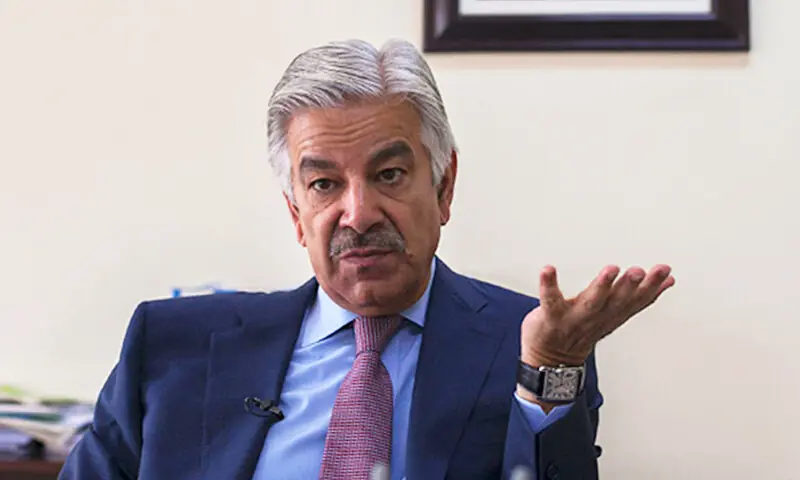
“After Qatar, Can the Gulf Still Trust Washington — or Is It Time for Turkey and Pakistan?”
Israel’s attack on Qatar has sent shockwaves across the Gulf, not only for its audacity but for what it reveals: the American security umbrella, long treated as unshakable, is looking increasingly fragile. For decades, the GCC states have outsourced their defense to Washington, trusting U.S. power to deter threats and uphold stability. Yet when a member state comes under fire, the silence—or hesitation—from their supposed guarantor speaks louder than any treaty. The time has come for the Gulf to ask a hard question: is dependence on the United States a strategic liability, and should the region begin forging alternative security partnerships with rising powers like Turkey and Pakistan?
For much of the post-Cold War era, Gulf capitals relied on American military might as the cornerstone of their survival. U.S. bases, aircraft carriers, and defense pacts projected an aura of invincibility. But recent events reveal cracks in that shield. Washington’s shifting priorities toward Asia, domestic political fatigue over Middle Eastern entanglements, and an increasingly transactional approach to alliances have left GCC leaders wondering whether U.S. protection is still guaranteed when push comes to shove. Israel’s strike on Qatar is not just an isolated incident—it is a stress test for a security model that may no longer fit the realities of today.
At the same time, the geopolitical landscape is changing. Turkey has demonstrated both willingness and capacity to project power in the region, from its military footprint in Qatar itself to its broader involvement in Syria, Libya, and beyond. Pakistan, meanwhile, holds unique value as a nuclear-armed state with deep cultural, religious, and economic ties to the Gulf. Its military has long been involved in Gulf security—from training Saudi forces to deploying troops for regional defense agreements. Together, Ankara and Islamabad present a compelling alternative: Muslim-majority powers capable of offering credible defense partnerships rooted in shared interests and identity.
Critics will argue that neither Turkey nor Pakistan can match the global reach of the United States, and that is true. But the question is not about replacing Washington wholesale—it is about diversifying security dependencies. Just as Gulf economies are seeking to diversify beyond oil, so too must their security strategies expand beyond an exclusive reliance on America. A more multipolar approach, involving Turkey, Pakistan, and even other Asian powers, could reduce vulnerability to U.S. political shifts while enhancing the region’s strategic autonomy.
This is not without challenges. Turkish foreign policy is ambitious and at times unpredictable, while Pakistan’s internal politics and economic instability raise concerns about long-term commitments. Yet both nations have demonstrated resilience and a willingness to engage where others hesitate. Most importantly, they do not carry the baggage of double standards that increasingly taints U.S. policy in the eyes of many in the Gulf.
Israel’s strike on Qatar should be a turning point. The GCC cannot afford to remain complacent, assuming that Washington’s shield will always hold. To do so is to invite vulnerability in a region where power is shifting rapidly. By exploring security partnerships with Turkey and Pakistan, the Gulf states would not only bolster their defenses but also send a clear message: the era of unilateral dependence on the United States is over.
Policy Recommendations for the GCC:
1. Joint Defense Exercises – Launch regular trilateral military drills with Turkey and Pakistan to strengthen interoperability and signal credible deterrence.
2. Intelligence Sharing Platforms – Establish secure intelligence-sharing frameworks focused on counterterrorism, cyber defense, and regional threat assessments.
3. Defense Procurement Diversification – Reduce reliance on U.S. arms by co-developing or purchasing advanced systems from Turkey and Pakistan, while investing in indigenous defense industries.
4. Security Academies and Training – Expand military training exchanges with Pakistani academies and Turkish defense institutions to build human capital within GCC armed forces.
5. Collective Security Dialogue – Create a GCC–Turkey–Pakistan security forum to institutionalize cooperation and gradually build a framework for mutual defense guarantees.
A Roadmap Forward
The Gulf’s future security lies not in nostalgia for past guarantees but in bold, pragmatic choices that reflect the realities of a changing world order. Israel’s attack on Qatar has exposed the risks of inaction. If the GCC takes concrete steps—joint drills, intelligence cooperation, diversified procurement, and institutionalized dialogue—it can gradually build a more resilient, autonomous security architecture. This roadmap is not about abandoning the United States, but about ensuring the Gulf is never again left vulnerable to the indecision or shifting priorities of a single power. The time for debate has passed; the time for decisive action has arrived.
Rizwan Warraich
PakTurk Institute


