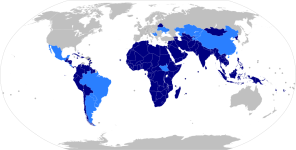
Members and other Participants of NAM Movement

ST1976

Banned
Joined
Jul 25, 2006
Messages
3,311
Reaction score
436
Reputation
271.9
Country of Origin
Country of Residence
Members and other Participants of NAM Movement :coffee:

The Movement recognizes three categories for participation: Full Member, Observer and Guest.
The Bandung Principles and the Membership Criteria of the Non-Aligned Movement function as admission criteria both for new members and observers. At present, the Movement has 120 Member States, 17 Observer Countries and 10 Observer organizations. Membership Criteria of The Movement of Non-Aligned Countries

1. The Country should have adopted an independent policy based on the coexistence of States with different political and social systems and on nonalignment, or it should have shown a tendency to favor such a policy.

2. The Country in question should support national independence movements in a consistent manner.

3. The Country should not be a member of a multilateral military alliance concluded in the context of great power conflicts.

4. If the Country has a bilateral military agreement with a great power or it is a member of a regional defense pact, the agreement or pact should have not been concluded deliberately in the context of great power conflicts.

5. If the Country has granted military bases to a foreign power, the concession should have not been made in the context of great power conflicts.

Members have full rights and duties, while observers may participate only in the Movement deliberation and plenary sessions and Guests only attend high- level meetings of the Movement ( specially opening and closing sessions ) if so approved by the coordinating Bureau.


How many countries are members of the Non-Aligned Movement?


The Non-Aligned Movement is a forum of 120 developing countries that aren’t formally aligned with any major world power or any bloc. After United Nations, it is the largest grouping of states worldwide. :coffee:

Drawing on the principles agreed at the Bandung Conference in 1955, the Non-Aligned Movement was established in 1961 in Belgrade, SR Serbia, Yugoslavia through an initiative of the Indian Prime Minister Jawaharlal Nehru, Ghanaian President Kwame Nkrumah, Indonesian President Sukarno, Egyptian President Gamal Abdel Nasser and Yugoslav President Josip Broz Tito. This led to the first Conference of Heads of State or Governments of Non-Aligned Countries. The term non-aligned movement first appears in the fifth conference in 1976, where participating countries are denoted as "members of the movement". ☕

The purpose of the organization was enumerated by Fidel Castro in his Havana Declaration of 1979 as to ensure "the national independence, sovereignty, territorial integrity and security of non-aligned countries" in their "struggle against imperialism, colonialism, neo-colonialism, racism, and all forms of foreign aggression, occupation, domination, interference or hegemony as well as against great power and bloc politics." The countries of the Non-Aligned Movement represent nearly two-thirds of the United Nations' members and contain 55% of the world population. Membership is particularly concentrated in countries considered to be developing or part of the Third World, though the Non-Aligned Movement also has a number of developed nations.

Although many of the Non-Aligned Movement's members were actually quite closely aligned with one or another of the superpowers (such as the People's Republic of China, an observer, or the Soviet Union, not participating in the Non-Aligned Movement), the movement still maintained cohesion throughout the Cold War, even despite several conflicts between members which also threatened the movement. In the years since the Cold War's end, it has focused on developing multilateral ties and connections as well as unity among the developing nations of the world, especially those within the Global South. ☕

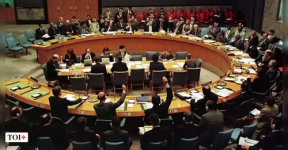
1734226098661.png

 
Six times Russia’s veto helped India avoid a crisis. ☕
https://timesofindia.indiatimes.com...DX_dXMODSU1UN7wffI_aem_9DHa_Mu1yJQJlbHfe8LnTg
1734226471797.png

Over the years, Russia’s veto power has thwarted many UN Security Council resolutions targeting India on issues such as Goa and Kashmir

To view this content we will need your consent to set third party cookies.
For more detailed information, see our cookies page.


.

=>

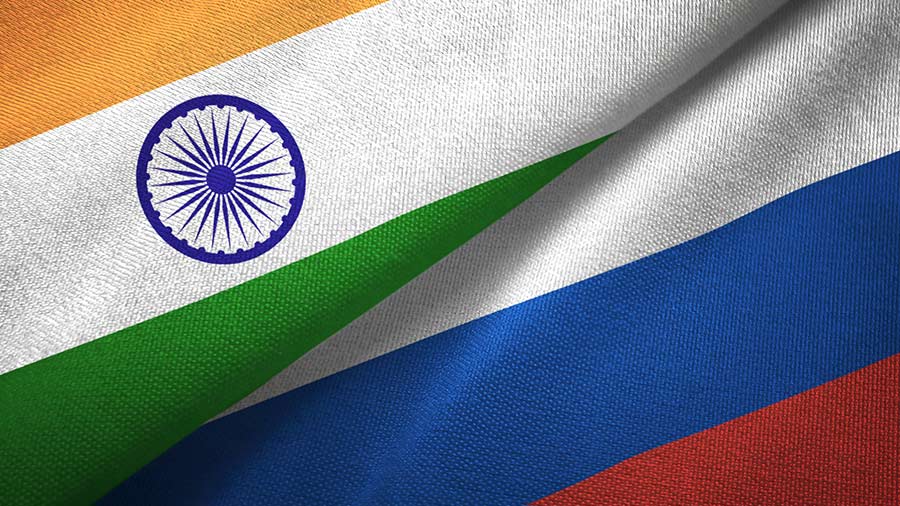
6 times Russia used Veto to save India at the UN​


1734226600538.png

Between 1957 and 1971, the Soviet Union used its veto power six times to torpedo resolutions against India. (y)

February 20, 1957- When the UN tried to interfere in the Kashmir matter​

After the British left India, Kashmir had signed an instrument of accession and decided to become a part of the Union of India.

Yet, on February 20, 1957, Australia, Cuba, the UK and the US brought a resolution, requesting the UNSC President to ask India and Pakistan to resolve the matter. The armies of both the countries were also to be withdrawn, as per the draft resolution.

Then there was also a proposal for the deployment of UN troops in Kashmir on a temporary basis. At that time, the Soviet Union vetoed the proposed resolution, whereas Sweden abstained from voting. :coffee:


December 18, 1961- When the West displayed outrage over Goa and Daman & Diu​

In 1961, India gained true freedom from colonialism, when the Portuguese were ousted from Goa and Daman & Diu. The West was however unhappy. After all, Western powers couldn’t tolerate the end of their imperialist agenda in India. So, France, Turkey, the UK and the US brought a resolution against India at the UNSC. It had objected to India’s use of armed forces.

India was asked to remove its forces and restore the situation that existed prior to December 17, 1961. Chile, China, Ecuador, France, Turkey, the UK and the US supported the resolution.

However, the Soviet Union, Sri Lanka, Liberia and the UAE voted against the resolution. With Soviet Union’s support, India was able to steer clear of the resolution. :coffee:

June 22, 1962- Kashmir issue was raised again​

On June 22, 1962, another vile attempt was made to internationalise the Kashmir issue.

With US support, Ireland brought a resolution in the Security Council that asked India and Pakistan to resolve the Kashmir dispute. The two countries were asked to create a conducive atmosphere for an amicable resolution.

Again, it was the USSR that vetoed the resolution. Romania too voted against the resolution. And India once again avoided external interference in Kashmir. :coffee:

December 4, 1971- demand fit ceasefire during the Bangladesh Liberation​

In 1971, India and Pakistan went to war and soon it became clear that Pakistan was headed for a humiliating defeat. The West was naturally alarmed. So, under American leadership, a proposed resolution was brought to declare a ceasefire on the Indo-Pak border. Argentina, Belgium, Burundi, China, Italy, Japan, Nicaragua, Sierra Leone, Somalia, Syria and the US supported the resolution.

Yet, the Soviet Union exercised its veto power, which allowed India to keep overwhelming the Pakistani forces. :coffee:

December 5, 1971- attempt to use refugees for a ceasefire​

With their first resolution failing, the countries of Argentina, Belgium, Burundi, Italy, Japan, Nicaragua, Sierra Leone and Somalia proposed another ceasefire. This time they claimed it was necessary to ensure the return of refugees.

The Soviet Union again vetoed the resolution against India, while the US supported the resolution. Again, India was able to continue its blistering campaign against the Pakistani military forces.

December 14, 1971- the Soviet Union vetoed the third resolution during the Indo-Pak war​

On December 14, 1971, one last desperate attempt was made to save Pakistan from a major humiliation.

A US-sponsored resolution proposed that both India and Pakistan should pull back their forces and declare a ceasefire.

Again, several countries voted in favour of the resolution, while Poland voted against it and the UK and France abstained. The important part was that the USSR vetoed the US-sponsored resolution against India yet again.

What happened thereafter is known to the world at large. On December 16, 1971, 93,000 Pakistani soldiers surrendered before the Indian Army and Bangladesh was ultimately liberated from the clutches of Pakistan.

Yet, it was the USSR that played a pivotal role in fending away the pressure that was being mounted against New Delhi.

https://tfipost.com/2022/03/6-times-russia-used-veto-to-save-india-at-the-un/

 
What are some examples of where the USSR used a veto for India?

The USSR used its veto power in the United Nations Security Council (UNSC) on several occasions regarding issues that directly or indirectly affected India, particularly during the Cold War era. Here are a couple of notable examples: :coffee:

  1. Kashmir Conflict (1948): After the first Indo-Pakistani war, the issue of Kashmir was brought before the UN. The USSR supported India's position on Kashmir and vetoed resolutions that were unfavorable to India, particularly those that called for a plebiscite or that would have favored Pakistan's claims.
  2. Bangladesh Liberation War (1971): During the conflict leading to the creation of Bangladesh, the USSR supported India’s intervention in the war against Pakistan. The US and China were critical of India’s actions, and there were attempts to pass resolutions in the UNSC that would condemn India. The USSR vetoed these resolutions, effectively backing India's military actions and its humanitarian concerns regarding the refugee crisis.
  3. Nuclear Non-Proliferation Issues: In the context of nuclear non-proliferation discussions, the USSR sometimes vetoed resolutions that sought to impose sanctions or restrictions on India, especially considering India's strategic interests as a non-signatory of the Nuclear Non-Proliferation Treaty (NPT).
These examples highlight how the USSR's veto power was utilized to support India’s territorial integrity and strategic interests during critical geopolitical moments.


19th Summit of the Non-Aligned Movement​


The 19th Summit of the Non-Aligned Movement was held in January 2024 in Kampala, Uganda. Out of 120 member states around 90 participated in the summit including 30 heads of state. The event was marked by strong criticism of Israel's actions during the Israel–Hamas war by many participating delegations. It was the first time since 2009 (Sharm El Sheikh) that the NAM summit was organized in Africa and first time since 1998 (Durban) it was organized in Sub-Saharan Africa.

The hosting of the event coincided with the hosting of the Group of 77 summit later that year, marking the first instance where both summits were organized by the same country. This dual hosting initiative aimed to enhance the country's global standing, particularly amidst strong criticism from Western nations regarding the significant downturn in LGBT rights in Uganda.

 
To view this content we will need your consent to set third party cookies.
For more detailed information, see our cookies page.
 
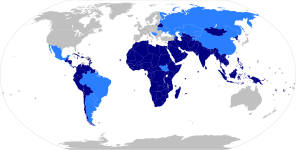
Non-Aligned Movement

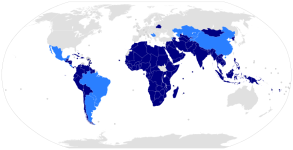
The Non-Aligned Movement (NAM) is a forum of 120 countries that are not formally aligned with or against any major power bloc. It was founded with the view to advancing interests of developing countries in the context of Cold War confrontation. After the United Nations, it is the largest grouping of states worldwide. :coffee:

1734227790852.png


Member States
Observer States

  • 120 member states
  • 20 observer states
  • 10 international organisations

Origins and the Cold War​


The aligned countries on the northern hemisphere: NATO in blue and the Warsaw Pact in red.Josip Broz Tito, Jawaharlal Nehru, and Gamal Abdel Nasser, pioneers of the Non-Aligned Movement during the Brioni Meeting
The term 'Non-Alignment' was used for the first time in 1950 at the United Nations by India and Yugoslavia, both of which refused to align themselves with any side in the multi-alliances involving Korean War. Drawing on the principles agreed at the Bandung Conference in 1955, the Non-Aligned Movement as an organization was founded on the Brijuni islands in Yugoslavia in 1956 and was formalized by signing the Declaration of Brijuni on 19 July 1956. The Declaration was signed by Yugoslavia's president, Josip Broz Tito, India's prime minister Jawaharlal Nehru and Egypt's president, Gamal Abdel Nasser. :coffee: One of the quotations within the Declaration is "Peace can not be achieved with separation, but with the aspiration towards collective security in global terms and expansion of freedom, as well as terminating the domination of one country over another". According to Rejaul Karim Laskar, an ideologue of the Congress party which ruled India for most part of the Cold War years, the Non-Aligned Movement arose from the desire of Jawaharlal Nehru and other leaders of the newly independent countries of the third world to guard their independence and sovereignty "in face of complex international situation demanding allegiance to either two warring superpowers".

A significant milestone in the development of the Non-Aligned Movement was the 1955 Bandung Conference, a conference of Asian and African states hosted by Indonesian president Sukarno, who gave a significant boost to promote this movement. Bringing together Sukarno, U Nu, Nasser, Nehru, Tito, Nkrumah and Menon with the likes of Ho Chi Minh, Zhou Enlai, and Norodom Sihanouk, as well as U Thant and a young Indira Gandhi, the conference adopted a "declaration on promotion of world peace and cooperation", which included Zhou Enlai and Nehru's five principles, and a collective pledge to remain neutral in the Cold War. Six years after Bandung, an initiative of Yugoslav president Josip Broz Tito led to the first Conference of Heads of State or Government of Non-Aligned Countries, which was held in September 1961 in Belgrade. The term non-aligned movement appears first in the fifth conference in 1976, where participating countries are denoted as members of the movement.

At the Lusaka Conference in September 1970, the member nations added as aims of the movement the peaceful resolution of disputes and the abstention from the big power military alliances and pacts. Another added aim was opposition to stationing of military bases in foreign countries. :coffee:

In 1975, the member nations which also were part of the United Nations General Assembly pushed for the Resolution 3379 along with Arab countries and the support of the Soviet bloc. It was a declarative non-binding measure that equated Zionism with South Africa's Apartheid and as a form of racial discrimination. The bloc voting produced a majority in the United Nations that systematically condemned Israel in the following resolutions: 3089, 3210, 3236, 32/40, etc.

Some Non-Aligned member nations were involved in serious conflicts with other members, notably India and Pakistan as well as Iran and Iraq.

Post-Cold War​

Since the end of the Cold War, the Non-Aligned Movement has felt forced to redefine itself and to reinvent its purpose in the new world-system. A major question has been whether any of its foundational ideologies, principally national independence, territorial integrity, and the struggle against colonialism and imperialism, apply to contemporary issues. The movement has emphasised its principles of multilateralism, equality, and mutual non-aggression in attempting to become a stronger voice for the Global South, and an instrument that can promote the needs of member-nations at the international level and strengthen their political leverage when negotiating with developed nations. In its efforts to advance Southern interests, the movement has stressed the importance of cooperation and unity amongst member states. However, as in the past, cohesion remains a problem, since the size of the organisation and the divergence of agendas and allegiances present the ongoing potential for fragmentation. While agreement on basic principles has been smooth, taking definitive action vis-à-vis particular international issues has been rare, with the movement preferring to assert its criticism or support rather than to pass hard-line resolutions.

The Movement continues to see a role for itself: in its view, the world's poorest nations remain exploited and marginalised, no longer by opposing superpowers, but rather in a uni-polar world, and it is Western hegemony and neo-colonialism that the movement has really re-aligned itself against. It opposes foreign occupation, interference in internal affairs and aggressive unilateral measures, but it has also shifted to focus on the socio-economic challenges facing member states, especially the inequalities manifested by globalization and the implications of neo-liberal policies. The Non-Aligned Movement has identified economic underdevelopment, poverty, and social injustices as growing threats to peace and security.

The 16th NAM summit took place in Tehran, Iran, from 26 to 31 August 2012. According to the Teheran-based Mehr News Agency, representatives from over 150 countries were scheduled to attend. :coffee: Attendance at the highest level included 27 presidents, two kings and emirs, seven prime ministers, nine vice-presidents, two parliamentary spokesmen and five special envoys. At the summit, Iran took over from Egypt as Chair of the Non-Aligned Movement for the period 2012 to 2015.

In 2016 Venezuela hosted the 17th NAM Summit.

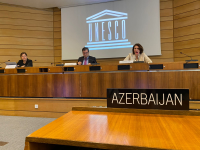
Azerbaijan, host of the 18th NAM summit in 2019, holds the Non-Aligned Movement presidency pending the 19th NAM summit, which took place in Kampala, Uganda in January 2024.

NAM Centres​

Centre for South-South Technical Cooperation​

"Non-Aligned Movement Centre for South-South Technical Cooperation" redirects here. For South-South Cooperation, see South–South cooperation.
The Non-Aligned Movement Centre for South-South Technical Cooperation (NAM CSSTC) as an intergovernmental institution, which enables developing countries to increase national capacity and their collective self-reliance, forms part of the efforts of NAM. The NAM CSSTC is located in Jakarta, Indonesia with a South-South Technical Cooperation focus. The NAM CSSTC was set up a few years after the Cold War to promote development in developing countries and to accelerate growth. From 18 to 20 October 1995, in Cartagena de Indias, 140 nations gathered and accepted a final document stating in paragraph 313 of the Final Document the establishment of the Centre for South-South Technical Cooperation in Indonesia.

The organisation aims to achieve the development goal of developing countries to achieve sustainable human development and enable developing countries to be equal partners in international relations, in accordance with the Final Document.

The NAM CSSTC's main body is the board of directors. In addition, the Board of Directors has a consultative arrangement with a Governing Council under the leadership of the Vice Minister for Foreign Affairs of the Republic of Indonesia and its members include Ambassador of Brunei, Ambassador of Cuba and Ambassador of South Africa. The head of the administrative officer of NAM CSSTC is accredited by Ronny Prasetyo Yuliantoro, Director, current Indonesian diplomat and Ambassador of the Republic of Indonesia to the Islamic Republic of Iran, who began his term of office on 1 July 2018. The organisation is financed by Indonesia's volunteer contributions. The NAM CSSTC, its officers, consists of a full-time staff who are not affiliated with any other governmental institution except their head of the administrative officer, who is typically nominated from Echelon-I or Echelon-II staff from the Indonesian ministries. Some say the organisation is a major endeavour to build NAM member countries' capacities. :coffee:

Summits​


1st summit, Belgrade


16th summit of the NAM, Tehran :)

The conference of Heads of State or Government of the Non-Aligned Countries, often referred to as Non-Aligned Movement Summit is the main meeting within the movement and are held every few years.

A variety of ministerial meetings are held between the summit meetings. Some are specialists, such as the meeting on "Inter-Faith Dialogue and Co-operation for Peace", held in Manila, the Philippines, 16–18 March 2010.
There is a general Conference of Foreign Ministers every three years. The most recent were in Bali, Indonesia, 23–27 May 2011 and Algiers, Algeria, 26–29 May 2014. ☕

The 7th Summit was originally planned for September 1982 in Baghdad, the Iraqi capital, during the Iran-Iraq War. On 21 July of that year, the Islamic Republic of Iran Air Force executed the "Baghdad Operation", an effort to disrupt that proposal by showing Baghdad's airspace was unsafe. Two McDonnell Douglas F-4 Phantom II planes bombarded Al-Dura refinery with Mk82 bombs. One plane returned damaged and the other (along with its pilot) was lost to Iraqi defensive fire. Combined with threats by an Iranian-backed terror group to kill the visiting heads of state, the effort was successful. On 11 August, Iraqi President Saddam Hussein announced that he would support Cuba's suggestion of a summit in New Delhi to be held in 1983. "Iraq will take part in the conference even if held in Tehran... We propose that the seventh conference be held in India." ☕

The Non-Aligned Movement celebrated its 50th anniversary in Belgrade on 5–6 September 2011. (y)

An online summit titled "United Against Covid-19" conducted on 4 May 2020, on the initiative of the chairman of the NAM for the 2019–2022 period, addressed mainly the global struggle to fight the COVID-19 pandemics and supporting NAM to increase its role in dealing with and mitigating the outcomes caused by this disease in NAM, as well as other countries.

The Non-Aligned Movement celebrated its 60th anniversary in Belgrade, on 11–12 October 2021.


Last edited:

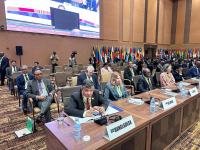
The 19th Summit of the Non-Aligned Movement (NAM) kicks off with Ministerial meeting in Kampala, Uganda​


1734227953325.png

Kampala, 17 January 2024:

The 19th Summit of the Non-Aligned Movement (NAM) kicks off with ministerial level meeting in Kampala, Uganda with the theme “Deepening cooperation for shared global affluence”. The Ministerial meeting is inaugurated by Jessica Alupo, Vice President of the Republic of Uganda. The Ministerial meeting will continue on 17 and 18 January followed by the Summit level meeting on 19 and 20 January 2024. :coffee:

Before the Ministerial meeting, the Senior Officials Meeting of the Non-Aligned Movement was held on 15-16 January 2024 to finalize the outcome document and declaration of the Summit. In the meeting, the issue of Israeli attack in Gaza dominated the discussion. It is expected that along with other political, economic and social issues, the Palestine issue will remain in focus during the Ministerial meeting. The Ministers of the member States of the Non-Aligned Movement will adopt the outcome document of the Summit as well as the Kampala Declaration and Political declaration on Palestine at the Ministerial level and will put forward the documents for the consideration of the Head of State and Head of Governments at the Summit. :coffee:

President, Prime Ministers and Foreign Ministers of more than 80 countries are attending the 19th Summit of the NAM – the largest multilateral platform after the United Nations. In the Summit, Azerbaijan will hand over the Chairmanship of NAM to Uganda for the next three years.

Bangladesh delegation in the NAM Summit scheduled to take place on 19-20 January 2024, will be led by Hon’ble Foreign Minister, Dr. Hasan Mahmud, MP. Whereas, in the Ministerial meeting of the NAM, Bangladesh delegation is attended by Foreign Secretary, Ambassador Masud Bin Momen, Ambassador Muhammad Abdul Muhith, Permanent Representative of Bangladesh to the United Nations, and Ambassador Tareque Muhammad, High Commissioner of Bangladesh to Kenya. :coffee:
2024-01-17

 
.
AZERBAIJAN — THE NON-ALIGNED MOVEMENT

1734228438912.png

The Non-Aligned Movement (NAM), once established by a number of states during the Cold War to prevent confrontation between the two political-military Poles, has now become one of the important multilateral mechanisms involved in the regulation of international relations. One of the main principles of the establishment and functioning of the NAM, the purpose of which is to promote peace, security and development in the world on the basis of respect for international law, is to serve as a forum for cooperation among its members. The Non-Aligned Movement currently has 120, 18 observer states and 10 observer international organizations. :coffee:

The Asia-Africa Conference held in Bandung, Indonesia in 1955, was the first significant step towards the establishment of the Non-Aligned Movement. 6 years after the Bandung Conference, on September 1-6, 1961, the institutional foundation of the Non-Aligned Movement was laid at the Summit held in Belgrade, former Yugoslavia with the participation of 25 heads of State and Government of Asia and Africa. Each member state of the organization must express its commitment to the principles of the organization. The “Bandung principles” are as follows:

  1. Respect the goals and principles of the UN Charter, as well as fundamental human rights and freedoms;
  2. Respect the territorial integrity and sovereignty of states;
  3. Recognized the equality of all races and peoples, regardless of their number; ☕
  4. Avoiding interference in the internal affairs of other states;
  5. To respect the right of each state to defend itself individually or collectively within the framework of the UN Charter;
  6. Avoiding the use of collective defense measures to serve any special interests of the great powers;
  7. Refusal to engage in any activity directed against the territorial integrity and political independence of the other state, as well as the use of force and threats to use force;
  8. To resolve all international disputes peacefully, peacefully in accordance with the UN Charter;
  9. Promote mutual interest and cooperation
  10. Justice and respect international obligations.
The Non-Aligned Movement does not have a permanent headquarters. The bureau is the main body of NAM operating on a permanent basis and regulating intra-agency coordination. Through the Bureau, the NAM coordinates the performance of its members from a single position in the UN bodies. The management of the bureau is carried out by the permanent representatives of the state to the UN, who is the chairman of the organization. The state wishing to join the NAM should express its commitment to the fundamental principles of the movement and apply in writing to the chairman of the Non-Aligned Movement. The decision on membership is made by consensus.

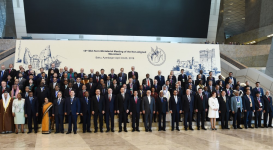
On May 26, 2011, the Republic of Azerbaijan, which chose not to join any military alliance in its foreign policy, gained the unanimous support of the member states of the movement on the Indonesian island of Bali and became a full member of the NAM. ☕
1734228488160.png

On May 09-10, 2012, in Sharm el-Sheikh, Egypt, a paragraph on the Armenian-Azerbaijani Nagorno-Karabakh conflict was included during the adoption of the final document at the next ministerial meeting of the Non-Aligned Movement coordinating Bureau and the member states of the NAM expressed support for the settlement on the conflict between Armenia and Azerbaijan on the basis of the principles of respect for the territorial integrity of states, non-use of force against territorial integrity and inviolability of internationally recognized borders.

On August 30-31, 2012, at the 16th summit of heads of state and Government of the NAM held in Tehran, Islamic Republic of Iran, article 391 of the final document states expressed support for the settlement of the conflict within the “territorial integrity, sovereignty and internationally recognized borders” of the Republic of Azerbaijan. ☕

On May 28-29, 2014, the XVII ministerial meeting of the NAM was held in Algeria. NAM member states expressed their regret that the conflict between Armenia and Azerbaijan remained unresolved despite relevant UN Security Council resolutions in paragraph 421 of the final document of the ministerial meeting and expressed their support for the settlement of the conflict within the territorial integrity of the Republic of Azerbaijan.

The final document of the Mid-Term Ministerial Conference of the Non-Aligned Movement held in conflict between Armenia and Azerbaijan remained unresolved despite the relevant resolutions of the UN Security Council and expressed support for the settlement of the conflict within the territorial integrity of the Republic of Azerbaijan.

The Caracas final document, adopted at the end of the next Ministerial Meeting of the Coordinating Bureau of the Non-Aligned Movement held in Caracas, Venezuela on July 18-21, 2019, reiterated its support position reflected in previous documents on the Azerbaijan-Armenian conflict.

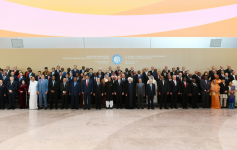
On October 25-26, 2019, the Republic of Azerbaijan hosted the 18th Summit of the heads of state and government of the movement in Baku. The event was attended by high-level representatives of 120 UN member states and representatives of 42 UN International organizations. During the Baku Summit, the Heads of State and Government expressed regret that, despite the relevant Un Security Council resolutions (S/RES/822, S/RES/853, S/RES/874, S/RES/884), the conflict between Armenia and Azerbaijan remains unresolved and threatens international and regional peace and security, and called on the parties to continue negotiations on the settlement of the conflict on the basis of territorial integrity, sovereignty and made a call.

With the Baku Summit, the chairmanship of the movement was transferred to the Republic of Azerbaijan for 2019-2022. After Uganda, which will become the next chairman of the movement, stated that it could assume the chairmanship with a delay of 1 year, the NAM member states, taking into account the successful chairmanship of the movement, appealed to our country with a request to preside over the movement for another 1 year, the Azerbaijani side also responded positively to this appeal, considering its commitment to the fundamental principles and values of the movement and the valuable experience of effective chairmanship of the movement in a difficult period. Thus, Azerbaijan’s chairmanship in the NAM was extended until 2023. ☕

The Coordinating Bureau of the Non-Aligned Movement adopted a communique on the so-called “elections” held in the occupied territories of the Republic of Azerbaijan on April 4,2020. It is stated in the communication that the member states of the movement do not recognize the so-called “presidential and parliamentary elections” held in the occupied Nagorno-Karabakh region of the Republic of Azerbaijan on March 31,2020 and consider this act illegal. Referring to paragraph 662 of the final document of the Baku summit of the NAM member states reiterated their support for the territorial integrity and sovereignty of the Republic of Azerbaijan within its internationally recognized borders, as well as for the settlement of the Armenian-Azerbaijani conflict on the basis of UN Security Council resolutions 822, 853, 874, 884.

On May 4, 2020, at the initiative of the President of the Republic of Azerbaijan and the current OSCE Chairman, Mr. Ilham Aliyev, a video conference of the contact group of the Non-Aligned Movement member countries on combating the COVID-19 pandemic was organized on the topic “we are together against COVID-19” in the format of a summit. The meeting was attended by 25 Heads of State and Government of the NAM membet states, 1 Vice President, 1 Deputy Prime Minister and 11 ministers.

As a result of the meeting, a declaration was adopted by the member states of the Nam and a Working Group on combating the COVID-19 pandemic was established. The group was instructed to develop a single database that will reflect the basic medical, social and humanitarian needs of the member states of the NAM in the fight against the pandemic.

In continuation of the summit meeting of the NAM contact group on May 4, 2020, the President of the Republic of Azerbaijan, Mr.Ilham Aliyev, as Chairman of the Non-Aligned Movement, took the initiative to convene a special session of the UN General Assembly dedicated to combating COVID-19, and the with the support of the majority of UN Member States, the UN Secretary-General announced the convening of this session on July 10,2020 years. As a result, on December 2020, 3-4, a high-level segment of the special session of the UN General Assembly on the fight against the COVID-19 pandemic was organized, and in the opening part of the event, President of the Republic of Azerbaijan Mr. Ilham Aliyev acted as the chairman of the Non-Aligned Movement and the initiator of this special session. During the general discussions of the special session, 37 heads of state and 40 governments, 67 ministers spoke and thanked Azerbaijan and the country’s leadership for initiating the session.

Due to the fact that the meeting of the Ministers of Foreign Affairs of the CSTO member states held on October 9, 2020 within the framework of the regular session of the UN General Assembly in the format of a videoconference coincided with the next aggression of Armenia against our country, that is, with the 44-day period of the Patriotic War, the item “armed attacked by The Republic of Armenia on the positions of the Armed Forces of the Republic of Azerbaijan and civilian settlements along the entire front”, under which a special declaration was adopted. In the special declaration, NAM member states expressed concern about the resumption of clashes between civilians in the Armenian-Azerbaijani conflict, reiterated their principled support for the settlement of the conflict on the basis of UN Security Council resolutions, and emphasized their support for the independence, sovereignty and territorial integrity of Azerbaijan. In the declaration, member states expressed their solidarity with the Republic of Azerbaijan on the basis of the principled position of the movement. ☕

Also, on October 19, 2020, in order to discuss the situation in the Armenian-Azerbaijani conflict, closed consultations of the UN Security Council were held, a draft statement of the chairman of the UN Security Council on the issues was submitted for discussion, however, as a result of preliminary work and negotiations of the Azerbaijani side with the permanent member states of the NAM, the adoption of this draft statement contradicting the position of our of the country and does the reflect references to the UN Security Council resolutions on the conflict.

A number of ministerial events were also held during the presidency of Azerbaijan in the NAM. Due to the restrictions arising from the pandemic conditions, these events took place in a virtual format. So, on May 20, 2020 and May 24, 2021, meetings of the ministers of health of the member states of the NAM were held, on October 9, 2020 (as part of the next session of the UN General Assembly), a meeting of the foreign ministers of the NAM States and on June 4, 2021, meetings of the Labor ministers of the Member States.
1734228539824.png

During the presidency of our country in the NAM, special attention was paid to the sphere of work with young people. Thus, on the initiative and organization of Azerbaijan, on April 16-18 at the national level and on March 1-5, 2021 at the international level, the NAM model simulation training was held. 4 young people from 39 continents representing 60 member states participated in the Simulation Training organized at the international level.

On March 23,2021, within the framework of the 46th session of the UN Human Rights Council, on the initiative of Azerbaijan as the chairman of the Non-Aligned Movement, a resolution entitled “ensuring equal, reasonable cost, timely and universal accessibility to vaccines against COVID-19” was adopted. The resolution was co-authored by a total of 133 states, which is a very high indicator for the resolutions adopted by the UN Human Rights Council.

On November 18,2021, within the framework of the 76th session of the Un General Assembly, at the Third Committee of the Assembly as chairman of the Non-Aligned Movement, a resolution “ensuring equal, reasonable cost, timely and universal access to vaccines against COVID-19” was adopted by the UN member states.

On October 4-5, 2021, on the initiative of the Azerbaijan chairmanship of the Non-Aligned Movement, a virtual founding meeting of the NAM Youth Network was held with the participation of more than 100 young people representing the Non-Aligned Movement member states. As a result of the 2-day founding meeting, a letter of recommendations was prepared by members of the Youth Network and presented to senior government officials of the member states of the movement who participated in the anniversary event dedicated to the 60th anniversary of the Non-aligned Movement held in Belgrade on October 11-12,2021.

On November 26,2021, the founding meeting of the network of parliamentarians of the Non-Aligned Movement was held on the initiative of the Azerbaijan chairmanship of the Non-Aligned Movement. During the XVIII summit of the Non-Aligned Movement held in Baku, the heads of state and government of the member states decided to deepen the relations between the parliaments of the member states of the NAM, taking into account the constructive role of parliamentarians in the implementation of the principles, ideas and goals of the movement.

On October 11-12, 2021, a high-level anniversary event was held in Belgrade on the occasion of the 60th anniversary of the founding of the Non-Aligned Movement. More than 100 delegations, including 6 heads of state or government, NAM member and observer states, more than 50 foreign ministers of the states invited as special guests, the heads of international organizations, including the chairman of the Un General Assembly and the Secretary General of the Cooperation Council of Turkic-speaking states, were attended by the UN Secretary General, the Un Secretary-General addressed a video-appeal.

On September 21,2022, a ministerial meeting of the Non-Aligned Movement was held in New York as part of the high-level week of the 77th session of the UN General Assembly.

The meeting, chaired by the minister of foreign affairs of the Republic of Azerbaijan Jeyhun Bayramov, was attended by about 50 foreign ministers of the Non-Aligned Movement member states, as well as deputy ministers and permanent representatives of the UN.

Minister Jeyhun Bayramov, who made a statement at the meeting dedicated to the global situation in the post-pandemic period and the tasks of the Non-Aligned Movement, informed the Non-Aligned Movement about the work done under the chairmanship of Azerbaijan, initiatives and future plans.

The historical significance of the summit of Non-Aligned Movement Contact Group on pandemic on the initiative of the president of the Republic of Azerbaijan, the parliamentary network of the Non-Aligned Movement established in Madrid, as well as the establishment of the youth organization was brought to the attention. It was noted that the logo and flag of the Youth Organization of the movement were approved with the Shusha chord.


 
Last edited:
@Beijingwalker
@Guru Dutt
@vasanthm
@vsdoc
@muhammed45
@Muji.Iqbal
@Persian Gulf

how you people see the topic of this thread?

we find around 120 member states in NAM. the last 2 summits were held in Azerbaijan in 2019 and in Uganda in 2024.
here we find China-Russia isn't included in main NAM members, but as observer nations :coffee:

(while we see that NAM have clear distance from US-western countries :))

I have news that this NAM is supposed to be more powerful than BRICS, how would you people respond this? :coffee:
 
Last edited:

Non-Alignment in the Era of the Global South​

  • The concept of non-alignment originated during the Cold War as a ‘third way’ for nations wanting to remain neutral between the capitalist liberalism of the United States (US) and the communism of the Soviet Union. Officially founded during the Bandung Conference in Indonesia in April 1955, the Non-Aligned Movement (NAM) today has 120 member nations, all of them from the Global South. Every African country, except for South Sudan, is a member of NAM. As the world moves towards increasing multi-polarity, NAM can again gain relevance. It would, however, require some revisions in both structure and scope to respond to the changing global realities and emerging challenges of the 21st century. As Uganda takes over the NAM presidency for the next three years, this paper defines ‘non-alignment’ in the current era and reflects on whether and how NAM can still serve the interests of the Global South, particularly Africa.


    Introduction
    The 19th summit of the Non-Aligned Movement (NAM), held in January this year and hosted by Uganda, carried the theme, ‘Deepening Cooperation for Shared Global Affluence’.[1] About 4,000 guests from different member states, including leaders from nearly all the 120 member countries of NAM, attended the summit. The Kampala Outcome document was then adopted by the Foreign Affairs Ministers of the attending countries and later announced at the Heads of State summit.[2] :coffee:

    In the 69 years since NAM’s inception, Uganda is only the fifth African country—after South Africa, Zimbabwe, Algeria and Egypt—to host a NAM Summit.[3] Now that an African nation will head NAM for the next three years, in what ways can the continent benefit? This paper examines the current state of NAM against the backdrop of a rapidly evolving international order, making the case that some of the organisation’s founding objectives have taken on new forms while others are still relevant.

    The West’s retaliatory measures against Russia in different multilateral forums, following Russia’s attack on Ukraine in February 2022, garnered little African support. In some ways, the response to the United Nations General Assembly (UNGA) resolution of February 2022, condemning Russia’s military intervention in Ukraine which was supported by only 27 African nations, captured today’s zeitgeist.[4] It was a fitting illustration of the rise of the multi-polar world that has supplanted both the Cold War era and the unipolar dominance of the United States (US) of the 1990s. Similar to the Ukraine crisis, many other emerging issues may require collective action by the NAM member states.

    Amid the rapidly changing dynamics of the new world order, a scenario may well arise where the world will be divided among multiple competing blocs or power centres. From that perspective, NAM is at an inflection point where it will not be able to respond to the current challenges unless its agenda and organisational design are modified. This paper reviews whether NAM’s current agenda and structure remain relevant, and to what extent reforms can respond to the needs of the Global South.

    With 1.4 billion people, Africa currently accounts for 17.5 percent of the global population. Given current trends, this could increase to 25 percent by 2050. Africa is also the world’s youngest and fastest growing continent, with approximately 250 million young people. Once properly implemented, the African Continental Free Trade Area (AfCFTA) will be the world’s largest single market, surpassing the European Union (EU).

    While Africa has mostly been viewed as a battleground for influence between the US and the erstwhile Union of Soviet Socialist Republics (USSR), and lately between the US and China, African agency is becoming more visible than ever, reflected in the increasing participation of African countries in different multilateral forums, including the G20 and BRICS.

    The Evolution of NAM Structure and Scope
    NAM is an institution from the Cold War era, established to offer a collective voice to nations that did not wish to take sides in the superpower rivalry between the US and the USSR.[5] Its genesis goes back to the Afro-Asian Conference at Bandung, Indonesia, in April 1955, where the term ‘third world’ was also coined.[6] The first Conference of Non-Aligned States took place six years later, in September 1961, in Belgrade, capital of the erstwhile Yugoslavia, under the leadership of President Josef Tito. It was attended by delegates from 25 countries across four continents, with President Gamal Abdul Nasser of Egypt, President Sukarno of Indonesia, President Kwame Nkrumah of Ghana, and Prime Minister Jawaharlal Nehru of India as its founding leaders. ☕

    For the next few decades, the member states would focus on a number of subjects as priorities for discussion: anti-colonialism and self-determination, sovereignty and non-interference, an end to discrimination and apartheid, general and complete disarmament, the importance of the UN, and the promotion of economic development.[7] Nkrumah used the term “neo-colonialism” in one of these conferences to describe how the US and other former colonial powers continued to maintain control over recently independent governments.[8]

    Nevertheless, even while NAM’s equidistance remained its defining characteristic, it underwent multiple transformations over the decades. In the 1970s, for example, some members attempted to develop the group as a formal voting bloc in the UN General Assembly. There was a discernible transition to a more activist set of new leaders who called for incorporating an economic dimension in the NAM agenda.

    By 1990, NAM had more than 100 members and had expanded the scope of its purview to economic issues and controversial ones like the Israel-Palestine conflict.[9] Zimbabwe strongman leader Robert Mugabe was elected chairman to host the NAM in 1986. During that time, while still emphasising apartheid in South Africa and the Israel-Palestine conflict, NAM also began to increasingly focus on the dual issues of development and disarmament. During the 1990s, NAM states were united in their call for third-world economic development, seeking a New International Economic Order (NIEO), and hoping for nuclear disarmament.

    In 1991, the Soviet collapse set off a period of struggle and conflict within NAM.[10] With some of its principal objectives becoming irrelevant with the end of the Cold War, there were even calls to dissolve NAM. At its 1992 Jakarta Summit, NAM reiterated the need for its continued existence in a resolution. The final Jakarta Declaration stated, “The collapse of the bipolar structure of the world presents unprecedented opportunities as well as challenges for cooperation among nations.” It called for strengthening non-aligned state coordination at the UN through the NAM Coordinating Bureau.[11] Disarmament and development emerged as the two key issues to bind the NAM states together.

    During the Cold War, NAM successfully served as a buffer between the Soviet Union and its allies in the Warsaw Pact (now defunct), on one side, and the US with its North Atlantic Treaty Organisation (NATO) alliance on the other. With the collapse of the Soviet Union, NAM lost its principal purpose.[12] This was mainly due to the belief that the world system was heading toward a permanent, unipolar new order headed by the US.[13] Nevertheless, its members continued to meet regularly and address various topics, including human rights, global economic equality, and even resistance to uni-polar US hegemony.

    As the world slowly transits from a uni-polar to a multi-polar one, the question of alignment has become an issue once again. With multiple centres of power, the Global South understands the need to stay neutral and avoids direct alignment with any hegemon. While this can help them avoid getting caught in conflicts between the global powers, complete non-alignment will not solve the problems of NAM states either. These countries must develop a new form of non-alignment in light of the changing realities of the 21st century. ☕

    Non-Alignment in a Multi-Polar World
    In this increasingly multi-polar world, the concept of non-alignment has drastically evolved. Developing countries, especially in the post–Cold War order, are opting for issue-based alignments[14] and seldom remain strictly non-aligned. Instead, they usually veer toward one or more great powers to obtain some security support while eschewing close alliances. Since flexible security arrangements offer the optimal balance of risks to rewards in the event of strategic uncertainty, limited alignments bode well for these countries. Although rewards such as defence support and other types of assistance are often linked to a country’s level of association with any great power, the benefits come at the cost of autonomy and the associated dangers of dependency that could lead to either abandonment or entrapment in the long run. A strong alliance frequently carries more risks than benefits compared to a more flexible partnership arrangement.

    Formal treaties to build alliances are typically characterised by strong, institutionalised defence ties. They often have responsibilities related to mutual defence as well. The most substantial pledges are generally made to formal alliances such as the North Atlantic Treaty Organization (NATO)—in part because they call for public signatures or ratification as well as legislative or judicial assessment. Formal treaties are not the only foundation for alliances, however. Occasionally, robust informal alliances can also develop. They are not contingent on formal laws and procedures but rather on the identification of common ground, personal pledges, and a history of collaboration demonstrated by the establishment of military bases, the exchange of intelligence, and joint military exercises. Examples are the US’s relationship with Israel since 1967[15] and the Sino-Vietnamese alliance during the Vietnam War.[16]

    However, true non-alignment implies no meaningful security cooperation with any single power. A non-aligned country may participate in joint exercises or training, yet typically does not allow great powers access to defence facilities on its land, even on a commercial basis. However, it could occasionally exchange defence delegations and share specific intelligence with a great power. :coffee:

    Further, issue-based or multi-alignment partnerships mean fewer obligations and a less binding security arrangement, such as preferential arms sales agreements, cooperative training exercises, and other military assistance. These relations are typically open and do not come with an obligation to conduct joint exercises or any promise of military support in times of crisis. Rarely do multi-alignments grant advantages to a major power. Instead, great-power allies may enjoy commercial access to military installations and some level of technical or logistical support. Contemporary American relations with Egypt, Jordan, and Saudi Arabia are a few examples.[17] ☕

    Evolution of Non-Alignment in Africa
    The Bandung Conference was significant for Africa as it boosted the independence movements across the continent, providing much-required direction and leadership. Without question, this helped Africa to expand its importance in global affairs. Ghana, the first sub-Saharan African country to gain independence (in 1957), paved the way for others in the continent by embracing non-alignment as a foreign policy strategy.[18]

    By 1960, Africa was ready to participate in the first Non-Aligned Countries Summit. Among the 25 participating countries, 11 were African. Even though the extent of adherence to non-alignment differed across states, all of them had by then made non-alignment the cornerstone of their foreign policies.

    There were 27 independent African states in 1961. The continent, however, was in crisis, primarily due to the Congo conflict[a] and the Algerian War of Independence,https://www.orfonline.org/research/non-alignment-in-the-era-of-the-global-south#_ftn2 which explains the absence of some of the independent countries at the summit. As African nationalism and Pan-Africanism increased, it led to the creation of the Organisation of African Unity (OAU), which held its first summit in Addis Ababa in May 1963.[19] Along with the principles of self-determination and majority rule, non-alignment was also entrenched at the core of the OAU Charter announced at the summit.[20] Point number 7 of Article 3 of the charter called for “an affirmation of a policy of non-alignment concerning all blocs” as one of its seven fundamental principles.[21] Both the Charter of the OAU and the Special Resolutions that have followed were designed to uphold the aims and objectives of non-alignment.[c]

    Nonetheless, Africa’s commitment to the non-alignment principle is fraught with inconsistencies. The Addis Ababa summit issued a declaration stating that the goals of non-alignment could not be achieved if any non-African power continued to keep military personnel on the territory of any independent African state.[23] Yet, the OAU Council of Ministers[d] passed a resolution a year later that essentially rendered the previous one void. Specifically, it removed any explicit mention of the need to remove military installations from African territory.[24]

    The flexible approach of African countries was useful in their quest to pursue divergent goals in their foreign relations. Some states professed non-alignment even as they became closely integrated with the defence strategies of external powers. Most Francophone states, in particular, retained French military bases in their territories, primarily to secure economic benefits from France. Some even pleaded for active French intervention to defend and preserve their national integrity.[25] Certain African states offered military facilities to the superpowers.

    Thus, in the 1970s, to protect their territorial integrity, Angola and Ethiopia—both of which had undergone recent political convulsions leading to left-wing governments taking over—sought the help of the USSR, following which a sizeable contingent of Cuban troops were stationed in both countries. In response, neighbouring governments looked to the US and other Western nations for military support. The US withdrew naval facilities from Angola and Ethiopia before providing their rivals, Kenya and Somalia, respectively, military and economic support. Strictly speaking, all these countries should have been disqualified from membership of NAM. It can be argued that at this stage, NAM compromised on its non-alignment principle to retain the existing members.

    Africa’s economic integration into the global capitalist system and growing reliance on external (Western) powers also remains critical. Despite the OAU’s Lagos Plan of Action, announced in April 1980 and which stressed the need for collective self-sufficiency, few African nations could break free of reliance on the leading Western economies. The Lomé Conventions (1975, 1980, and 1985) that bind Africa to the European Economic Community (EEC) bluntly demonstrate Africa’s dependency on Europe. African countries have increasingly turned for economic support to the same countries they had earlier condemned as “neo-colonial”.

    African states have also borrowed heavily from Western sources. In the 1990s, Africa’s total external debt was US$271.9 billion, almost double its 1982 figure of US$140 billion;[27] by the end of 2021 it stood at around US$824 billion—a serious threat to the prospects of economic recovery and development of the continent.[28] Thus, for economic reasons, many African countries remain tied to the apron strings of the western powers and have sacrificed some of their non-alignment for economic advantage.

    Relevance of NAM for Africa
    Africa has historically been an active participant as well as a working ground for NAM. As many African countries were still under colonial rule when NAM was conceived, its establishment galvanised the struggle against colonisation on the continent.[29] With the emergence of African nationalism and an increasing number of African nations becoming independent, they accepted non-alignment as a rational philosophy steering the continent in international affairs and safeguarding its domestic needs and interests. Today, every African country barring South Sudan is a member of NAM, comprising a significant bloc in its total membership of 120 countries.[30]

    Currently, Africa is going through a transition, steered primarily from within. In January 2015, the African Union (AU)—which supplanted the OAU in 2002—announced its ‘Agenda 2063’, which included “silencing the gun” (i.e., putting an end to armed conflicts) and establishing the AfCFTA (which was subsequently started in 2018). The agenda is a testament to Africa’s aspirations.[31] The recent inclusion of the AU in the G20[e] will advance the cause of a just, equitable, more inclusive, and representative world, and provide Africa with a seat at the high table where it can raise its concerns.☕

    To be sure, the changes in Africa today do not represent a turning point or an abrupt regional transformation; they are a natural course of organic evolution. The continent has evolved since the scramble for Africa in the 19th century, experiencing European imperialism and surviving the multiple Cold War-era proxy wars of the 20th century. African countries recognise that this is the era of active diplomacy and dynamic partnerships, which calls for agility and versatility from their policymakers. Naturally, these countries will seek multiple alliances to fulfil their requirements. However, these alliances will not be based on ideological affinity, as in the last century, but on economic or military convenience. It would be reasonable for them to stay as far away from conflicts as possible and to defend their own interests using a new formula of non-alignment that combines strategic autonomy and multi-alignment.

    A growing number of peacekeeping or security missions from different countries of the world, including half the UN peacekeepers, are working in Africa. While this reflects the vulnerable security situation in the continent, it also suggests that to create an independent security framework, often referred to as ‘Pax Africana’, while continuing on the path of socioeconomic development, African countries need to be more united. One of their primary objectives, with Uganda holding the three-year rotating Chair of NAM from December 2023, is to advance this strategy. Uganda will continue to strengthen the organisation into a more coherent bloc and promote unity in the Global South, even beyond Africa.

    During the Cold War, non-aligned nations were frequently able to use the rivalry between the US and the USSR to pursue their own agenda without caving in to pressure from either side. The refusal of many African countries, in 2022, to support the West’s stance on Russia’s invasion of Ukraine and its subsequent sanctions against Russia, was proof that non-alignment, in its basic form, is still alive.[32] African countries have little incentive to fully align with any superpower. By carefully managing relations with multiple powers while cultivating strategic links with like-minded states, the continent aims to find a strategic sweet spot. ☕

    Indeed, many African nations have been successful in pursuing a ‘multi-alignment’ approach while maintaining their standing as non-aligned powers in a strategically important area. They demonstrate their strategic autonomy by joining various partnerships established by seemingly opposing camps in the current intensifying great-power rivalry. For example, Ethiopia joined BRICS,[f] the Global South’s leading platform, while simultaneously partnering with the US, which remains its largest bilateral donor. (Although Ethiopia lost its status as a beneficiary of the US’s African Growth and Opportunity Act or AGOA[g] in January 2022, following its civil war and ensuing allegations of human rights violations, there is a strong possibility that it may be reinstated soon.[33]) South Africa, one of the top beneficiaries of AGOA, is another example. It remains a BRICS member and considers China and Russia its friends, conducting joint naval exercises with them in February 2023.[h],

  • It is an unhappy reality that African nations, which have condemned the neo-colonial characteristics of Western policies towards developing countries, are also dependent on those same policies. The borrowing practices of African states from Western sources, for example, have increased their external debt. Many African nations have long been held hostage by western powers due to their economic imperative. It is this that has led many of them to partially compromise their non-alignment principle.

    Nonetheless, the dismantling of foreign military sites—be they of the US, France, China, or Russia—is a prerequisite for any new non-alignment to work in Africa. Fence-sitting, or maintaining a neutral geopolitical stance, or even merely voicing ‘concern’ over transgressions of the international order’s basic rules and laws, may not always be appropriate.[35]

    Reforming NAM
    NAM states, by definition, do not wish to be forced to choose a side in the intensifying conflict between China and/or Russia and the US. In a multi-polar era, however, they are bound to find themselves wedged between these powerful nations. NAM has been marked by hostility to developments such as the US invasion of Iraq in 2003, the reduced funding of global development, disparities in energy use and environmental commitment between the developed nations and the developing world, and other perceived “sins of the West.”

    In a world where great-power rivalries and realpolitik increasingly characterise international affairs, NAM’s fundamental principles of peaceful co-existence are more crucial than ever. In the 21st century, they need to be practical and applicable as well. What needs to be done?

    Structure
    • NAM currently comprises 120 member states, 18 observer nations, and 10 observer organisations. It is the second largest association of nations after the UN. Yet, it lacks an executive body, a secretariat, and a constitution because it is not an international organisation. Its Joint Coordinating Bureau (JCB) at the UN in New York oversees all of its operations, including a monthly meeting of representatives of all NAM nations at the UN. It also puts NAM choices into practice. Formerly inconsistent summits are now held every three years. Foreign ministers also meet between summits; ministerial meetings are held on particular issues too. NAM should consider setting up a permanent secretariat in order to play a bigger role in global governance.
    • NAM should reflect more on achieving self-sufficiency instead of continuing to rely on the West for development assistance. It needs to develop strategies to seize control over potentially exploitable natural resources. It should encourage wealthy countries to invest in its member states.
    • Non-alignment should continue to be upheld—not as the movement’s primary goal but as one of its tenets. What NAM needs to do is to reframe the idea and give it a precise definition. It should not seek any kind of ‘union’ with the current Western alliance or any other potential power centres, but maintain its independence.
    • Some members have objected to NAM’s very nomenclature. Indeed, India has of late refused to speak of ‘non-alignment’, preferring the phrase ‘multi-alignment’ instead. This is not merely an issue of semantics. Some have even proposed a new name along the lines of ‘Southern Solidarity Organisation’ for NAM.[36] During the January 2024 summit in Kampala, heads of state and government of NAM discussed the need to create an official symbol and flag for the movement that would represent cohesion, solidarity, and unity among member states, and alignment with NAM’s lofty goals, values, and mission. They may now deliberate on a new name as well.
    Scope
    • Various international actors and analysts are of the view that NAM should change or redirect some of its ambitions and policies, as highlighted in the report of the South Commission, “The Challenge to the South”.[37] Indeed, NAM was established as a political organisation at a time when politics dominated global affairs. Later, it took up economic matters as a number of its member states were beset by severe financial problems, including extreme poverty and underdevelopment. The group called for a new international economic order, arguing that the West’s policies and actions had created the economic difficulties the South was facing. It thus turned into a political-economic organisation. This practice of revisiting the scope of NAM should be institutionalised.
    • The negative impacts of climate change and cross-border terrorism are two concurrent threats for the Global South requiring collective effort. Doing so is crucial to achieving the 2030 Agenda for Sustainable Development. As it works towards a global governance system that is transparent, fair, and inclusive, NAM must also incorporate in its agenda new and emerging areas threatening peace and stability, such as the two mentioned, as well as contagious diseases and pandemic control, or transition to cleaner and greener energy.
    • Artificial Intelligence (AI) and other emerging technologies are areas that will require South-South cooperation to avoid adverse outcomes, such as breaches of data security or a widening of the digital divide. NAM should work to become an expression of collaboration and solidarity across the Global South in all these matters.

    • Conclusion
    NAM has undergone revisions in both structure and scope since its inception; today, it faces an existential crisis. Several new coalitions have emerged, challenging the relevance of NAM.[38] There are developments such as the emergence of new technologies—from infotech and nanotech to AI—which are likely to drastically alter the nature of work and production. The threat of climate change remains. It has been seen that even with global threats where collective solutions seem logical, the solutions delivered are not always distributed equitably. During the COVID-19 pandemic, for instance, the imperative was universal vaccination. Yet soon, it was found that wealthy countries had cornered most of the vaccines being produced, leaving very little for the poor countries of the Global South.[39]

    Mini-lateralism and multi-alignment are becoming the norm.[40] In this era, where binary concepts like “democracy versus authoritarianism” or “the West versus the rest” have become archaic, it would be erroneous to label countries using simplistic perspectives such as ‘non-alignment’ or ‘anti-Americanism’ dating from the Cold War era. As the world moves toward pragmatic flexibility and global interdependence, fluid coalitions will require enhanced diplomatic creativity. Undoubtedly, developing countries, including those of Africa, must stay open to any collaboration or platform that might serve their interests.

    Following the collapse of the Soviet Union, NAM found itself in need of fresh legitimacy. It made adjustments to remain relevant by shifting its emphasis to the building of what NAM called a “new international economic order” and striving for more clout at the UN. It has demonstrated remarkable adaptability by doing so. Solidarity among developing countries has been further strengthened by a number of events, such as the Uruguay Round of the General Agreement on Trade and Tariffshttps://www.orfonline.org/research/non-alignment-in-the-era-of-the-global-south#_ftn9 (GATT, the predecessor of the World Trade Organization), the 1995 Non-Proliferation Treaty Review and Extension Conference,[j] and the growing sense of US hegemony. NAM countries still have a degree of collective influence in the UN, with coordinating offices in all of the main UN cities. NAM members regularly meet to discuss a unified perspective before crucial conferences and votes.

    The Global South differs from the West in its cultures, values, concerns and ways of life, which makes an alliance representing its interests paramount. Non-alignment, however, should not be seen as unwillingness to work with the West or other current or potential power centres. NAM is not and cannot be a group focused primarily on protest. It needs to develop strategies to interact positively with the West and other power centres while fostering solidarity within the Global South. Selective collaboration is one way to do so, rather than permanently aligning with one key actor or seeing another as an enemy.

    This paper makes the case that NAM should be continued, as it will continue to remain relevant to the creation of lasting solutions to the problems of developing countries. These countries still require institutional support to function effectively within a global order dominated by strong Western interests. To survive and become more meaningful, however, the organisation needs to be reconfigured.

 
Last edited:

The 19th Summit of the Non-Aligned Movement (NAM) kicks off with Ministerial meeting in Kampala, Uganda​


View attachment 88715

Kampala, 17 January 2024:

The 19th Summit of the Non-Aligned Movement (NAM) kicks off with ministerial level meeting in Kampala, Uganda with the theme “Deepening cooperation for shared global affluence”. The Ministerial meeting is inaugurated by Jessica Alupo, Vice President of the Republic of Uganda. The Ministerial meeting will continue on 17 and 18 January followed by the Summit level meeting on 19 and 20 January 2024. :coffee:

Before the Ministerial meeting, the Senior Officials Meeting of the Non-Aligned Movement was held on 15-16 January 2024 to finalize the outcome document and declaration of the Summit. In the meeting, the issue of Israeli attack in Gaza dominated the discussion. It is expected that along with other political, economic and social issues, the Palestine issue will remain in focus during the Ministerial meeting. The Ministers of the member States of the Non-Aligned Movement will adopt the outcome document of the Summit as well as the Kampala Declaration and Political declaration on Palestine at the Ministerial level and will put forward the documents for the consideration of the Head of State and Head of Governments at the Summit. :coffee:

President, Prime Ministers and Foreign Ministers of more than 80 countries are attending the 19th Summit of the NAM – the largest multilateral platform after the United Nations. In the Summit, Azerbaijan will hand over the Chairmanship of NAM to Uganda for the next three years.

Bangladesh delegation in the NAM Summit scheduled to take place on 19-20 January 2024, will be led by Hon’ble Foreign Minister, Dr. Hasan Mahmud, MP. Whereas, in the Ministerial meeting of the NAM, Bangladesh delegation is attended by Foreign Secretary, Ambassador Masud Bin Momen, Ambassador Muhammad Abdul Muhith, Permanent Representative of Bangladesh to the United Nations, and Ambassador Tareque Muhammad, High Commissioner of Bangladesh to Kenya. :coffee:
2024-01-17


@UKBengali
@Afif

Good day Bengali babu.
How you people see picture of post#8, as above. Bangladesh looks like having good experience of NAM, as in recent summit in Uganda, in 2024, as discussed in same post#8.
Would you people like to discuss experience of Bangladesh in NAM summits?🙂
 
@Indos

Good day. How would you measure Indonesian participation in NAM, as in post#8 & 9 & post#10, the articles detailing recent NAM summits in Uganda and Azarbaijan.
Indonesia is written as very dominant/front line member of NAM by Wikipedia 🙂, post#7
 
I am all for NAM as a way to avoid the competition between USA and China and for developing countries to avoid being lured into the conflicts of Great Powers.
 

Users who are viewing this thread

Country Watch Latest

Latest Posts

Back
Top