Beijingwalker
VIP Member

Megawatt Charging War Is Officially On in China, With Zeekr Beating BYD's Charging Speeds
Published: 31 Mar 2025, 09:13 UTC• By:Cristian Agatie

Photo: Zeekr
Zeekr unveiled a DC fast charger with a peak power of 1.2 MWh one week after BYD demonstrated its 1-MW charging technology. A new charging war is brewing in China, a strange race to the bottom in charging times. Meanwhile, competitors argue that such an insane charging speed is unnecessary and could harm the battery.
China is a brutal market regardless of the product you're selling. That's because the competition is insane, and everyone is trying to price out competitors, leading to a price "race to the bottom." This is essentially why few companies make a majority of profits in any given market, including smartphones, computers, and, more recently, electric vehicles.
If you want to see how brutal the Chinese car market is, it's enough to compare the prices of seemingly identical cars sold in China and in the US or Europe. For instance, Volkswagen sells the ID.3 compact EV for 120,000 yuan, about $17,000. The same car costs in Germany 40,000 euros, or over $43,000. The same goes for a Tesla Model Y LR AWD, which is sold for 313,500 yuan ($43,200) in China and 52,990 euros ($57,300) in Europe.
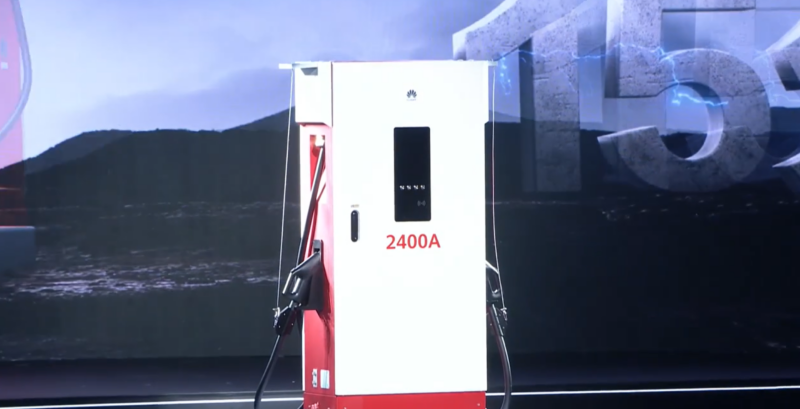
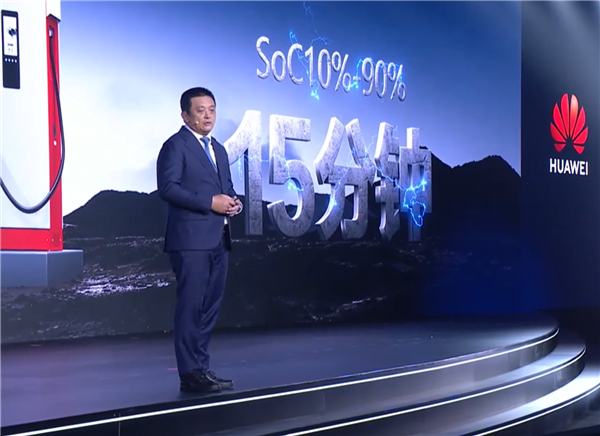
It appears that price is not the only factor, and any perceived competitive advantage is now fought to the death. The latest war brewing is for charging power, an area most carmakers have settled at around 350 kW for years. However, the status quo was demolished last week when BYD announced their new DC fast chargers with a peak power of 1 MW. Over the weekend, Zeekr followed with a 1.2-MW charger, which it will unveil at the Shanghai auto show in late April.
Zeekr is a brand owned by Geely and has competed fiercely with battery heavyweights like CATL and BYD in terms of charging performance and battery energy density. Its Golden Battery is among the fastest charging on the market, as recently demonstrated during a 0-100% charging test with a Zeekr 7X. The car needed only 22 minutes to fully charge from empty, sustaining over 300 kW of power for almost the entire session, with a peak power of over 500 kW.
Since it launched the Zeekr 7X and its Golden Battery, the Chinese carmaker has advanced its charging tech to support 600 kW and, later, 800 kW peak power. The latest charging tech allowing 1.2 MW peak charging power represents a big step-up, which is likely announced to counter BYD's 1-MW chargers. Zeekr's charging network has 826 charging stations with over 4,000 posts.
This projects a new trend in EV ownership, making EV charging as fast as filling up a gas tank. Instead of a price race to the bottom, you can call this a charging time race to the bottom. BYD already claims its first EVs using the 1-MW charging tech (Tang L and Han L) can add 250 miles (400 km) of range in 5 minutes of charging. Zeekr has not yet offered such details or revealed which cars will use this ultra-fast charging tech.
What is certain is that other companies don't see this new war as a good thing. Andrew Cornelia, the CEO of Mercedes-Benz High-Power Charging, brushed off the achievement in an interview with InsideEVs. While he conceded it's an "amazing breakthrough," Cornelia warned that "faster is not always better." He also said charging the battery in 5 minutes is unnecessary, as most people spend more time sipping a coffee or relaxing.
Even among EV fans, there's a widespread belief that fast charging is not good for a car's battery. However, there are many examples of EVs that have been frequently charged at DC stations without experiencing higher battery degradation. Recently, a Hyundai Ioniq 5 that was exclusively fast-charged to 100% had its battery replaced after over 300,000 miles (480,000 km). It also had over 87% of its original capacity when it died