Indos
INT'L MOD

- Thread starter
- #46
Not Government Spending: Purbaya Reveals the Real Engine of Indonesia's Economic Growth
By Chandra Dwi Pranata
Purbaya Yudhi Sadewa
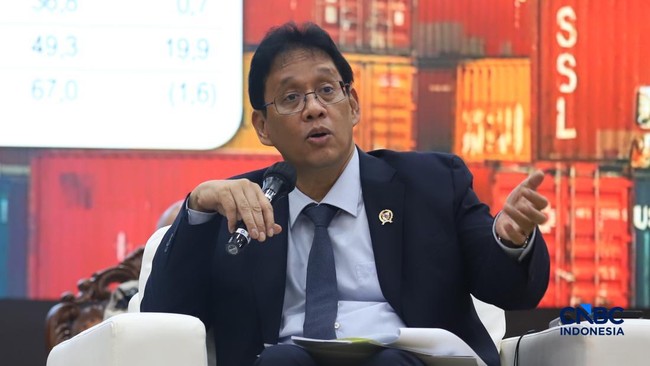
Jakarta, CNBC Indonesia – Finance Minister Purbaya Yudhi Sadewa has explained what is truly driving Indonesia's economic growth, emphasizing that government spending is not the country's primary growth engine.
According to Purbaya, government expenditure contributes only around 7.7% to the Indonesian economy, while the vast majority of economic activity is driven by the private sector.
"If we look at it, the government's contribution to the economy through spending is only about 7.7%. The rest comes from the private sector. So if the private sector is not moving, it is almost impossible for us to achieve 5.61% economic growth in the first quarter of 2026," Purbaya said during CNBC Indonesia's Economic Update 2026, as quoted on Tuesday (June 23, 2026).
Government and Household Spending Growing Together
Purbaya said President Prabowo Subianto's economic strategy is to ensure that both government spending and household spending expand simultaneously.He explained that household consumption makes by far the largest contribution to Indonesia's economic growth."This shows that the President's strategy to strengthen the economy through both the government and the private sector is working well. Government spending is increasing, and household spending is also growing significantly."
"If we multiply each component by its share of the economy, household consumption—which accounts for more than 55% of GDP—contributes about 2.9 percentage points to the overall 5.6% growth figure. Investment contributes 1.9 percentage points, while government spending contributes only 1.34 percentage points."
Two Key Indicators Remain Strong
Purbaya said two important indicators suggest that Indonesia's economy remains resilient:- Automobile sales
- Cement sales
Meanwhile, fuel consumption for both transportation and industry also recorded strong growth during March:
- Retail fuel consumption: +11.9%
- Industrial fuel consumption: +17%
- Total fuel consumption: +13%
Electricity Demand Also Rising
Purbaya added that electricity sales have continued to increase sharply, indicating stronger consumption by households, businesses, and industries as economic activity expands.Overall electricity sales grew by 19%.
Cement Consumption Surges
Domestic cement consumption—which supports infrastructure and construction projects—also recorded exceptionally strong growth.According to Purbaya, cement consumption increased by 35.6% in April 2026.
He concluded that the available indicators suggest Indonesia's domestic demand continues to support solid economic growth, with the private sector and household consumption remaining the principal drivers, while government spending plays a relatively smaller role."The figures are indeed higher than before, but that doesn't mean this is the only engine of growth. Overall, the data still indicate that household purchasing power remains quite strong."
Bukan Belanja Pemerintah, Purbaya Ungkap Motor Pertumbuhan Ekonomi RI
Menteri Keuangan (Menkeu) Purbaya Yudhi Sadewa membeberkan motor penggerak pertumbuhan ekonomi Indonesia
 www.cnbcindonesia.com






/data/photo/2026/07/28/6a683e9b8e947.jpg)


/data/photo/2026/05/10/6a00017713c52.jpg)










/data/photo/2026/08/10/6a7982abe4918.jpeg)