Pakistan Border and Barter Trade

Pakistan, Iran fast-track border SEZ​


Both sides renew $10b trade target as US sanctions expected to ease

Our Correspondent
June 19, 2026

tribune


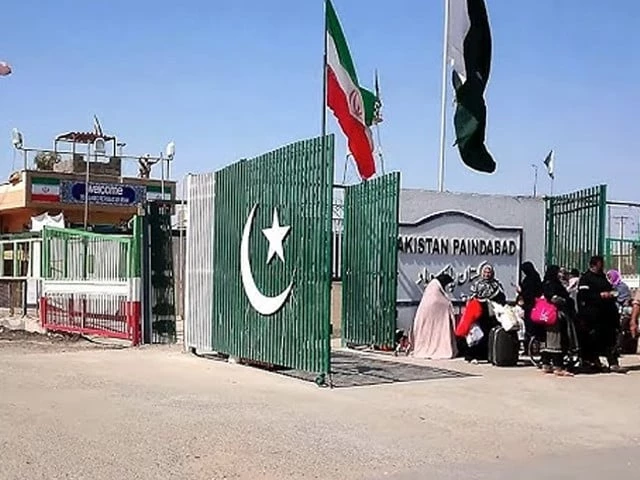
ISLAMABAD/KARACHI: Pakistan and Iran have agreed to accelerate implementation of the Rimdan-Gabd border Special Economic Zone (SEZ) and deepen economic cooperation as both countries renewed efforts to raise bilateral trade to $10 billion, following a peace deal between Iran and the United States (US).

The US is expected to remove sanctions against Tehran, which will open a large market in Iran for Pakistan. During the conflict, Pakistan gave Iran access to ports including Gwadar by opening six land routes – a new route Pakistan found during the war. Earlier, Pakistani traders had used the Afghan route to reach Central Asian states and Russia, but Afghanistan closed this route due to tensions with Pakistan.

According to officials, Iran had been conducting informal trade worth $45 billion through Dubai port. But during the war, the UAE sided by Israel, making Pakistan the best option for Iran to shift that trade, which would become legal after the US removes sanctions.

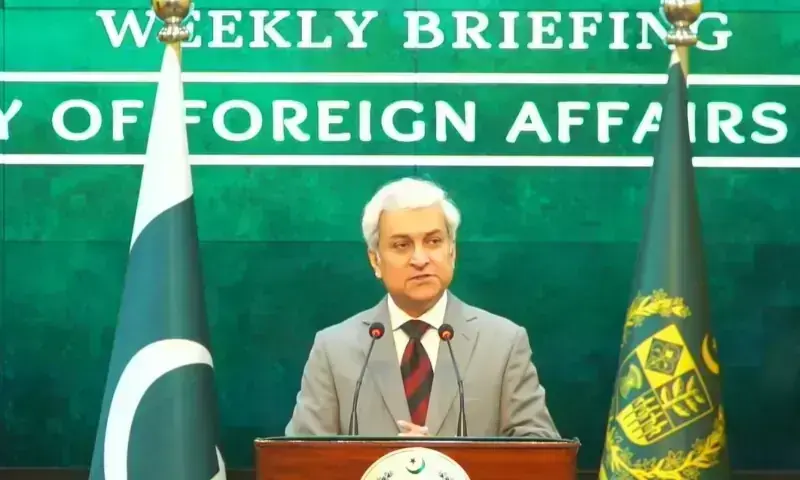
Federal Minister for Investment Qaiser Ahmed Sheikh held a comprehensive meeting with Iranian Ambassador Reza Amiri Moghadam to strengthen bilateral economic cooperation and address issues related to trade, investment and regional connectivity.

Discussions focused on enhancing economic relations under the MoU signed between Pakistan's Board of Investment and Iran's Supreme Council of Free Trade, Industrial and Special Economic Zones for the establishment of joint free or special economic zones along their shared border.

Both sides reaffirmed their commitment to achieving the bilateral trade target of $10 billion. It was noted that the SEZ initiative, particularly around the Rimdan-Gabd border region, along with previously agreed border markets, would play a pivotal role in improving livelihoods and boosting cross-border commerce.

Detailed discussions were held on operationalisation of the SEZ. The Iranian side emphasised the need for a joint visit to finalise and notify the boundaries. While Iran has completed demarcation on its side, Pakistan's side requires coordination. It was agreed that a joint technical visit would be undertaken, followed by the development of terms of reference.

Sheikh highlighted the strategic importance of the location, noting its proximity to key maritime routes and major ports, making it a viable hub for trade and investment. He observed that the area offers comparatively better security conditions than other border points.
 
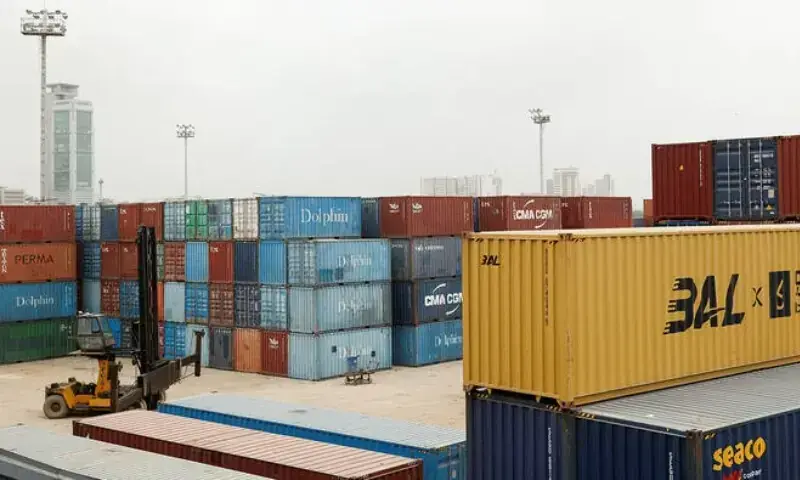
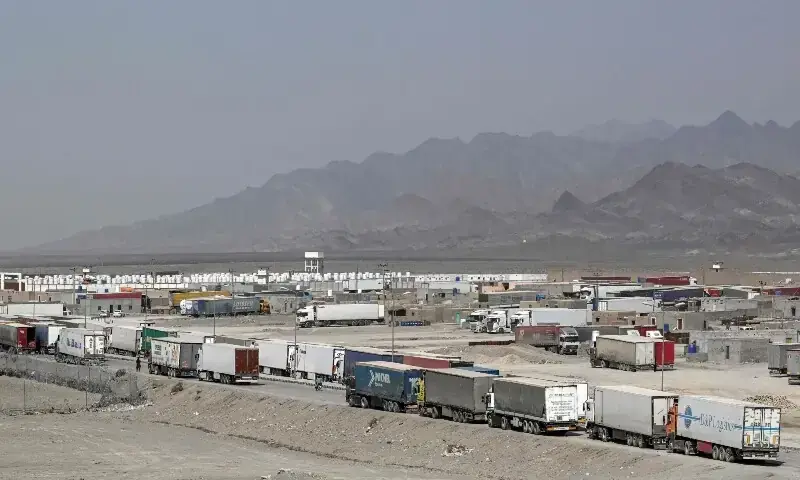
Both sides expressed concern over the decline in cross-border trade volume. It was noted that prior to recent tensions, approximately 700-800 trucks crossed the border daily, which has now decreased significantly. The two sides discussed enhancing this number, with a potential target of up to 2,000 trucks per day.

Ambassador Moghadam highlighted Iran's readiness to provide Pakistan enhanced access to Central Asian markets, presenting significant opportunities for regional connectivity. Both sides agreed to actively promote joint ventures and encourage private sector collaboration.

Sheikh emphasised that current developments present a timely opportunity to expand trade through both land and sea routes. He acknowledged that while the SEZ initiative has been agreed at the highest level, implementation challenges remain, particularly in coordination with provincial governments and external geopolitical factors.

He stated that the Special Investment Facilitation Council (SIFC) would be engaged to coordinate with provincial authorities to address these challenges, reaffirming that the Board of Investment would take a proactive lead in advancing this initiative.

It was agreed that the Iranian side would formally share a comprehensive communication outlining key concerns, enabling the Board of Investment to convene an inter-ministerial meeting for coordinated action. Ambassador Moghadam extended an invitation to Sheikh to visit Iran, which was accepted.
 
ISLAMABAD: The Federal Board of Revenue (FBR) has formally notified the establishment of a new land customs station at the border town of Taftan, a move that signals renewed focus on formalising and expanding Pakistan’s trade infrastructure with Iran.

According to a customs notification SRO1055 of 2026, the FBR has declared the Railway Station Taftan, spread over 11.75 acres, as a land customs station for the loading, unloading and clearance of imported and exported goods.

The notification specifies the facility’s geographical limits and brings the railway-linked terminal into the formal customs network. The development is expected to facilitate cargo handling through rail connectivity at Taftan, which has historically remained underutilised despite its strategic location as Pakistan’s primary land gateway to Iran.

Land customs station status aims to reduce informal channels and lower transport costs
By granting the status of a land customs station, tax officials aim to streamline documentation, clearance, and inspection processes, while reducing reliance on informal or fragmented trade channels.

The move comes in the backdrop of Pakistan’s ongoing efforts to expand formal trade with Iran, which has long been constrained by sanctions, limited banking channels, and weak border infrastructure.

Pak-Iran officials have made repeated commitments to raise bilateral trade volumes to $5 billion, but actual trade has remained significantly below potential, largely due to logistical bottlenecks and regulatory gaps.

One recurring issue has been the lack of fully functional customs and transport facilities at border crossings, which has restricted the movement of goods and discouraged large-scale commercial transactions. The notification appears to address part of that structural gap by operationalising rail-based cargo clearance at Taftan.

Trade analysts suggest that integrating rail infrastructure with customs operations could reduce transportation costs and improve efficiency for bulk goods, particularly in sectors such as agriculture, minerals, and petroleum products, which dominate cross-border trade.

The formal recognition of Taftan railway station as a land customs station marks a step toward institutionalising trade routes that have long operated below capacity, and reflects a broader policy direction aimed at normalising economic engagement with Iran through documented and regulated channels.

Published in Dawn, June 25th, 2026
 
ISLAMABAD: The Federal Board of Revenue (FBR) has formally notified the establishment of a new land customs station at the border town of Taftan, a move that signals renewed focus on formalising and expanding Pakistan’s trade infrastructure with Iran.

According to a customs notification SRO1055 of 2026, the FBR has declared the Railway Station Taftan, spread over 11.75 acres, as a land customs station for the loading, unloading and clearance of imported and exported goods.

The notification specifies the facility’s geographical limits and brings the railway-linked terminal into the formal customs network. The development is expected to facilitate cargo handling through rail connectivity at Taftan, which has historically remained underutilised despite its strategic location as Pakistan’s primary land gateway to Iran.


By granting the status of a land customs station, tax officials aim to streamline documentation, clearance, and inspection processes, while reducing reliance on informal or fragmented trade channels.

The move comes in the backdrop of Pakistan’s ongoing efforts to expand formal trade with Iran, which has long been constrained by sanctions, limited banking channels, and weak border infrastructure.

Pak-Iran officials have made repeated commitments to raise bilateral trade volumes to $5 billion, but actual trade has remained significantly below potential, largely due to logistical bottlenecks and regulatory gaps.

One recurring issue has been the lack of fully functional customs and transport facilities at border crossings, which has restricted the movement of goods and discouraged large-scale commercial transactions. The notification appears to address part of that structural gap by operationalising rail-based cargo clearance at Taftan.

Trade analysts suggest that integrating rail infrastructure with customs operations could reduce transportation costs and improve efficiency for bulk goods, particularly in sectors such as agriculture, minerals, and petroleum products, which dominate cross-border trade.

The formal recognition of Taftan railway station as a land customs station marks a step toward institutionalising trade routes that have long operated below capacity, and reflects a broader policy direction aimed at normalising economic engagement with Iran through documented and regulated channels.

Published in Dawn, June 25th, 2026
Posted already
 

Users who are viewing this thread

Pakistan Defence Latest

Latest Posts

Back
Top