Chinese Economy: General News, Updates and Discussions

China’s foreign exchange reserves reach record high in May​

8 June 2026 12:02 (UTC+04:00)

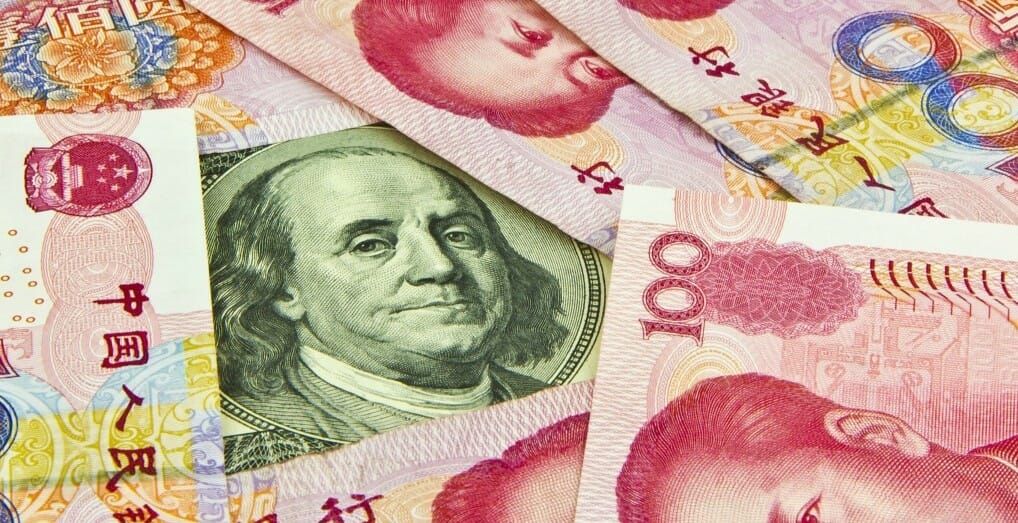
dollar-yuan.jpg

China’s foreign exchange reserves increased in May 2026, AzerNEWS reports, citing China’s State Administration of Foreign Exchange (SAFE).

The country’s foreign exchange reserves rose by $31.7 billion in May compared to the previous month, reaching a total of $3.442 trillion at the end of the month.

The figure represents a 0.93% increase compared to April.

In its statement, State Administration of Foreign Exchange noted that the US dollar index strengthened in May, while global financial asset prices also increased.

The authority said the growth in reserves was driven by a combination of swap operations and changes in asset valuations across international markets.


China’s foreign exchange reserves reach record high in May​

8 June 2026 12:02 (UTC+04:00)

dollar-yuan.jpg

China’s foreign exchange reserves increased in May 2026, AzerNEWS reports, citing China’s State Administration of Foreign Exchange (SAFE).

The country’s foreign exchange reserves rose by $31.7 billion in May compared to the previous month, reaching a total of $3.442 trillion at the end of the month.

The figure represents a 0.93% increase compared to April.

In its statement, State Administration of Foreign Exchange noted that the US dollar index strengthened in May, while global financial asset prices also increased.

The authority said the growth in reserves was driven by a combination of swap operations and changes in asset valuations across international markets.

Lol. We changed USD $1000 to CNY last month in a Chinese bank. This figure includes China absorbing USD $1k from us in May!
 

China's May Exports Surge 19.4%​

Published 2026.06.09. 16:34:49

Containers and ships are stacked at the port of Nanjing in China's Jiangsu province on the 9th. AFP/Yonhap News - Seoul Economic Daily International News from South Korea

Containers and ships are stacked at the port of Nanjing in China's Jiangsu province on the 9th. AFP/Yonhap News

China's exports rose for a second consecutive month in May, surging on demand for artificial intelligence (AI).

China's exports increased 19.4% year-on-year in May, far exceeding Bloomberg's market estimate of 15%, according to the General Administration of Customs, the country's customs authority, on Monday. China's export growth had slowed to 2.5% in March, just after the outbreak of the Iran war, before climbing to 14.1% in April and then jumping to 19.4% this month.
 

China’s May shipments to U.S. clock 5-year high growth at 35% as overall exports jump on tech boost​

Published Mon, Jun 8 202610:45 PM

Key Points
  • Exports rose 19.4% from a year earlier in U.S. dollar value terms, accelerating from the 14.1% gain in April.
  • Imports growth momentum continued to build, expanding 27.4% in May, outpacing the 25.3% rise in the previous month, beating economists’ forecast.
  • Shipments to the U.S. soared nearly 35.4% in May from a year earlier, the highest growth since March 2021.
SHENZHEN, CHINA - MAY 1: The Chinese national flag is seen in front of stacked shipping containers bearing MSC (Mediterranean Shipping Company), Maersk, and Hamburg Süd branding at Yantian Port on May 1, 2026, in Shenzhen, Guangdong Province, China. Port infrastructure and container cranes are visible in the background. Yantian Port is one of China's busiest container terminals and a major hub for global trade, handling large volumes of export goods from southern China. (Photo by Cheng Xin/Getty Images)

SHENZHEN, CHINA - MAY 1: The Chinese national flag is seen in front of stacked shipping containers bearing MSC (Mediterranean Shipping Company), Maersk, and Hamburg Süd branding at Yantian Port on May 1, 2026, in Shenzhen, Guangdong Province, China.
Cheng Xin | Getty Images News | Getty Images

China’s trade growth held up better than expected in May, as surging AI-related exports helped buffer the economy against disruption from the Iran war, with U.S.-bound shipment logging the strongest jump in five years.

Overall exports rose 19.4% from a year earlier in U.S. dollar value terms, customs data showed Tuesday, accelerating from the 14.1% gain in April. Economists polled by Reuters had pegged growth at 15%.

“The war is boosting demand for green exports, such as electric vehicles, batteries, solar products, and AI-related technology goods,” said Sheana Yue, senior economist at Oxford Economics, expecting the outperformance in high-tech product export growth to persist.

Overall exports of integrated circuits soared 110% in terms of value from a year earlier, in part driven by unit price surges. Outbound shipment of high-tech goods surged 50% in May from a year ago, while imports jumped 47% by value.

Shipments to the U.S. soared nearly 35.4% in May from a year earlier, the highest growth since March 2021, according to Wind Information, extending a rebound following a long streak of double-digit declines for the most of last year, pressured by President Donald Trump’s tariffs.

 
To view this content we will need your consent to set third party cookies.
For more detailed information, see our cookies page.
 
To view this content we will need your consent to set third party cookies.
For more detailed information, see our cookies page.
 
搜狗截图20260610012100.png
1774266875692
 

China’s exports jump 19.4% in May from a year earlier, boosted by demand for autos and tech goods

Updated 5:32 AM GMT+8, June 10, 2026

HONG KONG (AP) — China’s exports picked up pace in May, rising 19.4% from a year earlier, its customs agency said Tuesday, as technology-related shipments remained robust despite impacts from the Iran war.

The stronger than expected performance was an improvement from April’s 14.1% year-on-year increase.

Imports in May jumped 27.4%, also at a faster pace compared with April’s 25.3% year-on-year expansion.

Exports to the U.S. in May surged more than 35% from the year before — the strongest pace since early 2021 — after an 11% increase in April.

China’s shipments to the U.S. had fallen sharply for most of the months since U.S. President Donald Trump returned to the White House last year, as shipments to regions like Southeast Asia and Europe surged.

The strength in exports has been supported by shipments of autos and technology and artificial intelligence-related products such as semiconductors and computing equipment.

Exports are a “shock‑absorber” for China, helping its economy weather a spike in global energy prices that have driven inflation worldwide, said Wei Li, Head of Multi-Asset Investments at BNP Paribas Securities (China).

The global AI boom and a rising worldwide shift to green technology are also helping.

“Ships, chips, autos, and batteries continue to find strong demand amid the global tech boom, and higher prices along the tech supply chain have helped support the value growth for trade,” said Lynn Song, chief economist for Greater China at Dutch bank ING.

By product categories, overall exports of semiconductors in May more than doubled year-on-year by value while autos were up almost 40%. China’s biggest electric vehicle maker BYD said it sold more than 160,600 vehicles abroad in May, up 80% from a year earlier.

Advanced semiconductors and EV shipments are likely to help power China’s export growth for the rest of this year, Li of BNP Paribas said.

Trump’s visit to Beijing and his meetings there with Chinese President Xi Jinping in mid-May have raised hopes for improved relations between the world’s two largest economies after the two leaders agreed to set up boards of trade and investment.

But analysts said the recent year-on-year improvement in Chinese exports to the U.S. probably has more to do with the base effect, after Trump’s sweeping “Liberation Day” tariffs that came into effect in April 2025 caused a sharp drop in China’s shipments.

Chinese leaders have set a 4.5% to 5% annual economic growth target for 2026, slightly below the “around 5%” goal for 2025, and the slowest expansion goal since 1991. ING’s Song said a strong start to the year should help China stay on track to meet its full-year growth target.


The China collapse that just never arrives

A forecasting error that consistently points in the same direction reveals more about the observer than about the object

by Jan KrikkeJune 12, 2026

China-Market.jpg


China's economy isn't on the verge of collapse. Image: X Screengrab

China has been on the verge of collapse for more than 20 years. In 2001, lawyer and commentator Gordon Chang published “The Coming Collapse of China.” The book famously predicted that China’s economic model would fail within a decade.

The decade passed. The prediction was revised, republished and absorbed into a durable genre that has survived every missed deadline. The crisis, by Chang’s and others’ readings, was always near.

Consider two other prominent figures on opposite ends of the China collapse spectrum. Nouriel Roubini earned the nickname “Dr. Doom” even before predicting the 2008 global financial crisis. In 2011, he warned that China faced a meaningful probability of a hard landing.

He pointed to its runaway debt, over-investment and infrastructure projects disconnected from real demand. The crash, he suggested, would come after 2013.

By 2015, as the hard-landing consensus reached its peak, Roubini reassessed the evidence. He rejected the collapse scenario and argued instead for a “bumpy landing” — growth slowing, but without systemic failure. The prediction changed because the evidence changed.

Peter Zeihan took a different angle. For more than a decade, the geopolitical strategist has argued that China’s economy and political system face structural collapse. Demographics will shrink the workforce. Export dependence will undermine growth. In books and interviews, Zeihan’s timeline shifts, but his conclusion remains remarkably consistent.

The challenges Zeihan identifies are real. China’s population is aging. Export markets are more contested. Yet the collapse he predicts has not materialized. China has responded to demographic pressures through automation and moved steadily up the industrial value chain.

The contrast is revealing: Roubini changed his mind while Zeihan moved the date.

Wall still standing​

When the Shanghai stock market plunged in 2015, commentators warned of a hard landing. When property developer China Evergrande Group defaulted in 2021, comparisons with Lehman Brothers appeared almost immediately. Yet the collapse never arrived. China’s wall is still standing.

This is not to suggest that all is well. Household wealth remains tied to a declining property market. Youth unemployment rose to such a high level that authorities stopped publishing the figure. Export markets have become more difficult with rising protectionism in the West.

The people forecasting trouble were not inventing these problems – they were identifying genuine stresses. What they have repeatedly misjudged, though, was not the existence of stress but how it would propagate.

A prediction that repeatedly fails and is then quietly postponed changes its nature. It ceases to be a forecast and becomes a standing expectation that survives its own disconfirmation.

The question is no longer whether China faces serious challenges. It clearly does. The question is why the forecasts keep failing in the same direction. Error from bad data scatters. Some forecasts are too optimistic, others too pessimistic. Over time they average toward reality. China’s collapse forecast does not scatter, it leans.

The collapse deadline keeps receding. 2011 became 2012, then 2016. The hard landing was pronounced again after the 2015 stock crash and continued variously though the trade war, through the pandemic, through Evergrande’s default.

Across those same two decades, China’s economy grew, household incomes more than quadrupled, and the industrial base moved steadily up the value chain. A forecasting error that consistently points in the same direction reveals more about the observer than about the object.

Why the narrative persists

Three forces explain the durability of the collapse narrative. None requires anyone to be lying.

First, the conclusion is useful. An investor gets a reason to avoid Chinese assets that sounds like analysis, not anxiety. A government gets risk management in place of admitting a peer competitor has arrived. And the media gets a better story: a rising rival is complicated; a collapsing rival gets clicks.

When a conclusion is this welcome, confirming evidence is waved through while contradicting evidence is asked for its papers. Being wrong carries almost no professional cost. A forecaster can miss the same call for two decades and remain a sought-after authority. Nobody decides this consciously. It is what wanting does to looking.

Second, the assumption is old. A long tradition in Western thought holds that an economy cannot function without the institutions the West built: independent central banks, courts that constrain the state, free flowing information. Hold that assumption firmly enough, and Chinese growth begins to look like a trick borrowed from the future. Collapse becomes a deduction, not a prediction.

The conviction shows itself most clearly in the assumption that China could copy but never invent. Yet Chinese firms now lead in electric vehicles, batteries and renewable energy, among a growing list of other next-generation technologies. The premise has survived even as reality has steadily eroded it.

Third, the models were built elsewhere. The tools used to assess economic vulnerability learned their trade in systems where the state acts as referee. They watch private debt, leverage and property valuations. Those variables matter in China, but they do not transmit stress the same way.

Evergrande is the clearest example. Comparisons with investment bank Lehman Brothers seemed unavoidable. Yet Lehman’s collapse occurred within a system of largely independent creditors. China presents a different configuration: state-owned banks and government-directed restructuring have altered the pathways through which distress could spread.

The result was not the absence of crisis – it was a different kind of crisis. Developers defaulted, property values fell and growth slowed. But the chain reaction many analysts expected never materialized. The model identified genuine vulnerabilities. What it misjudged was the mechanism of propagation.

The opposite illusion​

And yet none of this means the wall is sound. Those who warned about China’s weaknesses were right about many things. Developers did default. Property values did fall.

Demographics are turning, and they will not reverse easily. However, the use of “imminent has been wrong for 20 years. “Fragile has not been wrong at all. That is the honorable way to miss — the path Roubini took.

The same instrument that exposes the collapse narrative can be turned on its mirror image. If a China perpetually on the verge of collapse is useful to believe, so is a China that cannot fail. Both narratives rely on selective attention. Both risk mistaking conviction for evidence.

The models used to forecast China’s economy are de facto maps: compressions of a vast and complex reality into a handful of neat, legible variables. The territory itself remains far messier.

When the territory refuses to behave as the map says it should, the disciplined response is to question the map. The reflexive response is to question the territory: the data must be fake, the growth hollow.

So, again, why have all the collapse forecasts been so consistently wrong? In part, because forecasters have been watching and weighing the wrong indicators.

The new middle class was not built primarily in Shanghai or Shenzhen but in inland cities such as Chengdu, Hefei, Xi’an, and Zhengzhou, where income growth was driven by industrial expansion and infrastructure investment rather than by speculative gains in coastal real estate.

If a genuine systemic decline is approaching, it will appear there first – in household incomes and altered spending patterns among the inland middle class.

If those indicators begin to show a sustained contraction, the collapse thesis will finally have the transmission mechanism it has long lacked. If, on the other hand, they remain resilient, analysts and critics may again need to reconsider their flawed assumptions.
 
Gordon Chang and the like have not been really making predictions, but speaking out of their wishes on China.
 

China has reduced its oil consumption by 20 %, using easy means​

Since the war in Iran started, China's oil consumption has reduced, and that helps keep global oil prices stable.​

Ever since the war in Iran started earlier this year, China has significantly reduced its purchases of oil from the world market. China has been the world's largest oil buyer, which has reduced the pressure of oil prices, as reported by Reuters and YLE.

Oil consumption in China had already fallen before the war in Iran due to the slowdown in economic growth and the widespread use of electric cars. But this current decline in oil demand has been something else.

In fact, China's use of gasoline and gasoline products fell by up to 20 percent in April compared to the previous year. The Chinese have not reduced their travel, but have changed it. People have switched from gasoline-powered cars to electric vehicles, meaning trains, subways, electric taxis and electric trucks. And as you might expect, charging of electric vehicles increased by 69 percent in April compared to last year.

Experts believe that Chinese behavior has permanently changed towards reducing oil consumption, supported by the rapid spread of electric vehicles.


China Added More Solar Than the Rest of the World Combined

June 11, 2026

China-Solar-Power_Web_05272025.webp


Key Takeaways​

  • China added 336 TWh of new solar generation in 2025, more than the rest of the world combined (300 TWh).
  • China accounted for 53% of all global solar additions, helping solar meet 75% of worldwide electricity demand growth.
  • Asia outside China, North America, and Europe each added around 80–90 TWh, highlighting the scale gap between China and every other region.
Solar power continued its record expansion in 2025, becoming the largest source of new electricity generation worldwide and meeting 75% of global demand growth.

The pace of deployment also helped drive a rare milestone: global fossil fuel generation declined even as electricity demand increased. According to Ember’s Global Electricity Review 2026, rapid clean power additions in China and India were a major reason why.

This map shows where new solar generation was added in 2025, highlighting the regions leading the world’s energy transition.

China vs. the World​

China added 336 terawatt-hours (TWh) of new solar generation in 2025, exceeding the combined total of every other region.

To put that scale into perspective, China’s solar additions in a single year were greater than all of the electricity the United Kingdom used in 2025 (322 TWh).

Excluding China, the rest of the world accounted for 300 TWh of new solar additions. Asia outside China added the second-largest amount of solar with 90 TWh, followed by North America at 86 TWh and Europe at 80 TWh.

Why China’s Scale Matters​

The scale of China’s electricity deployment has global implications. In 2025, global fossil fuel generation fell, which according to Ember, may be the first time this has happened without an economic recession or stagnation as the leading cause.

Fossil fuel generation reductions were led by China (-56 TWh) and India (-52 TWh), driven by each country’s rapid clean power deployment. This was despite moderate fossil fuel generation increases in the U.S., EU, and other regions.

China dominates the solar supply chain, allowing it to leverage its production scale to lower costs and accelerate adoption. However, this makes the global energy transition more exposed to Chinese policy, trade rules, and manufacturing capacity.

Global Solar Power Additions Are Soaring​

It was a record-setting year as the world added 636 TWh of solar power, beating the previous solar record in 2024 (+479 TWh) by 33%. This is the fourth year in a row that solar has had the largest absolute growth of any electricity source.

Coal is the only electricity source to have a larger recorded annual increase in recent years, after generation jumped by 719 TWh following the pandemic in 2021.

However, coal’s expansion was driven by a rebound in demand, unlike solar’s structural capacity expansion.


Users who are viewing this thread

Pakistan Defence Latest

Back
Top