The Chinese government has pledged to increase investment and coordination in the nation’s power gri

www.bastillepost.com
Chinese government boosts investment in electricity grid to support AI development
2026-08-12 23:03 Last Updated At:08-13 11:29
The Chinese government has pledged to increase investment and coordination in the nation’s power grid to help alleviate the pressure on the power supply from China’s fast-growing tech and artificial intelligence (AI) sector.
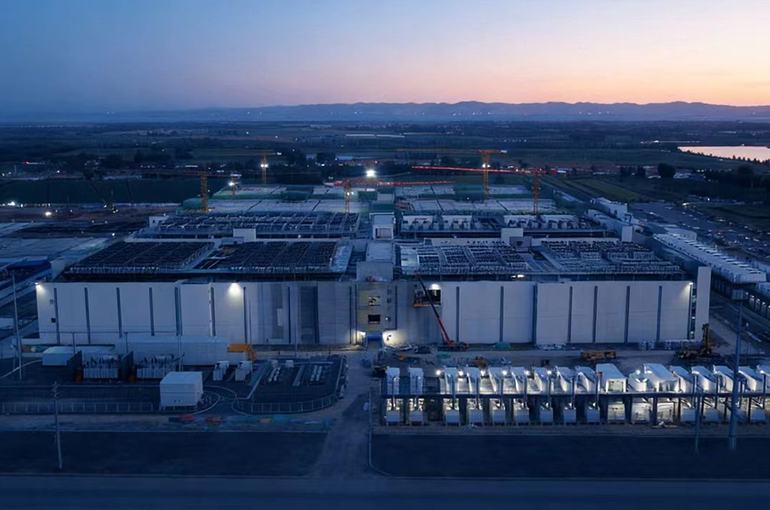
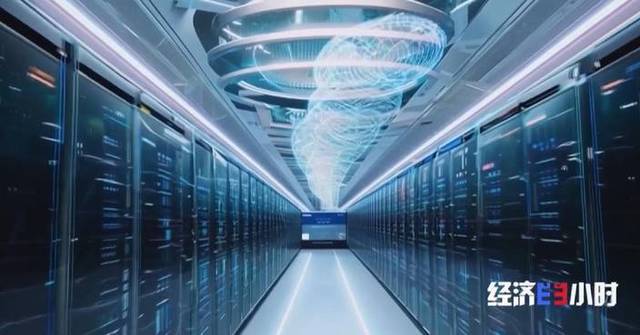
In the Guangdong Shaoguan cluster, one of China's top ten national data center clusters, intelligent computing cabinets are the core hardware supporting the operation of large AI models. A single cabinet can consume up to 240 kWh of electricity per day when operating at full load, roughly equivalent to the total electricity consumption of an average household for a month. In addition to the computing equipment itself, the supporting cooling and humidity control systems also generate considerable power consumption.
"The computing power we built has increased from 5,000 PetaFLOPS last year to 30,000 PetaFLOPS now, and electricity consumption has increased five to six hundred times compared to last year," said Xie Jinbao, deputy director of the development and reform bureau of Shaoguan City.
Data shows that in 2025, computing centers nationwide consumed 18.1 percent more electricity than in 2024, far exceeding the 5.2-percent growth rate for electricity consumption for the rest of the nation’s households and businesses.
To meet the rapidly growing demand for computing power, AI companies will be encouraged to "transfer" computing tasks from areas with tight power supplies to areas with surplus, to ease the burden on the power grid.
Guangzhou City faced a power shortage earlier this year but, after receiving instructions from the Southern Power Grid, organizations moved non-urgent calculation tasks from Guangzhou to the Gui'an Data Center in southwest China’s Guizhou Province.
"At that time, we detected that the load in Guangzhou was too high, so we issued real-time dispatch instructions to the China Mobile Southern Base Data Center to adjust the load," said Zhang Zihao, head of the research and development center of the Computer Engineering Company under China Southern Power Grid Digital Group.
The National Development and Reform Commission announced on July 31 that during the 15th Five-Year Plan period (2026-2030), four trillion yuan (about 593 billion US dollars) will be invested to promote the construction of a national integrated computing power network.
The integrated computing power network can schedule distributed computing power and regional resources across different regions, aggregate the advantages of single-point technologies into the advantages of national industrial clusters, and ultimately expand the growth space for domestic large-scale AI models.
"The 4-trillion-yuan investment in computing power networks is a crucial foundation for the future overseas expansion of our large models. First of all, it will further reduce the computing power costs of providing such services overseas and enhance the reliability of these services. This is fundamental and a basic guarantee for the future in-depth, practical, and sustainable overseas expansion of our large models," said Du Guochen, director of the Institute of E-commerce at the Chinese Academy of International Trade and Economic Cooperation.