US - Pakistan relationship

ghazi52

THINK TANK: CONSULTANT
Joined
Mar 21, 2007
Messages
156,952
Reaction score
206,788
Reputation
8,695.9
Country of Origin
Country of Residence

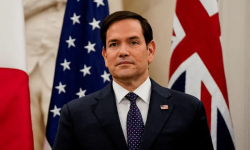
US sees opportunity to expand strategic relationship with Pakistan: Marco Rubio

Dawn.com
October 26, 2025

1761485244307.png

Secretary of State Marco Rubio has said that the US sees an opportunity to expand its strategic relationship with Pakistan and that the recent strengthening of ties between the two countries does not come at the expense of Washington’s relationship with New Delhi.

He made these remarks during a press briefing on Saturday, during which he was asked whether India had raised any concerns about the “stronger relationship” between the US and Pakistan.

“They really haven’t — I mean, we know they’re concerned for obvious reasons because of the tensions that have existed between Pakistan and India historically. But, I think they have to understand, we have to have relations with a lot of different countries,” he said, according to a transcript of the briefing on the State Department’s website.

He continued, “We see an opportunity to expand our strategic relationship with Pakistan, and I think we’ve made — that’s our job, is to try to figure out how many countries we can find how we can work with on things of common interest.


“So, I think the Indians are very mature when it comes to diplomacy and things of that nature. Look, they have some relationships with countries that we don’t have relationships with. So, it’s part of a mature, pragmatic foreign policy. I don’t think anything we’re doing with Pakistan comes at the expense of our relationship or friendship with India, which is deep, historic, and important.”

Rubio was also asked whether the recent improvement in ties between the US and Pakistan was based on Islamabad’s “recognition of the US role and President [Donald Trump’s] role in resolving and in avoiding potential war between India and Pakistan?”

“What do you think was the turning point?” a reporter asked him, according to the transcript on the State Department’s website.

To that, Rubio began his response with, “I think they appreciated.”

He then went on to say that “anytime you work with someone, you get to know them and you interact with them, and so I do think there was some sense of happiness about it. But even before that conflict had started, I had already reached out to them and said look, we are interested in rebuilding an alliance, a strategic partnership with you. We think there are things we can work together with them on”.

The secretary of state reiterated that the US was “fully aware of the challenges with regards to India and everything else, but our job is to try to create opportunities for partnerships with countries where it’s possible. And we’ve had a long history of partnering with Pakistan on counterterror and things of that nature. We’d like to expand it beyond that, if possible, understanding that there’ll be some difficulties and some challenges”.

“But I think it’s a very encouraging thing that that relationship has strengthened the way that it has, and I don’t think it comes at the expense, or instead of a good relationship with India, or anybody else for that matter,” he added.
 
Earlier this month, a Dawn report highlighted that Pakistan was entering a new phase in its economic and strategic partnership with the US, as the two allies move closer to implementing a deal for the export of rare earth minerals.

The improvement in ties and newfound partnership between the two sides was particularly seen after Pakistan acknowledged US President Donald Trump’s role in resolving a four-day escalation between nuclear powers Islamabad and New Delhi.

Following the development, Pakistan’s chief of army staff, Field Marshal Asim Munir, had gone to Washington on a five-day official visit in June. During the visit, he had met with President Trump over luncheon, becoming the first serving army chief to have a face-to-face meeting with a sitting US president.

During a subsequent visit to the US in August, Field Marshal Munir had termed his second trip to the US in a span of just a month and a half a “new dimension” in ties between Washington and Islamabad.

In September, he accompanied Prime Minister Shehbaz Sharif to a meeting with Trump on the sidelines of the United Nations General Assembly session in August, during which regional security and cooperation along the lines of counter-terrorism, among other matters, were discussed.

Meanwhile, Trump has thanked both PM Shehbaz and “my favourite” Field Marshal Munir for their efforts in securing the ceasefire deal in Gaza.

Earlier today, he called PM Shehbaz and Field Marshal Munir “great people” while stating that he would get the recent conflict between Pakistan and Afghanistan “solved very quickly”.

Separately, American metals company US Strategic Metals (USSM) signed a memorandum of understanding (MoU) with Pakistan in September to invest roughly $500 million to establish mineral processing and development facilities in the country. It recently dispatched its first consignment of mineral samples to the US to advance the deal.

The sample shipment, prepared locally in collaboration with the Frontier Works Organisation, includes antimony, copper concentrate, and rare earth elements such as neodymium and praseodymium.

In a statement, USSM described the delivery as “a milestone in the Pakistan–US strategic partnership,” noting that the MoU “establishes a roadmap for cooperation across the entire mineral value chain — from exploration and processing to the establishment of refineries inside Pakistan.”
 

A US-Pakistan opportunity

Fahad Hashmi
October 25, 2025

The writer is a Pakistani American entrepreneur with experience in healthcare, digital payments, and technology.

AS someone who’s lived and worked between Pakistan and the United States, I’ve seen this relationship rise with hope and fade with frustration. Still, I’ve never stopped believing in its potential. So when Pakistan dispatched its first-ever shipment of rare earth and critical minerals to the US recently, it felt like more than a transaction — it felt like a meaningful signal.

According to international reports, the shipment — containing copper concentrate, antimony, and rare earth elements — was sent under a $500 million investment deal between US Strategic Metals and Pakistan’s Frontier Works Organisation. It wasn’t just a commercial exchange; it showed that the two countries can still build something lasting through cooperation and mutual trust.

The world is going through a massive energy and technology shift. From electric cars to renewable grids, the modern economy now depends on minerals most people never think about. The International Energy Agency projects that global demand for these materials will triple by 2030, with certain battery minerals increasing thirtyfold by 2040.

Meanwhile, the overconcentration of mineral processing in a few countries has become a shared vulnerability. Diversifying supply chains isn’t just smart economics anymore — it’s a matter of trust and long-term security. Pakistan, sitting on vast and largely untapped reserves, could play a real part in reshaping that global balance.

For decades, Pakistan’s mineral wealth has been a story of promise without delivery. Estimates suggest the country’s reserves exceed $6 trillion in value. From Reko Diq’s copper and gold to newly confirmed rare earth and gold deposits in Gilgit-Baltistan, the potential has always been there — it’s the follow-through that’s been missing.

The modern economy depends on minerals most people never think about.

And yet, this isn’t just a story about rocks or maps. It’s about people — a young and ambitious nation of 240 million, and a government that seems more open than ever to responsible investment. The growing interest from US policymakers and investors shows that Pakistan might finally be ready to join the global minerals value chain in a serious way.

If this partnership’s going to succeed, it must avoid repeating the extractive models of the past. What Pakistan and the US need now is a framework built on sustainability, inclusion, and shared prosperity — one that ensures value is created within Pakistan, not merely extracted from it.
 
That vision can be achieved through five guiding principles. The first is joint exploration and mapping, combining US technical expertise with Pakistan’s on-ground knowledge to responsibly assess and manage resources. The second is environmental stewardship — holding all partners to international standards to safeguard fragile ecosystems, water sources, and local livelihoods.

The third pillar is infrastructure investment, not only in mining zones but also in the surrounding regions, so that roads, ports, and energy systems lift the broader economy rather than serving isolated projects. Equally important is community inclusion, ensuring that local residents benefit directly through employment, training, and equitable revenue sharing. Finally, the long-term goal must be in-country processing — building refining and beneficiation capacity within Pakistan so that the nation moves from exporter of raw materials to creator of value.

This approach would allow both countries to prove that resource partnerships can be transparent, fair, and mutually beneficial — a model for how economic cooperation can strengthen trust rather than dependency.

Beyond corporate responsibility, the government has an equally important role in making sure this opportunity turns into long-term progress. Islamabad should consider applying to the Extractive Industries Transparency Initiative, a global framework that promotes open reporting of mining contracts and revenues. That step alone would boost investor confidence and signal a clear commitment to clean governance.

Equally important is setting up transparent revenue management mechanisms, ensuring that mineral proceeds flow through audited public channels and support social and economic development priorities aligned with Pakistan’s fiscal responsibilities under its IMF programme. Finally, the inclusion of community development clauses within all mineral contracts should be made binding, guaranteeing that local populations share directly in the prosperity generated from their land.

By adopting these reforms, Pakistan can make sure its mineral wealth becomes a national asset rather than a temporary windfall — a base for sustainable, responsible growth.

Handled right, a US-Pakistan minerals partnership could go far beyond supply chains. It could strengthen regional stability, create thousands of jobs, and offer Pakistan a genuine path to sustainable growth. More importantly, it could show that resource partnerships can be transparent, ethical, and fair — a model for how developing economies can negotiate on equal footing.

For the US, Pakistan represents a credible partner in securing critical minerals. For Pakistan, it’s a chance to unlock economic potential while protecting sovereignty and community rights. Both countries now have the opportunity to move past old habits and co-write a new story — one rooted in mutual respect, shared prosperity, and forward-looking growth.

The writer is a Pakistani American entrepreneur with experience in healthcare, digital payments, and technology. He’s the founder of a US-based healthcare organisation, and an economic diplomacy platform focused on sustainable trade and resource partnerships.

[email protected]
 
Yeah, Rubio and Trump are in Asia, Modi skipped meeting Trump and now this statement by Rubio. Very similar to language used by US when they dumped Pakistan for India, no reversed.

Also looks like Xi and Trump are close to a trade agreement. Once that happens, I think Trump may well do a "Gran Bargain" with China.

Taiwan and India will be sacrificed.
 
It is not partnership if they are unwilling in selling you weapons.
 
Yeah, Rubio and Trump are in Asia, Modi skipped meeting Trump and now this statement by Rubio. Very similar to language used by US when they dumped Pakistan for India, no reversed.

Also looks like Xi and Trump are close to a trade agreement. Once that happens, I think Trump may well do a "Gran Bargain" with China.

Taiwan and India will be sacrificed.

Yeah, I think Taiwan is a done deal as well.

Trump wants India to bend the knee, and so far India has not. That is starting to irritate Trump it seems.

Trump is transactional for sure.

I do think he will dump Taiwan more overtly than the USA has done so, so far ( USA started the act of dumping Taiwan through the CHIPS Act which was to bring high value to the USA so that they did not have this dependency on Taiwan anymore imho).

India, too large to dump but Trump wants his pound of flesh and bending of the knee. Lets see what Modi does. Hopefully Pakistan does not get too carried away thinking this change in its fortune is permanent, because it is not. Things turn on a dime with Trump.
 
Yeah, Rubio and Trump are in Asia, Modi skipped meeting Trump and now this statement by Rubio. Very similar to language used by US when they dumped Pakistan for India, no reversed.

Also looks like Xi and Trump are close to a trade agreement. Once that happens, I think Trump may well do a "Gran Bargain" with China.

Taiwan and India will be sacrificed.

Yeah, I think Taiwan is a done deal as well.

Trump wants India to bend the knee, and so far India has not. That is starting to irritate Trump it seems.

Trump is transactional for sure.

I do think he will dump Taiwan more overtly than the USA has done so, so far ( USA started the act of dumping Taiwan through the CHIPS Act which was to bring high value to the USA so that they did not have this dependency on Taiwan anymore imho).

India, too large to dump but Trump wants his pound of flesh and bending of the knee. Lets see what Modi does. Hopefully Pakistan does not get too carried away thinking this change in its fortune is permanent, because it is not. Things turn on a dime with Trump.
The US will dump India and Taiwan for what exactly? A trade deal? Is the US going to give up its strategic interests in Asia in exchange for a trade deal with a rival that wants to supplant it as a global power? Nothing of the sort is going to happen.

Again, Pakistan is overstating its importance in such matters.
 
The US will dump India and Taiwan for what exactly? A trade deal? Is the US going to give up its strategic interests in Asia in exchange for a trade deal with a rival that wants to supplant it as a global power? Nothing of the sort is going to happen.

Again, Pakistan is overstating its importance in such matters.

Nothing to do with Pakistan (despite us being on your mind).

US is returning to isolationism, they have even told Europe to take care of itself and Trump is touting himself as getting out of wars, not into them.

His base will never want to see Americans dying for ethnic Chinese
 
Born to late for US-Pakistan strategic alliance
Born to early for US-Pakistan strategic alliance
Born just in time for US-Pakistan strategic alliance

^Above should not be taken too seriously
 
US is returning to isolationism
Trump is taking pride in his claim of ending many wars and aiming for a Nobel Peace prize. Additionally, the American evangelicals believe in a religious duty to support Israel. Furthermore, the US is trying to secure rare earth mineral agreements with countries like Pakistan and Japan, while showing willingness to use its military against South American targets.
 
Must remain balanced in our approach with USA. They can turn on a sixpence.

International geopolitics never has any permanent friends or enemies, ever. There are only alignments of national interests, for however long as they may exist in any time period, and it is up to each country to do whatever it takes to pursue its own national interests, as best as possible.

That is about all.
 

Users who are viewing this thread

Latest Posts

Back
Top