Chinese Aircraft Carriers - Liaoning, Shandong, Fujian and the future

Night view
To view this content we will need your consent to set third party cookies.
For more detailed information, see our cookies page.
 
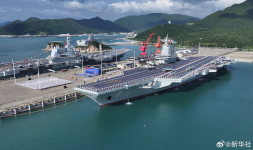
Nice pic of Yulin Naval base with both Fujian and Shandong

1762581076251.png
 
Would the 5th 075 be commissioned?
I thought it was the 4th, now officially commissioned. Anyway, good summary video splices from different videos
To view this content we will need your consent to set third party cookies.
For more detailed information, see our cookies page.
 
Better, larger, and more intelligent AC will come in future, that is the promise of young designers
To view this content we will need your consent to set third party cookies.
For more detailed information, see our cookies page.
 
To view this content we will need your consent to set third party cookies.
For more detailed information, see our cookies page.


When asked whether the Fujian will continue trial voyages after its commissioning and when it will achieve actual combat capability, PLA Navy spokesperson Leng Guowei said on Saturday that as China’s first electromagnetic catapult aircraft carrier, the Fujian is a landmark piece of equipment for the PLA Navy’s leapfrog development.

Many of its systems and technologies are being put into practical use for the first time. After commissioning, the warship will continue to carry out in-depth testing to further assess the stability of the platform system.
 
To view this content we will need your consent to set third party cookies.
For more detailed information, see our cookies page.


History of China's aircraft carrier development

Global Times 2006 headline: "How far is China from building our own aircraft carrier".

A history of Chinese carriers.The first Chinese aircraft carrier program started in the 1970s code named 707 project. But it was quickly cancelled due to lack of basically everything, from funding to shipbuilding capabilities and political will. Back then, large Army doctrine still dominated the PLA, and we were just phasing out of the People's War doctrine.

The first comprehensive carrier program started in 1989, with the project 891.But the political priority in the 1980s were to first develop the economy, the PLA of all branches were ordered to "persevere" with inadequate funding.This time the Navy stressed the importance of carriers for China, so a compromise was made; To put the program in the backburner. The Navy scrounged around and gathered 50 million yuan for the project.By 1995, great progress was made, China was ready to build our first aircraft carrier.

The report was submitted to the CMC, again, the problem with budget arose. The military budget back then was less than $12 billion dollars.So to the dismay of many in the Navy, the 891 project was cancelled.Throughout the 1990s, China purchased several decommissioned carriers from several countries, just to study the inside in detail.

And in 1998, through a 3rd party we purchased the unfinished Soviet carrier; The Varyag. Which was finished and completed to become China's first carrier, CNS-16 Liaoning, commissioned in 2012.For our second carrier, CNS-17 Shandong was planned to be a CATOBAR carrier with steam catapults.

But through deliberations, President Hu and the Navy decided to be more conservative, and reproduce the STOBAR CNS-16 Liaoning with the ski-jump, with some improvements.This decision ultimately had a huge impact on the following CNS-18 Fujian.

Because it gave us the time to develop our electromagnetic catapults.As we were building the Fujian, our electromagnetic catapult technology matured, so the decision was made by President Xi and the CMC to redesign the Fujian and swap out the steam catapults.

If President Hu did not made the decision to quickly build the CNS-17 Shandong, then by 2025, we would only have 2 carriers, Liaoning and the Steam catapult Shandong, with Fujian still being built with a approx. 2027 launch date, and a 2030 commission date.But because of the short building period of the less complicated CNS-17 Shandong, gave us an extra carrier by 2025, saving 5 years in our carrier development.

From now, China will have the capacity to build 2 carriers at a time, one in Dalian the other in Shanghai. China's advancement in our carrier program was never a given, our navy had to fight really hard to get the programs going. Time is of the essence, we will not leave the problem of national reunification for the next generation.
 
CV16 001 launched in 16th Nov 2011 Commissioned 25th Sep 2012 that's 315 days
CV17 002 launched in 26th April 2017 Commissioned 17th Dec 2019 that's 966 days
CV18 003 launched in 17th June 2022 Commissioned 7th Nov 2025 that's 1240 days

clearly the commissioning is getting much longer due to the complexities
 
It couldn't be any other way.

It's a somewhat forced comparison. Each carrier is different from its predecessor, which leads to more time in commissioning.

I would only expect a viable comparison standard when the PLAN is involved in building multiple CVNs in a single class.
 
CV16 001 launched in 16th Nov 2011 Commissioned 25th Sep 2012 that's 315 days
CV17 002 launched in 26th April 2017 Commissioned 17th Dec 2019 that's 966 days
CV18 003 launched in 17th June 2022 Commissioned 7th Nov 2025 that's 1240 days

clearly the commissioning is getting much longer due to the complexities
Previously, China had no experience in the field of aircraft carriers.

CV-16. This marked China's first in-depth study of an aircraft carrier's internal systems. When China acquired the Varyag from Ukraine, it was merely an empty shell. China needed to completely rebuild all its internal systems.
CV-17. This was China's first independently built, complete aircraft carrier. It referenced the CV-16 design but was more modern in structure and internal layout.
CV-18. This carrier incorporated even more new components.

These three aircraft carriers represent milestones in China's aircraft carrier program. Their development and construction speed certainly could not be compared to mass production plans.

For example:

China's Type 052 series destroyers.

Type 052, Type 052B, and Type 052C. China's development and production of these involved long construction cycles and small production numbers. However, by the time it reached the Type 052D, China's relevant technologies and production conditions were fully mature. Therefore, we see a completely different situation.

Currently, China has two shipyards officially designated as capable of building aircraft carriers: Jiangnan Shipyard and Dalian Shipyard. Once the technology is fully mature and secured, both shipyards can simultaneously begin constructing new aircraft carriers.
In fact, besides Jiangnan Shipyard and Dalian Shipyard, China also has many large dry docks capable of handling ships of 100,000 tons or more. If the country requires it, these can be converted into aircraft carrier construction facilities in a very short time.
China's shipbuilding industry is currently the world's largest. We don't lack raw materials, skilled workers, or infrastructure. We also don't lack capital. What we lack is time. We need these new technologies to mature further before mass production.
 
1762673373510.png
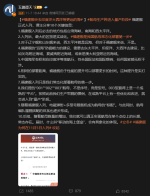
This is an unofficial Weibo account belonging to an official organization. It is operated by CMG (i.e., CCTV).
This article mentions some important information about the CV-18's entry into service. Those interested can translate the full text themselves.

The article specifically mentions the CV-18 aircraft carrier's long-range capabilities, particularly in the Indian Ocean...
Currently, the furthest point that China's CV-16 and CV-17 aircraft carrier battle groups have ever reached is the waters near Guam.

Maybe. At some point in the future, the CV-18 might become China's first aircraft carrier to visit Pakistan.
 
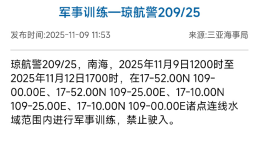
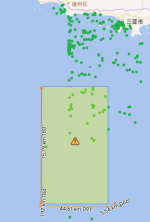
Prohibited shipping lanes off the coast of Sanya (military training).

It's unclear whether the aircraft carriers are the Shandong or Fujian, conducting training exercises.

1762696637352.png
1762696681777.png
 
A closer look at the Fujian air wing reveals that they have 50 J-15Ts in inventory. This video shows J15T with serial numbers 48 and 49. My guess is they have at least eight or even 10 J 35
To view this content we will need your consent to set third party cookies.
For more detailed information, see our cookies page.
 
Currently, China has two shipyards officially designated as capable of building aircraft carriers: Jiangnan Shipyard and Dalian Shipyard. Once the technology is fully mature and secured, both shipyards can simultaneously begin constructing new aircraft carriers.
In fact, besides Jiangnan Shipyard and Dalian Shipyard, China also has many large dry docks capable of handling ships of 100,000 tons or more. If the country requires it, these can be converted into aircraft carrier construction facilities in a very short time.
China's shipbuilding industry is currently the world's largest. We don't lack raw materials, skilled workers, or infrastructure. We also don't lack capital. What we lack is time. We need these new technologies to mature further before mass production.

no doubt China has established two yards for Carrier construction

DL is now building the CVN-20 or 004

and we might see the modules for 003A or B at JNCX the sister ship of the 003 in early 2026

if the "6th Hull" rumour is to be believed than it means after JNCX launches the sister carrier of 003 they could start on 006 the CVN

another words we could have

CV-16 STOBAR refitted at DL
CV-17 STOBAR copy of refitted at DL
CV-18 Conventional CATOBAR EMALS JNCX
CV-19 Conventional CATOBAR EMALS optimised JNCX

then

CVN-20 Nuclear CATOBAR EMALS DL
CVN-21 Nuclear CATOBAR EMALS JNCX

this would follow the general rule of 2 Carriers per "class" and 3 a piece from each shipyard

CV-16 and 17 use 4th and 5th generation fighters
CV-18 and CV-19 use 4.5 and 5th generation fighters + UCAVS GJ-21
CVN-20 and CVN-21 use the 6th generation's fighters J-50/XX + CCA

now all of this doesn't include Chinas drone Carriers like the Type 076 which will have the likes of GJ-21 and AR‑500CJ another words a hybrid Carrier force by 2035
 
Last edited:

Users who are viewing this thread

Country Watch Latest

Latest Posts

Back
Top