European Defence News and Discussions

Zarvan

Elite Member
Joined
Apr 28, 2011
Messages
56,731
Reaction score
68,508
Reputation
3,361.0
Country of Origin
Country of Residence

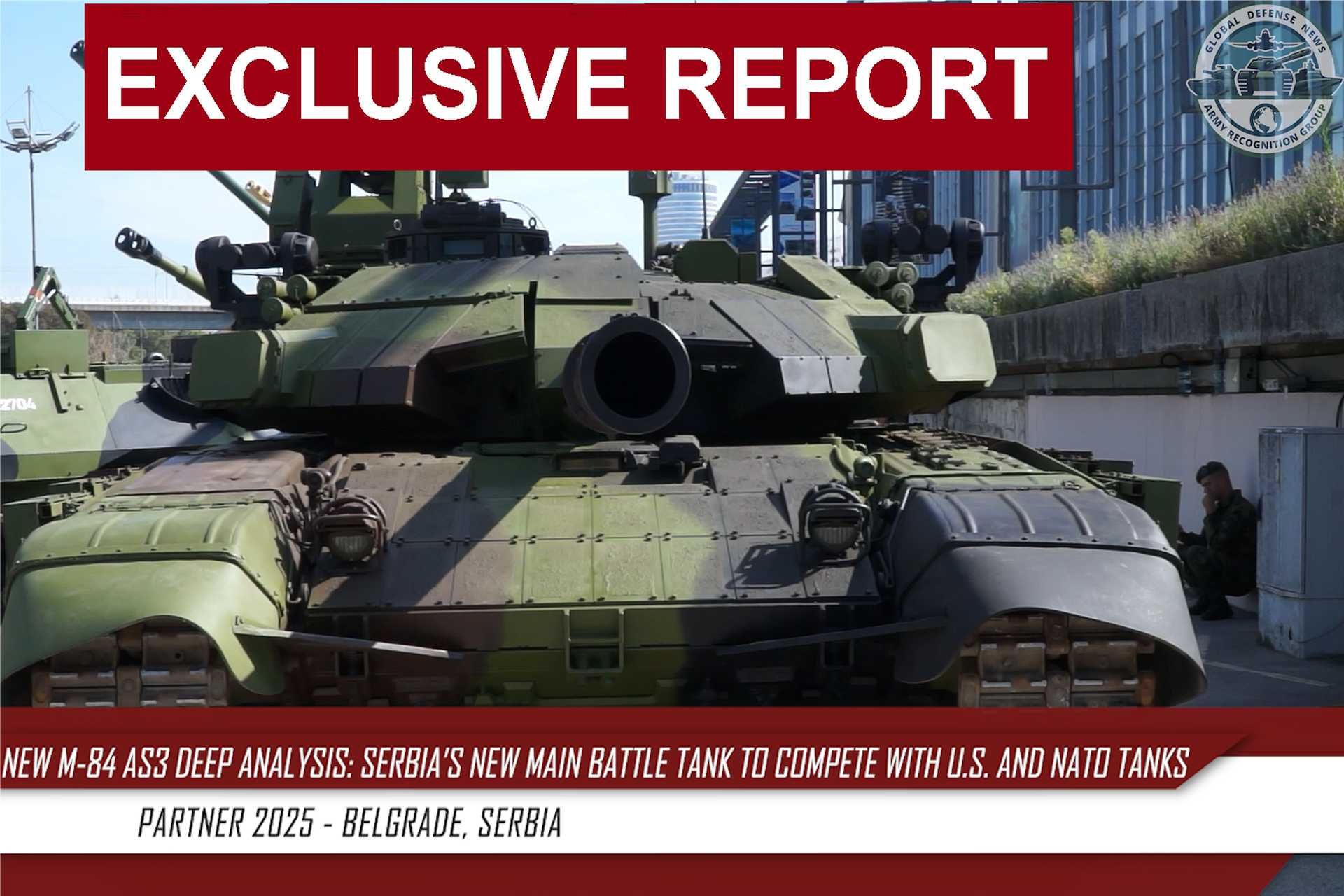
Serbia’s New M-84 AS3 Tank Aims to Challenge U.S. M1A2 Abrams and NATO Leopard 2​


Serbia has unveiled its new M-84 AS3 tank, designed to compete directly with the U.S. M1A2 Abrams and NATO’s Leopard 2. The modernization marks Serbia’s bid to elevate its armored forces and attract global defense buyers.

Belgrade, Serbia, October 8, 2025, 13:54 PM (CEST)
- At the Partner 2025 defense exhibition in Belgrade, Serbia, defense manufacturer Yugoimport introduced the M-84 AS3, its most advanced main battle tank to date. Equipped with upgraded armor, digital fire-control systems, and NATO-level sensors, the AS3 is designed to rival Western platforms like the U.S. M1A2 Abrams and German Leopard 2. The unveiling signals Serbia’s intent to modernize its ground forces and expand its defense export portfolio.


Serbias_New_M-84_AS3_Tank_Aims_to_Challenge_U.S._M1A2_Abrams_and_NATO_Leopard_2_1920_001-1cf86ac5.jpeg

The M-84 AS3 is Serbia’s latest main battle tank, featuring upgraded armor, active protection, advanced optics, and enhanced firepower to meet modern battlefield threats. (Picture source: Army Recognition Group)

The M-84 tank family has its roots in the 1980s Yugoslav defense industry, which sought to create an indigenous armored platform based on the Soviet T-72M while integrating localized enhancements. The first M-84 rolled off the production line at the Đuro Đaković plant in Slavonski Brod (present-day Croatia) in 1984 and quickly became the most advanced main battle tank produced by a non-Soviet Warsaw Pact member.

The original M-84 was armed with a 125mm 2A46 smoothbore gun, capable of firing a wide array of Soviet-standard ammunition types including APFSDS, HEAT, and HE-FRAG. It featured an autoloader system, reducing the crew to three—commander, gunner, and driver. Secondary armament included a coaxial 7.62mm PKT machine gun and a roof-mounted 12.7mm NSVT heavy machine gun for anti-air and anti-infantry roles.

Mobility was a key strength of the M-84. Powered by a V-46TK 12-cylinder diesel engine generating 780 horsepower, the tank had a top road speed of 65 km/h and an operational range of up to 500 kilometers. Its combat weight of around 41.5 tons gave it a favorable power-to-weight ratio, while its torsion bar suspension enabled off-road agility. It could ford water obstacles up to 1.2 meters deep unprepared, or up to 5 meters with a snorkel.

In terms of protection, the M-84 incorporated composite armor on the turret front and glacis plate, offering an estimated protection equivalent to 400–450 mm RHA against kinetic threats and up to 600 mm against shaped-charge munitions. The M-84A variant introduced minor enhancements in fire control and targeting optics, but by the 2000s, the platform was technologically outdated compared to modern threats, lacking thermal sights, reactive armor, or advanced digital networking.

The M-84 AS3 unveiled at Partner 2025 is far more than an incremental upgrade; it is a sweeping modernization that transforms a legacy Cold War platform into a digitally networked, battlefield-resilient fighting vehicle. At its core, the AS3 retains the 125mm smoothbore gun but integrates a new generation of armor-piercing (AP) and high-explosive (HE) ammunition, offering improved penetration and blast effects to match evolving armored threats.

Critically, the automatic loading system for the main armament has been relocated outside the crew compartment and repositioned at the rear of the turret, drastically improving crew survivability by isolating ammunition in an armored bustle with blow-out panels, an approach now standard in Western MBT designs.

The gunner’s station has been fully upgraded with a new sighting system incorporating thermal imaging (TMV), daylight television (TV), and laser rangefinding (LR), linked to a digital fire control system. This dramatically improves first-round hit probability and overall engagement effectiveness under all battlefield conditions.

One of the most important survivability features is the integration of a hard-kill active protection system (APS), designed to intercept and destroy incoming anti-tank guided missiles (ATGMs), rocket-propelled grenades, and top-attack munitions. With this addition, the M-84 AS3 achieves survivability standards comparable to tanks like the M1A2 Abrams with Trophy APS and the Leopard 2A8 with EuroTrophy.

Additional protection is delivered through modular explosive reactive armor (ERA) modules on the hull and turret, a fuel explosion prevention system, an automatic fire suppression system, and enhanced engine protection subsystems. In terms of electronic warfare and sensor evasion, the tank features a mobile camouflage kit that reduces its signature in both the infrared (IR) and radio frequency (RF) spectrums, offering greater survivability against drone and loitering munition threats.

The M-84 AS3 also embraces full digitization. It includes a GNSS-based navigation and orientation system, a dual-axis digital meteorological sensor, and a new commander’s 360-degree video surveillance suite, significantly increasing situational awareness. These are fully networked into upgraded command information and communication systems (CIS), enabling seamless integration into modern C4ISR frameworks.

Despite a raised combat weight of 48.5 tons, mobility is maintained through an upgraded engine producing up to 735 kW (1,000 hp). The tank can reach road speeds in excess of 60 km/h, supported by forged dual-pin tracks with a service life of up to 4,000 kilometers. A 7.5 kW auxiliary power unit (APU) ensures onboard systems remain powered during silent watch operations, reducing fuel consumption and acoustic or thermal signatures when stationary.

With the M-84 AS3, Serbia has redefined its armored capability not just for national defense but for global export relevance. The AS3 offers a low-cost, high-capability solution for countries seeking to modernize Soviet-era fleets without the financial or political burdens associated with Western platforms. It is especially attractive for armed forces in Africa, Asia, and the Middle East that operate aging T-72 or M-84 inventories and seek an affordable modernization path with credible battlefield performance.

While it cannot match the sheer industrial depth or sensor fusion of the Abrams, Leopard 2, or Leclerc families, the AS3 offers a pragmatic balance of protection, firepower, and digitalization, making it one of the most capable non-NATO MBT modernization packages currently available on the international market.

The public debut of the M-84 AS3 at Partner 2025 marks not only a new chapter for the Serbian defense industry, but also reasserts Belgrade’s ambition to reclaim a role in the global armored systems marketplace.

Written by Alain Servaes – Chief Editor, Army Recognition Group
Alain Servaes is a former infantry non-commissioned officer and the founder of Army Recognition. With over 20 years in defense journalism, he provides expert analysis on military equipment, NATO operations, and the global defense industry.
 

IAI to equip Greek Navy with autonomous submarine​

Hellenic Aerospace Industry will be responsible for the development and production of the BlueWhale system.

May 8, 2025
Share
a1-shutterstock_1894292899-430x241.jpg
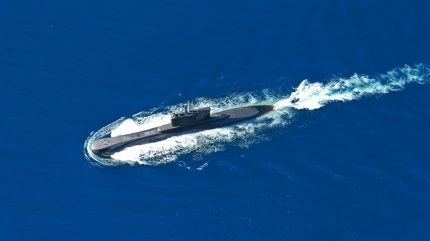
BlueWhale autonomous underwater vehicle can conduct a variety of tasks including anti-submarine warfare. Credit: Aerial-motion/Shutterstock.
Israel Aerospace Industries (IAI) and Hellenic Aerospace Industry (HAI) have deepened ties with a strategic memorandum of understanding (MoU) to enhance naval capabilities of the Greek Navy.

Signed at the DEFEA exhibition being held in Athens, Greece, the agreement focuses on incorporating IAI’s advanced BlueWhale autonomous submarine system into the Hellenic Navy’s fleet.

BlueWhale is an autonomous underwater multi-mission platform measuring 10.9 metres (m) long and 1.12m in diameter. The sizable uncrewed underwater vehicle is equipped with a broad array of sophisticated sensor systems


It is engineered for complex underwater operations that are conducted without any crew onboard, thereby eliminating risk to human life, according to IAI.

Weighing 5.5 tonnes, the system can a variety of tasks including intelligence gathering, anti-submarine warfare and mine countermeasure operations.

IAI said that the system has demonstrated its operational capabilities through extensive hours of diving in real-world scenarios.

strategic-int.png

GlobalData Strategic Intelligence

US Tariffs are shifting - will you react or anticipate?​

Don’t let policy changes catch you off guard. Stay proactive with real-time data and expert analysis.

By GlobalData
Learn more about Strategic Intelligence
Under the terms of the strategic partnership, HAI will be significantly involved in the development and production phases of the BlueWhale system.

Additionally, IAI will provide technology transfer and access to advanced know-how, strengthening the defence manufacturing and technological innovation capabilities of both nations.


In a LinkedIn post, IAI said: “Beyond its operational impact, this partnership deepens the strategic alliance between Israel and Greece — promoting technological independence and regional stability.

“Today’s announcement is another key milestone for IAI in driving maritime defence innovation on the global stage.”

In November 2024, the German Navy completed a two-week intensive testing phase involving the BlueWhale autonomous underwater vehicle. This trial was a component of its Operational Experimentation (OPEX) programme.

Collaborating with IAI and Germany-based ATLAS Elektronik, the evaluation of the BlueWhale’s capabilities was conducted in accordance with the precise requirements set forth by both the Navy and the Bundeswehr Technical Center for Ships and Naval Weapons, also known as WTD 71.

The tests aimed to assess the vehicle’s performance and integration into their maritime operations.
 

Greece considers U.S.-made Abrams tanks and Paladin self-propelled howitzers under EDA program​


Greece has initiated a structured assessment to identify specific U.S. military systems available through the Excess Defense Articles (EDA) program, including armored vehicles, artillery, and helicopters.


According to Pentapostagma on October 30, 2025, Greece is evaluating U.S. military assets offered under the Excess Defense Articles framework following coordination between Athens and Washington. The list under review includes M109A5/A6 Paladin howitzers, M1A1/A2 Abrams tanks, M2A3 Bradley infantry fighting vehicles, Humvee 4x4s, AH-64E Apache helicopters, and UH-60M Black Hawks. The process defines transfer priorities, refurbishment needs, and training timelines based on available U.S. lots and operational requirements.
Follow Army Recognition on Google News at this link

Greece's interest appears to be centered on M109A5 and M109A6 Paladin self-propelled howitzers, M1A1 and M1A2 Abrams main battle tanks, M2A3 Bradley infantry fighting vehicles, Humvee 4x4 tactical vehicles, AH-64E Apache Guardian attack helicopters, and UH-60M Black Hawk utility helicopters. (Picture source: US Army)

Greece's interest appears to be centered on M109A5 and M109A6 Paladin self-propelled howitzers, M1A1 and M1A2 Abrams main battle tanks, M2A3 Bradley infantry fighting vehicles, Humvee 4x4 tactical vehicles, AH-64E Apache Guardian attack helicopters, and UH-60M Black Hawk utility helicopters. (Picture source: US Army)


The plan concerns the possible transfer of U.S. weapons and vehicles through the Excess Defense Articles program, which allows surplus systems to be given or sold to allied countries. Greece's interest appears to be centered on fast military assets sized for both mainland and island formations. The objective is to lift immediate readiness without long development cycles while aligning more tightly with NATO standards. Planners are prioritizing units in sensitive Aegean and border regions where reinforcement speed, protected mobility, and responsive fires are essential. The package is framed to complement, not replace, key European fleets already in service. Integration timelines will depend on available lots, refurbishment requirements, and training throughput within depots and schools. The organizing logic is to add mass, reliability, and interoperability where gaps in availability and sustainment are most visible.

The Excess Defense Articles (EDA) program is the U.S. mechanism for transferring equipment that has been removed from active inventory after exceeding force objectives. It operates under the Foreign Assistance Act and the Arms Export Control Act, administered by the Defense Security Cooperation Agency. Transfers may be made as reduced-cost sales or as grants, but recipients fund packing, crating, handling, transportation, and refurbishment on an as is, where is basis. Sale pricing typically ranges from about 5% to 50% of original acquisition value depending on age and condition. Items must be declared excess by the Military Departments before offer, and significant military equipment or higher-value cases trigger congressional notification. Public listings reflect notified transactions rather than preliminary discussions or internal allocations. Because releases track U.S. modernization, partners often see availability of platforms being phased out by newer variants. Greece has been informed alongside other eligible allies that artillery, armored vehicles, and helicopters are available for near-term evaluation and potential uptake.


Paladin self-propelled howitzers in M109A5 and M109A6 configurations are high on Greece’s artillery list, aimed at adding protected, mobile indirect fire with automated laying and faster displacement. Greece already fields several hundred M109s across mixed sub-variants together with a smaller number of PzH 2000s, creating gaps in digital standardization and maintenance uniformity. The M109A6 offers improved turret protection, upgraded fire-control computing, and reliability enhancements over the A5, while both provide ranges around 23.5 kilometers with standard ammunition. These platforms would gradually replace older M109 versions still in frontline or reserve artillery units. Standardizing batteries around A5 and A6 lots would compress training time, simplify spares pooling, and improve integration with allied targeting workflows. Mobility under armor supports counter-battery survivability in constrained littoral terrain common to Greek island defense. The U.S. transition to the M109A7 generates A5 and A6 availability for partners, shortening delivery compared to new production.

Abrams main battle tanks in M1A1 and M1A2 variants are also under consideration to increase armored protection, firepower, and digital situational awareness across Greek armored brigades. Greece operates several hundred Leopard 2A6HEL, Leopard 2A4, and Leopard 1A5 tanks, with the Leopard 1A5 approaching the limits of service viability in high-threat roles. Potential Abrams receipts would not displace the Leopard 2A6HEL in top-tier units but could retire Leopard 1A5 formations or backfill second-line roles. For Greece, the tank's 120 mm smoothbore gun, thermal imaging systems, and high-level armor protection offer several advantages in survivability and night engagement capability compared to aging fleets. Introducing these tanks would facilitate standardized gunnery and tactics with U.S. and NATO partners, improving joint training outcomes. The rationale behind the request includes the availability of refurbished U.S. stocks, extensive logistical infrastructure, and established maintenance ecosystems. The U.S. withdrawal of older Abrams variants as the M1A2 SEP V3 enters service makes multiple configurations available for transfer, potentially allowing Greece to modernize armor formations in stages while maintaining current readiness levels.

Bradley M2A3 infantry fighting vehicles form another core element of the prospective EDA package, intended to enhance troop protection and mobility. Greek mechanized units rely on hundreds of aging M113-based vehicles and a smaller pool of BMP-1s that lack modern armor protection and digital situational awareness. The M2A3’s stabilized 25 mm cannon, TOW launcher, and thermal sights would lift survivability and lethality compared to legacy tracked carriers. Adopting Bradley hulls would allow frontline brigades to replace BMP-1s and reduce the operational burden on aging M113s. The chassis also supports command, reconnaissance, and medical variants that share common spares and training pipelines. The rationale includes the wide availability of M2A3 hulls as the U.S. Army transitions to the M2A4 and XM30 Optionally Manned Fighting Vehicle programs, reducing acquisition lead times. For Greece, adopting the Bradley would bridge the capability gap between light APCs and main battle tanks, offering better crew survivability, more effective firepower, and the ability to conduct sustained operations in confined island or mountainous environments.

Humvee 4x4 tactical vehicles figure as a standardization tool for light mobility across reconnaissance, command, logistics, and base security roles. Greece operates large mixed fleets of light tactical and utility vehicles, including recently inducted M1117 armored security vehicles and various older trucks. The Humvee’s modularity, parts commonality, and broad accessory ecosystem enable mission-specific fits without bespoke engineering. These vehicles could replace portions of unarmored 4x4 inventories and expand light mobility where heavier platforms are impractical, especially across islands and coastal corridors. Standardized 4x4s simplify ferry operations, spares storage, and field repairs while improving communications integration, while the ability to configure the Humvee for diverse missions such as signals, medevac, and transport without specialized tooling makes them attractive for rapid integration. Training and maintenance adaptation would be shortened by Greece’s prior experience with U.S. wheeled platforms. Fleet renewal via EDA lots would also reduce procurement lead time and support cost control through mature supply chains.

The AH-64E Apache Guardian attack helicopter also features prominently in Greece’s modernization interest list to reinforce anti-armor strike, close support, and littoral defense with networked sensors and modern avionics. Greece operates a mixed Apache fleet of AH-64A+ and AH-64DHA, and the E model would improve reliability, endurance, and data-link connectivity. The variant supports coordination with unmanned systems and integrates with NATO targeting architectures. It would progressively replace earlier Apache airframes as they reach life-cycle limits. The operational driver is persistence over islands, rapid concentration of effects, and escort for air assault and resupply. Access to E-model airframes would depend on U.S. availability and channel selection, but the role justification aligns with current Greek mission sets. Improved night-fighting capability and maritime relevance are particularly pertinent to Aegean geography. Integrating the E model consolidates training and upgrades within the largest global Apache configuration.

Finally, the UH-60M Black Hawk utility helicopters are being evaluated to expand medium-lift for air assault, medevac, and logistics across dispersed terrain. Current inventories include aging UH-1H aircraft and limited numbers of newer European types that face availability constraints. The UH-60M’s payload, range, and austere-site performance suit maritime and mountainous operations common to Greek requirements. The type would likely replace the oldest UH-1H units first, enabling standardized maintenance and crew training with allied forces. Strong global fleet numbers and parts support underpin the sustainment rationale and shorten integration cycles. Role flexibility allows rapid reconfiguration between transport, medical evacuation, and search-and-rescue tasks. For interoperability, aligning with a widely used NATO standard improves joint exercise value and contingency responsiveness.

In recent years, Greece has progressively strengthened its defense ties with the United States, incorporating a broad range of American assets across all service branches. For instance, the Hellenic Army employs U.S.-made M1117 armored vehicles and specialized equipment for its special forces, including tactical communications, night-vision, and precision weapons. The Air Force continues to operate and modernize American-built C-130 Hercules transports and P-3 Orion maritime patrol aircraft, while maintaining discussions on the future acquisition of F-35A fighter jets and KC-135R Stratotankers. The Navy has ordered MH-60R Seahawk helicopters to expand its anti-submarine and surface warfare reach, reinforcing fleet coordination with U.S. procedures. Greek special forces units routinely train alongside U.S. counterparts and use American-origin gear to standardize joint operations, while also eyeing light Cessna Caravan aircraft and MH-60L DAP Black Hawks helicopters. Athens has also tested American loitering munitions such as the Switchblade 300 and 600.

Written by Jérôme Brahy

Jérôme Brahy is a defense analyst and documentalist at Army Recognition. He specializes in naval modernization, aviation, drones, armored vehicles, and artillery, with a focus on strategic developments in the United States, China, Ukraine, Russia, Türkiye, and Belgium. His analyses go beyond the facts, providing context, identifying key actors, and explaining why defense news matters on a global scale.
 

Greece weighs additional Rafale F4 fighter jets as Türkiye pursues Eurofighter deal​


Greece is studying a follow-on purchase of Rafale fighters in the F4 standard to keep its edge in the Aegean as Türkiye advances a Eurofighter deal that includes long-range Meteor missiles. The move aligns with Athens’ stated goal of fielding about 200 modern fighters while it phases out Mirage 2000-5s and integrates the F-35A.

Athens is signaling interest in additional Rafales upgraded to the F4 configuration, according to reporting by Ekathimerini, as defense planners weigh how to sustain a qualitative advantage over Türkiye through the 2030s. The debate comes just days after Ankara’s Typhoon purchase reportedly moved forward with a weapons package that features MBDA’s Meteor beyond-visual-range missile, a capability Greece already fields on its Rafales.


Greece_weighs_additional_Rafale_F4_fighter_jets_as_T%C3%BCrkiye_pursues_Eurofighter_deal-b8e03d75.jpeg

The Rafale F4’s capability step rests on hardened connectivity and resilient communications (Picture source: Hellenic Air Force)


At the core of the case, the Rafale F4’s capability step rests on hardened connectivity and resilient communications. In addition to the Link 16 (LINK 16) data link, the aircraft has a proprietary link dedicated to intra-flight coordination, designed to preserve continuity of exchanges in a dense electronic warfare environment. The network-centric philosophy enables rapid sharing of detection, classification, and targeting tracks, with direct effects on building the situational picture. At the beginning of the body text, it is advisable to restate the Link 16 (LINK 16) data link a second time before using the acronym alone thereafter. This redundancy of data paths is relevant for an air force operating against a threat with regional jamming effects.

The sensor suite also progresses. The active electronically scanned array radar (AESA) on the F4 benefits from expanded processing, including the ability to track and lock moving ground targets at long range, useful for deep-strike tasks and air-to-ground fire control. The new-generation infrared search and track (IRST) improves discreet detection of low-observability targets, which strengthens options under emission control (EMCON). At the beginning of the body text, one should rewrite “active electronically scanned array (AESA)” and “infrared search and track (IRST)” once before using the acronyms alone thereafter, in line with standard usage. These sensors are complemented by the Scorpion helmet-mounted display (HMD) and the upgraded SPECTRA self-protection suite to increase survivability at short and medium range.


Armament evolves alongside avionics. The F4 can integrate the MICA New Generation (MICA NG) missile, offered with two seekers, passive infrared and active electronically scanned radar. According to the manufacturer, the firing envelope allows 360-degree launch, while range exceeds that of the MICA already in Greek service by about 40 percent. In a beyond visual range environment (BVR), the AESA plus MICA NG combination creates wider firing windows and tightens the no-escape zone. As a practical effect, the opponent is forced earlier into a defensive posture, degrading its kinematics and freedom of maneuver.

On the tactical and operational level, the F4 provides clear levers to the Polemikí Aeroporía. Under EMCON, the IRST and HMD support passive acquisition and a rapid transition to an opportunistic shot, while SPECTRA manages self-protection and responsiveness to electromagnetic threats. In an air-superiority configuration, the aircraft relies on LINK 16 and the proprietary link to aggregate tracks from other platforms, including the F-16 Viper and, in the future, the F-35A, to build a robust Recognized Maritime/Air Picture, referred to here as picture reconnue maritime et aérienne (RMP/COP). At the beginning of the body text, “picture reconnue maritime et aérienne (RMP/COP)” should be rewritten a second time before using the acronym alone thereafter. The practical aim is to extend decision distance, trigger the neutralization sequence earlier, and retain the initiative across the spectrum, from air policing to high-end crisis management.


The effort also targets sustainment and interoperability. Standardizing around Rafale F4, F-16V, and F-35A facilitates NATO integration in cryptography, procedures, and data sharing, while rationalizing maintenance and munitions stocks. The presence of the Scorpion HMD standardizes target acquisition in close-in combat and optimizes employment of infrared-seeker missiles. The resilience of data links and the improved mission computer accelerate data fusion and track quality, which are key to maintaining informational advantage in contested bubbles.

On the industrial side, the F4 objective aligns with the French Defense Industrial and Technological Base (BITD) and the support capabilities already set up at Tanagra. Scheduling choices condition production slot availability and alignment with ongoing modernization programs. Relevant offsets in training, in-service support, and test benches would remain a lever to smooth costs and build local expertise without disrupting F-35A integration or the F-16V retrofit flow.

On the geopolitical level, the Greek-Turkish relationship remains marked by cyclical tensions over airspace, FIRs, and EEZs, with recurring incidents over the Aegean despite NATO de-confliction mechanisms. The capability paths of both countries sustain this rivalry. Athens is relying on the Rafale F4, F-16V, and F-35A to keep an information and range advantage in BVR combat, while Türkiye prepares the arrival of new fighters and modernizes its fleet with sensors and beyond-visual-range weapons. In this context, France’s political and industrial support to Greece, reflected in strategic cooperation and current programs, strengthens Greek deterrence without calling into question their shared Alliance membership. The security equation in the Eastern Mediterranean will depend less on presumed alignments than on the ability of both capitals to manage friction, frame deployments with confidence-building measures, and preserve sufficient interoperability to prevent parallel modernization from turning into sharper crises.


NewsArmy
ByDylan Malyasov

Nov 7, 2025
Modified date: Nov 7, 2025


Sapsan tactical missile system.
Key Points
  • Defense Express reported that Ukraine’s “Sapsan” ballistic missile program, previously declared 80% complete in 2021, has not moved into serial production and faces growing risks due to the proximity of key industrial sites to the front line.
  • Experts noted that producing solid-fuel ballistic missiles requires advanced industrial, chemical and testing infrastructure that Ukraine currently lacks at scale.
Ukraine’s drive to field indigenous medium- and long-range ballistic missiles has run into hard technical and industrial limits, according to a detailed critique published by Defense Express and interviews with former experts in the field.

What once was presented as a project nearing operational status in 2021 now faces problems that go well beyond design: the core issue is solid-rocket propulsion and the fragile industrial ecosystem that produces it.

Defense Express notes that the Sapsan ballistic missile — marketed abroad in an export configuration as Grim-2 and first publicly shown in pieces and a launch erector in 2018 — was described in 2021 as “ready at 80 percent.” Yet five years on, there is no public sign of mass production and growing concern that advances will evaporate as the front line approaches key facilities that underpin the program. The outlet also reported that official testing in 2024 produced a launch with a near-term range on the order of 300 kilometres, not the 480 kilometres the Sapsan was claimed to reach and far short of the 1,000-kilometre capability some planners say Ukraine needs to strike deep into Russian territory.

At the heart of the problem are solid propellant motors. Modern, reliable solid-fuel engines are a high-technology product that requires not only precise chemical recipes but also advanced test, measurement and manufacturing capabilities. Ukraine has no ready external suppliers for such motors and cannot simply buy the engines from abroad. Former Soviet-era expertise is available in people and in legacy facilities, but converting that capacity into a modern, resilient production line is complex and time-consuming.

Defense Express drew on commentary from Zinoviy Pak, a chemist and former general designer at the research-production association Soyuz, which during the Soviet period developed solid motors for multiple ballistic systems. Pak stressed the technical and organizational demands of producing solid motor grain and assembling complete motors. He and others interviewed pointed to the Pavlograd Chemical Plant as the linchpin of Ukraine’s solid propellant capability; yet Pavlograd sits some 80 kilometres from the current front line and is vulnerable to disruption. The plant’s legacy production model uses large rotating mixing drums — a Soviet-era process the industry calls the “rotating barrel” concept — and sprawling open production zones that are hard to relocate and that expose the enterprise to wartime risk.

Attempts to repurpose ingredients salvaged from retired Soviet missiles have not proved a simple fix. Hydrodemilitarization yields some reusable chemical components — notably octogen in certain cases — but other dissolved or processed materials are suitable only for industrial explosives, not for precision rocket propellant. Trial work, including exchanges with foreign specialists, has revealed how sensitive propellant performance is to the exact fuel formulation, burn rate versus pressure characteristics, and the mechanical stresses a grain must withstand during firing. Incomplete mastery of those parameters risks catastrophic motor failures, including internal burn-through and explosion.

The article argues that Ukraine needs a systemic investment in laboratory, measurement and computing capacity to train designers and technologists and to move beyond “firefighting” fixes. It also highlights modern, compact approaches to secure production: hardened, modular production cells — described in the report as small spheres that can survive significant internal blasts — could allow dispersed, resilient manufacture of propellant and munitions without replicating massive Soviet-style yards that require hundreds of hectares.

Finally, Valeriy Romanenko, an aviation expert, said that Russian strikes have in many cases damaged or destroyed Ukrainian enterprises that could have developed and produced ballistic missiles.

“The Russians know every enterprise in Ukraine that could be involved in missile production… As for ballistics, the Russians have practically knocked out everything that could produce ballistic missiles here. Clearly, ballistics is Dnipro and Pavlohrad — rockets and engines. Everything that can reach those areas is sent there; Molniyas [kamikaze drones] and KABs [guided bombs] also strike those regions,” the aviation expert said.

He said that when Ukraine was approaching the stage of serious tests and the start of production, Russian combined strikes hit a number of key facilities to disrupt those plans.
 

THAAD and ARROW vs. PATRIOT and SAMP/T​

How Four Nations Built the World’s Most Advanced Shield – And What It Reveals About Modern Alliance Strategy​

The world’s most sophisticated missile defense systems tell a story that extends far beyond their technical specifications. THAAD, Arrow, PATRIOT, and SAMP/T represent four distinct approaches to the same existential challenge: how to defend against increasingly sophisticated missile threats while navigating the complex realities of alliance politics, industrial sovereignty, and strategic deterrence. Each system embodies its nation’s particular answer to questions of technological dependence, cost-effectiveness, and military partnership that will define 21st-century security.

Recent combat experience has transformed these systems from theoretical capabilities into battle-tested platforms. Ukraine’s successful use of PATRIOT against Russian hypersonic missiles, Israel’s Arrow intercepting Iranian ballistic barrages, and SAMP/T’s first fighter aircraft kill have provided unprecedented real-world validation. Yet the implications extend beyond battlefield effectiveness to fundamental questions about technological sovereignty, alliance burden-sharing, and the evolving nature of deterrence itself.

The American shield: THAAD’s global reach​

THAAD (Terminal High Altitude Area Defense) represents America’s most technically ambitious missile defense achievement, designed specifically for the unique challenge of both atmospheric and space-based intercepts. Developed by Lockheed Martin with its distinctive AN/TPY-2 radar, THAAD stands alone among these systems in its ability to intercept missiles both inside and outside Earth’s atmosphere— a capability that has proven decisive in recent deployments.

The system’s technical sophistication is matched by its strategic complexity. Each THAAD battery costs between $800 million and $1.8 billion, with individual interceptors priced at $13-15 million. This extraordinary expense reflects not just advanced technology but a specific strategic philosophy: high-cost, low-inventory systems designed to protect critical assets rather than provide area-wide coverage. THAAD’s 150-kilometer range and 150-kilometer altitude ceiling make it ideal for defending key installations, but insufficient for comprehensive territorial defense.

THAAD’s deployment pattern reveals American strategic priorities clearly. Seven operational batteries serve U.S. forces globally, with international deployments carefully calibrated to alliance relationships: South Korea’s controversial 2017 deployment strengthened deterrence against North Korea while straining relations with China; the UAE’s 2016 purchase represented the first international sale to a key Gulf partner; Israel’s recent deployment following Iranian attacks demonstrated extended deterrence in practice.

The system’s perfect operational record—16 successful intercepts in 16 production tests plus recent combat successes in Israel and the UAE— validates its technical approach while highlighting its strategic limitations. THAAD protects what America values most, but only what America can afford to protect.

Israel’s multi-layered masterpiece: The Arrow system​

Israel’s Arrow system represents perhaps the most sophisticated integration of missile defense technology and strategic doctrine, born from the unique pressures of living under constant ballistic missile threat. The Arrow family—encompassing Arrow 2, Arrow 3, and the forthcoming Arrow 4—demonstrates how sustained threat exposure can drive technological innovation.

Arrow 2’s atmospheric intercepts and Arrow 3’s space-based kills create overlapping engagement envelopes that have proven decisive in recent conflicts. During Iran’s April and October 2024 attacks, Arrow systems “carried out the main part” of intercepting over 120 ballistic missiles in a single night— a combat validation unmatched by any other system. This performance justified nearly four decades of development investment, with total U.S.-Israeli spending reaching $2.4 billion.

The system’s technical evolution reflects Israeli strategic thinking. Arrow 2’s explosive warhead gives way to Arrow 3’s hit-to-kill technology, mirroring a broader shift from area denial to precise interception. The upcoming Arrow 4’s focus on hypersonic threats demonstrates Israel’s characteristic ability to anticipate and counter emerging dangers before they fully materialize.

Equally significant is Arrow’s emerging role as an export system. Germany’s €4 billion purchase—Israel’s largest defense export ever—validates both the system’s capabilities and its strategic value to allies. This success transforms Arrow from a purely defensive tool into a component of Israeli soft power, strengthening ties with European partners while generating revenue for continued development.

The proven workhorse: PATRIOT’s evolution​

PATRIOT’s journey from Gulf War disappointment to Ukraine success story illustrates how sustained investment and operational learning can transform military capabilities. The system that initially struggled against Iraqi Scuds now successfully intercepts Russian hypersonic missiles, representing one of the most dramatic capability transformations in modern military history.

Technical evolution drives this success story. PAC-3 MSE interceptors with their dual-pulse motors and hit-to-kill technology represent a quantum leap from original PAC-2 variants. The new LTAMDS radar with its gallium nitride technology and 360-degree coverage addresses the system’s most significant historical limitation. Most importantly, the Integrated Battle Command System (IBCS) allows PATRIOT to operate as part of networked defense architectures rather than standalone batteries.

Combat validation has been decisive. Ukraine operations demonstrate PATRIOT’s effectiveness against the world’s most advanced missile arsenal: Kinzhal hypersonic missiles, Kh-22 supersonic cruise missiles, and even aircraft at ranges exceeding 100 kilometers. Saudi Arabia’s 150+ successful intercepts against Houthi missiles provide additional proof of concept across different threat types and operational environments.

Yet PATRIOT’s greatest strength may be its alliance architecture. Nineteen nations operate PATRIOT systems, creating the world’s most extensive missile defense network. This interoperability provides both military advantage and political cohesion, making PATRIOT not just a weapons system but a cornerstone of Western alliance structure. The $4.2 million per PAC-3 MSE interceptor cost seems reasonable when amortized across such an extensive user base.

Europe’s sovereign choice: SAMP/T’s strategic autonomy​

SAMP/T represents Europe’s most ambitious attempt to achieve strategic autonomy in missile defense, embodying Franco-Italian determination to reduce dependence on American systems. The system’s technical capabilities—150-kilometer range, 360-degree radar coverage, and proven effectiveness against supersonic sea-skimming missiles—match or exceed American equivalents while maintaining European industrial control.

The strategic implications extend beyond technical performance. France and Italy’s rejection of Germany’s European Sky Shield Initiative in favor of SAMP/T expansion reveals fundamental disagreements about European defense strategy. While Germany advocates cost-effective integration with American systems, France and Italy prioritize technological sovereignty even at higher cost.

Recent combat experience has validated this approach while highlighting its limitations. SAMP/T’s successful engagement of Russian aircraft in Ukraine and effective performance in Red Sea operations prove the system’s technical competence. However, limited production capacity—accelerating from 40-month to 18-month missile production cycles—constrains both European stockpiles and export potential.

The system’s future depends on balancing European ambitions with practical constraints. Recent orders for SAMP/T NG systems by both founder nations, plus growing interest from Belgium, Slovakia, and Estonia, suggest expanding European acceptance. Yet the fundamental tension between strategic autonomy and cost-effectiveness remains unresolved.

Technical comparison: Capabilities and limitations​

Comparing these systems across technical dimensions reveals both convergent trends and persistent differences. All four systems have evolved toward hit-to-kill interception, active electronically scanned array radars, and network-centric operations— suggesting technological convergence around optimal solutions.

Range capabilities reflect different strategic priorities. THAAD’s 200-kilometer range serves extended deterrence missions, while PATRIOT’s 35-kilometer PAC-3 MSE range prioritizes point defense of critical assets. Arrow’s exoatmospheric intercepts provide unique capabilities against long-range threats, while SAMP/T’s 150-kilometer NG range balances area coverage with cost considerations.

Radar systems show similar convergence with important distinctions. THAAD’s AN/TPY-2 offers unmatched sensitivity and range for early warning missions. PATRIOT’s LTAMDS provides 360-degree coverage addressing historical blind spots. Arrow’s Green Pine radar demonstrates specialized ballistic missile tracking capabilities. SAMP/T’s ARABEL and upcoming AESA systems offer European alternatives with comparable performance.

Cost per interceptor reveals strategic philosophies clearly: THAAD’s $13-15 million interceptors reflect low-volume, high-capability priorities. PATRIOT’s $4.2 million PAC-3 MSE interceptors balance capability with inventory requirements. Arrow’s $2-3 million interceptors optimize for high-threat environments. SAMP/T’s undisclosed but presumably comparable costs reflect European sovereign capability premiums.

Strategic doctrines and alliance implications​

These systems embody fundamentally different approaches to alliance structure and strategic doctrine. PATRIOT represents traditional alliance architecture: American-led development with extensive partner participation, standardized equipment enabling interoperability, and shared costs across multiple users. This model maximizes military effectiveness while reinforcing American technological leadership.

THAAD embodies extended deterrence principles: American-operated systems protecting key allies and assets, direct U.S. personnel involvement maintaining escalation control, and selective deployment reinforcing alliance hierarchies. This approach strengthens deterrence while maintaining American strategic control.

Arrow demonstrates specialized partnership models: bilateral U.S.-Israeli cooperation combining American funding with Israeli innovation, technology sharing benefiting both partners’ broader defense programs, and export success validating partnership value. This model shows how smaller allies can achieve technological parity through focused collaboration.

SAMP/T represents strategic autonomy aspirations: European-controlled development reducing dependence on American systems, sovereign industrial base maintaining technological independence, and competitive alternative challenging American market dominance. This approach prioritizes long-term strategic freedom over short-term cost-effectiveness.

Performance in modern conflicts​

Recent combat experience has transformed theoretical capabilities into operational realities. Ukraine represents the most significant missile defense validation since World War II: PATRIOT systems successfully engaging advanced Russian threats, real-time software updates improving performance based on combat experience, and demonstrated effectiveness against hypersonic weapons previously considered unstoppable.

Israel’s experience against Iranian attacks provides equally valuable data: Arrow systems intercepting massive ballistic missile barrages, multi-layered defense architecture proving its worth under extreme stress, and successful integration with American early warning systems. These engagements demonstrate both system capabilities and integration benefits.

Naval operations in the Red Sea add another dimension: SAMP/T’s naval variant successfully intercepting Houthi missiles, proven effectiveness against diverse threat types, and validation of European technological competence. These successes support European arguments for strategic autonomy while demonstrating interoperability with allied operations.

Cost effectiveness and procurement realities​

Economic considerations increasingly drive missile defense decisions as inventories prove inadequate for sustained operations. Ukraine operations deplete PATRIOT stockpiles faster than production can replenish them, highlighting fundamental tensions between cost-per-shot and magazine depth requirements. Saudi Arabia’s 150+ intercepts against Houthi attacks similarly strain inventories, requiring continuous American resupply.

Production capacity becomes as important as technical capability. PATRIOT’s target production of 650 interceptors annually versus SAMP/T’s accelerated 18-month production cycles reveals industrial base limitations. Arrow’s recent multi-billion dollar production contracts demonstrate how combat experience drives procurement priorities.

The cost-effectiveness debate extends beyond unit prices to strategic value calculations. THAAD’s $15 million interceptors seem expensive until compared to the strategic assets they protect. PATRIOT’s $4.2 million interceptors prove economical when shared across nineteen allied nations. SAMP/T’s comparable costs support European strategic autonomy worth measuring in more than financial terms.

Future evolution and emerging challenges​

All four systems face similar challenges from emerging threats while pursuing different solution paths. Hypersonic weapons require faster decision cycles, improved discrimination capabilities, and enhanced kinematic performance—driving common technological solutions despite different industrial approaches.

Counter-saturation attacks demand deeper magazines, more distributed launchers, and improved reload capabilities. PATRIOT’s 16-missile launcher capacity versus SAMP/T’s 48-missile ready inventory highlight different approaches to this challenge. THAAD’s 8-missile launchers prioritize rapid deployment over sustained engagement.

Integration with broader defense networks becomes increasingly critical. PATRIOT’s IBCS integration allows cross-platform sensor and shooter coordination. THAAD’s demonstrated ability to guide PATRIOT interceptors using its superior radar creates new operational possibilities. Arrow’s integration with American early warning systems proves partnership value. SAMP/T’s NATO compatibility maintains alliance interoperability despite European sovereignty.

The systems reveal how technological convergence coexists with strategic divergence in modern defense planning. Common technical solutions—hit-to-kill interceptors, AESA radars, network integration—emerge from similar threat environments. Yet different strategic priorities—extended deterrence, strategic autonomy, alliance interoperability, regional specialization—drive distinct development and deployment patterns.

Conclusion​

These four missile defense systems represent more than technological achievements; they embody competing visions of 21st-century security architecture. PATRIOT’s alliance-centric model maximizes interoperability and cost-sharing while reinforcing American leadership. THAAD’s extended deterrence approach provides premium capabilities for critical scenarios while maintaining American control. Arrow’s partnership model demonstrates how focused bilateral cooperation can achieve technological parity and export success. SAMP/T’s sovereignty approach prioritizes European strategic autonomy despite higher costs and smaller user bases.

The strategic implications extend far beyond missile defense itself. These systems shape alliance relationships, drive industrial policy decisions, and influence deterrence calculations across multiple theaters. Recent combat experience validates all four approaches while highlighting their respective strengths and limitations: PATRIOT’s proven alliance architecture, THAAD’s unmatched technical capability, Arrow’s combat-validated effectiveness, and SAMP/T’s sovereign alternative.

Future security will likely require all four approaches rather than dominance by any single model. Different threats, alliance relationships, and strategic priorities demand diverse solutions. The challenge lies not in choosing between these systems but in integrating their respective strengths into coherent defense architectures that serve broader strategic objectives while adapting to an increasingly complex threat environment.

The missile defense revolution is far from complete, but these four systems have established the technological and strategic foundation for whatever comes next.
 

IAI to equip Greek Navy with autonomous submarine​

Hellenic Aerospace Industry will be responsible for the development and production of the BlueWhale system.

May 8, 2025
Share
a1-shutterstock_1894292899-430x241.jpg
BlueWhale autonomous underwater vehicle can conduct a variety of tasks including anti-submarine warfare. Credit: Aerial-motion/Shutterstock.
Israel Aerospace Industries (IAI) and Hellenic Aerospace Industry (HAI) have deepened ties with a strategic memorandum of understanding (MoU) to enhance naval capabilities of the Greek Navy.

Signed at the DEFEA exhibition being held in Athens, Greece, the agreement focuses on incorporating IAI’s advanced BlueWhale autonomous submarine system into the Hellenic Navy’s fleet.

BlueWhale is an autonomous underwater multi-mission platform measuring 10.9 metres (m) long and 1.12m in diameter. The sizable uncrewed underwater vehicle is equipped with a broad array of sophisticated sensor systems


It is engineered for complex underwater operations that are conducted without any crew onboard, thereby eliminating risk to human life, according to IAI.

Weighing 5.5 tonnes, the system can a variety of tasks including intelligence gathering, anti-submarine warfare and mine countermeasure operations.

IAI said that the system has demonstrated its operational capabilities through extensive hours of diving in real-world scenarios.

strategic-int.png

GlobalData Strategic Intelligence

US Tariffs are shifting - will you react or anticipate?​

Don’t let policy changes catch you off guard. Stay proactive with real-time data and expert analysis.

By GlobalData
Learn more about Strategic Intelligence
Under the terms of the strategic partnership, HAI will be significantly involved in the development and production phases of the BlueWhale system.

Additionally, IAI will provide technology transfer and access to advanced know-how, strengthening the defence manufacturing and technological innovation capabilities of both nations.


In a LinkedIn post, IAI said: “Beyond its operational impact, this partnership deepens the strategic alliance between Israel and Greece — promoting technological independence and regional stability.

“Today’s announcement is another key milestone for IAI in driving maritime defence innovation on the global stage.”

In November 2024, the German Navy completed a two-week intensive testing phase involving the BlueWhale autonomous underwater vehicle. This trial was a component of its Operational Experimentation (OPEX) programme.

Collaborating with IAI and Germany-based ATLAS Elektronik, the evaluation of the BlueWhale’s capabilities was conducted in accordance with the precise requirements set forth by both the Navy and the Bundeswehr Technical Center for Ships and Naval Weapons, also known as WTD 71.

The tests aimed to assess the vehicle’s performance and integration into their maritime operations.
 
But that never happened though...I think
 
All destroyed and infiltrated by Iranian/Russian missiles. Funnily
Yes most of your cruise missiles and drones were destroyed By allied air defense systems and very few of your BMs went through from allied air defense systems, as far as I remember less than 15 your BMs went through Israeli and allied ABM systems, you fired 300 to 350 drones/cruise missiles/ BMs in 4 waves of attacks that's makes less than 1% success rates of specially for your BMs
 
Yes most of your cruise missiles and drones were destroyed By allied air defense systems and very few of your BMs went through from allied air defense systems, as far as I remember less than 15 your BMs went through Israeli and allied ABM systems, you fired 300 to 350 drones/cruise missiles/ BMs in 4 waves of attacks that's makes less than 1% success rates of specially for your BMs
Dude, you need to update your info of the 12 days war. Not even Haaretz makes such silly claims lol

At least read Israeli sources, the thread Iran-US/Israel conflict has turned into an anti Iranian shit hole thanks to the so called Iranian moderator. Read Israeli sources, since they have to tell the truth to their own people.
 
Destroyed not really,not all.
They can't even react to incoming Oreshnik missiles. Shahed drones (Geran-2) is literally monitoring Ukrainian airspace and NATO airdefenses cannot stop them. Get real
 
They can't even react to incoming Oreshnik missiles. Shahed drones (Geran-2) is literally monitoring Ukrainian airspace and NATO airdefenses cannot stop them. Get real
THAAD and Arrow aren't in Ukraine. The SAMP-T and Patriot aren't systems that you'll use to shoot down cheap drones with. They shoot down cruise missiles, they shoot down ballistic missiles,the occasional bomber or fighter jet.
 

Users who are viewing this thread

Latest Posts

Back
Top