Waymo Driverless Taxis - Updates and Discussion

Waymo plans robotaxi launch in London, marking its European debut​


The company said in a release on Wednesday that it plans to start test drives on London’s roads in coming months, with human safety specialists at the wheel. It intends to open its robotaxi service next year, assuming it can get permissions from regulators as well as local and national leaders.

London will mark the company’s second international city after Tokyo, where testing began in early 2025.

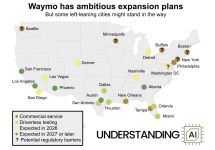
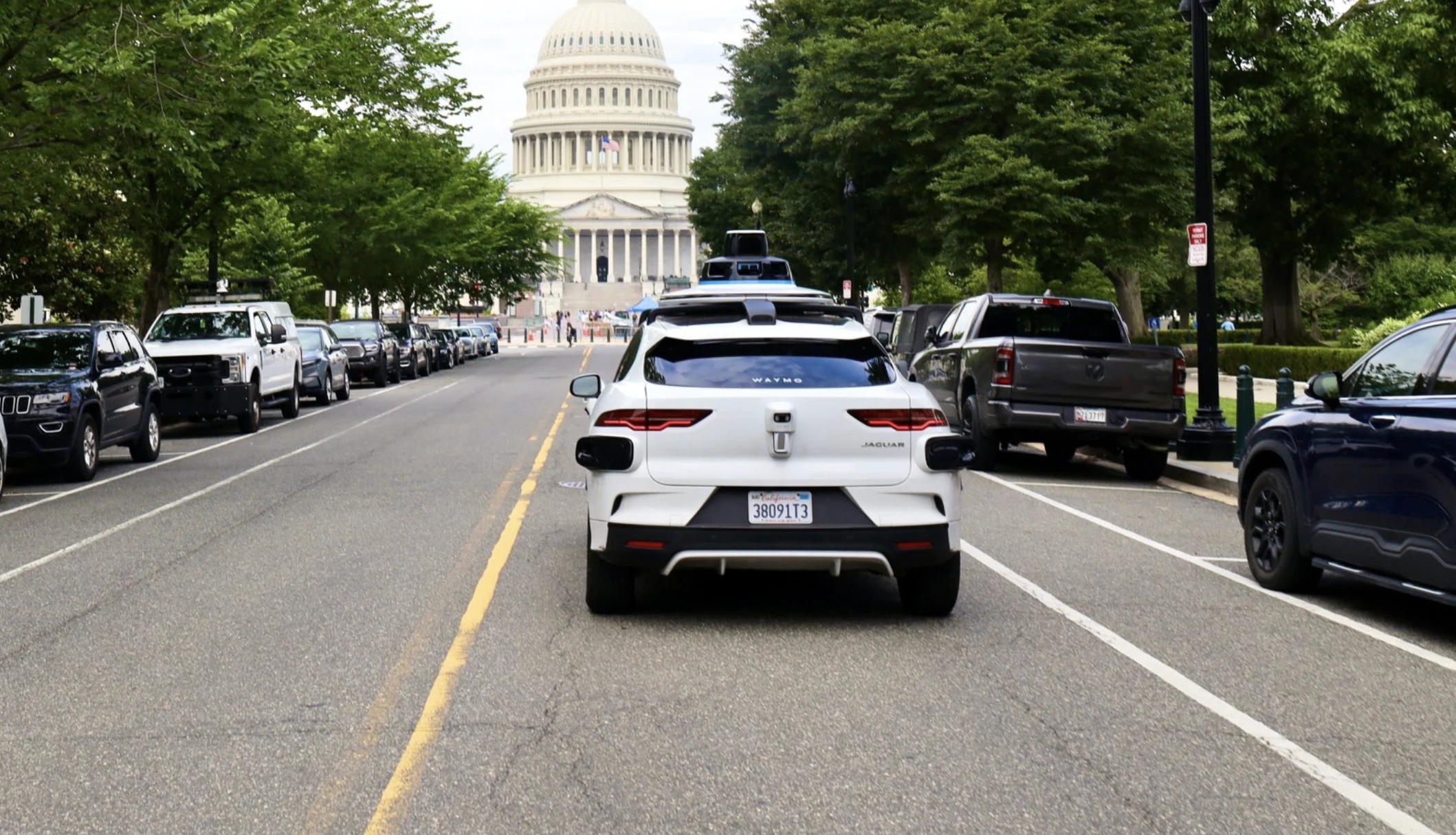
Waymo has been aggressively expanding in the U.S., and now offers a commercial service in the Los Angeles area, Phoenix, San Francisco, Atlanta and Austin, Texas. The company has also announced plans to start robotaxi services in Miami and Washington, D.C., and said in August that it obtained permits to begin testing its autonomous vehicles with trained safety drivers on board in New York City.

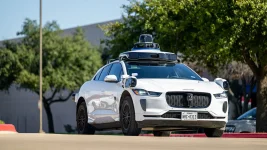
In London, Waymo’s fleet will be comprised of Jaguar iPACE electric vehicles equipped with the company’s Waymo Driver autonomous systems. Waymo said it already employs engineering teams in Oxford and London, and that it plans to work with Moove to handle operations and maintenance for its fleet.

Moove provides vehicle financing to drivers who want to purchase a new vehicle for ride-hailing, and offers services like cleaning, some repairs and charging of electric vehicles to transportation businesses including Waymo and Uber, which is an investor in the startup.

In June, the U.K. announced an accelerated framework for commercial pilots by AV ventures, an effort to bring self-driving investments to the region. London also established a “Vision Zero” goal earlier this year to eliminate all serious injuries and deaths in its transportation systems by 2041.


Waymo says its system “is involved in five times fewer injury-causing collisions, and twelve times fewer injury-causing collisions with pedestrians compared to humans,” according to the company’s analysis of its own data.

The company has also reported that its self-driving vehicles have logged 100 million “fully autonomous miles” on public roads, and provided more than 10 million paid rides to passengers to-date.

Waymo is part of Alphabet’s “Other Bets” segment, which brought in revenue of $373 million in the second quarter on a loss of $1.25 billion. Alphabet plans to report third-quarter results on Oct. 29.

Wayve, a U.K.-based startup backed by SoftBank and Microsoft, previously announced that it plans to bring a robotaxi commercial pilot to London next year. While Waymo uses radar, lidar and other sophisticated sensors in its vehicles, Wayve is developing camera-based systems, an approach that’s similar to Tesla’s pursuits.
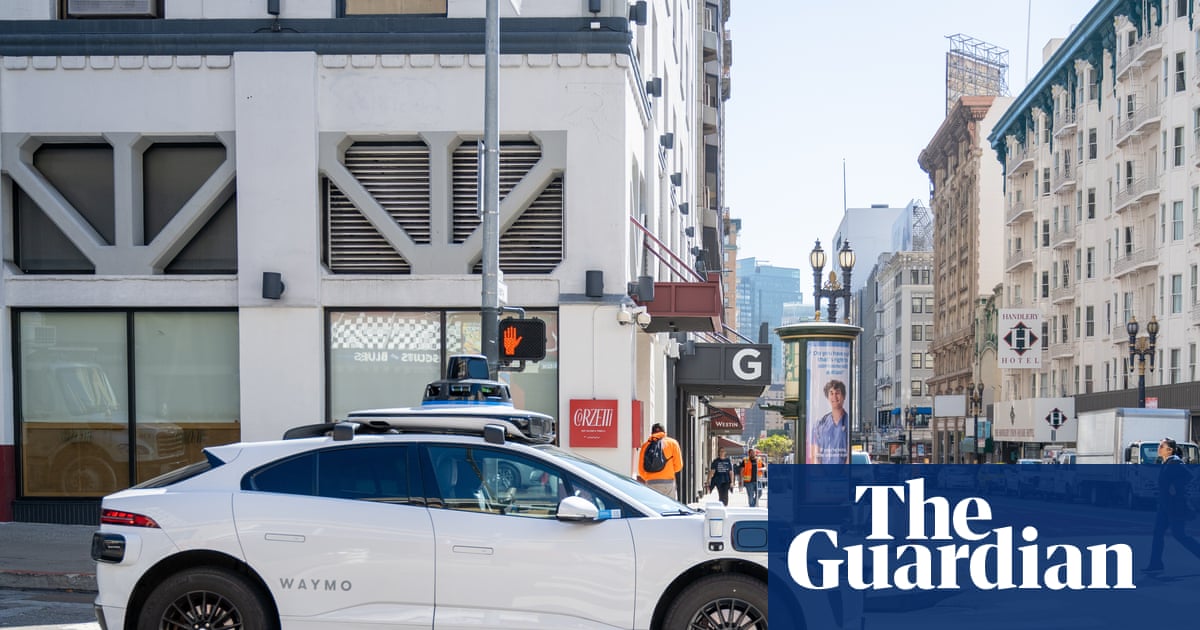
 
Heard about this. Phoenix is one of the markets with expanded service.

Tesla had them on Austin highways for months..although they moved the safety guy to the driver's seat.

Waymo..(open to the public since Oct 2020) avoided highways for how long now...5 years? :unsure:


To view this content we will need your consent to set third party cookies.
For more detailed information, see our cookies page.

[Tesla] Robotaxi Rides on the Highways, here in Austin! Let's go!​


I always find it hilarious when people say they trust FSD on the highway far more than the local roads.

Um..no...even Tesla and Waymo are wary of that. i have used FSD on local roads with little worry...but have it drive 85mph on the highway....uh not for me.
 
Last edited:
Robotaxi defensive coding for road-ragers and police cars

To view this content we will need your consent to set third party cookies.
For more detailed information, see our cookies page.

We Tried To Crash Into A Self Driving Tesla​

 
Last edited:
note no media outrage...

A Waymo hit a child near an elementary school. The NHTSA is investigating​


  • A Waymo driverless vehicle struck a child near an elementary school in Santa Monica, California.
  • The company voluntarily reported the incident to federal auto safety regulators on the same day, and the National Highway Traffic Safety Administration is now investigating.
  • In a separate incident in Los Angeles, a Zeekr vehicle operated in manual mode by a human sped through a one-way residential street near Dodger Stadium.
108253204-1768506877899-gettyimages-2256473943-bb2_5286_mct2m6ds.webp

Alphabet-owned Waymo has informed the National Highway Traffic Safety Administration that one of its driverless vehicles “struck a child near an elementary school” in Santa Monica, California

The Jan. 23 incident is now being investigated by the U.S. vehicle safety authority.

According to records posted to the NHTSA website, the child sustained minor injuries.

The Waymo collision occurred within two blocks of an elementary school during normal school drop-off hours, while other children, a crossing guard and several double-parked vehicles were nearby.

“The child ran across the street from behind a double-parked SUV towards the school and was struck by the Waymo AV,” NHTSA said in a document describing the incident that necessitated their “preliminary evaluation.”

The vehicle was running on Waymo’s 5th Generation Automated Driving System with no human safety supervisor in the vehicle.

NHTSA’s Office of Defects Investigations plans to assess “whether the Waymo AV exercised appropriate caution given, among other things, its proximity to the elementary school during drop off hours, and the presence of young pedestrians and other potential vulnerable road users.”


The agency’s investigation will include analysis of the “intended behavior” of Waymo’s driverless vehicles in school zones and neighboring areas, especially during normal school pick-up and drop-off times, as well as the company’s post-impact response.

“Our technology immediately detected the individual as soon as they began to emerge from behind the stopped vehicle. The Waymo Driver braked hard, reducing speed from approximately 17 mph to under 6 mph before contact was made,” Waymo said in a statement on their blog.

The company wrote that a fully attentive human driver in the same situation would have likely “made contact with the pedestrian” at a higher speed of 14 miles per hour.

“This significant reduction in impact speed and severity is a demonstration of the material safety benefit of the Waymo Driver,” the company said.

After the robotaxi struck the child at low speed, the pedestrian “stood up immediately, walked to the sidewalk, and we called 911,” Waymo said. The company also reported that its vehicle “remained stopped, moved to the side of the road, and stayed there until law enforcement cleared the vehicle to leave the scene.”

Waymo was involved in a separate incident on Jan. 25 in Los Angeles, where one of its Zeekr vehicles sped through a one-way residential street near Dodger Stadium. The vehicle struck several parked cars, including one that had a person in it.

There were no reported injuries, Waymo said in an emailed response.

The vehicle was being operated in manual mode by a human specialist at the time of the event. Waymo did not respond to questions about how the vehicle ended up speeding in the incident.

Waymo is already facing regulatory scrutiny for the behavior of its robotaxis around school buses.

Last week, the National Transportation Safety Board initiated an investigation after reports of Waymo robotaxis illegally passing stopped school buses in several different locations.

In a statement posted on X on January 23, the NTSB said it “opened a safety investigation to examine the interaction between Waymo vehicles and school buses stopped for loading and unloading students in Austin, Texas.”

The Austin Independent School District previously identified at least 19 incidents where Waymo vehicles passed its school buses, and demanded that Waymo stop using its driverless vehicles during school bus hours in Austin until the safety concerns could be resolved.

NHTSA had earlier started “to investigate the performance of the Waymo ADS around stopped school buses and the system’s ability to follow traffic safety laws concerning school buses,” it said in a letter the agency sent to Waymo.

While both the NTSB and NHTSA are vehicle safety watchdogs in the U.S. government, their roles are distinct.The NTSB investigates accidents to determine underlying causes of damaging or concerning incidents. The board also makes safety recommendations to regulators (including NHTSA) and the auto industry.

To view this content we will need your consent to set third party cookies.
For more detailed information, see our cookies page.
 
To view this content we will need your consent to set third party cookies.
For more detailed information, see our cookies page.

close calls between robotaxis and school buses​


Waymo caught doing an "Amazon Go"

Waymo Exec Admits Remote Operators in Philippines Help Guide US Robotaxis​


Waymo‘s Chief Safety Officer disclosed Wednesday that some of the remote operators who assist its self-driving vehicles in navigating difficult scenarios are based in the Philippines.

Mauricio Peña, the company’s Chief Safety Officer, confirmed under questioning that the Alphabet subsidiary employs human operators abroad to provide guidance to its robotaxis when they encounter challenging driving situations.

Waymo‘s Chief Safety Officer disclosed Wednesday that some of the remote operators who assist its self-driving vehicles in navigating difficult scenarios are based in the Philippines.

Mauricio Peña, the company’s Chief Safety Officer, confirmed under questioning that the Alphabet subsidiary employs human operators abroad to provide guidance to its robotaxis when they encounter challenging driving situations.

Peña noted that the vehicles remain in control of all driving tasks at all times.

“They provide guidance. They do not remotely drive the vehicles,” Peña told the Senate committee. “The Waymo vehicle is always in charge of the dynamic driving tasks, so that is just one additional input.”

When pressed on how many operators are located outside the United States, Peña said he did not have the breakdown available, escalating frustration from senators.

“It just seems kind of curious that you don’t know that answer,” one senator responded, before asking in which countries the operators are located.

“The Philippines,” Peña replied.

Safety and Security Concerns​

The disclosure drew immediate pushback from lawmakers, who raised concerns about cybersecurity vulnerabilities, outdated information relays, and the qualifications of overseas operators.

Having people overseas influencing American vehicles is a safety issue,” the senator said. “The information the operators receive could be out of date. It could introduce tremendous cybersecurity vulnerabilities. We don’t know if these people have US driver’s licenses.”

The senator also criticized the labor implications, noting that Waymo’s autonomous vehicles are already displacing taxi and rideshare drivers in the United States.

“It’s one thing when a taxi is replaced by an Uber or a Lyft. It’s another thing when the jobs just go completely overseas,” the senator added.

The hearing brought together top executives from both Waymo and Tesla to make the case for the safety of their autonomous driving systems before the Senate committee, with both companies insisting their technology is safer than human drivers despite recent incidents.

Tesla’s Take​

Tesla was represented by its Vice-President of Vehicle Engineering Lars Moravy.

The VP quoted the company’s CEO Elon Musk when he said, over a decade ago, that one of his biggest fears was “the possibility that someone could do, as you described, take over an autonomous vehicle and do something nefarious.”

“Since that day, we’ve been committed to making sure that never happens,” Moravy guaranteed.

“We have many layers of security within our system and similar to what Dr. Peña said, our driving controls, go, stop, steer, are in a core embedded central layer that cannot be accessed from outside the vehicle,” the VP said referring to Waymo’s Chief Safety Officer.

Tesla began operating robotaxis using slightly modified Model Ys in Austin last June.

Since then, the Elon Musk-led company has been expanding both the fleet and geographically as Tesla rolls out the service to more states following the Texas Debut.

The company has recently removed safety operators in Austin, with Musk aiming for an aggressive expansion in the next few years.

Congress is considering how to move forward with legislation to create uniform federal safety regulations for self-driving vehicles, which are becoming increasingly common in major US cities.

Santa Monica Accident​

Last week, the US regulators started investigating a January 23 incident where a Waymo autonomous vehicle hit a child near a Santa Monica elementary school.

The incident occurred during school drop-off hours when the Waymo robotaxi struck a child who was running across the street toward the school, according to the National Highway Traffic Safety Administration (NHTSA).

There were other children, a crossing guard, and several double-parked vehicles in the vicinity at the time.

The company claims that its peer-reviewed model indicates that a human driver in a similar scenario would have hit the kid at a higher speed.

“To put this in perspective, our peer-reviewed model shows that a fully attentive human driver in this same situation would have made contact with the pedestrian at approximately 14 mph,” Waymo said.

“This significant reduction in impact speed and severity is a demonstration of the material safety benefit of the Waymo Driver,” the company added.

The investigation comes weeks after a Waymo robotaxi became trapped on light rail tracks in Phoenix, forcing a passenger to exit the vehicle before an approaching train struck the autonomous car.
 
Last edited:

London gets closer to its first robotaxi service as Waymo begins testing​


To view this content we will need your consent to set third party cookies.
For more detailed information, see our cookies page.

London is Testing Waymos, so I followed one…
 

London gets closer to its first robotaxi service as Waymo begins testing​


To view this content we will need your consent to set third party cookies.
For more detailed information, see our cookies page.

London is Testing Waymos, so I followed one…


As someone living in London, I am not sure how well self drive vechicles will work in a city like London or many UK cities

( Disclamer - I have not seen the video).

Space here in the UK is a premium, and our roads reflect that, they are narrow, to very narrow and require a lot of co-ordination between drivers to be able to navigate successfully. I am not sure robo-taxi's can navigate the hostility that compressed area driving brings to the table. The USA has alot of space, and roads sometimes look like our motorways, so there is the space to allow such systems to work effectily.

"imho".. but I am keen to see how things progress on this front anyway.
 
As someone living in London, I am not sure how well self drive vechicles will work in a city like London or many UK cities

( Disclamer - I have not seen the video).

Space here in the UK is a premium, and our roads reflect that, they are narrow, to very narrow and require a lot of co-ordination between drivers to be able to navigate successfully. I am not sure robo-taxi's can navigate the hostility that compressed area driving brings to the table. The USA has alot of space, and roads sometimes look like our motorways, so there is the space to allow such systems to work effectily.

"imho".. but I am keen to see how things progress on this front anyway.

Well we have big cars and plenty of narrow streets designed back in the horse days in Boston for instance. But I know you have more of them.

I know my Tesla was more confident driving in narrow one lane places than with two lanes so Waymo probably will do good.
 
Last edited:
To view this content we will need your consent to set third party cookies.
For more detailed information, see our cookies page.

Taking a Waymo from SeaWorld to Icon Park Orlando​

 
To view this content we will need your consent to set third party cookies.
For more detailed information, see our cookies page.

🇰🇵🇺🇸 North Korean Sisters Ride a Self-Driving Taxi for the First Time in the U.S.​


Waymo LLC, Alphabet Inc.’s autonomous ride-sharing brand, plans to expand its service to Detroit later this year. But a recent vehicle sighting by The Detroit News suggests the Motor City fleet will include Waymo’s latest vehicle: a China-sourced minivan.

Called the Waymo Ojai, the electric minivan shares the so-called SEA-M architecture platform with the Zeekr C1Me and RT vehicles built by Chinese automaker Geely.

89933660007-waymo-ojai-corpfr-34.jpg

Waymo Ojai is an autonomous, electric minivan built on a Geely platform

Waymo Ojai EV being spied testing in Detroit.

Waymo Ojai EV being spied testing in Detroit
 

Waymo LLC, Alphabet Inc.’s autonomous ride-sharing brand, plans to expand its service to Detroit later this year. But a recent vehicle sighting by The Detroit News suggests the Motor City fleet will include Waymo’s latest vehicle: a China-sourced minivan.

Called the Waymo Ojai, the electric minivan shares the so-called SEA-M architecture platform with the Zeekr C1Me and RT vehicles built by Chinese automaker Geely.

89933660007-waymo-ojai-corpfr-34.jpg

Waymo Ojai is an autonomous, electric minivan built on a Geely platform

Waymo Ojai EV being spied testing in Detroit.

Waymo Ojai EV being spied testing in Detroit

LOL...you are simply proving Chinese EVs are not banned in the US.

China just wants to cry high import taxes are "unfair" even though they slapped foreign car imports with a 100% luxury tax for decades.
 

Users who are viewing this thread

Country Watch Latest

Latest Posts

Back
Top